🌍 The way people trade is changing.
Markets are becoming more connected, and traders need tools that can keep up with a global economy.
At StoCex, we believe the future of trading should be:
⚡ Faster
🌐 More accessible
🔗 More connected
From crypto to stocks, forex, and global indices — one platform, multiple opportunities.
The next generation of trading starts with breaking boundaries.
Follow @StoCex and join the journey. 🚀
#StoCex #Crypto #Trading #Web3 #Finance #Investing
🌍 One platform. Endless opportunities.
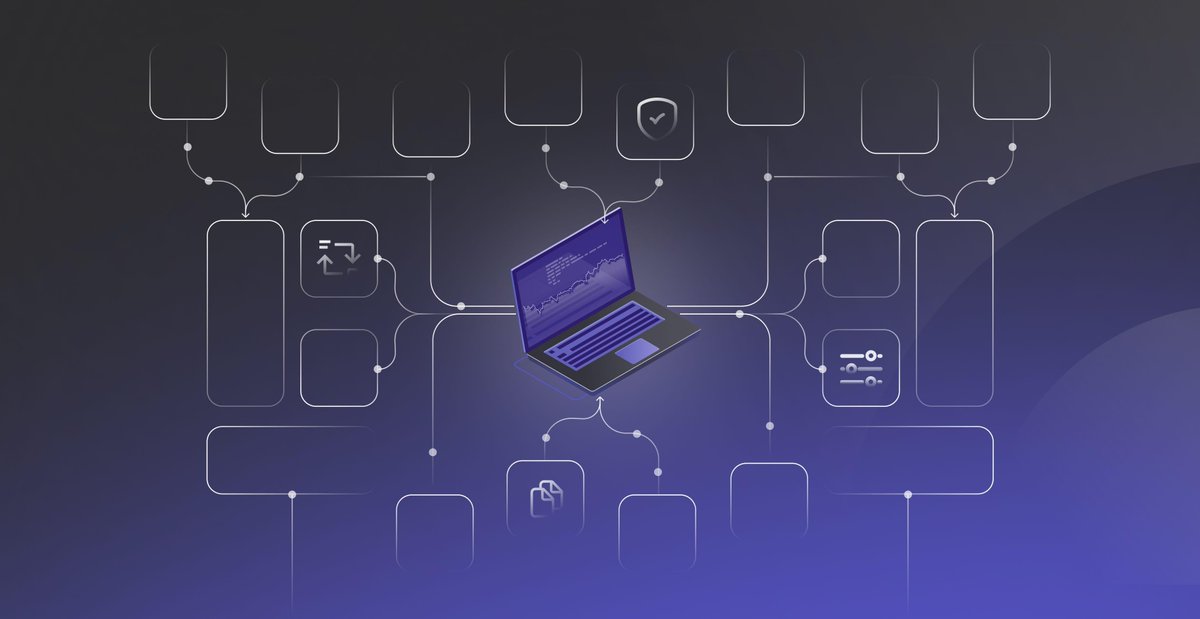
Why switch between multiple apps when you can trade everything in one place?
At StoCex, we're building a seamless trading experience that brings together:
🔹 Crypto
🔹 US & Hong Kong Stocks
🔹 Forex
🔹 Global Indices
Built for speed. Designed for everyone.
The future of global trading starts here.
Follow @StoCex and stay tuned for what's coming next. 🚀
#StoCex #Crypto #Trading #Forex #Stocks #Investing #Web3
🚀 The future of trading is about simplicity, speed, and accessibility.
At StoCex, we're building a platform where you can access global markets from one place.
✔ Crypto
✔ Stocks
✔ Forex
✔ Indices
Fast execution. Real-time market data. A seamless trading experience.
This is just the beginning.
Follow us and stay tuned for exciting updates.
#StoCex #Crypto #Trading #Forex #Stocks #Web3 #Investing
The future of trading isn't about having more indicators.
It's about having fewer barriers.
People shouldn't need five different apps to trade crypto, stocks, forex, and commodities.
One account.
One platform.
Global markets.
24/7 access.
That's where the industry is heading.
At STOCEX, we believe trading should be simple, fast, and accessible to everyone—not just professionals.
Markets never sleep.
Neither should opportunity.
The next generation of trading platforms won't compete on flashy features.
They'll compete on speed, security, and user experience.
We're building for that future.
What do you think is the biggest problem with today's trading platforms?
👇
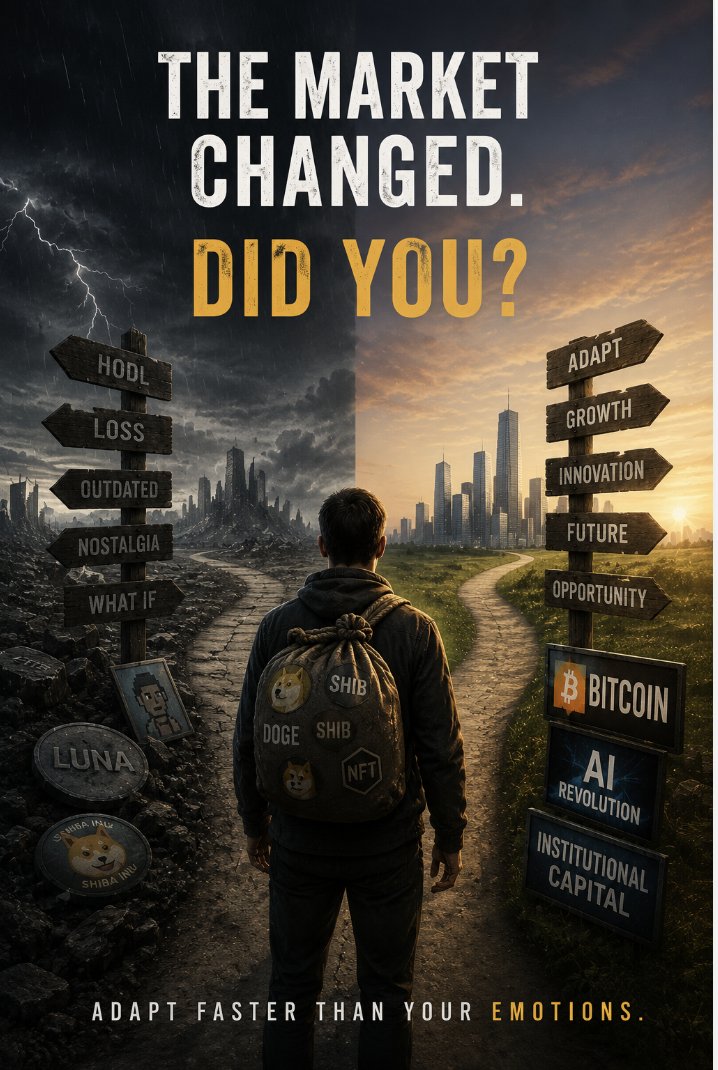
The biggest mistake in crypto isn't buying the wrong coin.
It's refusing to change your mind.
The market evolves.
Narratives change.
Liquidity moves.
Regulations shift.
Technology improves.
But many investors stay emotionally attached to projects they bought years ago.
They don't hold because of conviction.
They hold because admitting they were wrong is painful.
The best investors aren't the smartest.
They're simply the fastest to adapt.
Every cycle creates new opportunities.
But only for people willing to let go of the last one.
What's one crypto opinion you've changed your mind about over the past few years?
👇
The crypto market isn't becoming easier.
It's becoming more selective.
In the last cycle, almost everything pumped.
Memecoins.
Layer 1s.
NFTs.
Metaverse.
GameFi.
It didn't matter what you bought.
Liquidity was everywhere.
This cycle feels different.
Institutional money isn't chasing every narrative.
It's chasing quality, regulation, infrastructure, and assets with the highest probability of survival.
Bitcoin has ETFs.
Ethereum has institutional adoption.
A handful of AI projects continue to attract attention.
Meanwhile, thousands of altcoins are still waiting for a "rotation" that may never come.
Many people are still expecting 2021 to repeat itself.
But markets rarely reward people who expect history to repeat exactly.
Every cycle creates new winners.
Every cycle also leaves behind yesterday's heroes.
The hardest part of investing isn't buying.
It's accepting that the market has changed.
The best investors don't marry narratives.
They adapt.
Maybe the next Altseason will arrive.
Maybe it won't.
Either way...
Capital always flows where confidence is strongest.
The question isn't:
"When will my bags pump?"
The real question is:
"Am I positioned where the next wave of capital actually wants to go?"
Curious to hear different opinions.
Do you think we're still getting a classic Altseason, or has the game fundamentally changed?
👇
Everyone says they're "early."
But if everyone is early... who's left to buy?
The next bull run won't reward the loudest people.
It will reward the most patient ones.
What's your unpopular crypto opinion?
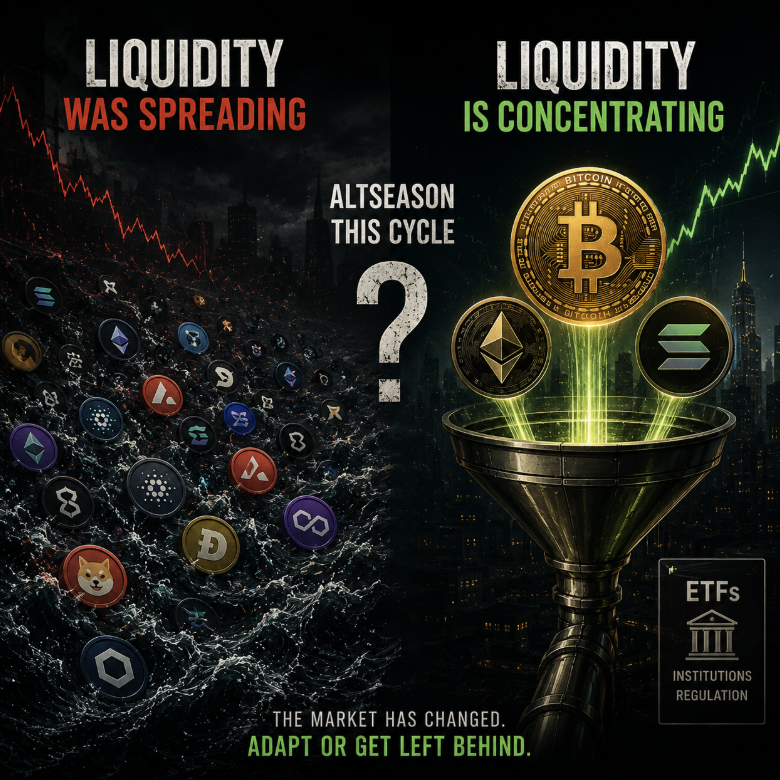
Everyone wants altseason.
But what if there isn't one this cycle?
ETFs changed everything.
Liquidity is concentrating, not spreading.
The biggest opportunity might be accepting that the market has changed.
Agree or disagree?
Markets never sleep.
Crypto. Forex. Stocks. AI.
The future isn't one market—it's every market in one account.
What are you watching this week?
#Crypto#AI#Trading#Web3#Stocex
@MarketMelodies Sticky inflation changes the cross-asset read. The first reaction may show up in equities, but DXY, yields and BTC usually decide whether risk appetite can hold.
@PavloAtlantis Liquidity is the key layer here. A large OTC transfer can change ownership without hitting spot order books, but the market still watches whether it affects sentiment, ETF demand and broader risk appetite.
Liquidity is still the market's main filter.
BTC watches dollar conditions.
Gold watches the Fed path.
Oil watches geopolitics.
Stocks watch risk appetite.
Multi-asset traders do not isolate one chart.
They track where capital is rotating.
@alicharts Stablecoin liquidity is a useful crypto-native signal, but it works best with the broader macro backdrop. If dollar conditions tighten, the same flow can travel much less distance.
@robin_j_brooks This is why gold needs to be read through real yields, not just the debasement narrative. A stronger dollar and a hawkish Fed path can change the whole trade quickly.
@Kylechasse ETF flows matter, but the macro filter still matters more. Liquidity, DXY and risk appetite decide whether fear becomes capitulation or just another reset.
Markets are not moving in isolation.
BTC is reading liquidity.
Gold is reading real yields.
Oil is reading geopolitical risk.
Stocks are reading risk appetite.
DXY is the pressure gauge across all of them.
A multi-asset view helps separate the headline from the actual flow.
@nordin_eth This is where multi-asset context matters. Equities, oil, BTC and the dollar are all reacting to the same macro path through different risk channels.