Markets don’t beat traders.
Their own habits do.
The difference isn’t strategy.
It’s having a rules-based system you can execute under pressure.
https://t.co/JEDXyd1QFm
The goal isn't to trade more hours. It's to make the hours you trade more productive.
A rules-based system, a repeatable daily routine, and the discipline to execute consistently can change what's possible.
More screen time doesn't necessarily mean better trading.
Trade Part-Time. Build Consistent, Repeatable Outcomes.
If you could trade a couple of hours per day and produce consistent, repeatable, outcomes what would that do for your lifestyle?
See if this could work for you...
https://t.co/RJLl3bhx2K
Progress can look like passing on a forced trade, honoring a stop, or waiting for your planned entry.
Those decisions rarely make exciting screenshots. They’re still worth tracking.
That’s where the NeuroTrader Scorecard begins to tell a story P&L alone can’t.
The market is back near where it was a week ago.
What did it reveal about your patience, discipline, and execution?
Successful traders measure progress in better decisions. Making the same mistakes with a better P&L isn't improvement.
Would you agree?
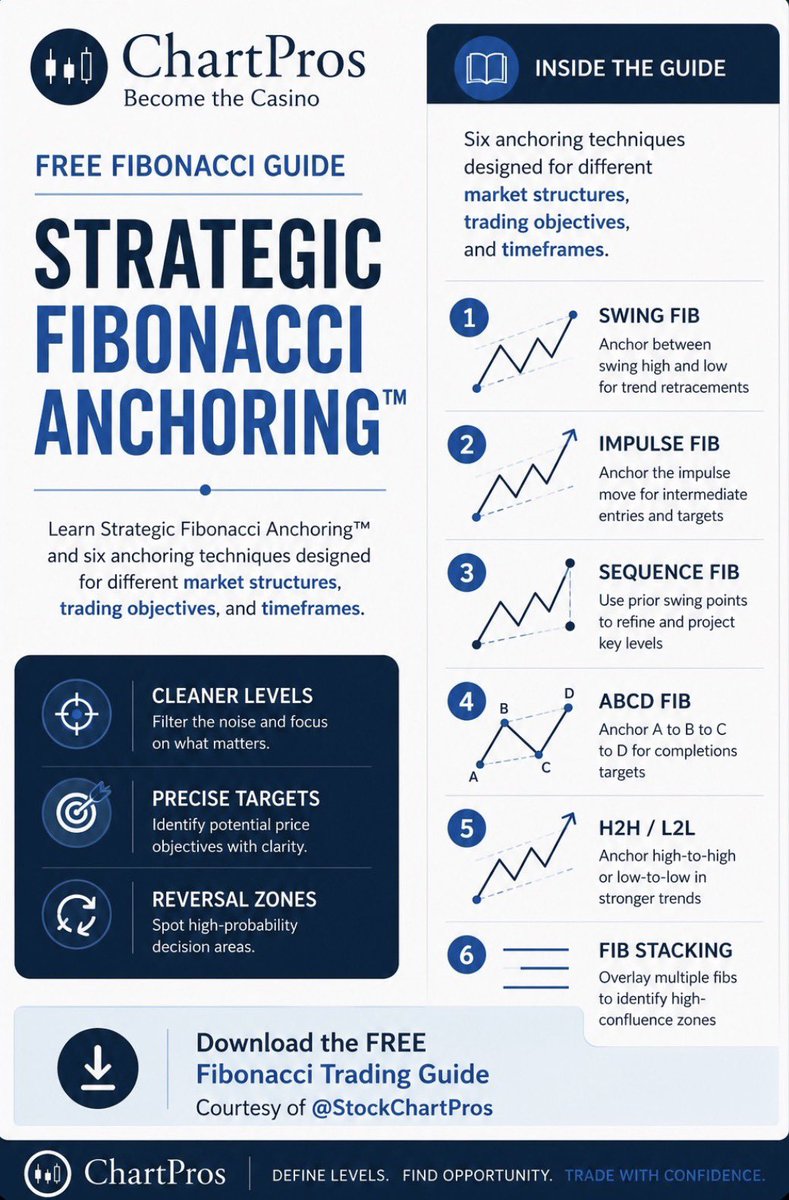
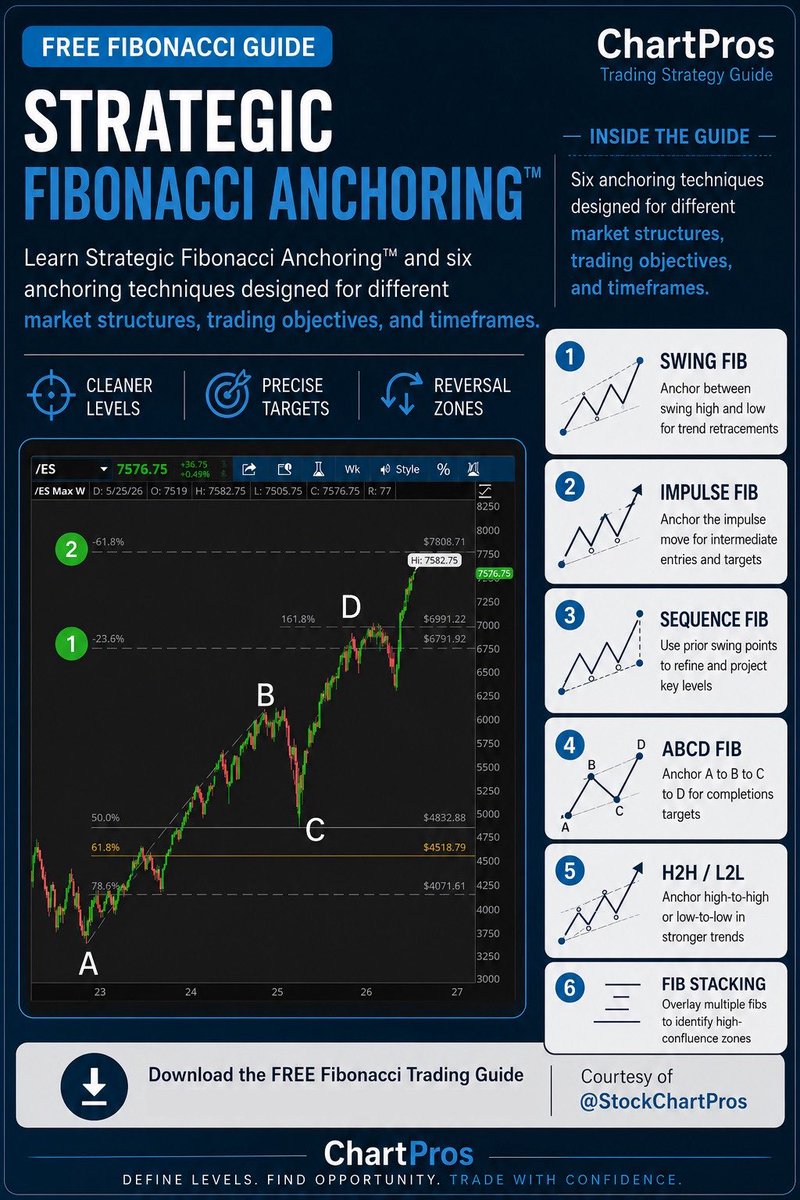
Want Fibonacci superpowers? Learn to anchor both bull fibs and bear fibs.
More anchors reveal more levels of interest and potential opportunities in both directions.
The market moves both ways.
Why only prepare for one?
FREE Strategic Fibonacci Anchoring Trading Guide:
Download here👇
https://t.co/JdCaOI71EK
Most traders stop after learning a single Fibonacci anchor.
Strategic Fibonacci Anchoring™ teaches six anchoring techniques designed for different market structures, trading objectives, and timeframes, giving you more ways to identify high-quality setups.
@SJosephBurns Fibonacci superpowers come from learning to anchor both bull fibs and bear fibs.
More anchors. More levels of interest. More opportunities to recognize in either direction.
Why only map one side of a market that moves both ways?
A selloff. A massive bounce. Two days of opportunity.
The direction changed. Your commitment to your rules shouldn’t.
Which tests your discipline more: waiting for your setup or watching a move happen without you?
The market finished red.
But that doesn’t tell you how well you traded.
Did you follow your plan?
Respect your risk?
Stay out when nothing met your rules?
Before you judge today by your P&L, ask:
Which of your decisions would you want to repeat tomorrow?
A winning trade can teach you the wrong lesson.
Break your rules and get paid, and you may start trusting the habit that can later cost you.
Judge the execution before celebrating the outcome.
Would you call it a good trade if you followed your rules but lost?
You can read the market correctly and still be unprepared to trade it.
A valid setup answers, “Is the opportunity there?”
Mental readiness answers, “Can I execute it without abandoning my rules?”
How often do you check the chart but never check yourself?
@SJosephBurns This has become our preferred and highest recommended entry strategy during the past few years.
Why?
Because it happens almost every day for #ES_F and #NQ
Occasionally it will happen it both directions on the same trading day.
Missed the move? Before you chase, take another look.
Different Fibonacci anchors can reveal entry levels and targets you never knew were there.
The next opportunity could be on the chart you’re already watching.
FREE Fibonacci Trading Guide
Download here 👇
https://t.co/JdCaOI71EK
Most traders learn just one way to anchor Fibonacci.
Learn Strategic Fibonacci Anchoring™ and six anchoring techniques designed for different market structures, trading objectives, and timeframes, helping uncover more opportunities throughout the day, week, and month.
@SJosephBurns Ever chase a move because you thought you missed your only entry?
Learning different ways to anchor Fibonacci can reveal levels and opportunities you never knew to look for.
Before chasing the next candle, learn what you may be missing on the same chart.
Most traders don’t need another indicator.
They need fewer exceptions.
Every time you override your stop, chase an entry, move a target, or abandon the plan, you teach yourself that your rules are optional.
The edge isn’t just having a plan.
It’s becoming the trader who follows it.
@SJosephBurns Finding an edge takes research.
Trusting it takes evidence.
Keeping it takes review and adaptation.
Executing it is hardest. The other three are easy in comparison.
Knowing your rules is easy. Following them when your money is on the line is the hard part.
More Fibonacci anchoring techniques means more levels of interest you might otherwise miss.
When different anchor sets point to the same zone, that’s confluence worth watching.
The anchors show you where to pay attention.
Price action tells you how to respond.
FREE Fibonacci Trading Guide
Download 👇
https://t.co/JdCaOI71EK
Fibonacci percentages never change.
Where and how you anchor them does.
Learn Strategic Fibonacci Anchoring™ and six anchoring techniques designed for different market structures, trading objectives, and timeframes.