BREAKING NEWS
RIO TINTO HAS SUSPENDED UNDERGROUND OPERATIONS AT ITS MASSIVE OYU TOLGOI COPPER MINE IN MONGOLIA.
One of the largest copper and gold mines globally.
We need to mine as much copper in the next 18 years as we have mined in the past 10,000 years, which is 700-800 million tonnes... and that's without the AI demand.
Including AI demand, @BMO estimates we need ~35,000 tonnes of copper per gigawatt of installed data centre capacity... And according to S&P, by 2030, installed data centre capacity in the US is expected to reach 152 GW (~62 GW today).
Morgan Stanley is the latest sell-side bank to raise its copper price forecasts, citing persistent long-term deficits and capex failing to translate into higher volumes. Its new long-term price (i.e. 2030 onwards) is now up 15% to $5.73/lb.
They warn that even at these new estimates, incentive prices may still not be high enough to support development of several brownfield and greenfield projects. They cite a whirlwind of escalating cost headwinds, such as a sulphur squeeze, diesel export bans, grade declines, royalty changes, a super El Niño and strategic stockpiling, all driving further cost pressures.
We think that, given all these factors, the copper price should be even higher… So which will be the straw that breaks the camel’s back?
@MgnStnlyIdeas
Copper prices are soaring📈
⚠️The biggest miners are producing less.
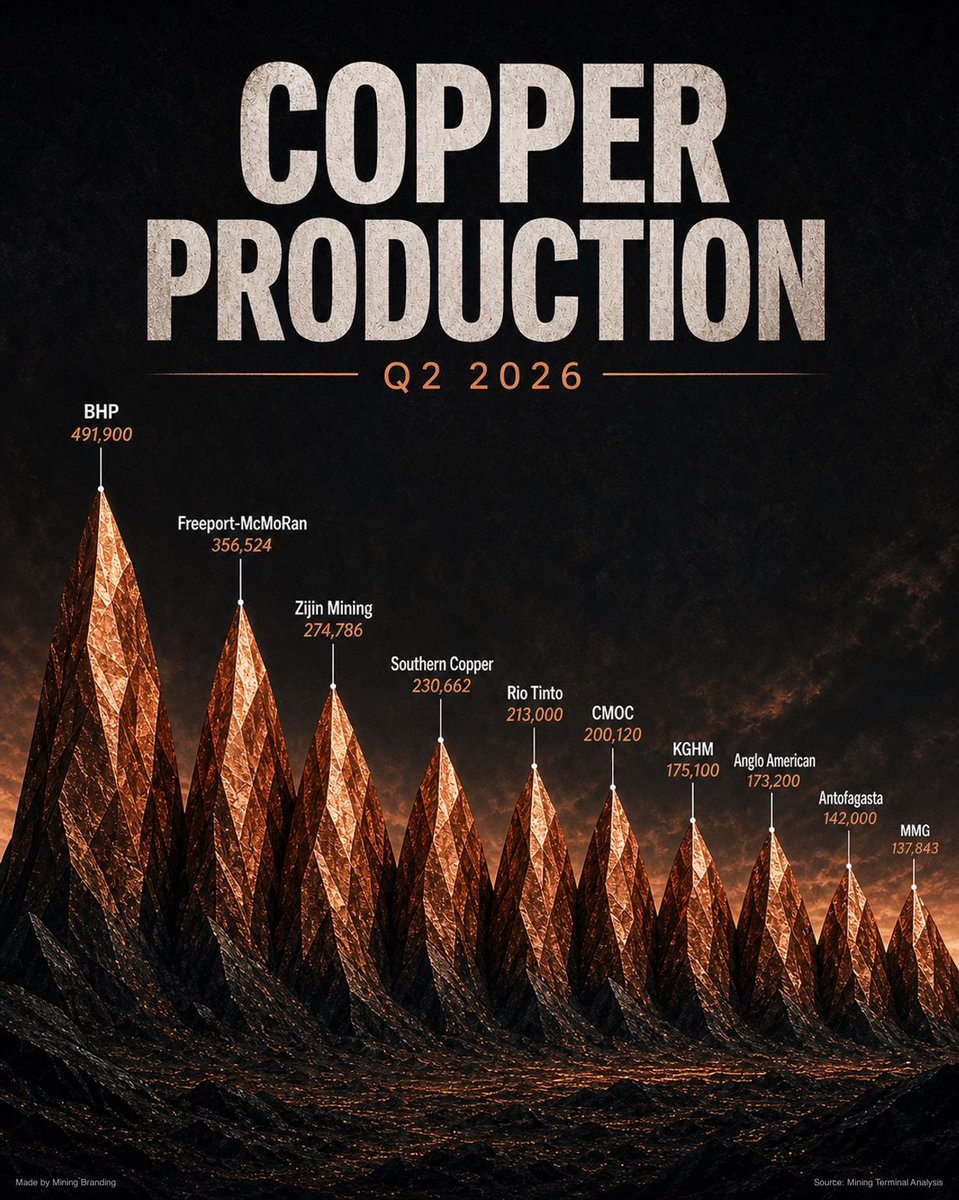
🇦🇺BHP, the world's largest copper miner, produced 492kt in Q2. That's down 5% year on year.
It expects to produce 1.65 to 1.80 Mt next year, against 1.95 Mt this year.
🇨🇱Codelco's own mines produced 564kt in H1, down 11%.
Freeport's output fell after the mud rush at 🇮🇩Grasberg.
Meanwhile prices have jumped.
BHP's average realised copper price was $5.74/lb this financial year, up 35%. Freeport got $6.17/lb in Q2, against $4.54 a year earlier.
The reason is geology.
The giant mines are getting old.
At Escondida, the world's largest copper mine, ore grade fell from 1.02% to 0.90%.
That means more rock moved for less metal.
New mines take more than a decade to build, so high prices can't fix supply quickly.
The incentives point one way… Miners earn more from fewer tonnes: Codelco's H1 EBITDA rose 68%.
Grids, data centres and EVs all need copper, and US power demand alone is heading for a fourth straight record.
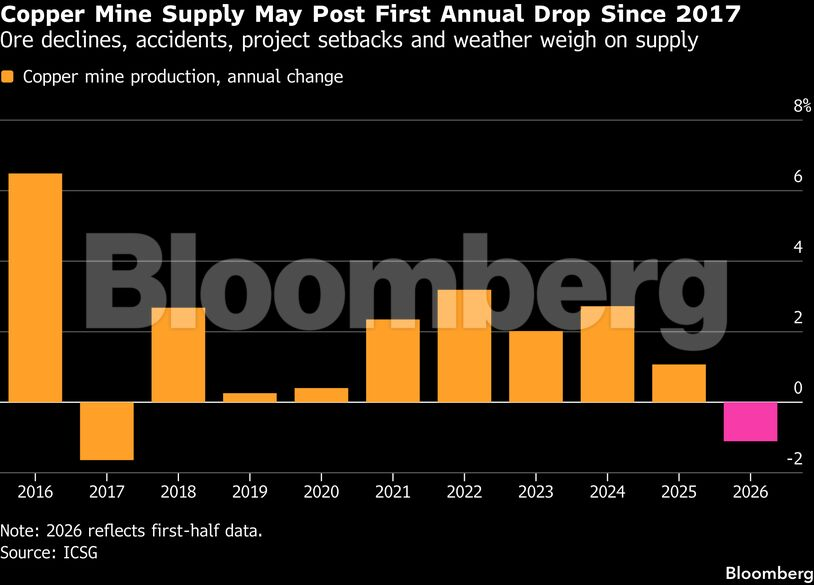
Copper mine supply remains under pressure ⚠️⛏️
* Chile Copper Production Sinks to Lowest in More Than 15 Years
* Codelco suspends operations after worker dies in accident at Radomiro Tomic mine (250,000+t Cu production)
* World's largest copper mine: Supervisors at BHP Escondida mine in Chile reject offer, paving way for strike
* Shares in First Quantum Minerals plunged after a Panamanian government commission recommended the closure of the company's giant copper mine
* Potential new strike at Antofagasta's Centinela mine (240,000+t Cu)
* Copper Mine output fell 1.1% year over year in the first half of 2026
* Antofagasta reported that adverse weather conditions at the ports caused delays in end-of-period shipments from the Centinela and Los Pelambres mines
* Chile’s copper output falls 12.8% in August hit by weather conditions and ore grades
* Chilean government to cut 2026 copper production forecasts by up to 7%
* UBS now forecasts the copper deficit to reach 379,000 tonnes next year, a 73% increase on its expected deficit of 219,000 tonnes in 2026
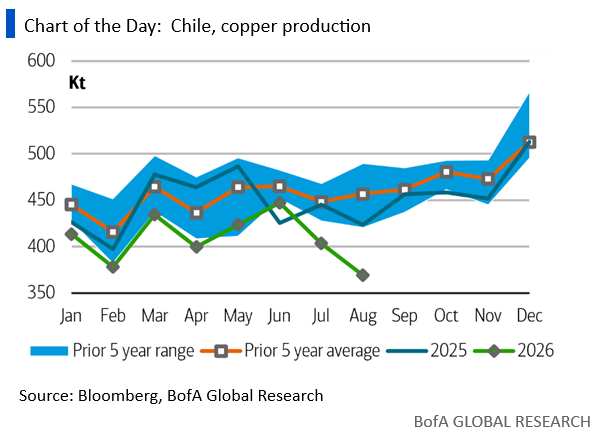
In August, copper output from Chile fell to a multi-year low of 369,500 tonnes, the lowest level in 15 years (see chart 👇).
Chile’s Mining Minister, Daniel Mas, has attributed the decline to “temporary [weather-related] problems” and says he has “good expectations for [a recovery in] production next year”.
@BankofAmerica forecasts a 4.2% growth in global copper supply next year, supported in part by an expected recovery in Chilean production. Yet... Bank of America still expects the global copper market to REMAIN IN DEFICIT.
The Chilean authorities have historically been more likely to revise copper production forecasts DOWN than up.
In other words, the expected recovery in Chilean production is critical to the global supply-growth outlook, especially since the country is the world's largest copper producer. So, even if the recovery in copper production materializes, which the country's track record of underperformance suggests it won't, next year's global copper market will remain firmly in deficit.
The world must mine more COPPER in 18 years than in all of history.
Robert Friedland has driven this point home.
The world is staring down a serious copper problem.
It was great spending time with him today.
He is a true legend. @robert_ivanhoe
Copper demand is exploding.
No new supply is coming online over the next 8 years. Developing a new copper deposit takes around 15–18 years.
The copper shortage is here.
After many years of not fully understanding the enormous challenges we’re facing in the copper market, we are FINALLY starting to see more realistic price targets.
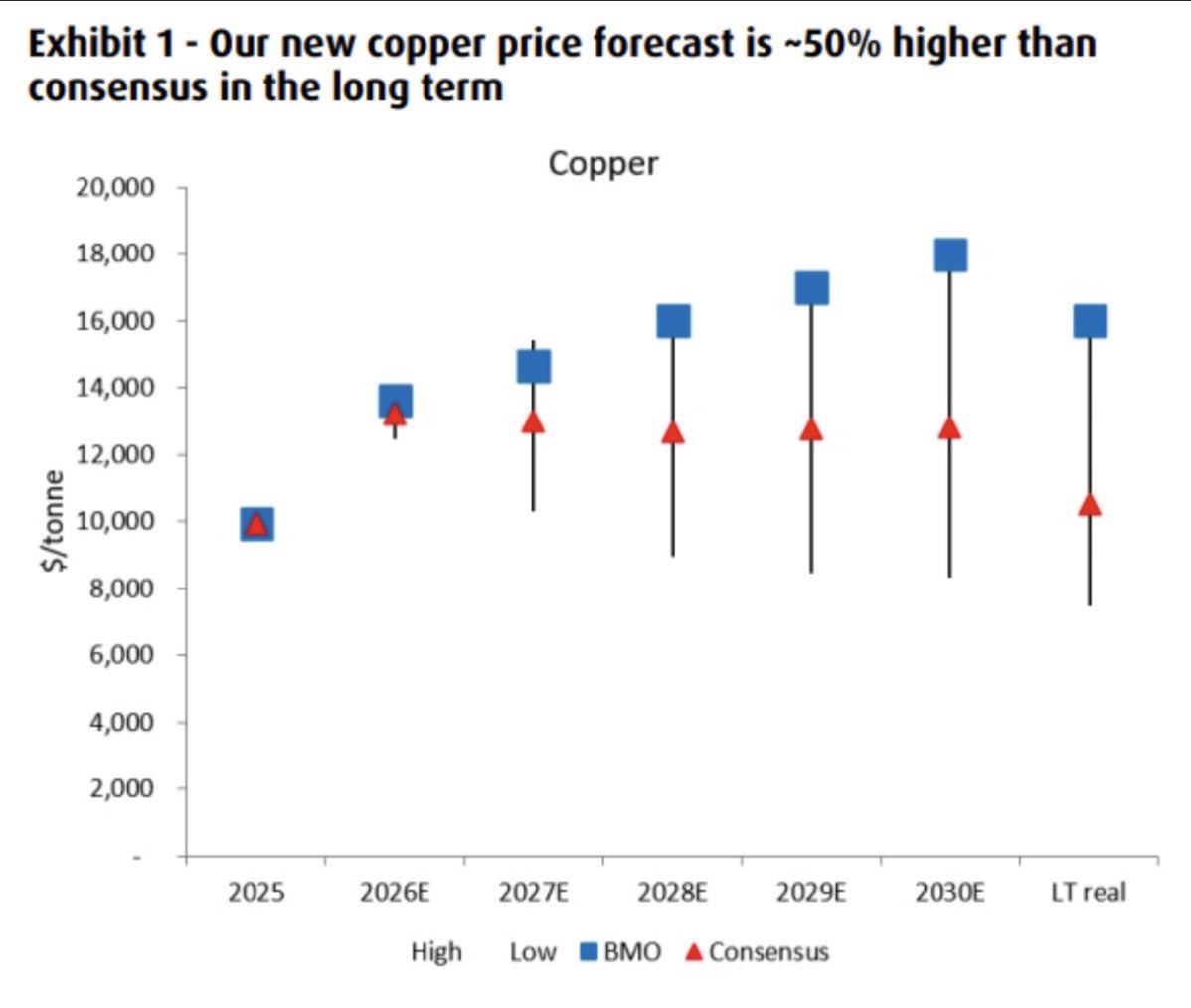
Last night, analysts at @BMO raised their copper price forecast to ~$18,000 per tonne by 2030… 50% above what the rest of the street believes.
Despite the many factors behind their upgrade, one key catalyst is the “freight train of capex” necessary to support existing mine output.
Copper miners today need to “spend more to stay”… our industry needs to spend considerably more on sustaining capex to offset declining grades as we mine increasingly challenging ore bodies.
But we are still only at the foothills of the Himalayas…
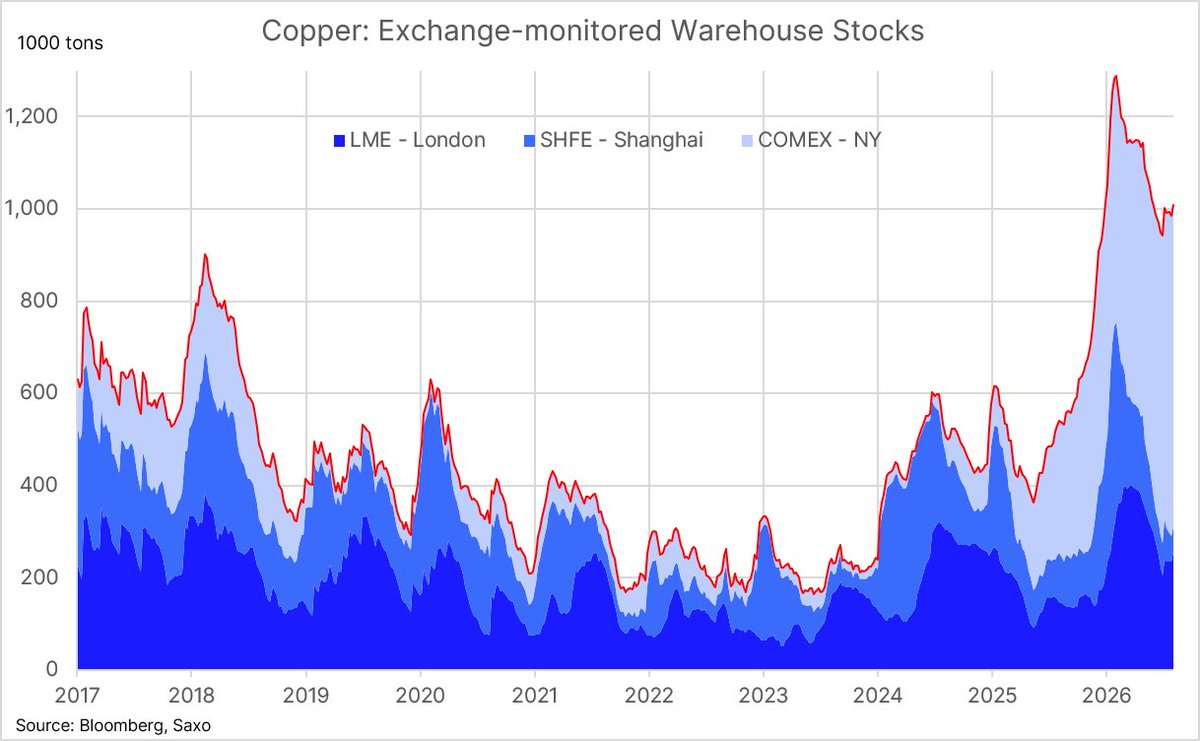
#Copper stocks monitored by the three major futures exchanges show a weekly rise of 21.9kt to 1,007kt, a nine-week high. For a change both London and Shanghai recorded small increases of 20.6kt to 255.1kt and 1.2kt to 56kt while COMEX held steady at 696kt, with onshore stockpiles in the USA representing 69% of the total.
Copper Market: "little room for supply disruptions.."
BHP’s Escondida restart eases tight copper market 🇨🇱⛏️
The mine halt, low Chinese inventories and an approaching holiday pause had left the copper market with little room for supply disruptions..
https://t.co/qtY4L6KiXO