all these events creates buying opportunities.
it hurts when it happens on your holdings, but could have a potential upside when you stack assets based on convictions and your thesis plays out.
we watch...
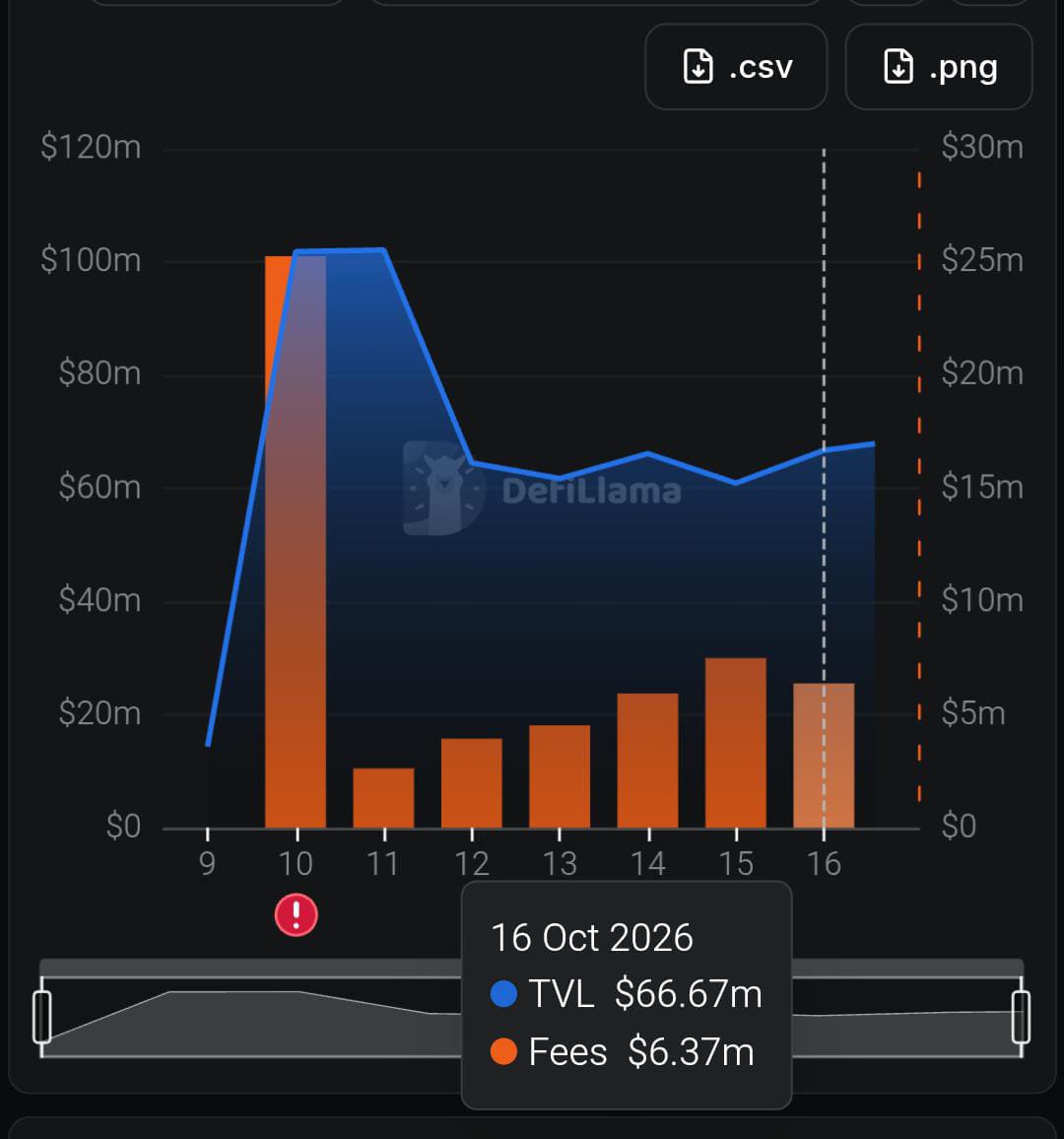
since launch, @papertrade_xyz has generated ~$56.1m in cumulative fees/rev. with ~$6.37m in the last 24hr.
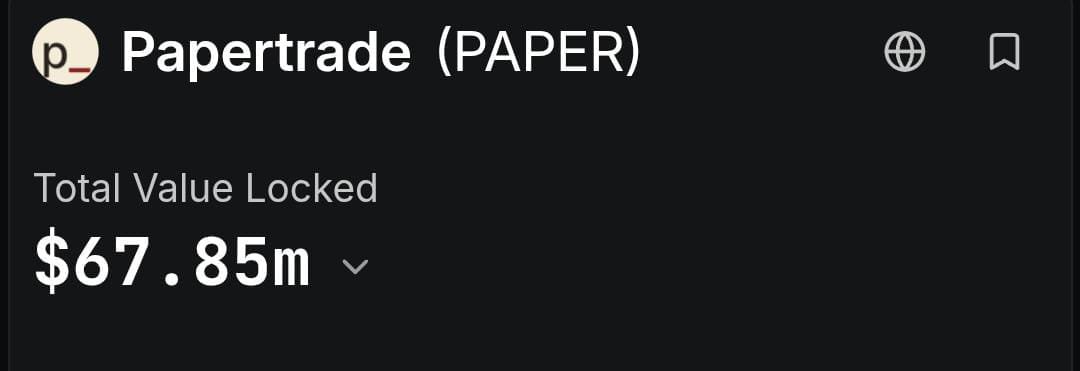
tvl sits around $67.8m after hitting an ath of $102m the day after launch; that's roughly a 33% drawdown.
even with the mint rate now at 13 $paper per $1 (down from 100), activity is still there; queue debt is currently $0.00.
on the 13th, one trader lost ~1.71M on a trade, received 136m paper, and earned ~1.07m in usdc staking rewards, net loss was ~637k, the rewards reduced some losses, but not all.
from the metrics shown since Inception - date, it proves one thing; ppl are always ready to try out new things.
placing bets on “what if it works out?
looking at the incentive design, both sides (winner and loser) can extract value.
the winners get paid from losers' funds.
losers lose, but get paper minted that can earn them usdc through staking even if the rewards covering the cost isn't guaranteed.
both still extract something, along the line, I feel this protocol might actually scale, if the team executes well.
100% supply to users
stakers receive 99% of rev. in usdc.
sit and reason....
capitalism > socialism
all these innovations are always possible by private companies in most cases.
those science fiction we see on sci-fi movies are beginning to turn to real products.
i've been learning TA for about 2 weeks now, thanks to a close friend whom i see as a brother.
we were roommates until he moved out.
bro really teaches to understanding fr, and he's always ready to answer my questions.
If he was on X, I would've tagged him, but bro doesn't want to be on here for now, which i understand.
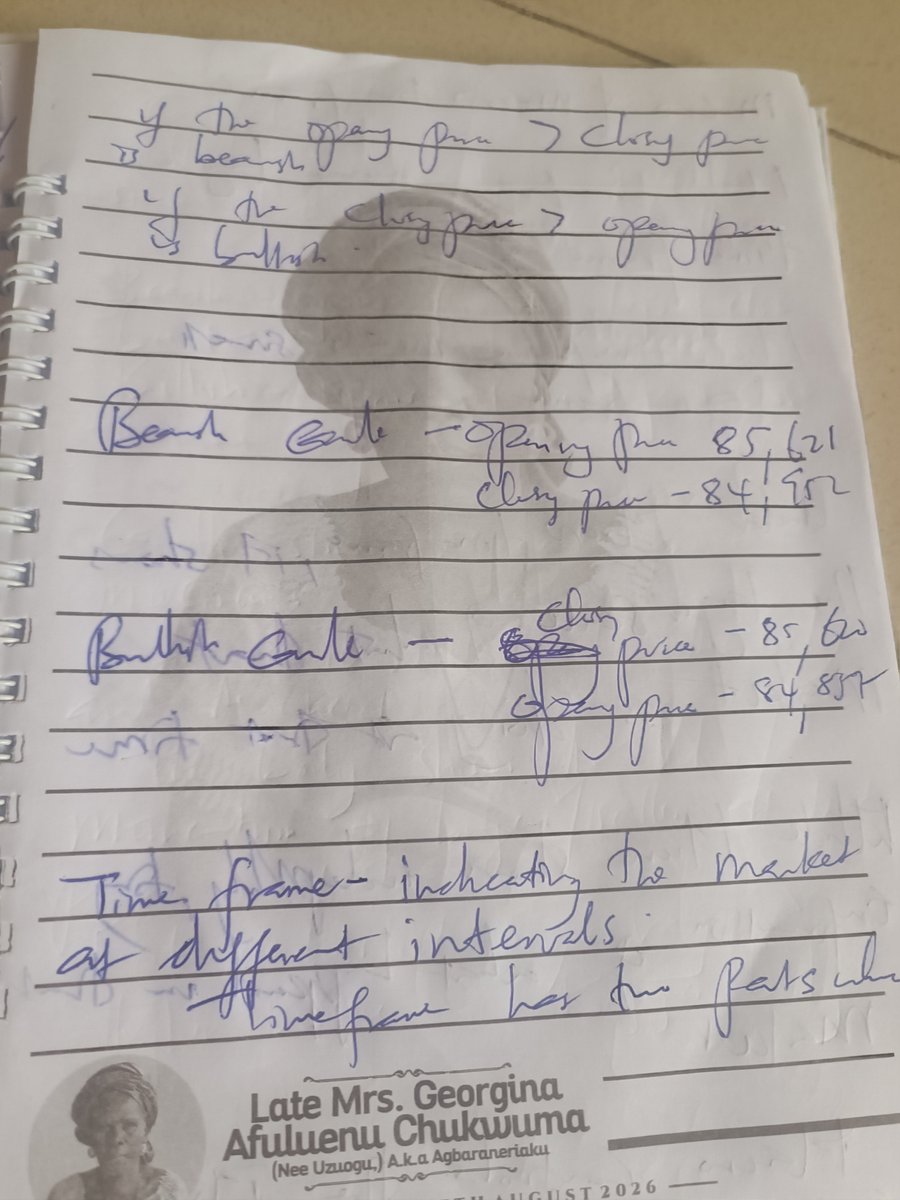
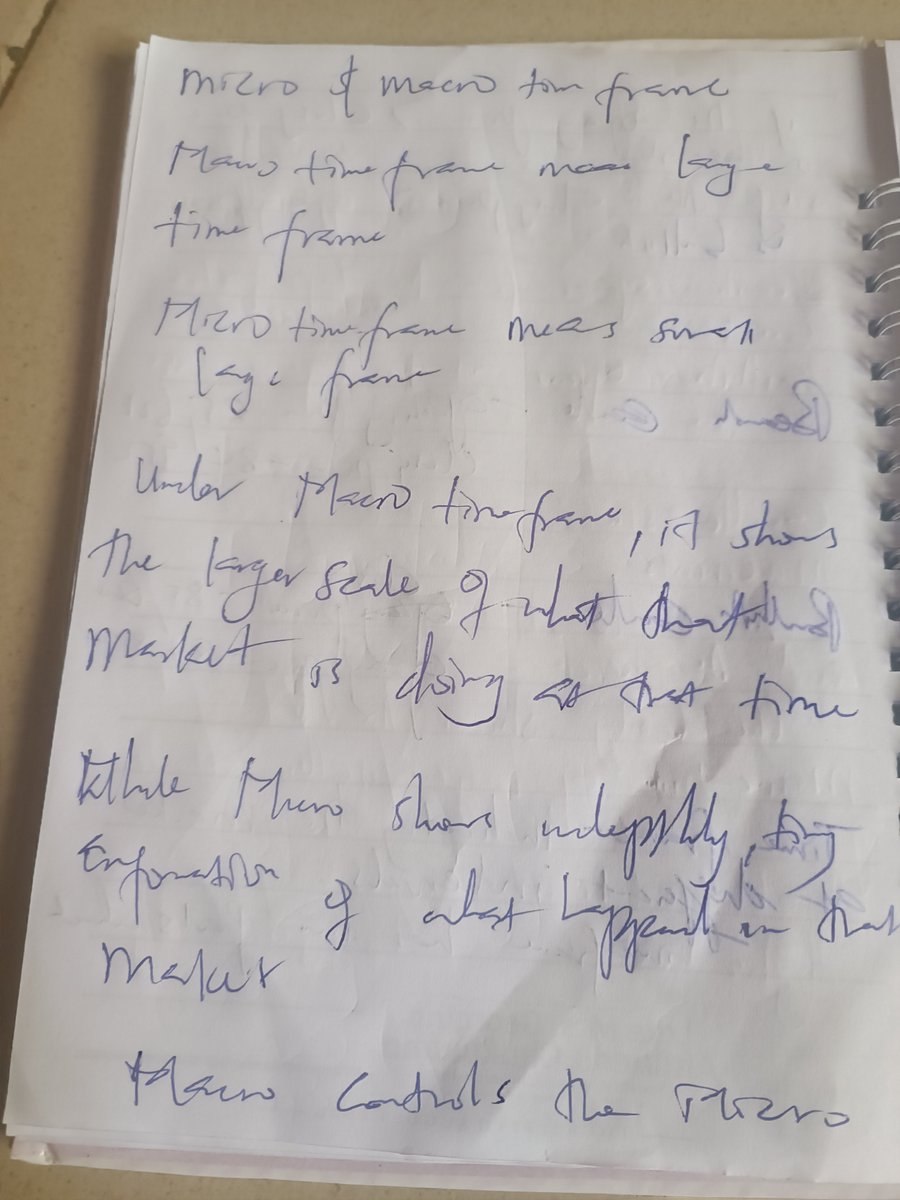
one thing he taught me was how to understand how candlestick are formed, how to determine when a candle closes bearish or bullish, different timeframes to narrow down a specific price movement.
i used btc's october 10, 2025 liquidation event as an example of what i learnt.
the process was basically:👇
→ started with the 12 months timeframe to identify the broader price range using trendlines and ohlc (open, high, low, close).
→ switched to the 1 month timeframe to narrow my focus to the relevant candle in 2025.
→ then moved to the 1 day timeframe to identify the exact day the move happened.
using the binance btc/usdt chart, I identified where btc reached around $126k on monday, october 6, before dropping to around $102k on Friday, October 10 (the day crypto realised the highest liquidation ever $19bn).
i recorded a full video explaining how i arrived at my analysis and sent it to him.
i also made a shorter video highlighting the two candlesticks showing the price movement.
my trendlines weren't perfect, but i understood what i was doing and why I was doing it.
made these videos around midnight and decided to post them this morning.
still learning; still improving.
time and practice makes one better 😮💨
correct me if i'm wrong,
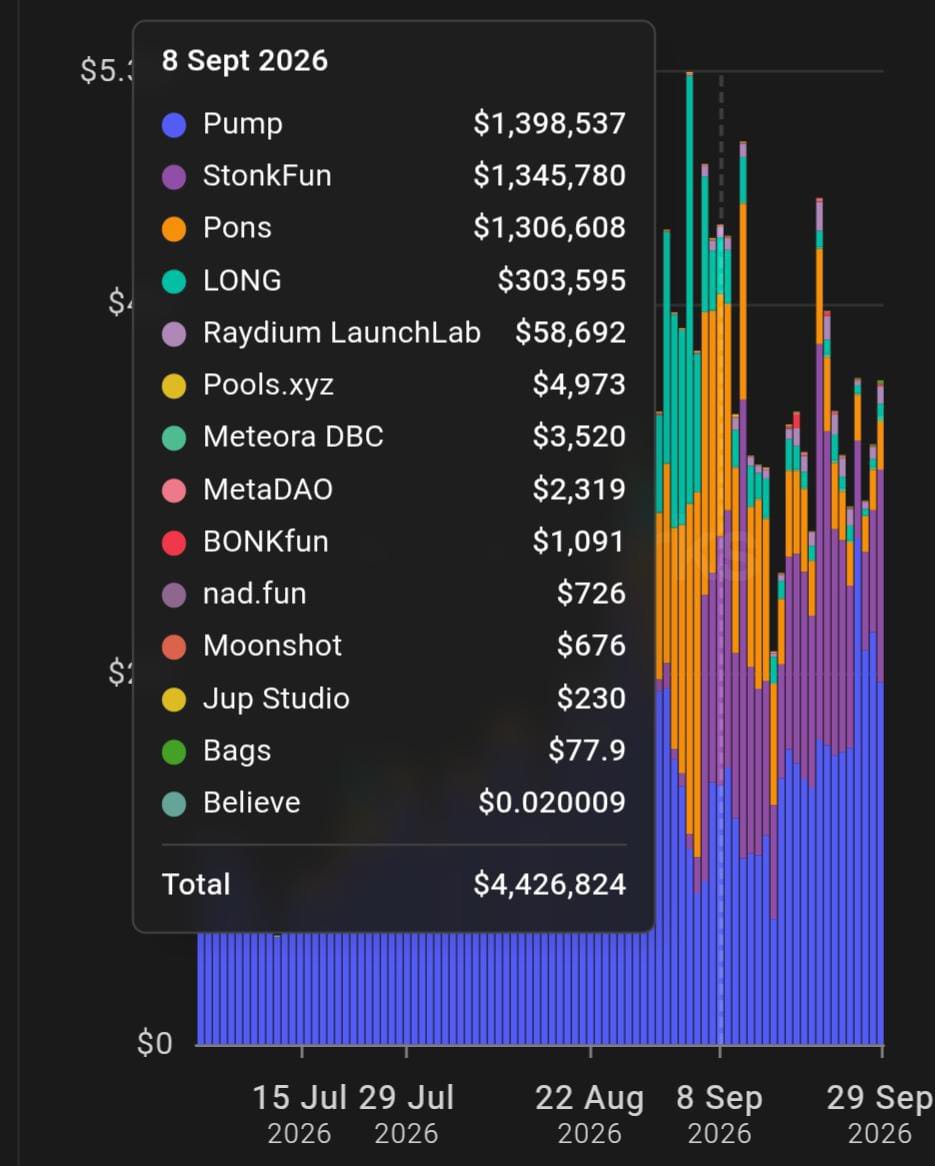
but I feel like the battle for launchpad rev. will always favor pumpfun.
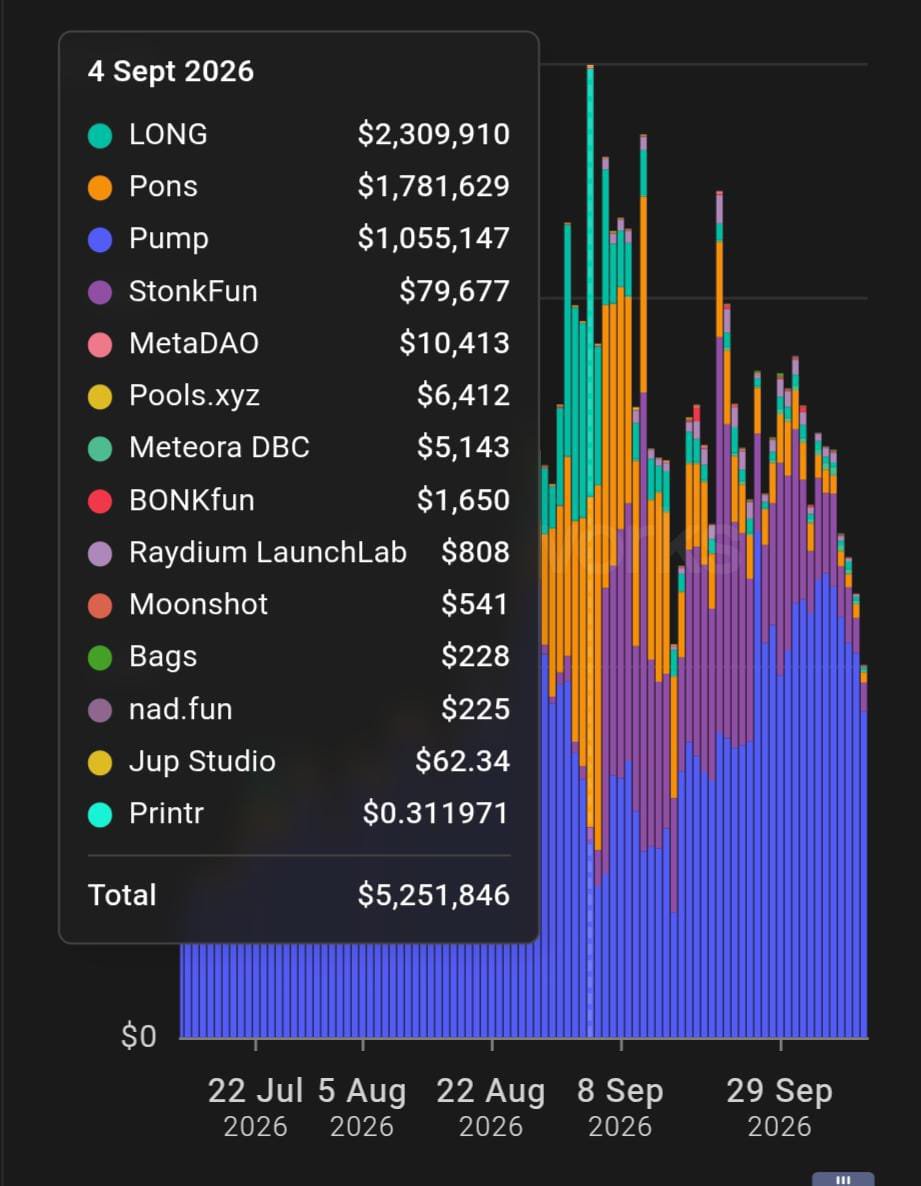
looking at these charts, there's an obvious inverse correlation between pons and pumpfun's rev.
when pons was outperforming pumpfun in early september (4-7), pumpfun's rev. was relatively weaker.
but from sept. 8 onward, pumpfun reclaimed the lead while pons' revenue declined.
that said, this inverse relationship appears weak and short, with pons only leading for a few days before pumpfun took back dominance.
i think pumpfun's advantage has always come from being the og on an already established chain (solana), with existing liquidity, distribution and user familiarity.
competitors can outperform it temporarily, but sustaining that lead would be too hard ngl.
(coming from a fella who doesn't like https://t.co/NBKOJAXggm 😂).
something clicked for me after watching $ZEC reprice so hard once the market finally paid attention to privacy in 2025–2026.
it wasn’t just a random pump.
it showed how fast a token can get revalued when the industry decides it actually needs what the project is building.
@Starknet feels like the latest version of that.
$STRK has been moving because they’re considering becoming their own L1 with a 2027 target for quantum resistance ahead of ethereum.
$NEAR is further along than most people realize.
they already shipped post quantum signing on mainnet.
It makes me wonder how hard tokens with real revenue, buybacks, and clear value distribution will run once the market starts taking their thesis seriously.
watching strk and near.
The more interesting thing I’m beginning to learn from experienced traders is betting on relevant narratives or sectors in crypto that also have expanding revenue and actual value accrual, then waiting for the market to pay attention.
you either get blessed for being right or get rekt for being wrong.
Wagmi ❤️
@papertrade_xyz is printing crazy volume rn.
most of it probably people racing to mint $paper while the rate is still high
(100 paper per $1 lost below ~2M lp threshold).
imo, two different actors are inside that volume.
• farmers (including structured ones) who are deliberately incuring losses to mint paper and then stake it for the usdc claim on the pnl pool.
• traders who actually want the product and are simply also collecting early mint bonus while it lasts.
these are the ones more likely to keep using the perps after the rate decays.
this current volume spike is mostly the first group + opportunistic members of the second group.
the real deal would be clear once the mint rate has dropped.
@papertrade_xyz goes live today at 3pm wat.
so i went through the docs to understand how the protocol works, how $paper is gotten, and where $pulp from paperdao fits in the picture.
the mechanics are cool, but what caught my attention was how they create different ways to get exposure to the ecosystem.
a breakdown 👇
first, Papertrade is an onchain synthetic perps exchange built on hyperevm.
the design advertises up to 1000x leverage, no funding costs, and no slippage or spread.
but the more interesting part is how it approaches liquidity.
the system is designed to start with zero lp and zero $paper supply, rather than relying on a pool of external lp capital from the beginning.
so where does the liquidity come from?
under the model stated in the docs, eligible realized trading losses and liquidations contribute to the LP, while profitable traders are paid from the available pool.
in simple terms, losses help build the pool that supports payouts to winners.
but this creates an important question;
what happens when the pool doesn't have enough money to pay profitable traders?
according to the docs, unpaid profits can be queued until sufficient funds become available.
that's an important trade-off to understand fr.
a profitable trade doesn't necessarily mean the trader can withdraw their profit immediately if the lp llacks enough funds.
so beyond leverage and trading volume, i'd be watching the lp's capacity to meet payout rules and how quickly queued profits get settled.
now, where does $paper come in?
the docs describe a model where eligible realized losses can mint.
below the stated $2m lp threshold, the base minting rate is 100 $paper per $1 of eligible loss, with the rate decreasing as the lp grows.
that makes early participation potentially more rewarding in token terms ngl.
but there's a difference between earning more tokens and making a profit.
you're still incurring a trading loss to acquire a token whose future market value and liquidity aren't guaranteed.
this is where i started questioning the incentives.
why would i deliberately lose money on leveraged trades to earn $paper when the token is initially non transferable?
the docs describe staking as a way to earn eligible usdc rewards, but the actual economics matter.
how much revenue or profit is available for distribution?
what determines the rewards? and can those rewards justify the cost of acquiring the token?
those are the questions i'd want answered before treating this as an attractive strategy.
this brings me to $pulp and PaperDAO.
rather than deliberately taking trading losses to earn $paper, i looked at whether buying $pulp could offer another form to exposure.
paperdao describes a treasury based model, with $pulp representing a pro-rata interest in the dao's treasury under its published design.
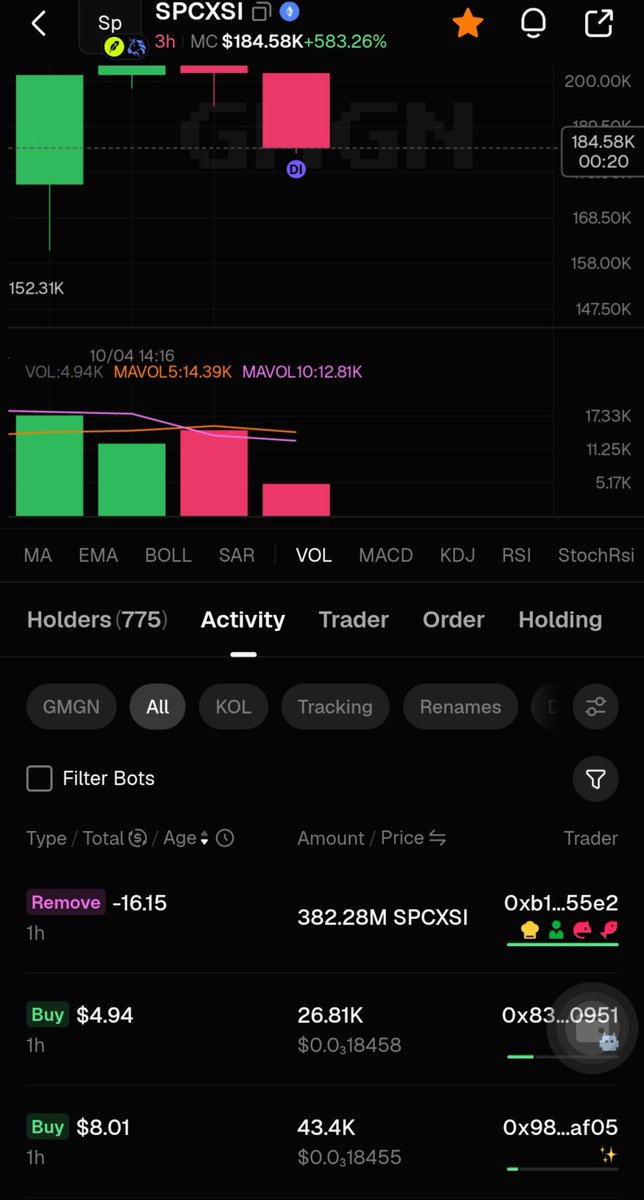
i bought a small amount of $pulp on gmgn last night to explore that thesis.
but treasury exposure isn't the same as a guaranteed claim to a specific amount of $paper, and the exact rights, redemption mechanics and assets backing that exposure matter.
here's the potential demand loop i'm thinking about.
some users may want exposure to the papertrade ecosystem but have no interest in deliberately losing money on leveraged trades to earn $paper.
(like me 🥲).
if they see $pulp as a more better route, they could buy it instead.
that could create demand for $pulp alongside the activity generated by papertrade.
but this is a hypothesis, not an established fact.
it depends on actual demand, the treasury's performance, token liquidity, and how value reaches $pulp holders.
(currently at 2.53k holders)
my takeaway is that papertrade and paperdao need to be evaluated at two level.
papertrade: can the exchange attract sustainable trading activity, manage its liquidity, and meet payout obligations?
paperdao: does the treasury accumulate valuable assets, and do $pulp holders have clear, enforceable ways to benefit from them?
what's actually going on with crypto security fr?
it's getting harder to ignore how much can go wrong when it comes to protecting your port/assets fr.
defi protocols gets exploited, wallets gets drained and now reports of over $86m in crypto being drained from wallets linked to ledger devices bought through an approved reseller?
$86m?
that's crazy amount of money ngl.
and the fact that this involves devices bought through an approved reseller is what i still find concerning.
self custody has always been about taking control of your assets, which in other words, means taking responsibility for securing them.
and clearly, that responsibility isn't straightforward any longer.
it made me think if keeping our crypto on a cex is actually a better option fr.
at least with cex, there may be a recovery or compensation, if a hack or anything goes wrong.
so is "not your keys, not your coins" still a thing?
cuz it's becoming "your keys, and get rekt" kind of thing.
@0xNairolf is very good at simplifying technical terms fr.
whenever you come across some technical crypto concept you don't understand, check his page, you'd probably find one of the simplest explanations there ngl.
now back to @papertrade_xyz.
this industry is really filled with creative people.
people keep coming up with different mechanisms to push developments in this space and papertrade is another interesting experiment.
a perps exchange without funding makes sense to me thanks to the quoted thread, but the "no slippage" part is something i'm still trying to fully understand.
if the protocol itself takes the other side of the trade and one is trading against a synthetic price, i can see why traditional order book slippage would not apply.
but then i start thinking about the sustainability of the model (papertrade)
• what happens when usage is low?
• what happens when aggregate trader profits are greater than trader losses?
if winners are waiting for future losses before they can be fully paid, how long are traders actually willing to wait?
and then there's $paper.
if it starts at 0 supply and is minted as traders lose, does that mean supply is effectively uncapped?
how does that affect the the tokens value?
and how does the token actually become liquid/tradable if supply is continuously being emitted at every loss of a trader?
still trying to wrap my head around that part.
teach me sensei 🥺.
it'd be nice to position on coins tied to tokenization.
could hit hard ngl.
i'm optimistic on @plumenetwork
tokenization is becoming a major sector in crypto, and it's best to look at projects at the forefront of it.
but beyond identifying ecosystems positioned to benefit from, it's much better if this value they create accrues back to the token.
as the ecosystem grows, usage compounds and the token is designed to capture a meaningful share of that value.
hodlers would definitely smile.
having your thesis actually play out is one of the best feelings ngl.
that's why i respect people whose thesis eventually play out the way they predicted ngl.
it doesn't matter if it takes days, weeks, months, or years.
there's something different about watching reality eventually validate something you spent time researching and formed a conviction around.
and in most cases, there's some skin in the game.
when you put out a thesis on a token you hodl, you're not just talking about it.
you're exposing yourself to being wrong while potentially benefiting if the thesis plays out.
let's think about the people who understood btc potential years ago, held through all the uncertainty and eventually saw that thesis play out.
the same applicable to altcoins, but obviously the risk of being wrong is much higher.
(so many coins competing for limited liquidity).
during the @traceforms mint, the fp was already profitable, but i told a fren it had more room to run after looking into a few things.
it did
(caught it btw).
i was happy seeing that the few things I checked before making a decision to hold a little longer played out well.
if only it could be that easy on altcoins we tend to hodl.
because these days, we have so many good protocols with bad token designs.
the protocol can succeed, usage can grow , fees and rev can increase and yet the token might or not capture any of that value.
and hodlers keep believing the token could end up being a good investment cuz the protocol is doing well.
hodling alts feels like war fr.
i'm a bit confused about how @jumperapp ico allocation works.
i initially thought the public sale allocation would mainly be based on how much usdc one is willing to commit to the sale.
so if I pledge $100 for example, i assumed the allocation would be determined around that amount, while things like xp, waitlist, rank etc would be used for distributing the community allocation/airdrop.
but from what I'm seeing, xp level and the top 500 waitlist participants actually give you a priority for an allocation in the public sale itself.
if that's the case, what then is the difference between the sale allocation mechanism and the community allocation?
someone who knows pls help clarify 🙏.
having frens with different skillsets is one underrated thing tbh.
i remember when i joined crypto, a close fren also joined the same time, but decided to lean more towards fx.
i still remember how active he was at night, constantly learning technical analysis and studying charts.
at the time, i didn't really pay much attention to it.
fast forward to now, i've realised that one of the useful skills to have in pvp especially when you actively trade volatile assets is being able to understand what the chart tells you ngl.
not just looking at the charts and saying the price is going up.
but being able to identify market structure, trends, support and resistance, momentum, potential reversals and most importantly for me reasonable places to enter or exit.
it's not going to be easy, but it's a skill i want to develop.
most of the money i've made in crypto has actually come from PvP (buying and selling assets based on markets movement, narratives, liquidity and attention) rather than holding because of it's fundamentals (not a bad thing though).
and i've realised that I've fumbled potentially solid profits simply because I didn't understand the chart to make a reasonable exit decision.
I'd identify an opportunity correctly, get in, watch the position run and then have no real frame work for deciding when i should tp.
that's a skill gap tbh.
so I decided to go all in on developing the skills i need and that pushed me towards learning TA.
the funny part is that the person teaching me now was actually my roommate back in 100lv.
he moved out for another lodge, we still kept in touch.
now bro is teaching me what I really need to learn.
for the past two nights we've had 1hr 30mins sessions at night and the way he explains things make everything sink in fr.
learning from him while still doing my own due diligence.
I pray we all make at the end ngl.
the amount of ways hackers can actually extract liquidity in crypto is outrageous.
and fr, in most cases, it takes an insane amount of knowledge to pull these moves off.
look at the hacks we've seen across defi protocols, centralised exchanges, and now the recent Giwa RPC issue where scammers released a fake rpc and caused around $2M in losses.
(the scammer made $2M in this).
the giwa situation was also social engineering at its peak ngl.
the victims were definitely convinced it was legit because they wanted to front run others and buy probably shitcoins at lower prices.
the scammer basically exploited that urgency and fomo.
and honestly, so sorry to everyone who lost funds in the giwa rpc incident.
it hurts losing capital fr.
but there's a lesson here btw
it's not real until it's n official announcement from the team.
that's also the reason I still haven't made a decision on jumper ico.
there have been different mathematical speculations about the possible fdv and the valuation it could reach at public launch.
nice maths tbh most especially from @wyckoffweb.
but speculation is still speculation.
it's not real until there's an official announcement from the team.
the sentiment around arc is pretty poor fr after that live session.
and tbh, i don't think arc would really fit into the meme frenzy just like how rh did.
what i don't understand tho is how robinhood was able to capture the whole meme vibe in ct, while tether and circle; two institutions that have been serving the retail market for years couldn't really break into that side of ct the way rh did.
anyways, despite the current sentiment, i think one of the main things that could bring momentum back is having solid projects launch, gain attention and start hitting ct.
once there are few projects actually working, the attention, the users, liquidity loop can start again.
i played one meme during the launch and tbh, i thought it was one that could atleast hit $1M - $2M mcap.
aped at $100k and watched it run to $500k mcap.
my plan was to watch throughout the night and exit around $1M mc because the creator had already moved a coin into millions mcap on robinhood.
but the arc session that created the bearish sentiments made all coins on arc to nuke -70% etc.
even the meme frenzy on robinhood has cooled down now.
from @theunipcs thesis', which I've been paying close attention to, I'm starting to think the best chains to place bid on relating to memes are BnB/Rh/Solana.
also, finally decided to properly learn TA.
time to understand market structure and actually improve my entries and exits.