Exciting News! Launch of Stormwall Devotional Hi everyone! For the past three years, I’ve been working on a daily devotional with brief (less than one page) but profound readings designed to inspire, encourage and strengthen your faith in Christ. This labor of love, which will total 365 entries, is now ready for digital release. I’m confident that this will benefit your spiritual walk and practical life, and I trust you’ll want to incorporate it into your daily routine. You can receive a reading each morning in your e-mail by subscribing to the Stormwall Devotional Substack and in your X feed by following @stormwalldevo
Please help my efforts by taking two minutes right now and follow
@stormwalldevo and https://t.co/Ll33m7zPIP. Thank you in advance for signing up, and for helping to spread the news with anyone you think will appreciate and benefit from it.
Perfect Surrender
“I can do nothing on My own initiative. As I hear, I judge; and My judgment is just, because I do not seek My own will, but the will of Him who sent Me.”
—John 5:30
Jesus had complete confidence in what He said and did on earth because He was perfectly yielded to the will of the Father. We can operate from the same position of authority through the same process of surrender.
The objective of practicing listening to the Holy Spirit is twofold: to condition one’s spiritual ears to hear and one’s heart to yield and obey. The more we say yes to what we hear, the better we hear. The more we say no and resist what we hear, the harder of hearing we become.
Jesus promises: “all things for which you pray and ask, believe that you have received them, and they will be granted you” (Mk. 11:24). When we yield to the Spirit, our prayers become an extension of God’s heart. Because Jesus did not seek His own interests, He was entrusted with great authority. Without this, neither we nor Jesus can do anything of spiritual power.
Jesus makes this explicit when he says, “the Son can do nothing of Himself, unless it is something He sees the Father doing; for whatever the Father does, these things the Son also does in like manner” (Jn. 5:19). We are to practice the imitation of Christ. This means that we say what we hear Him say, we do what we see Him do, and we go where we see Him lead. As Jesus only did what He saw that Father doing, so we must fix our eyes on Him to see clearly enough to follow.
When Jesus teaches His disciples to pray, the first thing He instructs them to petition of the Father is “Your kingdom come. Your will be done, on earth as it is in heaven” (Mt. 6:10). Then, with that priority established, we can confidently demand “our daily bread,” i.e., that God would meet our practical needs, and even our heart’s deepest longings.
Prayers which drive hard one’s own will, ambitions, and agendas are not pleasing to the Lord. This is not to say these prayers will not be answered. God is kind and generous enough to hear and answer His children even when their prayers are muddled with selfish desires. And thank God He does, for who is ever completely free of Self?
Yet we are called to grow beyond childish and selfish prayers to those that align with the heart of God for our lives and others. Jesus completely surrendered to the will of the Father. He call us to follow in His footsteps. They lead to the Cross. Learn to yield in love, and pray with Jesus, “not my will, but Yours be done” (Lk. 22:42).
Read more and subscribe on Substack to receive Stormwall Devotional sent to your email every morning: https://t.co/KvmKOO9O5J
Where Wisdom Resides
It is better to go to a house of mourning
Than to go to a house of feasting,
Because that is the end of every man,
And the living takes it to heart.
—Ecclesiastes 7:2
We live in an age of Folly. In the allegorical language of the Dutch theologian Erasmus, Folly is the offspring of Wealth and Youth. Nursed by Inebriation and Ignorance, Folly is attended to by Self-Love, Flattery, Forgetfulness, Laziness, Pleasure, Intemperance, Slumber, and Wantonness.
In this generation, global industries have been built on a foundation of Folly, which denies the realities of life. Death, pain, and suffering are hidden away in secret, while sexual gratification and all kinds of fleshly pleasures are openly paraded and exulted as the highest end of man. Consider how the entertainment and advertising complex cooperatively work overtime to keep the audience from ever having to contemplate mortality or sorrow. Most modern funerals no longer even display the body of the beloved and departed, as if it’s too shameful or shocking for the living to realize that “thereto shall I go.”
Pleasure, in the many flavors and varieties it comes, is the principle offering of Folly. Amusement, which implies not thinking, undedicated, beguiled or deluded, is the means by which Folly operates through entertainment’s products and services.
Folly is well designed. It acts to prevent the soul from contemplating the realities of death, of sin, of an eternity composed of heaven and hell, and of a God who sees and judges with righteous judgment. Intoxication and pleasure seeking don’t lead to hatred of God, only the forgetting of Him. Yet, “The mind of the wise is in the house of mourning, while the mind of fools is in the house of pleasure” (Ecc. 7:4).
The point isn’t that we should spend our lives in a state of depression and gloom, or that joy and laughter are wrong. Look at Jesus. The gospels reveal Him as one of the most joyful men on earth, full of mirth, occasionally playful and even teasing, yet he “was a man of sorrows and acquainted with grief”(Is. 53:3). He did not shirk from suffering or from death.
Folly is a distraction from the realities of life. As believers, we must be the first to mourn with those who mourn, and weep with those who weep (Rom. 12:15). Because our hope is in Christ and in the sure reality of eternal life, we are able to boldly face even the most difficult of situations on earth.
Through Christ, we alone have the words of eternal life (Jn. 6:68). Those who suffer and mourn are on the path to wisdom and life, and need to hear what the gospel of Christ offers. Do not hesitate to enter into their sorrow with them. You will find that Jesus is there with you both.
Read more and subscribe on Substack to receive Stormwall Devotional sent to your email every morning: https://t.co/nOwXBfSKVH
Ambassadors of Christ
Therefore, we are ambassadors for Christ, as though God were making an appeal through us; we beg you on behalf of Christ, be reconciled to God.
—II Corinthians 5:20
No matter what our occupation or station in life, we are each called and uniquely qualified to be ambassadors. This high vocation comes to us from Christ himself. An ambassador is an official envoy, such as a top diplomat, certified to a foreign power as the representative of his own government or sovereign. In other words, an authorized representative or messenger. We represent not the mere princes of the earth but the King of Kings and Lord of the universe Himself.
What is the message that we are asked to carry? Reconciliation. Paul writes “Now all these things are from God, who reconciled us to Himself through Christ and gave us the ministry of reconciliation, namely, that God was in Christ reconciling the world to Himself, not counting their trespasses against them, and He has committed to us the word of reconciliation” (II Cor. 5:18-19).
God has entrusted us to represent Him to bring the good news of salvation to a world alienated from God and lost to themselves. The message is that no one has to remain an orphan, but can be brough home into the family, and that there is forgiveness for sin and new life in Christ. God’s heart longs for His creation to be restored to Himself. He is calling out to the lost through us as His anointed messengers.
One does not have to be a professional minister to be an ambassador of this message of reconciliation. Paul was speaking to the church, broadly comprised of individuals carrying out their private lives as civil servants, farm workers, business owners, soldiers, students, and housewives. There is no qualification or credential for the role, other than being a child of God bought by the Blood of the Lamb, and being yielded enough to the Holy Spirit that He can speak through us.
Each and every one of us has the opportunity to carry the message of salvation and life to the dead and dying. There is no higher calling.
Read more and subscribe on Substack to receive Stormwall Devotional sent to your email every morning: https://t.co/lZnxBBaPTM
Job’s Fortunes
The Lord restored the fortunes of Job when he prayed for his friends, and the Lord increased all that Job had twofold.
—Job 42:10
Job had lost everything. His children, his health, his wealth, and his productive means of rebuilding it. Remarkably, “despite all this, Job did not sin, nor did he blame God” (Job 1:22). Job remains faithful to the Lord even though he is confused and despairs of his situation. The Lord credits Job with righteousness and as one who speaks truthfully about the nature of God. Job’s friends, on the other hand, sinned against the Lord by speaking falsehoods about Him and by giving Job bad advice.
God wants to bless, heal, and reestablish Job, but first wants to ensure that Job’s heart is free from all bitterness, resentment, and any other evil that would sully the blessing or render the gift unfruitful. To this end Job must first forgive those who wronged him. God intends to replenish Job’s fortunes and more, but first insists that Job pray to restore and forgive his friends, and that they make a sin offering to the Lord for what they have said and done.
The mechanism by which God begins the restoration process is instructive. God uses Job’s friends, family, and neighbors to bless him, not just spiritually, but materially. His siblings and “all who had known him before” his distress go to Job, fellowship with him, and “they consoled him and comforted him for all the adversities that the Lord had brought on him.” But their support does not end there. His community very pragmatically ensures that Job has the practical tools that he needs to rebuild his life and his wealth. To this end, “each one gave him one piece of money, and each a ring of gold” (Job. 42:11).
How humbling this must have felt for Job, the formerly noble, wealthy, generous and kind patriarch, supporter of the orphan and defender of the widow, to in this moment submit himself to receive the goodwill of others. A proud man would never have allowed it. Better to be remain poor and struggle rather than lower oneself to accept charity like a mendicant. But Job has learned much in his suffering. He no longer has any illusions of his own greatness. He appreciates a reality that the haughty soul fails to acknowledge: “Naked I came from my mother’s womb, and naked I shall return there. The Lord gave and the Lord has taken away. Blessed be the name of the Lord” (Job 1:21).
Never let your pride stand in the way of what God wants to do to bless you. If He asks you to take the low road, the road of humility, set out upon it with joy and gladness. You will find Jesus walking with you there. Accept the gifts He puts in your hands and worry not about the means He uses to give them.
Read more and subscribe on Substack to receive Stormwall Devotional sent to your email every morning: https://t.co/ndFlc1fwgr
Sin Crouches at the Door
Then the Lord said to Cain, “Why are you angry? And why has your countenance fallen? “If you do well, will not your countenance be lifted up? And if you do not do well, sin is crouching at the door; and its desire is for you, but you must master it.”
—Genesis 4:6-7
Cain and Abel, the first descendants of Adam and Eve, represent the first generation to live in the wake of their parents’ sin and rebellion. They soon suffer the consequences.
Cain was a “tiller of the soil” and Abel a “keeper of flocks.” They each eventually come before the Lord to make an offering of their increase. Cain brings a grain offering while Abel brings “the firstlings of his flock and their fat portions.” But it is only through the shedding of blood that there is remission of sin (Heb. 9:22). So “the Lord had regard for Abel and for his offering; but for Cain and for his offering He had no regard” (Gen. 4:4).
This slight enrages Cain. Surely he deserves better. How dare God reject his gift and give more honor to his upstart little brother. He becomes angry and downcast, and through his resentment and envy, he opens the door to sin. The Lord tries to warn Cain that he is on the road to perdition, but that it is not too late … if he repents. God gives Cain a warning and a chance to redeem himself. He promises Cain that he can not only recover from his error but master the situation and the voice of evil which seeks to control him. “Submit therefore to God. Resist the devil and he will flee from you” (James 4:7).
Unfortunately for both brothers, Cain chooses not to heed God’s voice but rather to entertain the whisperings of Sin, until it eventually enters and devours him and his brother, Creation’s first victim of fratricide. Sin thereby more fully enters the world, and enmity within the brotherhood of man only multiplies from there.
The image of “Sin crouching at the door” is an apt portrait. Sin does not have power to enter the house without permission of the owner. Even Jesus “stands at the door and knocks;” He does not barge in uninvited (Rev. 3:20). Jesus stands, but Sin crouches. It crouches to hide from the peephole of the door of the soul, which would reveal it for what it really is. Instead, Sin hides and whispers and mutters and coaxes one into agreement with a lie.
God does not promise to keep us from temptation. But He does promise to give us power to resist it. This power comes both through supernatural means, i.e., by the enabling of the Holy Spirit, and through practical application of the spiritual disciplines, including the power of saying “No!”, a spiritual force which grows in strength each time it is employed. Paul reminds us that “No temptation has overtaken you but such as is common to man; and God is faithful, who will not allow you to be tempted beyond what you are able, but with the temptation will provide the way of escape also, so that you will be able to endure it” (I Cor. 10:13).
Read more and subscribe on Substack to receive Stormwall Devotional sent to your email every morning: https://t.co/7WVAX2Lex0
He Shall Crush the Serpent’s Head
“And I will put enmity
Between you and the woman,
And between your seed and her seed;
He shall bruise you on the head,
And you shall bruise him on the heel.”
—Genesis 3:15
As early as the retelling of the Fall of Man do we see the promise of God’s redemptive plan. The third chapter of Genesis already hints at the Incarnation—of God becoming Man—, of the final triumph of God’s kingdom, and of the “Lamb slain from the foundation of the world” (Rev. 13:8).
The biting on the heel and the crushing of the head refer to the forever enmity now arisen between the children of God and the children of darkness (cf. Matthew 23:33; 1 John 3:10). Not long after their rebellion, Adam and Eve’s first born son, Cain, would in envy and murderous rage slay his own younger and more righteous brother Abel. Thereafter would the descendants of Cain align with darkness and forever seek to destroy God’s chosen people.
Yet this verse also speaks of the Passion of Christ and the great victory of Calvary. God both curses the Serpent who deceived Eve and foreshadows the redemption of the race of Man. While Satan would bite Jesus on the heel, inciting men to persecute, torture, and kill Him, Christ Jesus’s death would not be the end of the story. While His death was as factually real as that of every living thing, for the Messiah it would only be temporary. Death could not keep Him, “since it was impossible for Him to be held in its power” (Acts. 2:24). He would rise again in the power of the Spirit, and crush the enemy once and for all. His name is Immanuel, “God with us” (Mt. 1:23). He has won for us our freedom and given us new and eternal life.
In that triumph of the Cross, Jesus rendered powerless Death, Hades, and Satan himself. All things were then made subject to Him, and there is nothing that is not under His power. This is true even though “now we do not yet see all things subjected to him” (Heb. 2:8). In this since we speak of the Kingdom as being both “now and not yet.” He has obtained the victory, and we walk with Him in His triumphal train to make that victory manifest in all things, now and forever. Amen.
Read more and subscribe on Substack to receive Stormwall Devotional sent to your email every morning: https://t.co/IONMp0ZfQ7
Be Quick to Repent
He who conceals his transgressions will not prosper,
But he who confesses and forsakes them will find compassion.
—Prov. 28:13
One of the most important lessons one must promptly learn as a follower of Jesus Christ is this: be quick to repent.
While human nature seeks to cover up and hide our sins away, Jesus insists that we bring them into the light of His presence. He requires this not to punish us but to cleanse us from all iniquity and thereby to heal us of sin’s effects. Unrepentant sin is like a spiritual tumor, slowly growing and spreading disease in our souls and, eventually, in our bodies. No matter whether we have sinned in “thought, word, or deed, by what we have done or by what we have left undone,” and no matter whether we’ve sinned against our fellow humans or against God alone (Ps. 51:4), it is imperative to bring our sin before the Lord immediately.
Hiding sin takes us out of God’s favor. While He still loves us as His children, He cannot pour out His grace on one who is stubborn and unrepentant. Confession, repentance, and tears of sorrow over sin allow the river of the blessings of God to flow freely in our lives, while unrenounced sin dams it up. “When I kept silent about my sin, my body wasted away through my groaning all day long” (Ps. 32:3).
The wages of sin is death (Rom. 6:23). This is an immutable spiritual law. The consequence of sin is inevitably to bring about judgment and punishment for wrongdoing. There would be no justice in the universe were this not so. It is only through the precious blood of Jesus, shed on Calvary, that can otherwise pay the debt that is due. If we reject this free gift of God, then we must pay the obligation in full ourselves. This is a terrifying prospect. But it is entirely avoidable thanks to the One who has provided a way into reconciliation and right relationship with God.
Go to the Lord the moment you feel the conviction of the Holy Spirit, no matter how small a matter it may appear to you to be. Confess your sin, renounce the underlying idols that led you there, and ask Jesus to forgive you and to “wash you with water by the word” daily (Eph. 5:26). Stay in the light. It is your place of safety.
Read more and subscribe on Substack to receive Stormwall Devotional sent to your email every morning: https://t.co/oaB3lPH1QB
No Hiding from God
They heard the sound of the Lord God walking in the garden in the cool of the day, and the man and his wife hid themselves from the presence of the LORD God among the trees of the garden.
—Gen 3:8
It is the nature of sin to produce shame. The one who sins knows he is wrong, that something is out of order, broken beyond repair. Shame created by sin is something ugly. We try desperately to cover it. We hide it from ourselves, we hide it from others, and we try to hide it from God.
We hide it from ourselves through intoxication, workaholism, constant distraction and entertainment, and by striving and effort. All this attempting to forget and to cover, and to mute the voice of the Accuser, who stands ever ready to remind us of our guilt. We hide it from others by putting on masks and disguises, never revealing our true selves lest we be exposed as a fraud, and by isolating and by cutting of those we love and those we’ve hurt. We try to hide from God by covering our shame with fig leaves, by ignoring Him, pretending He isn’t there and can’t see, and by looking away rather than meeting His gaze. This is no more effective that the two-year old who closes her eyes, covers her face, and turns around in the hope that her parent can’t see her.
We can never hide from God. Like the two-year old, all we can do is pretend He is not there.
In the Garden, God already knew what Adam and Eve had done long before they confessed and started pointing the finger at one another. He calls out “Adam, where are you?” not as a condemning judge but as a loving father, heartbroken for the loss of His children to a world of sin. Adam can only reply to God that he “was afraid, because I was naked; so I hid myself” (Gen. 3:10). Their attempts to sow fig leaves to cover their nakedness was a vain attempt to deal with the sin that only blood sacrifice could ever wash away.
Develop the habit of taking your sin and your shame directly to the Lord. Do it as often as you feel the need. Place these things at the foot of Calvary, where Jesus “endured the cross, despising the shame,” (Heb. 12:2) so that, through the shedding of His blood, He could cleanse you of all sin and reconcile you to Himself. He knew all about you and your failings and yet still loved you enough to die. Give Him what you have been hiding. He is waiting for you to come to Him. Don’t delay another minute.
Read more and subscribe on Substack to receive Stormwall Devotional sent to your email every morning: https://t.co/6laf5hPZYK
Healing of Memories
I remember the days of old; I meditate on all Your doings; I muse on the work of Your hands.
—Ps. 143:5
As a younger man, I was critical of the elderly who seemed to do nothing more than sit around with each other and talk about the past. In the arrogance of youth, I swore to myself that I would not do this. Rather than recount old memories and live in the past, I would continue to make new memories, and to live in the present with an eye towards the future.
How foolish I was. I did not understand that memories—even though existing only in the mind—are not insubstantial, but rather heavily weighted. They carry with them the burdens of regret, of loss, of missed opportunities, of loves having left never to return. Memories contain days of sunshine and confident laughter as well as nights full of tears and confused darkness. Whether time adds to the weight of memories, or we simply grow weary of carrying them, I don’t know, but either way they must eventually be unloaded if we are to move forward in freedom.
Jesus invites us to see Him as the “friend who sticks closer than a brother” (Prov. 18:24). He offers not only to listen, but to lift the burden of our past off of our shoulders, and to heal the wounds that they have left behind. Go to Jesus and tell Him your story. Recall your memories before Him as a holy act. Yes, He knows all about it already, but He wants to hear from you. He wants you to open your heart before Him and allow Him to touch and heal in that place most wounded and guarded. Ask Him to show you His perspective of your past and see it in a new light. And ask Him to heal your memories. There is cleansing and lightness here.
As we grow in Christ, our experiences in faith create new memories that—rather than burdening us—become sources of strength as we recount God’s faithfulness in our lives. Each supernatural blessing, intervention, miracle, deliverance, word in the moment, becomes fuel for our hearts to have faith and confidence in God for our future. Your new memories and experiences in Christ become your hidden manna, nourishing and strengthening you each day. And your testimony, which is the shared recital of your memories and experience, becomes a powerful tool to strengthen the faith of others around you.
Trust the One who says “Behold, I am making all things new” (Rev. 21:5) to do so in your life, and even in your past.
Read more and subscribe on Substack to receive Stormwall Devotional sent to your email every morning: https://t.co/sgV16cm4e5
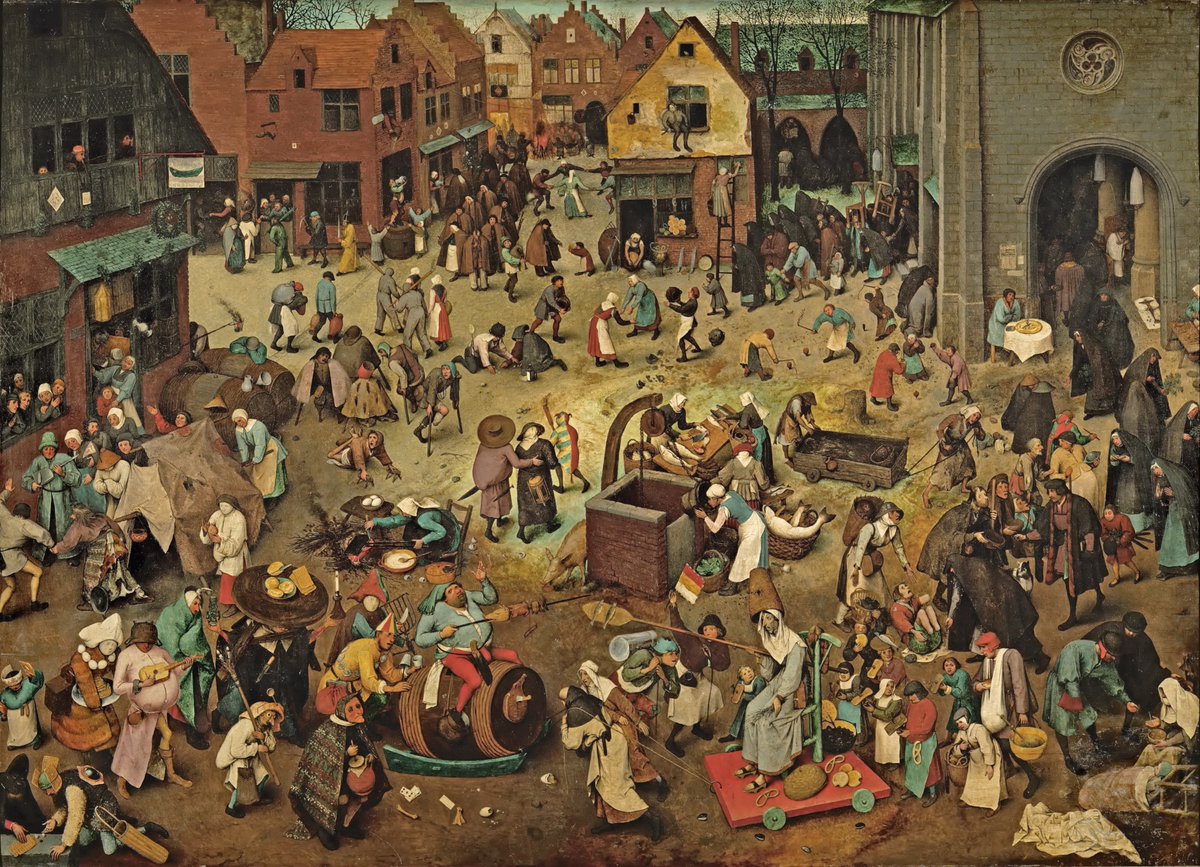
Sheep and Goat Nations
“All the nations will be gathered before Him; and He will separate them from one another, as the shepherd separates the sheep from the goats…”
—Mt. 25:32
The parable of the sheep and the goats is commonly used to describe how individuals will be assessed at the Last Judgment. The standard of judgment Jesus says He will apply is how one treated “the least of these,” i.e., the poor, the weak, the hungry, the oppressed, the imprisoned etc. as representatives on earth of Jesus Himself. Those who considered and cared for these least ones will be rewarded, those who harmed, ignored, or withheld good from them will be judged. As one treated them, so Jesus will consider it as done unto Him, whether for good or evil. Jesus warns that eternal woe and suffering awaits those who mistreat these powerless ones.
But Jesus is also describing a judgment on the nations of world. It is the “nations” that appear before the Son of Man “on His glorious throne.” The word translated as nations in this verse is ethnē, signifying a race, a tribe, a foreign nation, or people. As with individuals, nations have callings and roles to play in God’s design. They can serve Him, or they can disobey and act wickedly against Him. The nations will be judged according to God’s righteous law and called to account for what they have done.
Specifically, God will judge the nations as “sheep or goat” based on how they treat the nation of Israel, and on how they treat both the Jewish people and the believing Christians within their own borders. God warns Babylon, which throughout the Bible represents the spiritual enemy of Zion, ‘For thus says the LORD of hosts, “After glory He has sent me against the nations which plunder you [i.e., Israel], for he who touches you, touches the apple of His eye” (Zech. 2:8). As for treatment of individuals within their borders, God warns the nations, “Do not touch My anointed ones, and do My prophets no harm” (Ps. 105:15).
The Bible tells us that the nations will ignore these warnings. “It will come about in that day that I will make Jerusalem a heavy stone for all the peoples; all who lift it will be severely injured. And all the nations of the earth will be gathered against it” (Zech. 12:3). The goat nations will align themselves and make war against Israel. But those which do will be severely punished, just as the ancient Babylonian Empire was destroyed forever in God’s righteous judgment for its harsh treatment of Israel.
Pray for the peace of Jerusalem.
Read more and subscribe on Substack to receive Stormwall Devotional sent to your email every morning: https://t.co/tQysWjVAN0
Adopted Into Family
When Jesus then saw His mother, and the disciple whom He loved standing nearby, He said to His mother, “Woman, behold, your son!” Then He said to the disciple, “Behold, your mother!” From that hour the disciple took her into his own household.
—John 19:26-27
Jesus hangs on a Roman cross. His body—beaten, bloodied, and bruised—is exposed to the world as a ruthless criminal. Hard nearby stand his disciples—defeated, deflated, and despairing—helpless before the cruel power of the State. With them were His mother and other women close to Jesus and his ministry.
With failing breath and searing lungs, Jesus instructs those He loves dearest to accept and care for each other as family. Mary lost a son, but the Son of God gives her a new one, “the disciple whom Jesus loved.” John in turn finds a mother, one capable of soothing his traumatized soul and wounded heart.
The nature of the Body is revealed in this poignant exchange. We are called to adopt and care for one another, to take into our families, whether literally or metaphorically, those whom God brings into our lives. Just as Jesus knew that His mother would need John, and John His mother, so does He know that we need one another.
Outside of the love of Christ, the entire earth is an orphanage. The beaten and broken of this world wander from place to place, looking for love and care, for recognition and acceptance, for safety and protection. Wounded and traumatized as we all are, we build defensive walls to protect us from further pain, suffering, and betrayal. When we come into the Body, we often bring these protective instincts with us. We’d prefer to remain in lonely isolation, rather than exposing ourselves to love and with it the risk of being hurt (again). Fear keeps us from the vulnerability often needed to receive healing.
Jesus directs His mother and John to share their lives and help heal each other. So it should be in the Body of Christ. We are called to live in the family of Christian community, not in isolation. This runs completely opposite to the atomistic spirit of this age. Jesus is clear in instructing His disciples that they are to serve and care for one another. “This is My commandment, that you love one another, just as I have loved you.” (Jn. 15:12). He had modeled it to them, now they were to live it.
Surround yourself with those who give life (Ps. 16:3), and boldly take the risk to be loved.
Read more and subscribe on Substack to receive Stormwall Devotional sent to your email every morning: https://t.co/1jMnVA3vE3
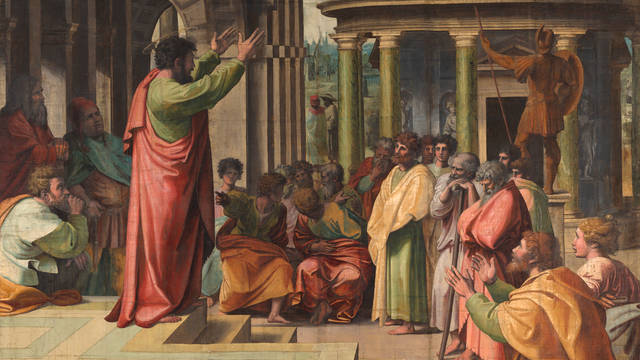
Through Trials and Tribulations
[Barnabas and Paul were] strengthening the souls of the disciples, encouraging them to continue in the faith, and saying, “Through many tribulations we must enter the kingdom of God.”
—Acts 14:22
Nothing is more thrilling than hearing the voice of God call us to step out in faith and follow Him in obedience on a new adventure. Often this takes a specific action on our part, like moving towns or changing jobs, giving up the security of income or the comfort of community, ending or starting a relationship, or otherwise stepping out of our comfort zone and boldly taking new risks in faith.
Thus, one of the most confusing things in life can be the times when God leads us to do something, we respond and obey, and then everything appears to go wrong. “But God, you told me to do this thing! Why is it so hard? Why is it not working out? Why is it failing?”
The problem often lies in our expectations. We imagine that if God has called us, He will clear the path before us, smoothing the way to our goal. Indeed, these new ventures in God often do start with a miracle or other supernatural sign that encourages us that God is in fact leading us. Then suddenly, once it is too late to turn back, a formidable obstacle appears that we did not count on.
God miraculously parted the Red Sea for the Israelites, but He did not remove the Canaanites from the Promised Land. Rather, He prepared Israel to conquer it themselves, by teaching them warfare in the wilderness and by having to rely on the Lord for their daily provisions when no other source existed. The path was not straight nor the journey quick. This was in part because the children of Israel refused to learn the lessons, but also because the process cannot be rushed.
As any athlete knows, muscular hypertrophy occurs only when resistance is applied in a consistent manner over a considerable length of time. It is the weight and strain that causes the growth and increased strength. So it is in the Christian life. We develop our spiritual “muscles” through trials, difficulties, setbacks, and resistance. Look at these things not as adversaries but as your spiritual training partners. Embrace your challenges with gratitude for what they are producing in your soul. God has not failed you. His word is true. Through trials He is preparing and equipping you for greater things to come.
Read more and subscribe on Substack to receive Stormwall Devotional sent to your email every morning: https://t.co/33TK1nJiAl
Shipwrecked not Sunk
"Do not be afraid, Paul; you must stand before Caesar; and behold, God has granted you all those who are sailing with you.’ “Therefore, keep up your courage, men, for I believe God that it will turn out exactly as I have been told.”
—Acts 27:24-25
God called Paul to be a witness to the gospel in Rome, the capital of the Roman Empire, and specifically to address the emperor, who blasphemously took upon himself the title “son of god.” Paul obeyed the Lord, and, by appealing to Caesar to hear his case, was given transport and an armed guard to convey him on his journey. While technically a prisoner, he was treated with honor as a Roman citizen, moving about freely and teaching and preaching as he went.
During the trip across the Mediterranean Sea, Paul warns his entourage that he had seen by the Holy Spirit that if they continue, the journey would come to grave peril due to the approach of winter. He advises them to not set out but to remain in Fair Havens, a prophetically named harbor if ever there was one. But Paul’s Roman guards and the ship’s captain ignore his prophesy, leave Fair Havens, and resume the trip by sea. “Before very long,” their ship is caught in a violent storm. On the second day of the storm, the crew jettisons the cargo, and on day three, the ship’s tackle. All hope appeared lost.
Yet Paul receives a visitation from an angel sent by God. The angel tells Paul that he must stand before Caesar, and by God’s merciful grace he and all the men would be saved, although shipwrecked on the island of Malta. The ship and its goods would sink to the bottom of the sea, along with the worldly hopes of the stubborn captain and shipowners. Paul and all the men aboard would be brought safely ashore in Malta. Eventually the voyage would resume, and Paul would reach Rome.
Paul was determined to fulfill God’s command. He did all he could to carry it out. Paul was not destined to be shipwrecked. This outcome was not inevitable. But, due to decisions beyond his control, he was thrown off course. Nothing surprises God, who already had a contingency plan.
Like Paul, we live in a world in which the will and actions of men and the circumstances of life can temporarily divert us from the course God has set. This can be disheartening and confusing. “Keep up your courage,” as Paul said, because God is big enough to correct wrong turns, rescue from the pitfalls others create, and get you back on course. The fulfillment of His word, His promises over your life, will not be thwarted, even if there appears a frightening detour.
Read more and subscribe on Substack to receive Stormwall Devotional sent to your email every morning: https://t.co/nG0KiE8xxC
The Reward of Generosity
The generous man will be prosperous,
And he who waters will himself be watered.
—Prov. 11:25
Generosity is a “first principle” of life in the Kingdom of God. It seems counterintuitive to reason and even common sense. Worldly wisdom says hold on to what you’ve earned, protect what is yours lest it be taken from you, store it up for a rainy day. God expects the opposite of His children. He demands that we demonstrate the same generosity that He has shown to us in graciously giving the free gift of God, which is eternal life (Rom. 6:23).
God promises his covenant people that in blessing others they will be blessed. Generosity is a form of humility and the fear of the Lord that attracts “riches, honor, and life” to one’s own soul (Prov. 22:4). Behold the principle of the Kingdom that the world cannot comprehend: “There is one who scatters, and yet increases all the more, and there is one who withholds what is justly due, and yet it results only in want” (Prov. 11:24). Stinginess and a closed fist will lead to scarcity and lack, while generosity and kindness will lead to prosperity.
Learning to freely give what has been hard-earned is for many a difficult task. To God belongs the “first fruits,” the first tenth of everything we create or produce. God commanded the tithe, i.e., giving ten percent of our income or increase back to Him, to teach His children the practice of generosity. Embedded throughout the Mosaic code, the tithe was practiced from the days of Abraham, who gave a tenth of his spoils to Melchizedek the high priest (Gen. 14:20), and Jacob (Gen. 28:22) through the time of Jesus and the disciples.
Beyond the tithe, God also prescribed that a residual portion of the harvest be left behind for the poor (Lev. 23:22). God wants us to remember the destitute, needy, and dislocated, and live with an open hand. God will never forget. “Whoever is generous to the poor lends to the Lord, and he will repay him for his deed” (Prov. 19:17 ESV).
The way of generosity extends beyond the tithe and similar laws. Generosity is a matter of the heart. Jesus rebuked the pharisees for their strict adherence to the technical details of tithing while lacking the most basic compassion and mercy towards those around them.
Giving generously even when we ourselves lack abundance teaches us to trust God and breaks the power of the idol of Mammon. The Lord invites us to let Him prove Himself true to His word. Regarding the tithe He says, “test Me now in this … if I will not open for you the windows of heaven and pour out for you a blessing until it overflows” (Mal. 3:10).
Read more and subscribe on Substack to receive Stormwall Devotional sent to your email every morning: https://t.co/5ijlOXYqAD
In the Land of the Living
I would have despaired unless I had believed
that I would see the goodness of the Lord
In the land of the living.
—Ps. 27:13
David faced more than his fair share of life’s hardships. Over the course of years, he was at various points wrongly accused, persecuted, publicly mocked, attacked with lethal force by the king, exiled and on the run (more than once) from those who wanted him dead, and betrayed by both friends and family. He was mocked, scorned, and ridiculed; lied about and maltreated.
Yet in the midst of adversity David never lost sight of God’s redeeming power. In spite of all he faced, David never lost faith in God’s inherent goodness and His faithfulness towards His children. David remained confident that God would intervene on his behalf, and—in time—redeem the situation for his good. David knew that God was not standing far off, aloof, immovable, and untouched, but intimately involved and caringly present in his life.
This confidence, that we will see God’s hand move on our behalf and for our good “in the land of the living,” is a source of daily strength. God is active and present, and He wants to intervene for our blessing and reward.
Beware the religious voices who deny hope in the manifestation of God’s goodness in the present life. These are the ones who can wax poetic about the joys of heaven and the afterlife, but don’t acknowledge that God wills to address the evils of sickness and disease, poverty and injustice, and corruption and oppression here on earth. Their words of comfort are reduced to platitudes. “Just hold on to the end, and then it will be alright.” Theirs is an impotent and dead religion, not a powerful faith in the living God for whom nothing is impossible, the One who loves us with an everlasting love.
David reveals the secret to successfully enduring all the challenges of life. In the following and final verse of the psalm, he says to his own heart and to us, “Wait for the Lord; Be strong and let your heart take courage; Yes, wait for the Lord” (Ps. 27:14). Here, in the waiting, we meet the Lord and His Word. This waiting isn’t passive. It is an active turning of our hearts to the Lord, reminding ourselves of His promises, and thanking Him in advance for their fulfillment. It is walking through the challenges of life with gratitude rather than bitterness. In this process we discover both strength and encouragement rising up in our hearts.
Read more and subscribe on Substack to receive Stormwall Devotional sent to your email every morning:
https://t.co/9cbxSC7iPf
Grace Not Works
For by grace you have been saved through faith; and that not of yourselves, it is the gift of God; not as a result of works, so that no one may boast.
—Ephesians 2:8-9
The distinguishing feature of the Christian faith—in contrast to other religions—is the understanding that no man can save himself. We earn in our own power neither our eternal salvation nor our right standing before God. There is no number of good deeds sufficient to overcome the permanent stain of sin; no amount of sin and evil weighty enough to invalidate the perfect work of Christ on the cross.
Every other major religion relies upon good works to overcome the problem of sin and evil in the individual. One must constantly strive to produce good works, and to extirpate the bad. Islam, Buddhism, Hinduism, etc. all share this basic concept, in varying forms and practices. Ancient religions, including from the Egyptian, Babylonian, and Persian civilizations, imagined a scale on which, in passing into the afterlife at the moment of judgment, one’s deeds, good and bad, were loaded and weighed. One’s eternal destiny was determined by the weighing on the scales of the books recording one’s acts, both good and ill.
This belief leads to a gloomy and depressive state of fear and anxiety for anyone who desires to please God (the godless have no such concern). To order one’s ways according to the righteous laws of God feels like trying to permanently stand on tiptoes. It is not sustainable. It quickly becomes apparent to anyone trying earn their salvation that the good they do is never enough, and that villainy thrives in their thoughts, words, and deeds. Fear of terrifying judgment paralyses the life of anyone with a religious mindset who sees their own sin for what it is. On the other hand, for the one convinced that his deeds are righteous, pharisaical pride cloaks him with blindness to his own intrinsic sinfulness.
Contrast this with the joy of the believer; one who knows her sins are forgiven! What freedom awaits the soul willing to humbly accept salvation as a free gift from God. The pride of man has no place here. Salvation cannot be earned by striving, good works, religious service, ascetism, or any other form of human effort. Salvation is the free gift of God, hard won by Jesus’s suffering and death.
Come to the cross of Calvary. Confess that your salvation is by grace, not by works. All you have to contribute is your faith in what Jesus Christ, the sacrificial “Lamb slain from the foundation of the world” (Rev. 13:8), has already done for you. Receive your free gift and walk in the freedom of forever forgiveness. A new life is waiting for you.
Read more and subscribe on Substack to receive Stormwall Devotional sent to your email every morning: https://t.co/9zdBaS2ZMz
Be Ready
“For this reason you must also be ready. For the Son of Man is coming at an hour when you do not think He will.”
—Matthew 24:44
Jesus was describing to His disciples His Second Coming, that future event when He would return to earth, this time not in humility as the suffering servant, but in power as the glorified King of Kings. The disciples press him to know when this will take place. Jesus demurs. He tells them that “of that day and hour, no one knows, not even the angels of heaven, nor the Son, but the Father alone” (Mt. 24:36).
What Jesus tells them is that His return will be at a time when no one expects it. He describes it as being like in the days of Noah, when no one saw the flood coming. They busied themselves with life, with work, with eating and drinking and celebrations, with marriage and children, with plans for the future. Living in peace, they were caught completely off-guard when the rains came. Jesus says that just as “they did not understand until the flood came and took them away; so will the coming of the Son of Man be” (Mt. 24:39).
There are believers who make waiting for the Second Coming a central tenet of their faith, sometimes losing proportion with other truths. In extremes, this can lead to neglect of the other aspects of their faith and their God-given responsibilities on the earth. On the other extreme, some believers live as if Christ is never returning. Jesus sternly warns those who live without accountability for His inevitable appearance. He will weigh their actions as on a scale, and many will be found wanting.
Whether Jesus returns in your lifetime or not, you can be assured that you will meet Him. Paul writes, “For we must all appear before the judgment seat of Christ, so that each one may be recompensed for his deeds in the body, according to what he has done, whether good or bad” (II Cor. 5:10). Paul’s point is not to create fear, but to remind us that our lives count towards eternity. What we do here on earth matters. Let us be good stewards of the time, talents, and treasures that God has entrusted to us.
Whether He comes to us or we go to Him, let us live knowing that we will see Him face to face. Keep a lookout for His return. John instructs us, “abide in Him, so that when He appears, we may have confidence and not shrink away from Him in shame at His coming” (I Jn. 2:28).
Read more and subscribe on Substack to receive Stormwall Devotional sent to your email every morning: https://t.co/77odvDE4Ty
A Beautiful Inheritance
"The Lord is the portion of my inheritance and my cup;
You support my lot.
The lines have fallen to me in pleasant places;
Indeed, my heritage is beautiful to me."
—Psalms 16:5-6
What confident joy is expressed in these verses!
In Psalm 16, David uses a gaming metaphor to describe the favor of the Lord on his life. When he speaks of cups, lots, and lines, he’s referring to favorable outcomes of events and circumstances the way we might say “dealt a good hand,” “lucky draw,” or “roll of the dice.” More than that, David is saying that God has loaded the dice, stacked the deck, and tipped the tables in his favor. The cards have already been counted. The game has been rigged, and David will come up the winner. God Himself has ensured it.
What David has won is the Lord Himself. Whatever else God may give him in this world, David knows that his true inheritance is the presence and friendship of God in his life. David says to God, “You are my Lord, I have no good besides You” (Ps. 16:2). With the knowledge of this inheritance, David rests secure. He does not fear adversity or difficult circumstances. He has a confidence to take on any challenge the world may bring him, knowing that God is always at his right hand. He will overcome.
We share in the same heritage as King David. In fact, we have an even better one, made perfect by the completed work of Christ on the cross. We have an unbreakable covenant relationship with the Creator of the universe. We have a beautiful inheritance as children in the Lord. All that is His is ours to partake and enjoy. We have no need to envy others or to covet what they have. God has all that we need, and His love and generosity is better than that of any earthy father. He will not withhold what is good from His children.
Pray that God will open your eyes to see the beauty of your inheritance in Him. May we like David say to the Lord, “You will make known to me the path of life; In Your presence is fullness of joy; In Your right hand there are pleasures forever” (Ps. 16:11).
Read more and subscribe on Substack to receive Stormwall Devotional sent to your email every morning: https://t.co/7YOUntOqhL
The Nations as Your Inheritance
"Ask of Me, and I will surely give
the nations as Your inheritance,
And the very ends of the earth
as Your possession."
—Psalms 2:8
The Father promises through David that His Son will sit on the throne and rule forever and ever. Every nation of the earth will bow before Him. He will rule them with the scepter of His power, and shatter His enemies like pottery. His peaceable Kingdom, once established, will not pass away.
The inheritance of the nations is not just for the Messiah. It is to be shared with His faithful followers. Jesus promises that, just as He Himself has received authority from the Father, so He will give it to his people to rule alongside Him. Jesus says to the church in Thyatira, “He who overcomes, and he who keeps My deeds until the end, to him I will give authority over the nations” (Rev. 2:26). Jesus promises to give them the morning star, i.e., the scepter in hand representing His power and royal authority (Rev. 2:28).
This psalm therefore invites us to pray and ask for the nations as our inheritance. This means asking God to give you a voice and influence over specific nations and people so that you might bring them into the Kingdom of God.
We are called to stand before ‘kings,’ meaning influential leaders, peoples, and communities, and “tribes and tongues” to convey the message of the Gospel in all its forms. The sword of the Word tears down strongholds, and changes and molds the political, social, and commercial systems and the culture itself. Through the message of our lives, we usher the kingdom of God into that environment. We influence and shape the course of the nation and of history itself. We further the interests of the King of Kings in bringing that nation or people into alignment with His Kingdom.
Establishing a new authority first requires that the old be vanquished. The enemy which holds the fortified city must be defenestrated. The tower of the kingdom of darkness must be pulled down. Its fruits are easily recognizable. They are poverty, sickness, crime, oppression, injustice, and wickedness fueled by corruption. Wherever those symptoms lie, there is work for us to do.
Ask God to give you the nations as your inheritance. Humbly thank Him for the opportunity to share in the inheritance of His Son. Ask Him to reveal what this means for you. Ask for a specific place or people to focus and intercede. Ask Him to show you how to prepare for the role He has for you to play. Take up your authority in Christ.
Read more and subscribe on Substack to receive Stormwall Devotional sent to your email every morning: https://t.co/60yCDrzBeC
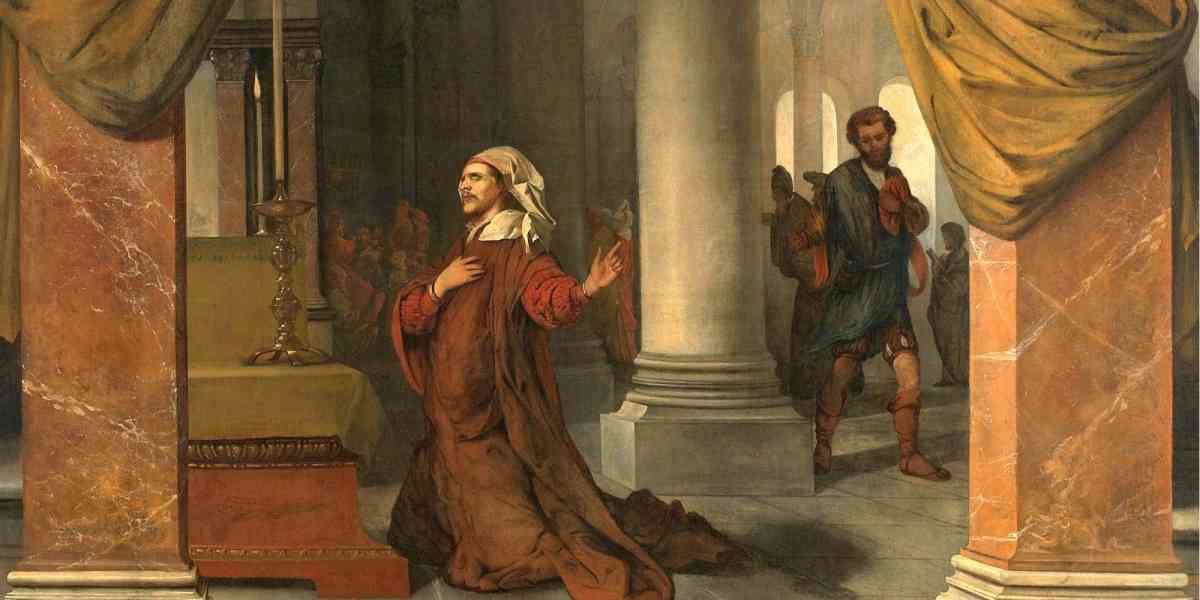
Take no Offense
But Jesus answered and said to them …
“And blessed is he who does not take offense at Me.”
—Matthew. 11:4, 6
John the Baptist was imprisoned for confronting the Roman rulers about their immorality and corrupt lifestyle. His whole life had been dedicated to God. According to Jesus, “among those born of women there is no one greater than John” (Lk. 7:28). He was a firm and bold man, who courageously spoke the truth regardless of consequences.
John had waited all his life to see the revealing of the Messiah. He baptized Jesus in the Jordan river, and watched as the Holy Spirit descended like a dove upon Him. He heard a voice from heaven declare, “this is My beloved Son, in whom I am well-pleased” (Mt. 3:17). John knows beyond a doubt that Jesus is the Christ.
But then circumstances change. He’s imprisoned. He’s maltreated. He’s bereft of family and friends. Hope fades and doubt creeps in. He hears the voice of the Accuser whisper, “where is your God now?” John begins to question what he’s experienced and seen. So from prison he sends for word.
‘[John] sent his disciples to ask of Jesus, “Are You the Expected One, or shall we look for someone else?” Jesus replied, “Go and report to John what you hear and see: the BLIND RECEIVE SIGHT and the lame walk, the lepers are cleansed and the deaf hear, the dead are raised up, and the POOR HAVE THE GOSPEL PREACHED TO THEM”’ (Mt. 11:2-5). And by the way John, don’t be offended with Me over what is happening in your life.
This sounds like a harsh word to someone suffering and in prison. Jesus gives John no explanation, no promise of rescue. Jesus encourages John by conveying what is happening as a result of his ministry, but also warns him. Don’t fall into bitterness over your circumstances. I know you’re confused—and scared—but look at what I’m doing. Don’t be disappointed in what I’m yet to do.
The important lesson for us here is to not allow disappointment about things that haven’t worked out as we hoped or planned to turn into bitterness and resentment towards God. This is deadly. It is exactly the trap the evil one wants us to fall into. Jesus tell John, and us, how to avoid it. Look at what he’s doing. Look to His faithfulness and His promises. Remind yourself of what He has already done, and practice gratitude. Express thanksgiving for your salvation in Christ, knowing that, whatever your circumstances, He has already overcome. And so have you.
Read more and subscribe on Substack to receive Stormwall Devotional sent to your email every morning: https://t.co/WB9UkVksJz








![StormwallDevo's tweet photo. Sheep and Goat Nations
“All the nations will be gathered before Him; and He will separate them from one another, as the shepherd separates the sheep from the goats…”
—Mt. 25:32
The parable of the sheep and the goats is commonly used to describe how individuals will be assessed at the Last Judgment. The standard of judgment Jesus says He will apply is how one treated “the least of these,” i.e., the poor, the weak, the hungry, the oppressed, the imprisoned etc. as representatives on earth of Jesus Himself. Those who considered and cared for these least ones will be rewarded, those who harmed, ignored, or withheld good from them will be judged. As one treated them, so Jesus will consider it as done unto Him, whether for good or evil. Jesus warns that eternal woe and suffering awaits those who mistreat these powerless ones.
But Jesus is also describing a judgment on the nations of world. It is the “nations” that appear before the Son of Man “on His glorious throne.” The word translated as nations in this verse is ethnē, signifying a race, a tribe, a foreign nation, or people. As with individuals, nations have callings and roles to play in God’s design. They can serve Him, or they can disobey and act wickedly against Him. The nations will be judged according to God’s righteous law and called to account for what they have done.
Specifically, God will judge the nations as “sheep or goat” based on how they treat the nation of Israel, and on how they treat both the Jewish people and the believing Christians within their own borders. God warns Babylon, which throughout the Bible represents the spiritual enemy of Zion, ‘For thus says the LORD of hosts, “After glory He has sent me against the nations which plunder you [i.e., Israel], for he who touches you, touches the apple of His eye” (Zech. 2:8). As for treatment of individuals within their borders, God warns the nations, “Do not touch My anointed ones, and do My prophets no harm” (Ps. 105:15).
The Bible tells us that the nations will ignore these warnings. “It will come about in that day that I will make Jerusalem a heavy stone for all the peoples; all who lift it will be severely injured. And all the nations of the earth will be gathered against it” (Zech. 12:3). The goat nations will align themselves and make war against Israel. But those which do will be severely punished, just as the ancient Babylonian Empire was destroyed forever in God’s righteous judgment for its harsh treatment of Israel.
Pray for the peace of Jerusalem.
Read more and subscribe on Substack to receive Stormwall Devotional sent to your email every morning: https://t.co/tQysWjVAN0](https://pbs.twimg.com/media/HPpWZ3UXsAAGTGA.jpg)

![StormwallDevo's tweet photo. Through Trials and Tribulations
[Barnabas and Paul were] strengthening the souls of the disciples, encouraging them to continue in the faith, and saying, “Through many tribulations we must enter the kingdom of God.”
—Acts 14:22
Nothing is more thrilling than hearing the voice of God call us to step out in faith and follow Him in obedience on a new adventure. Often this takes a specific action on our part, like moving towns or changing jobs, giving up the security of income or the comfort of community, ending or starting a relationship, or otherwise stepping out of our comfort zone and boldly taking new risks in faith.
Thus, one of the most confusing things in life can be the times when God leads us to do something, we respond and obey, and then everything appears to go wrong. “But God, you told me to do this thing! Why is it so hard? Why is it not working out? Why is it failing?”
The problem often lies in our expectations. We imagine that if God has called us, He will clear the path before us, smoothing the way to our goal. Indeed, these new ventures in God often do start with a miracle or other supernatural sign that encourages us that God is in fact leading us. Then suddenly, once it is too late to turn back, a formidable obstacle appears that we did not count on.
God miraculously parted the Red Sea for the Israelites, but He did not remove the Canaanites from the Promised Land. Rather, He prepared Israel to conquer it themselves, by teaching them warfare in the wilderness and by having to rely on the Lord for their daily provisions when no other source existed. The path was not straight nor the journey quick. This was in part because the children of Israel refused to learn the lessons, but also because the process cannot be rushed.
As any athlete knows, muscular hypertrophy occurs only when resistance is applied in a consistent manner over a considerable length of time. It is the weight and strain that causes the growth and increased strength. So it is in the Christian life. We develop our spiritual “muscles” through trials, difficulties, setbacks, and resistance. Look at these things not as adversaries but as your spiritual training partners. Embrace your challenges with gratitude for what they are producing in your soul. God has not failed you. His word is true. Through trials He is preparing and equipping you for greater things to come.
Read more and subscribe on Substack to receive Stormwall Devotional sent to your email every morning: https://t.co/33TK1nJiAl](https://pbs.twimg.com/media/HPiQ17iW4AA2E_I.jpg)






![StormwallDevo's tweet photo. Take no Offense
But Jesus answered and said to them …
“And blessed is he who does not take offense at Me.”
—Matthew. 11:4, 6
John the Baptist was imprisoned for confronting the Roman rulers about their immorality and corrupt lifestyle. His whole life had been dedicated to God. According to Jesus, “among those born of women there is no one greater than John” (Lk. 7:28). He was a firm and bold man, who courageously spoke the truth regardless of consequences.
John had waited all his life to see the revealing of the Messiah. He baptized Jesus in the Jordan river, and watched as the Holy Spirit descended like a dove upon Him. He heard a voice from heaven declare, “this is My beloved Son, in whom I am well-pleased” (Mt. 3:17). John knows beyond a doubt that Jesus is the Christ.
But then circumstances change. He’s imprisoned. He’s maltreated. He’s bereft of family and friends. Hope fades and doubt creeps in. He hears the voice of the Accuser whisper, “where is your God now?” John begins to question what he’s experienced and seen. So from prison he sends for word.
‘[John] sent his disciples to ask of Jesus, “Are You the Expected One, or shall we look for someone else?” Jesus replied, “Go and report to John what you hear and see: the BLIND RECEIVE SIGHT and the lame walk, the lepers are cleansed and the deaf hear, the dead are raised up, and the POOR HAVE THE GOSPEL PREACHED TO THEM”’ (Mt. 11:2-5). And by the way John, don’t be offended with Me over what is happening in your life.
This sounds like a harsh word to someone suffering and in prison. Jesus gives John no explanation, no promise of rescue. Jesus encourages John by conveying what is happening as a result of his ministry, but also warns him. Don’t fall into bitterness over your circumstances. I know you’re confused—and scared—but look at what I’m doing. Don’t be disappointed in what I’m yet to do.
The important lesson for us here is to not allow disappointment about things that haven’t worked out as we hoped or planned to turn into bitterness and resentment towards God. This is deadly. It is exactly the trap the evil one wants us to fall into. Jesus tell John, and us, how to avoid it. Look at what he’s doing. Look to His faithfulness and His promises. Remind yourself of what He has already done, and practice gratitude. Express thanksgiving for your salvation in Christ, knowing that, whatever your circumstances, He has already overcome. And so have you.
Read more and subscribe on Substack to receive Stormwall Devotional sent to your email every morning: https://t.co/WB9UkVksJz](https://pbs.twimg.com/media/HO0D2W3WcAAb1ch.jpg)


