Most technical founders have built a product that doesn't need them.
Documented
Versioned
Autonomous
Then they built a revenue system that stops the moment they leave the room.
Full piece 👇
https://t.co/q1Dk93GKVO
The Revenue Source Code is the output that matters most.
Not the training.
Not the frameworks.
A written, client-specific document that contains:
Exact qualification criteria (binary)
Call architecture scripts
CRM stage logic and auto-disqualification rules
30-day execution calendar.
The team inherits a complete map.
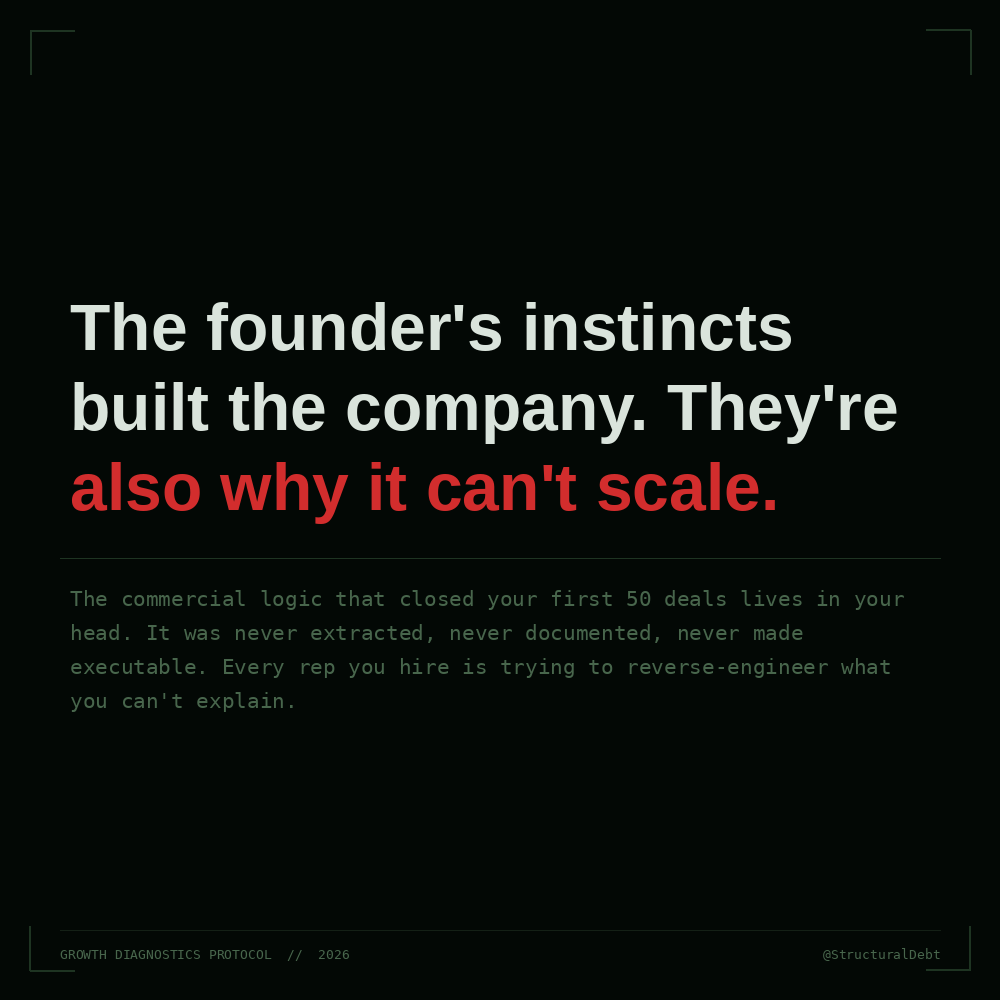
Not tribal knowledge.
What happens in 2 days with GDP @StructuralDebt :
Day 1: Install the MAA.
Install the Impact Probe.
Install the Clean No Protocol.
Co-create the Revenue Source Code.
Day 2: Build the CRM architecture live.
Run 3–5 live simulations.
Certify the team.
Day 3 onwards: The team runs the system. Without the founder.
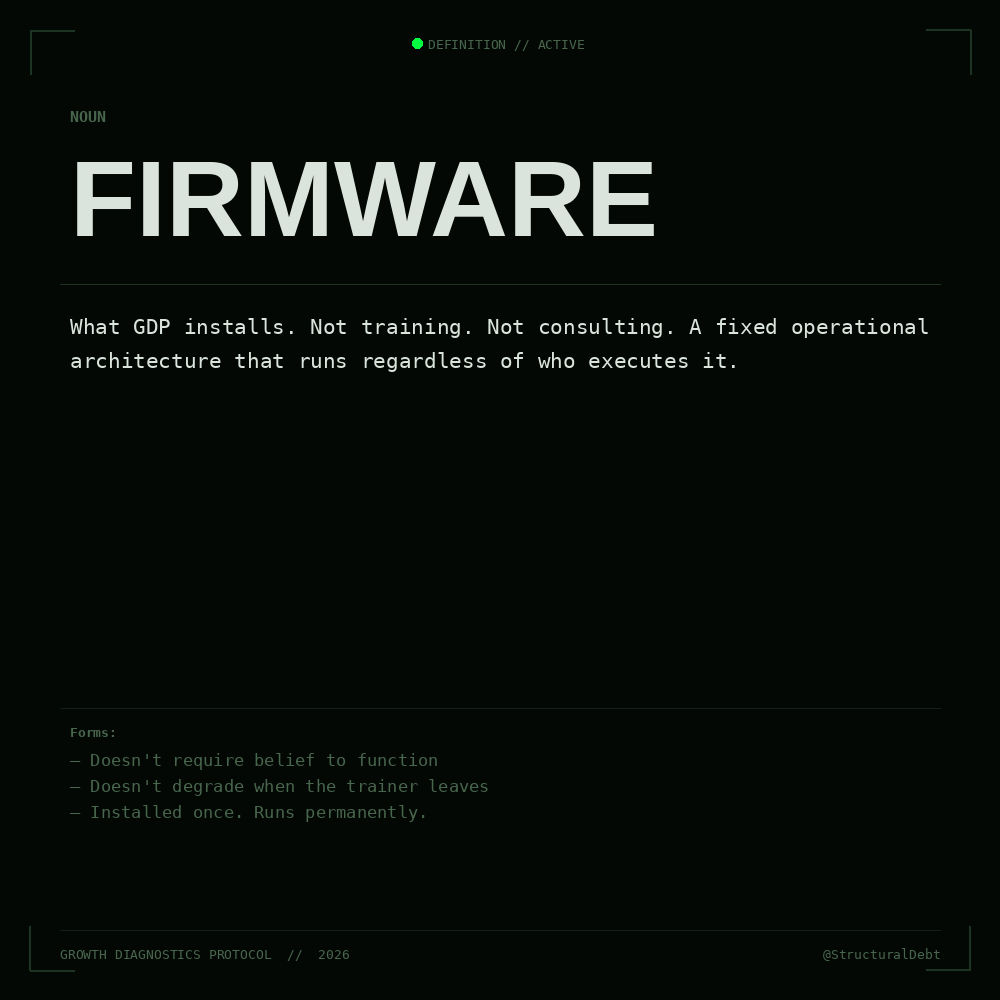
That's firmware installation. Not training.
GDP doesn't chase.
Fast outreach.
Up to 48 hours.
Then move on.
Not because chasing doesn't work. Because chasing destroys stature.
And stature closes deals.
Founders who complete the diagnostic and don't book a Logic Check:
I follow up with their exact Friction Score and COI.
"Your score is 74/100. Your COI is $287k/year.
If that number is acceptable, no further action needed.
If not: [calendly link]." That's the follow-up.
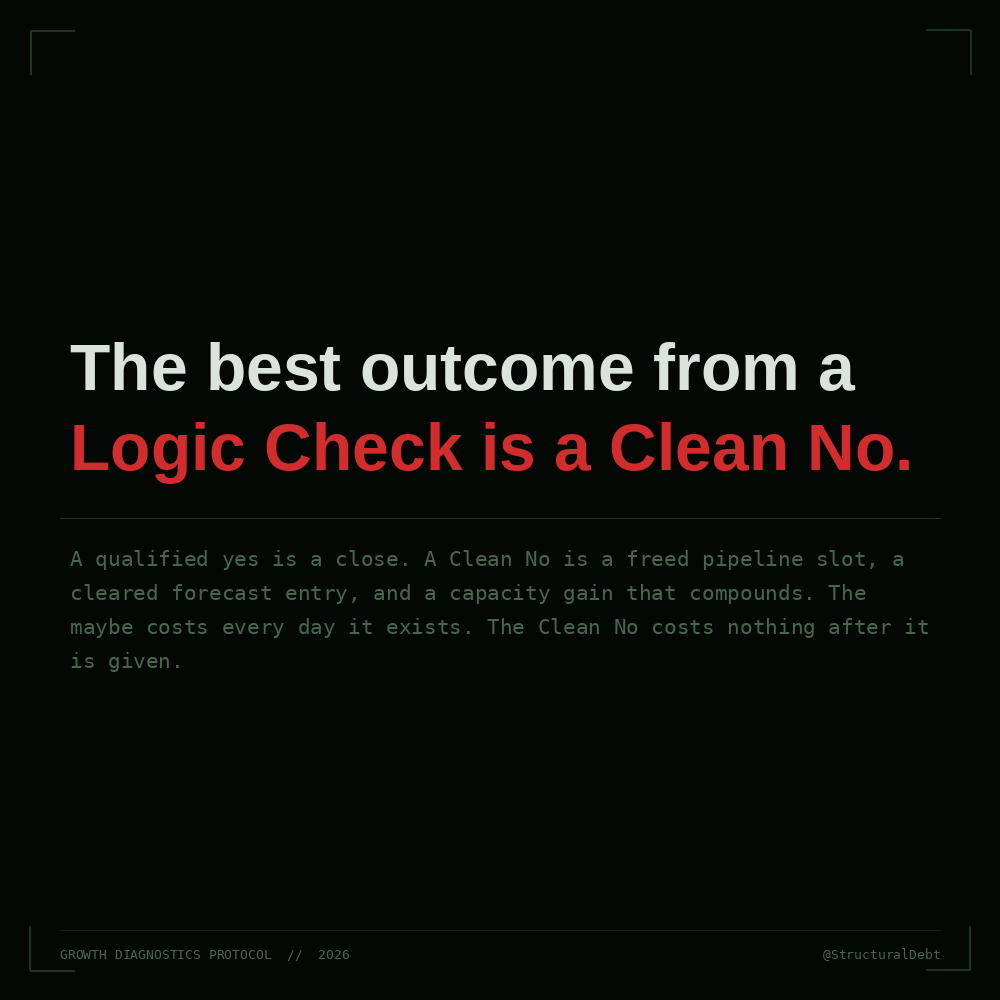
Then Clean No on my end.
The Logic Check ends in one of two ways.
1. "When can we schedule the intensive?"- Tier 1 closes.
2. "I need to think about it."- Clean No issued.
Pipeline cleared. There is no third outcome.
The MAA established this before the call started.
This is what binary qualification looks like in practice.
The most common response to a COI calculation:
"That seems high."
Then we walk through the layers together.
Zombie Debt cost.
Founder time cost.
Maybe Leak cost.
Narrative Debt cost.
By Layer 3, they've stopped arguing with the number.
It's not an estimate. It's the math.
The founders most surprised by their COI are the ones whose revenue is growing.
They assume growth = no problem.
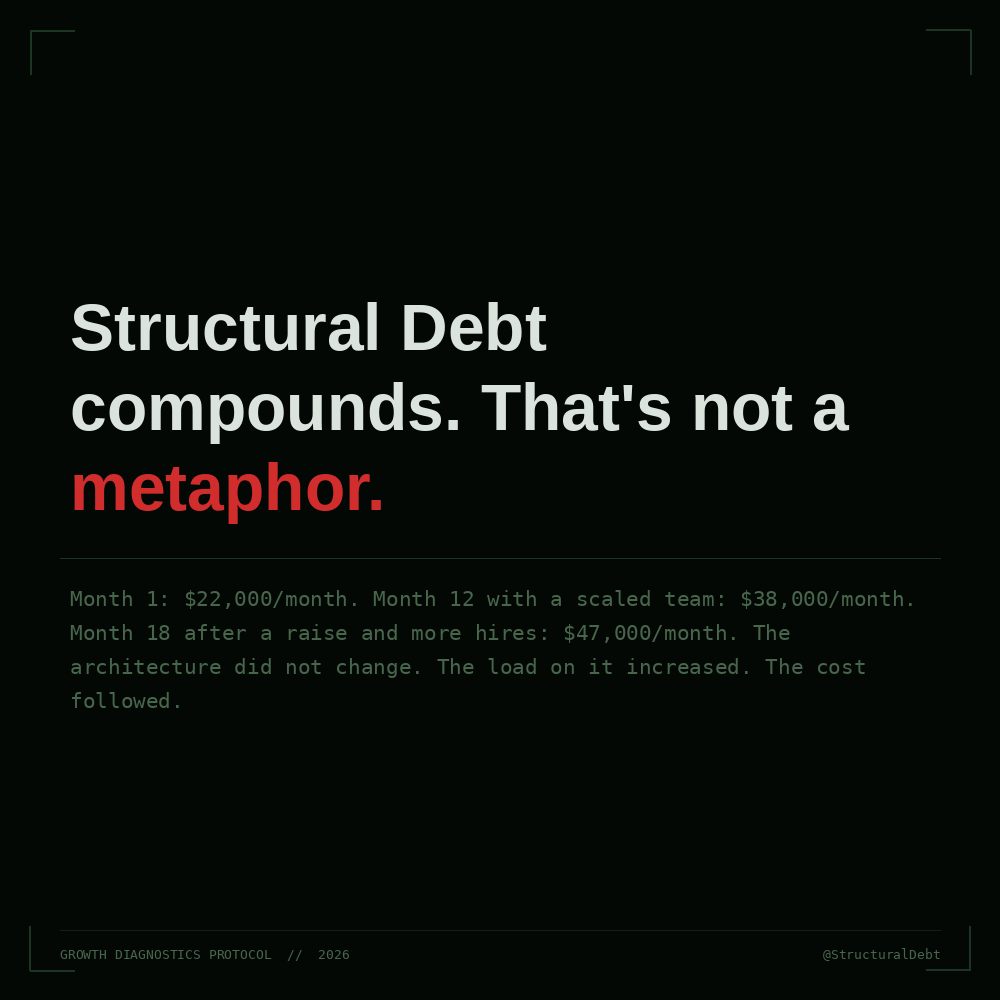
Growth masks Structural Debt. It doesn't eliminate it.
You can be growing at 40% YoY and losing $400k/year to friction.
Both are true simultaneously.
The Web3 company that installs commercial firmware first wins.
While competitors are still doing relationship-dependent, founder-led selling you're running an autonomous, protocol based revenue engine.
In a market this early, that's an asymmetric advantage.
Observation from diagnostics this month:
Average Friction Score: 63/100.
Average annualised COI: $195,000.
Both numbers higher than expected.
The founders who ran the diagnostic thought their system was "mostly working."
The numbers disagreed.
Node infrastructure.
Wallet infra.
L2 rollups.
Cross-chain bridges.
Extraordinary technology.
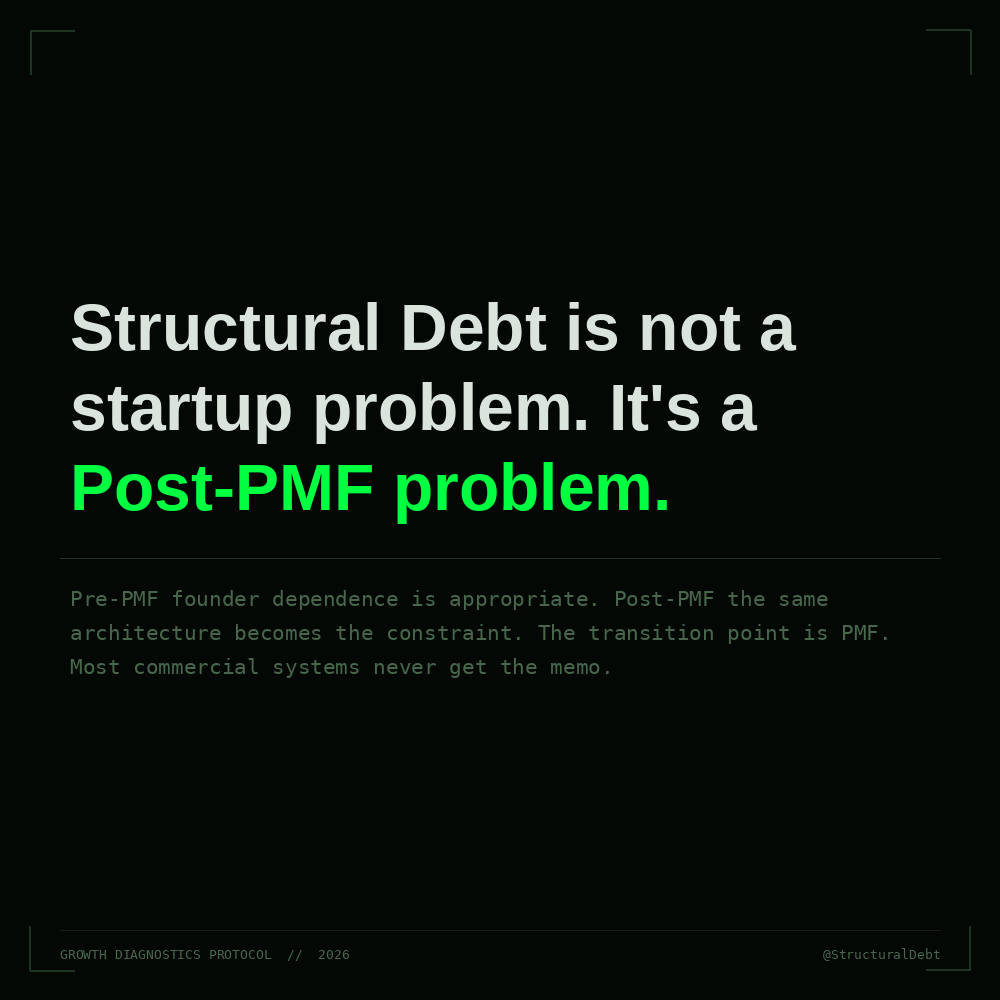
Post-PMF. Scaling B2B. And the commercial architecture is:
founder on demos, team improvising, CRM full of maybes.
Every single time. This is why GDP exists.
Web3 B2B companies spend millions on audits.
Smart contract security.
Code review.
Architecture validation.
The commercial architecture? No audit. No documentation. No scoring.
That's Structural Debt sitting unexamined while the technical infrastructure gets obsessively verified.
Technical complexity is not a commercial strategy.
Your product can be the most sophisticated piece of infrastructure in the ecosystem.
If the commercial architecture is undocumented and founder dependent, the sophistication dies at the boundary of the founders availability.
Document the commercial logic.
It's as important as the technical docs.
DeFi protocols trying to close enterprise B2B:
The product is extraordinary. The commercial architecture is non-existent.
"We're talking to some big names" is not pipeline.
It's Activity Theater wearing the costume of a sales motion.
Web3 companies have a specific Structural Debt pattern.
The product is technically complex. The buyers are technical. So the founder does all the demos.
Every time!
Because nobody else understands it well enough.
This is not a technical problem. It's a documentation problem.
And it creates the most expensive form of Founder Dependency.
The most expensive three word sentence in B2B:
"Let's do training."
Training assumes the system works and the people need improvement.
Most Post-PMF companies have the opposite problem.
The people are fine. The system is broken.
Sales training fails at scale for one reason:
it modifies behaviour without modifying architecture.
The rep goes back to the same CRM, the same qualification criteria, the same pipeline with the same Zombie Debt.
New behaviour, old system.
The system wins every time.


![StructuralDebt's tweet photo. Founders who complete the diagnostic and don't book a Logic Check:
I follow up with their exact Friction Score and COI.
"Your score is 74/100. Your COI is $287k/year.
If that number is acceptable, no further action needed.
If not: [calendly link]." That's the follow-up.
Then Clean No on my end.](https://pbs.twimg.com/media/HJ4T1WtWYAActQ7.png)