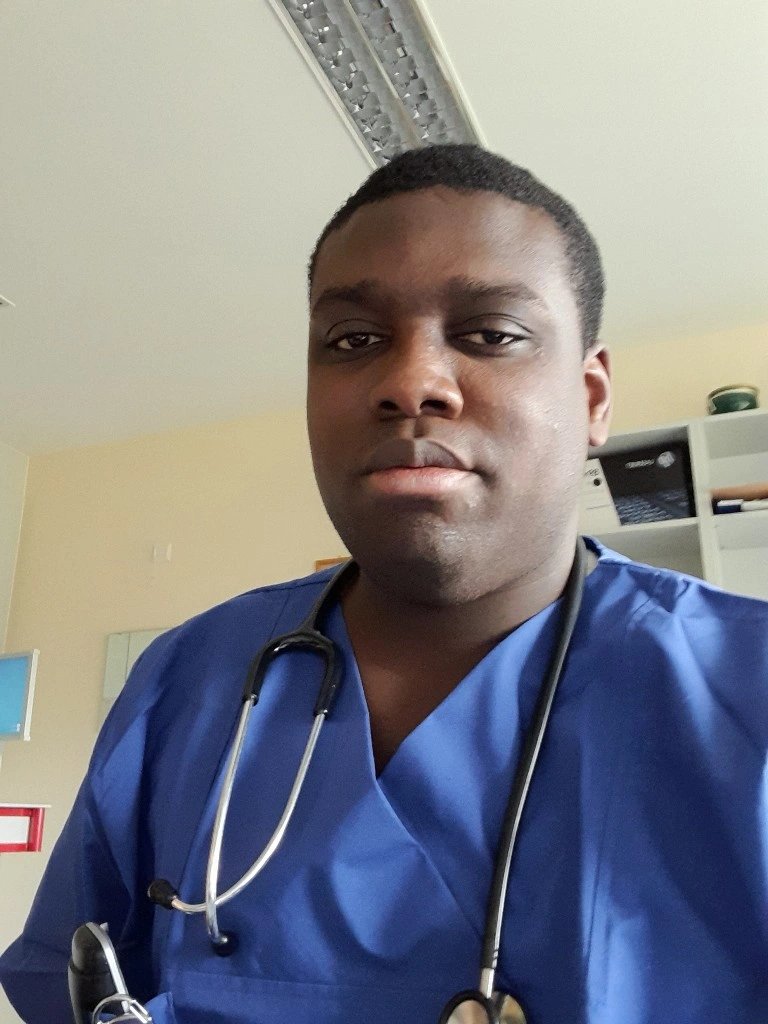
"Hi X! 👋
I'm Smith a pharmacy student in Awka,Anambra state
Just starting my journey into the stock market (NGX and beyond) while juggling lectures, practicals, and trying not to fail ochem 😅
Planning to share my real learnings here: beginner mistakes, small wins
If you are a foreigner visiting Africa, especially if you are from Europe or North America where malaria is almost non-existent, please make sure you take a malaria test IN AFRICA before departing the continent.
This is absolutely crucial. If the Russian chess official had gotten tested in Nigeria before departing for Uzbekistan, medical staff would have easily detected the Plasmodium parasite in his blood. He would have been administered Artemether or Artesunate treatments, which would have cleared the parasite from his system within a 72-hour window.
The problem with waiting to get tested in Europe or other non-endemic regions is that because malaria is so rare in those places, it is usually the last thing doctors check for. Malaria manifests with flu-like symptoms, high fever, and severe exhaustion, which Western doctors often misdiagnose as a standard viral illness. In contrast, if you walk into any standard clinic, pharmacy, or hospital in Nigeria complaining of dizziness and a high fever, the very first thing they check for is malaria. Consequently, you have a much higher chance of early detection in Africa than anywhere else.
Beyond just early detection, you also have a significantly higher chance of receiving an accurate diagnosis in Nigeria compared to any hospital in Europe or America. This may sound counterintuitive, since Western countries undoubtedly possess more robust medical infrastructure and advanced diagnostic technology, but this advantage does not apply to malaria. The gold standard for diagnosing malaria is largely manual, not electronic. The parasite is not detected by a digital frequency signature on a monitor. A medical laboratory scientist must draw the patient's blood, prepare a thin and thick blood film, place it under a microscope, and visually examine the red blood cells. They must manually identify the specific species of the parasite and determine the exact density and severity of the infection.
Nigerian lab scientists and healthcare workers can perform this task almost effortlessly and with staggering precision because it is a daily routine. In their medical training, and across hospitals and clinics, they do this every single day, as malaria is the most common infectious disease in Nigeria and many parts of Africa. In Europe and other non-endemic nations, this specific visual diagnostic skill is almost non-existent. An American or European medical technician might only ever manually detect malaria in a red blood cell during a single practical project in medical school, and that is where it ends. Throughout their entire medical careers, they may never encounter a live malaria case. For this reason, their practical accuracy in diagnosing it will never match that of their African colleagues.
So, if you ever visit Africa, and particularly a country like Nigeria, please make sure you get yourself tested for malaria before traveling back to your home country to avoid the tragic reality of paying the ultimate price.
On 30 August, we’ll meet Dr. Osarodion Ohenzuwa on the dr.Jakpa X Space:
🎙️ 3 LIES Nigerian Doctors Still Believe About Practising Medicine in Germany
Dr. Osarodion's journey is exactly why I wanted him for this conversation.
🇳🇬 Obafemi Awolowo University
→ MBBS, Medicine
🇳🇬 House Job & MDCN
🇩🇪 Deggendorf Institute of Technology
→ MSc, Digital Health
🇩🇪 Medical Residency in Germany
He's not speaking from something he read online.
He's gone through the transition himself, from studying medicine in Nigeria to building his professional career in Germany.
And on Sunday, we're going beyond the usual:
“Germany is a good country for doctors.”
We'll talk about what Nigerian doctors actually misunderstand about:
• Medical degree recognition
• The licensing process
• German language requirements
• The costs involved
• Getting into residency
• And what life as a doctor in Germany really looks like
Most importantly, we'll ask:
If you were a Nigerian doctor starting this journey today, would you still choose Germany?
Come hear his answer.
📅 Sunday, 30 August
🇳🇬 7:30 PM Nigeria
🇩🇪 8:30 PM Germany
🎙️ Live on X
Set your reminder. Bring your questions.
#drJakpa #NigerianDoctors #DoctorsInGermany #MedicalMigration #Germany #ResidencyInGermany #InternationalDoctors
You’ll know this is a replica of how their parents treat each other at home
Purest joy, purest love ❤️❤️
I pray this world doesn’t make their hearts cold 🙏🏽
It's easy to ignore the little moments we experience, assuming tomorrow will be just like today. But it will eventually albeit beautifully and painfully remind us that it doesn't come with warnings.