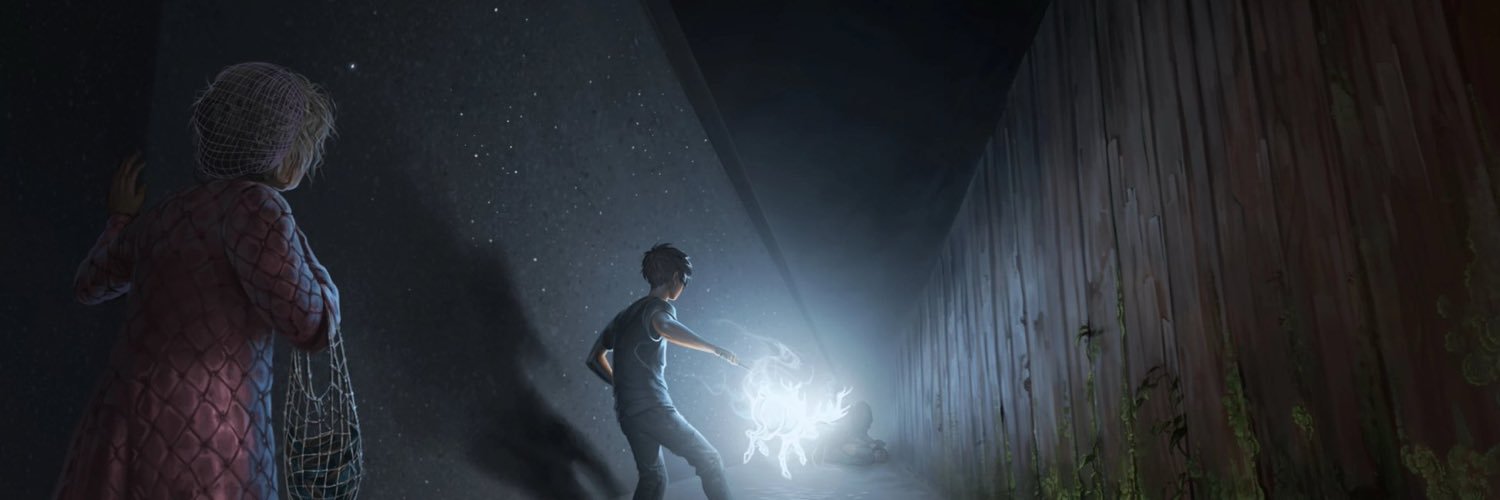
How did Severus Snape manage to remain loyal to Dumbledore’s plan for years, even while living among Voldemort’s most trusted followers, knowing that one mistake could expose his true allegiance?
The contrast between the films and the books hits hard here because the movies never circle back to that lie. Dumbledore spent decades reading everyone else's weaknesses, which made him hyper-aware of how dangerous it was to expose his own
I don’t think Dumbledore ever told Harry the truth about what he saw in the Mirror of Erised.
In Philosopher’s Stone, he tells Harry he sees himself holding a pair of thick woollen socks. It’s a funny little moment, and the films leave it at that. But in Deathly Hallows, at King’s Cross, Dumbledore finally admits that what he truly wanted was to see his family alive and together again. He had lost his mother, sister and eventually his brother’s trust. That desire never really left him.
It makes me wonder whether Dumbledore deliberately gave Harry a harmless answer because he didn’t want to expose just how much regret he was carrying. For someone who spent so much of his life understanding other people’s deepest desires, he was very careful about revealing his own.
I think Dumbledore’s answer about the Mirror of Erised was one of the biggest lies he ever told Harry, and Rowling knew exactly what she was doing.
When Harry asks what he sees in the mirror, Dumbledore claims it’s a pair of thick woollen socks. But in Deathly Hallows, we learn that his deepest desire was to have his family back, especially Ariana, and to undo the choices that destroyed them. That makes me look at that earlier conversation differently. Was Dumbledore using humour to hide the one desire he could never admit to Harry? Because the man who spent years teaching Harry about love and loss was still carrying a lifetime of guilt himself.
Harry nearly died in his very first Quidditch match, and somehow everyone remembers it as the match where he caught the Snitch.
His broom was going out of control, Snape was suspected of cursing him, and Harry was desperately trying to stay alive while the entire school watched. Then, just when it looked like he was about to fall, he managed to catch the Snitch with his mouth.
What I find interesting is that Harry had barely started flying before McGonagall recognised his natural ability and pushed him onto the team. Was he just ridiculously lucky that day, or did he have an instinct for flying that even he hadn’t realised yet?
If Thor unlocks the Odinforce, Doctor Doom could be facing a version of Thor he has never had to prepare for.
We’ve seen Thor at his most powerful with Stormbreaker, but even after everything he went through in Infinity War and Endgame, he was still fighting with his own abilities. The Odinforce is a different level entirely. It’s not just about hitting harder; it gives Thor access to the kind of magic and power Odin once used to command respect across the Nine Realms.
What makes this interesting for Doomsday is that Doom isn’t simply another enemy Thor can overpower with brute strength. If Thor gains access to the Odinforce, I want to see whether he can actually challenge Doom’s magic and knowledge, or whether Doom has already prepared for that possibility.
Do you think Harry Potter fans sometimes confuse the absence of representation with an actual rule in the lore?
The books never establish that pure-blood wizards must be white. Pure-blood status is determined by magical ancestry, not race
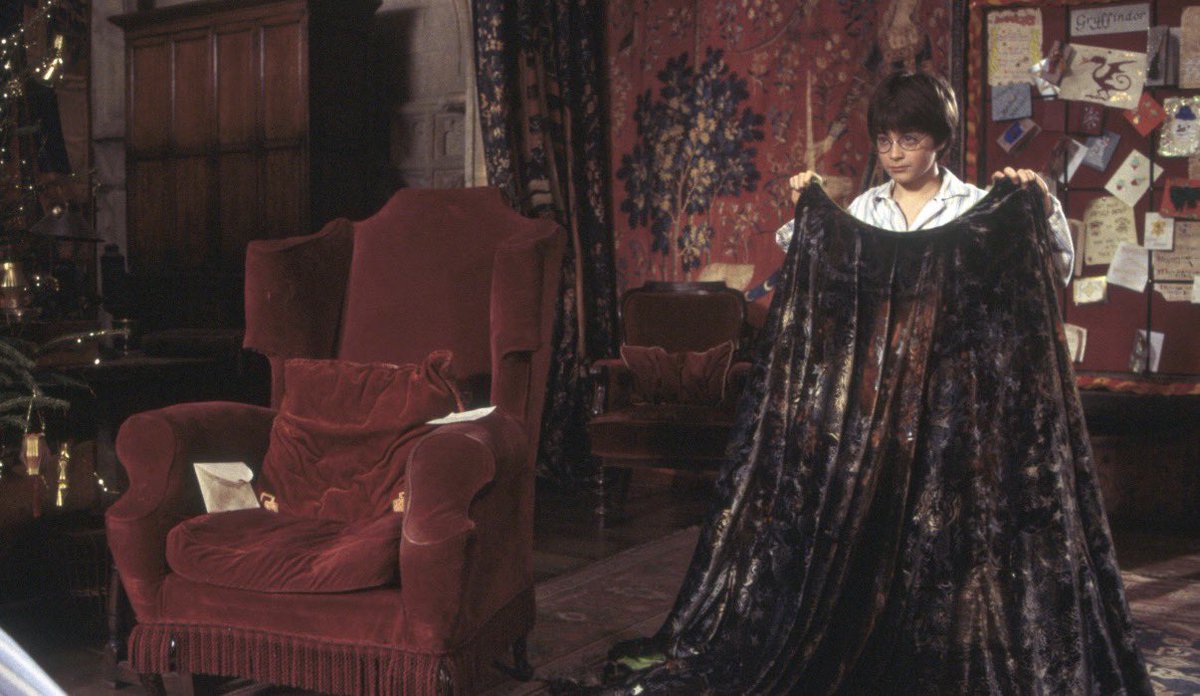
Dumbledore had James Potter’s Invisibility Cloak in his possession before Harry even started Hogwarts. I’ve always found that detail more interesting after reading Deathly Hallows.
In Philosopher’s Stone, Dumbledore tells Harry he borrowed the cloak from James because he wanted to examine it. At the time, it sounds like an ordinary favour between two wizards. But later, we discover that Dumbledore had spent years fascinated by the Deathly Hallows, and he eventually admits that he recognised the cloak for what it really was.
Think about that for a moment. Harry was walking around Hogwarts with one of the three legendary Hallows, completely unaware of its history, while the man who gave it to him knew exactly what it represented. I wonder how differently Dumbledore looked at that cloak knowing it was the one Hallow he had actually managed to get his hands on.
What makes Tom Riddle’s diary one of the most disturbing artifacts in Harry Potter isn’t just that it was sixteen-year-old Riddle’s very first Horcrux—created in 1943 after he murdered Moaning Myrtle Warren with Salazar Slytherin’s Basilisk—it’s that he bought that cheap, blank pocket diary at Winstanley’s Booksellers and Stationers on Vauxhall Road in Muggle London specifically to prove his ultimate lie. Despite preaching pure-blood supremacy to his Knights of Walpurgis at Hogwarts, half-blood Tom Riddle loved taking ordinary, unassuming Muggle objects and turning them into instruments of pure dark magic, weaponizing an everyday journal to groom a lonely eleven-year-old Ginny Weasley throughout Chamber of Secrets. As Christian Coulson’s chillingly charismatic sixteen-year-old Riddle explains to Harry Potter down in the Chamber (Chapter 17, "The Heir of Slytherin"), the diary didn't force Ginny to obey through an Imperius Curse—it fed on her adolescent insecurities, her crush on Harry, and her loneliness at Hogwarts until she poured enough of her own soul into the ink that Riddle could literally step off the page and drain her to death.
Even wilder is how catastrophically Lucius Malfoy’s greed ruined Voldemort’s grand design. As Albus Dumbledore later explains to Harry in Half-Blood Prince (Chapter 23, "Horcruxes"), Voldemort never told Lucius that the diary contained a piece of his soul—he simply handed it to his most trusted lieutenant for safekeeping before attacking Godric’s Hollow in 1981, intending for Lucius to smuggle it into Hogwarts only on Voldemort’s direct command to reopen the Chamber of Secrets. Instead, panicking during Arthur Weasley’s 1992 Ministry of Magic raids on dark artifacts and wanting to publicly humiliate Arthur by framing his daughter, Lucius slipped the diary into Ginny’s cauldron at Flourish and Blotts (a moment Jason Isaacs played with razor-sharp malice in Chris Columbus’s 2002 film)—accidentally handing Harry Potter the exact clue Dumbledore needed to realize Voldemort hadn't just made one Horcrux, he had shattered his soul across multiple vessels!
Kate Bishop can’t catch a break. Every time she looks out that window, something is happening that could end the world.
Girl just wants to live her life, but the MCU keeps giving her a front-row seat to the apocalypse. At this point, does she even bother opening the curtains anymore?
Here's 5 major power boosts Thor will gains after unlocking the ODINFORCE
• Thor goes from Marvel' heavy hitter to a Cosmic Powerhouse, capable of wielding massive amounts of cosmic energy.
• He gains access to vast magical enchantments like Odin, granting him mystical attacks and feats far beyond his normal abilities.
• He can perform extraordinary feats involving matter, energy and even reality itself now, in one word he becomes a living cosmic embodiment.
• He gains immense cosmic knowledge and awareness, allowing him to perceive and understand threats on a much greater scale which is really important to fight Doom.
• He can share his power with others granting them a massive boost in abilities, potentially bringing them up to the level of his normal power.
Who's excited to see this Upgrade of Thor?
Imagine how much of what we see in films isn’t physically present during filming.
An actor can perform in an ordinary studio and eventually appear in an entirely different world.
That’s the beauty of visual effects.
Sometimes the most convincing movie are completely artificial
I guess this is the most hilarious deleted scene of Harry potter
Am I the only one who heard Ron say "l knew she lied about that tattoo"
And it was also in the books 😂
One of the most noticeable changes in Harry Potter and the HalfBlood Prince is something that doesn’t get discussed enough why did the filmmakers decide to burn down the Burrow when nothing like that happened in the sixth book?
In J.K. Rowling’s original story, the Burrow remains standing throughout Half Blood Prince it continues to be a place where Harry can spend time with the Weasley family, away from some of the pressures of Hogwarts.
Of course, the world is becoming increasingly dangerous and Voldemort’s return is affecting almost everyone but there is no attack on the Weasley home.
The movie, however, takes a completely different direction.
During Harry’s Christmas visit, the Burrow is attacked by Death Eaters, who set the house on fire. Harry and Ginny pursue Bellatrix Lestrange and Fenrir Greyback through the surrounding fields, and the entire sequence ends with the Weasley family home engulfed in flames.
But here’s what makes the change particularly interesting: this entire attack was created for the film. It wasn’t something J.K. Rowling wrote in the sixth book.
The filmmakers seemingly wanted to make the threat of Voldemort’s followers feel more immediate, showing that even a place as familiar and supposedly safe as the Burrow was no longer beyond their reach. It also gave the film an additional action sequence and brought the danger of the war directly into Harry’s personal life.
However, the decision has always been interesting to question. The Burrow represents more than just a house. It’s one of the few places where Harry genuinely experiences the warmth of having a family. Destroying it, even temporarily, changes the atmosphere of the story and introduces an attack that has no equivalent in the original narrative.
Interestingly, the Burrow is still standing when we return to it in Deathly Hallows so the filmmakers eventually had to restore it for the following film.
Was burning down the Burrow a necessary cinematic decision to raise the stakes or did the filmmakers introduce an unnecessary scene that didn’t really belong in the story?
I think it’s one of the more questionable changes between the sixth book and its movie adaptation.
Why did Snape respond with “I see no difference” when Hermione’s teeth were hexed in Goblet of Fire?
What was behind his cruel remark and what does this moment reveal about his attitude towards Hermione?
Before Cyclops became one of the biggest talking points surrounding Avengers: Doomsday, I think it’s worth revisiting just how dangerous Scott Summers actually is and how much potential the previous X-Men movies left unexplored.
For years, James Marsden’s Cyclops was one of the most underutilised characters in the Fox X-Men franchise. Despite being the field leader of the X-Men, one of Professor Xavier’s most trusted students and a character whose tactical intelligence makes him incredibly valuable in combat, the movies frequently pushed him into the background. Wolverine received much of the attention, while Scott was often reduced to his rivalry with Logan and his relationship with Jean Grey. Even his death in The Last Stand felt like a tremendous waste of a character who should have had a much greater presence in the franchise.
But people sometimes underestimate what Cyclops brings to a battlefield.
His optic blasts aren’t ordinary lasers. They’re powerful beams of concussive force capable of sending enormous objects flying, tearing through obstacles and overwhelming opponents with sheer impact. His visor isn’t what gives him his powers; it’s what allows him to control and contain them. Without it, Scott has to rely on his own ability to keep those destructive beams under control.
And there’s more to his abilities than raw power. Cyclops can adjust the intensity and width of his blasts, redirect them using reflective surfaces, attack multiple targets through calculated ricochets and use the environment to his advantage. He’s not simply someone who shoots whatever is standing in front of him. He’s a trained combatant who understands angles, positioning, timing and battlefield strategy.
That’s what makes him particularly dangerous. His greatest strength isn’t necessarily how powerful his optic blasts are, but how intelligently he uses them.
The Doomsday footage is especially exciting because we finally get to see James Marsden wearing a much more comic-accurate blue-and-yellow costume, before removing his visor and unleashing an enormous optic blast in what appears to be a confrontation involving the Sentinels. It’s a striking image, particularly when you consider how rarely the original films allowed Cyclops to demonstrate that level of destructive potential.
And James Marsden himself has spoken about how much the character was previously pushed into the background. He described Doomsday as an opportunity where they’ve turned up the volume on Cyclops considerably. More importantly, he has expressed that he didn’t want the character’s return to be nothing more than a nostalgic appearance without a genuine purpose in the story.
That’s an important distinction.
Cyclops isn’t just another mutant with an impressive ability. He’s traditionally the person who coordinates the X-Men, makes difficult decisions under pressure and carries the responsibility of keeping his team alive. He’s a leader before anything else, and that aspect of his character deserves just as much attention as his powers.
Imagine putting that version of Scott Summers in a battlefield alongside Captain America, Thor, Doctor Strange and the rest of the Avengers. Imagine what happens when his experience fighting mutants, Sentinels and some of the most dangerous threats in the X-Men universe becomes relevant to a conflict involving Doctor Doom.
I also think there’s something particularly satisfying about seeing Cyclops finally receive the recognition that Wolverine has enjoyed for years. Hugh Jackman’s Wolverine is iconic, and rightfully so, but the X-Men have always been more than one character. Scott Summers deserves to be recognised as one of the central figures of that universe.
If Doomsday gets this right, it could completely change how general audiences perceive Cyclops.
Am I the only one wondering why Stormbreaker didn’t react with lightning when Captain America wielded it?
When Thor uses the weapon,it responds to his connection with lightning and the power of the storm but when Steve Rogers picked it up in Endgame we didn’t really see that same display of power.
Does this mean Stormbreaker responds differently depending on who wields it or was Steve simply using the weapon without fully accessing its connection to Thor’s powers?
We know Captain America was worthy enough to lift Mjolnir but does that automatically mean he could channel Stormbreaker’s full abilities as well?
Was it a deliberate distinction between the two weapons,a difference in how Steve used Stormbreaker or simply a detail Marvel never bothered to explain?