Email a proposal (250-500 words) with your chapter’s focus, argument, and contribution to Veteran Critical Theory with a brief author bio (100-150 words) to [email protected] and [email protected] by 12/15. Thought pieces, case studies, policy applications welcome. - 3/3
The editors seek chapters that address:
-Applications in workforce, family, community, higher ed, etc.)
-Application of VCT to the larger critical theory conversation
-Critical examinations of veteran services, policies, institutional support systems
-Advocacy and activism - 2/3
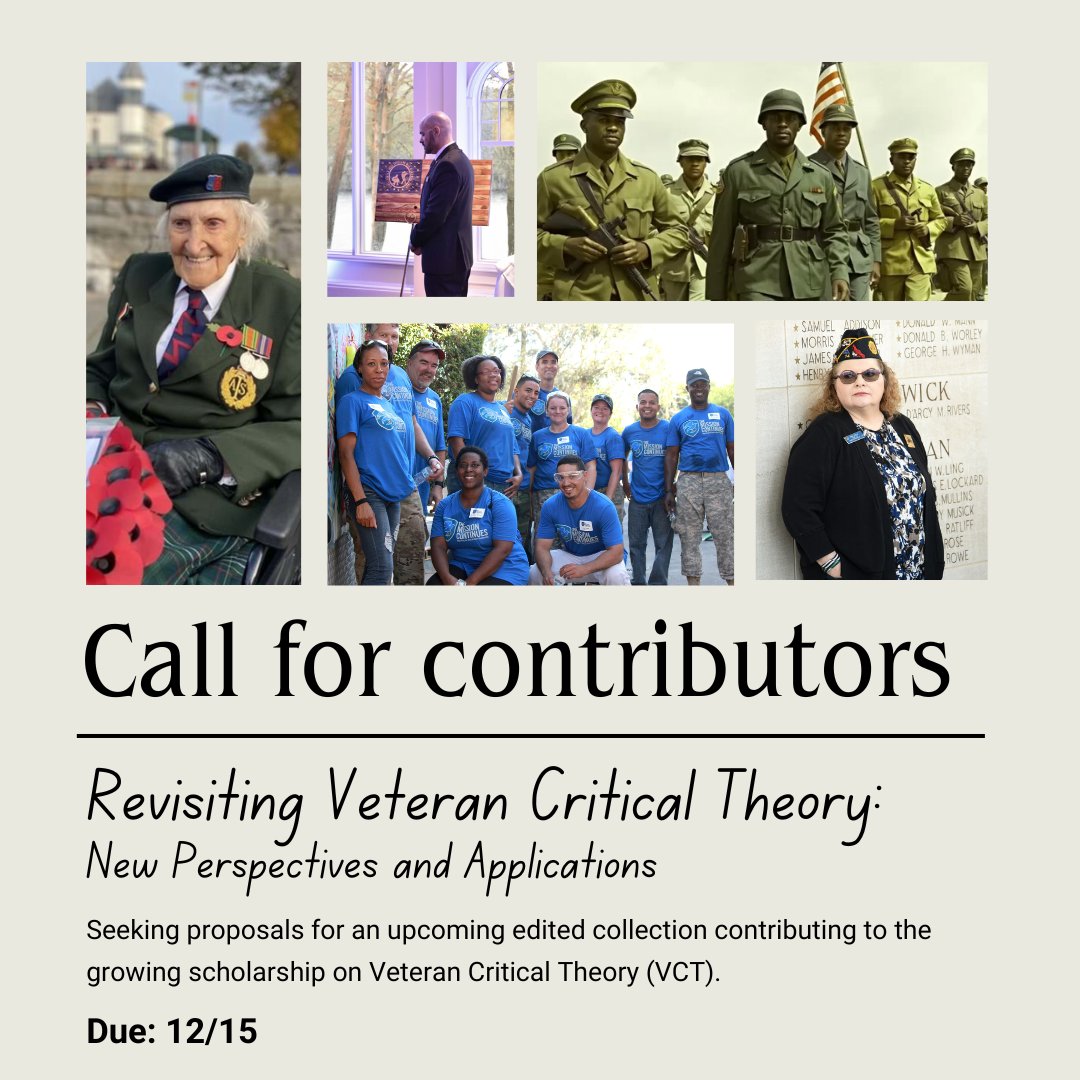
Deadline approaching! Drs. Sharon Young and Glenn Phillips are seeking chapter proposals for an edited collection tentatively titled, "Revisiting Veteran Critical Theory: New Perspectives and Applications." to contribute to the scholarship on Veteran Critical Theory (VCT) - 1/3
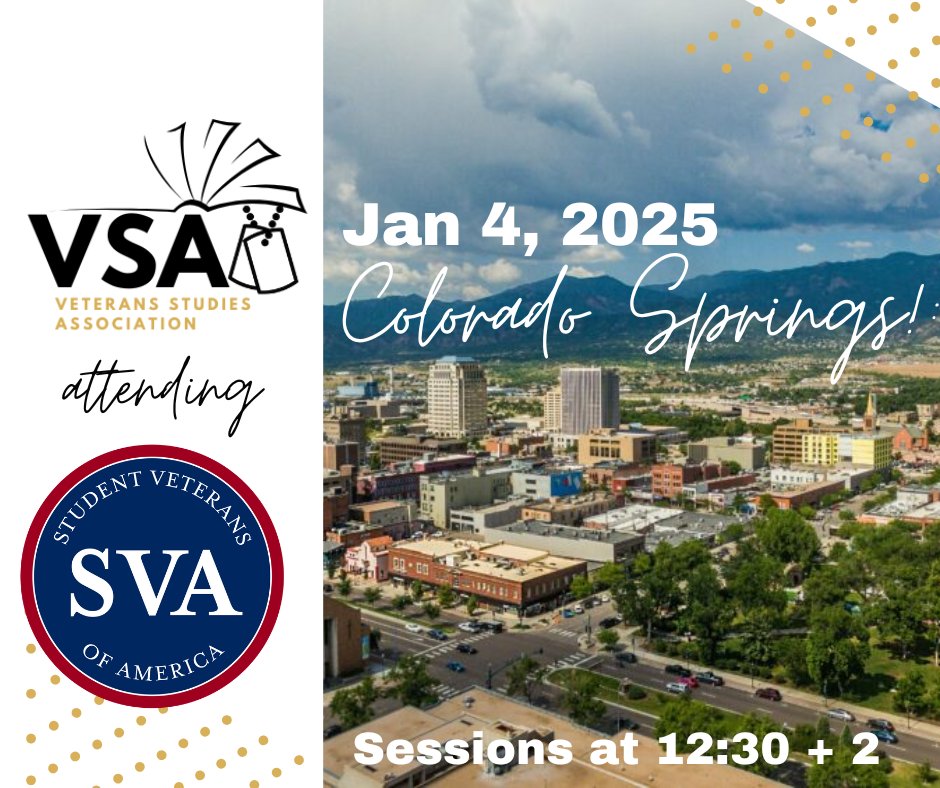
Exciting news! VSA is proud to join forces with SVA at #SVANatCon on 1/4 in Colorado Springs! For the first time, VSA will be formally represented, showcasing the incredible diversity of scholarship, teaching, and practical insights #veteransstudies brings to the table (1/4)
Thank you to Dr. Godier-McBard and The Centre for Military Women's Research for their wonderful research presentation exploring the "I don't feel like that's for me" report about women veterans' mental health. Watch the YouTube video at the link in comments!
Whether you have a personal narrative, a course resource, or recent findings to share, we’d love to hear from you! https://t.co/iRbVU1m3RA or email [email protected] (attn: Latosha Henderson) (3/3)
Call for blog contributions! Are you a scholar, student, or community member passionate about #veteransstudies? We’re inviting guest blog submissions to share your insights, stories, and research! (1/3)
VSA Voices is an informal discussion forum intended to promote academic discourse about emerging topics and on-going debates in the field of veterans studies relevant to scholars, practitioners and the general public. View details about submission guidelines on the blog (2/3)
Next month, the EBoard will “self-organize” into positions so they can be ready to work as your board starting 1/1/25. New members are eligible for any named position except the presidency, which will be filled by a returning member. (2/2)
Congrats to our newly elected EBoard members! We appreciate all of our VSA members who stepped up to serve and are excited to see how our #veteransstudies community grows from their contributions, as well as those who will become JVS reviewers and committee members! (1/2)
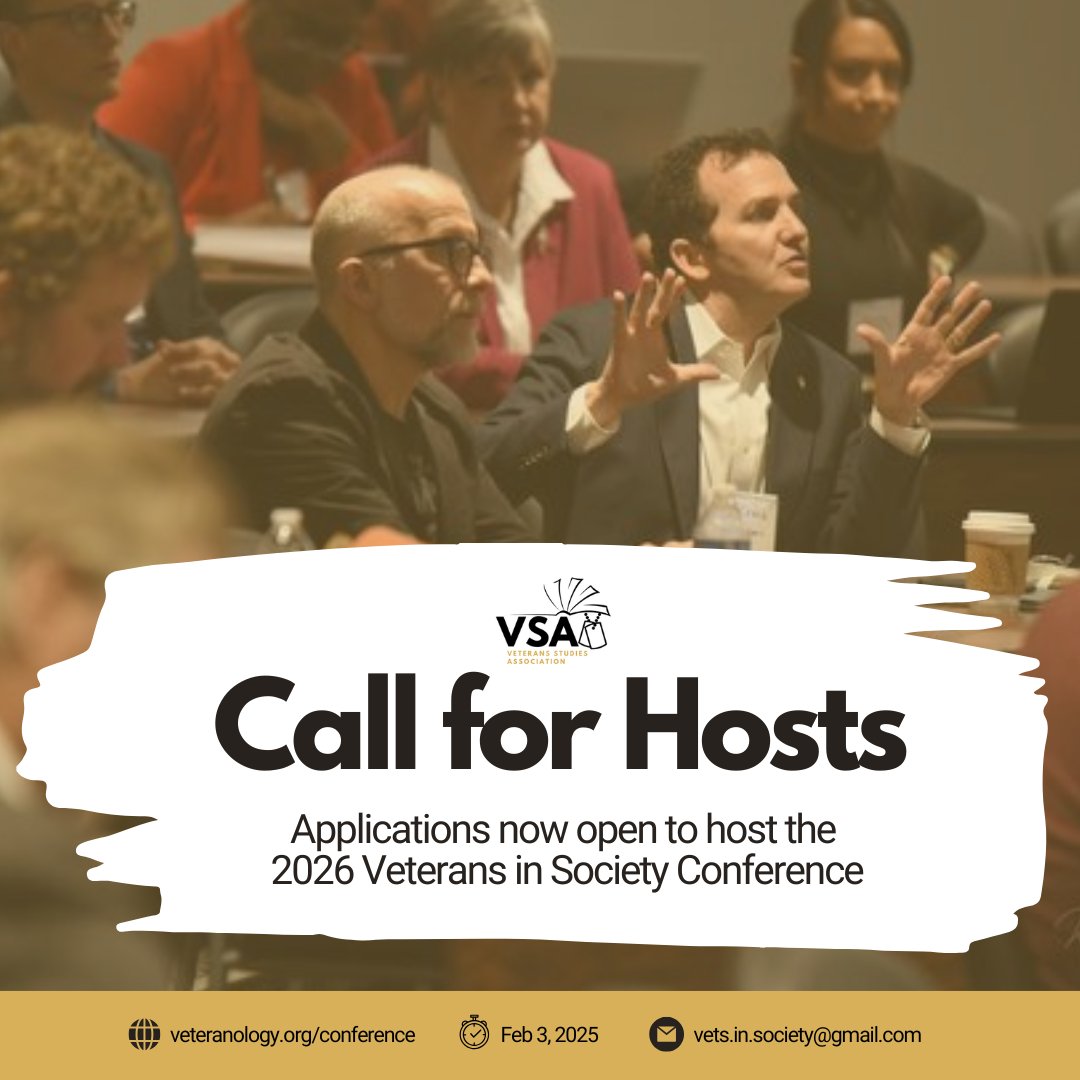
Are you an academic or cultural institution leader with a commitment to #veteransstudies? Consider submitting a proposal to host the 7th Veterans in Society Research Conference! Detailed submission instructions are now available at the link in comments. Proposals due 2/3/25
Voting closes TONIGHT for '25-27 Leadership Elections! Members, who do you want to join the VSA Executive Board? Read about the candidates on our blog and cast your vote using the link in your email before the day ends! Email [email protected] with questions
Miss our last colloquium on indigenous Australian Second World War service? We've got you covered with a full recording on YouTube! Don't forget to register for our next event on 11/17, "Supporting the Mental Heath Needs of Women Veterans" at 10am CST. Links in comments.
VSA leadership elections are open now through October 29! Need a quick way to learn about the nominees and their goals? Check out this article on our new blog, VSA Voices! We have an exceptional slate of #veteransstudies leaders who are worth getting to know! Link in comments
Join us in 2 weeks for the 2nd fall VSA colloquium with Rachel Caines, Historian in the #Military History Section of the Australian War Memorial. Rachel is a PhD candidate at the The Australian National University. Her research focuses on #Indigenous experiences of war- see below
This talk explores the diversity of Indigenous experiences in the Australian Defence Force during the Second World War, considering how seemingly unremarkable objects- from sketches to letters- can serve as conduits for stories that broaden understanding of Indigenous service.