Article here: https://t.co/wN2PjKaFus
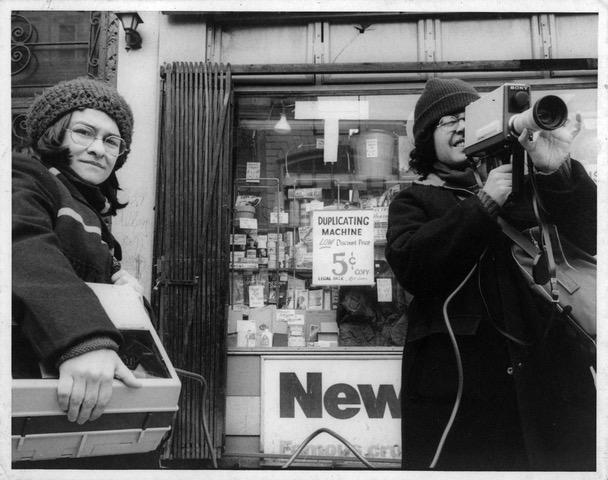
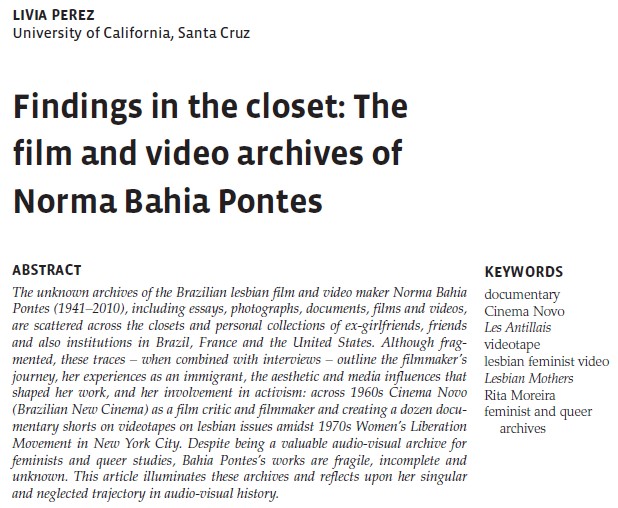
Drawing on a fragile, scattered archive—tucked away in closets, in the personal collections of ex-girlfriends and friends, and in institutions across Brazil, France, and the U.S.—Perez reconstructs a long-overlooked legacy in A/V history.
In Issue 20.3, Livia Perez retraces the research journey that “outed” Norma Bahia Pontes (1941–2010) as a documentary filmmaker whose work was crucial to anticolonial cinema in France, the Brazilian Cinema Novo movement, and to feminist and lesbian video in the US.
El artículo se centra en Guadalupe Ferrer, una cooperativista, quien guarda en su casa el único archivo conocido de este período. Miguel ofrece una lectura feminista del archivo, que matiza la versión común, la más monopolizada por voces masculinas.
¡Lee el artículo de Miguel Errazu (@m_errazu) en el número 20.3!
https://t.co/EqUmXL5lvQ
Miguel cuenta la historia de La cooperativa de cine marginal, un colectivo militante mexicano activo entre 1971 y 1975, y el papel de cooperativista Guadalupe Ferrer.
It covers Cine Urgente (Urgent Cinema, 1968–73) and Grupo Feminista Miércoles (Wednesday’s Feminist Group, 1979–88). It also addresses the physical state of these archives, reflects on issues of positionality, and describes the transmedia project emerging from this research.
Check out @LorenaCervera's article in issue 20.3!
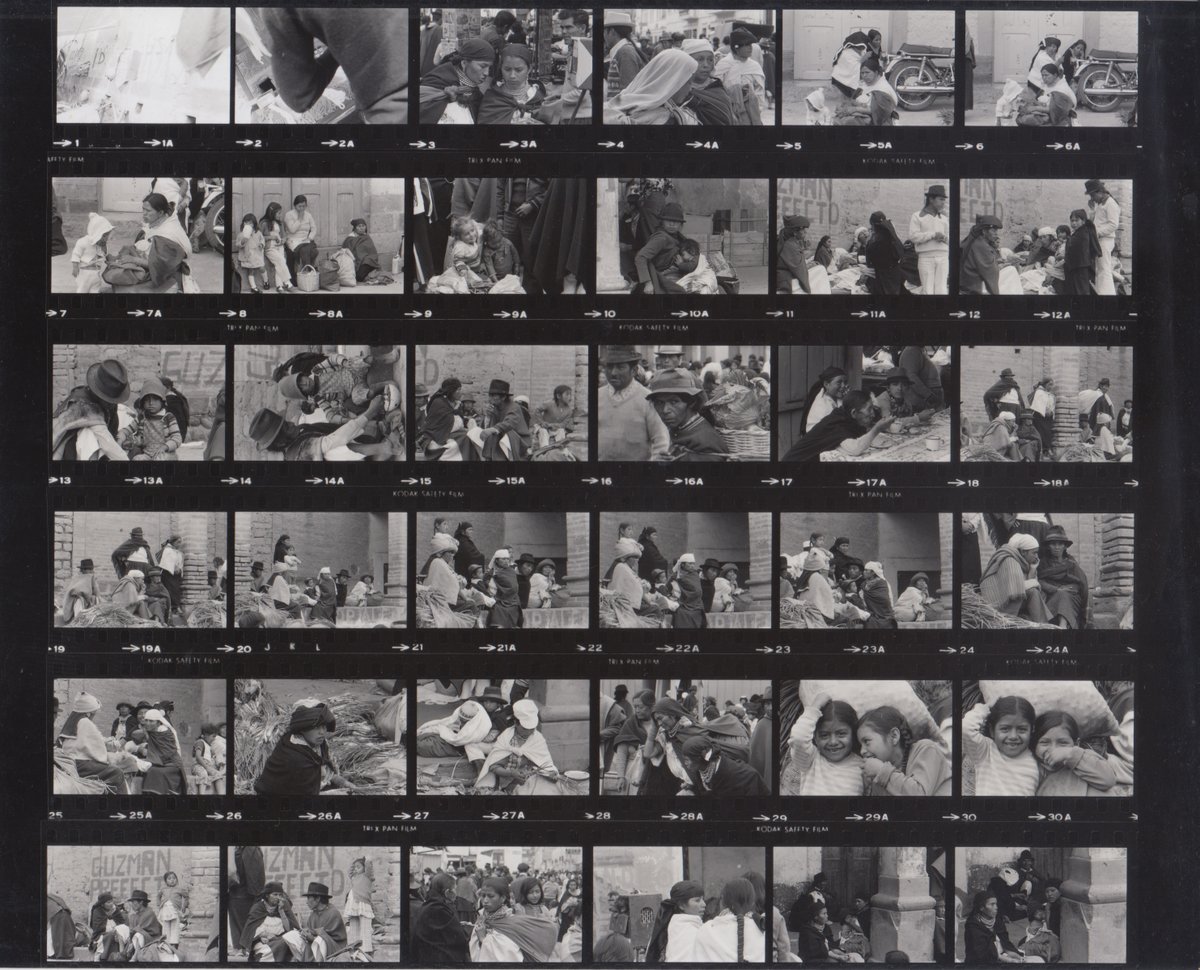
Lorena outlines the photographic and cinematic production of Franca Donda (1933–2017) and the two Venezuelan film collectives in which she participated.
https://t.co/ZVcPI7vhJs
Mónica argues that Bussenius has been underappreciated in scholarship despite producing groundbreaking work exploring the struggles of and solidarities between women and the Mapuche.
Image courtesy of Anarchivo Chile.
Check out Mónica Ramón Ríos’ article in issue 20.3!
Mónica revisits the legacy of the 1917 Chilean film La agonía de Arauco o el olvido de los muertos/Death Throes of Arauco or How to Forget the Dead and its Director Gabriela Bussenius (1889–1975).
https://t.co/m0gFKl8MGw
Fabulous conference being planned at Tulane for this December in honour of our dear Ana Lopez who we all miss. December 4, 5 and 6, Tulane University.
More information at: https://t.co/KLwL3RBalv
Submissions are due by July 15, 2025
¡Vea esta reseña de nuestro reciente número! Escrito por la Dra. María Aimaretti en @MediaticoMFM, termina con un llamado a la acción, "Hagamos de nuestras investigaciones un hermoso portal del tiempo para escuchar, dialogar, aprender y multiplicar".
https://t.co/LNib43vTlg
Including articles by Juana Suarez, Lorena Cervera, Maricruz Castro Ricalde, Miguel Errazu, Mónica-Ramón Ríos, Mary Carmen Molina Ergueta, Marcela Visconti, Livia Perez, María Lourdes Cortés, Lorena Best Urday, and Sara Lucía Guerrero.
Delighted to present issue 20.3 of Studies in Spanish & Latin American Cinemas, a Special Issue entitled "Guerrilla Archiving: Documents for a Feminist History of Latin American Cinemas."
https://t.co/OxSvDirAt5
Featuring an introduction by Special Issue Editors Isabel Segui, Nina Tedesco and Elizabeth Ramirez-Soto.
Ana Lopez the co-editor of this issue gets a heartfelt shout out. We miss you Ana!
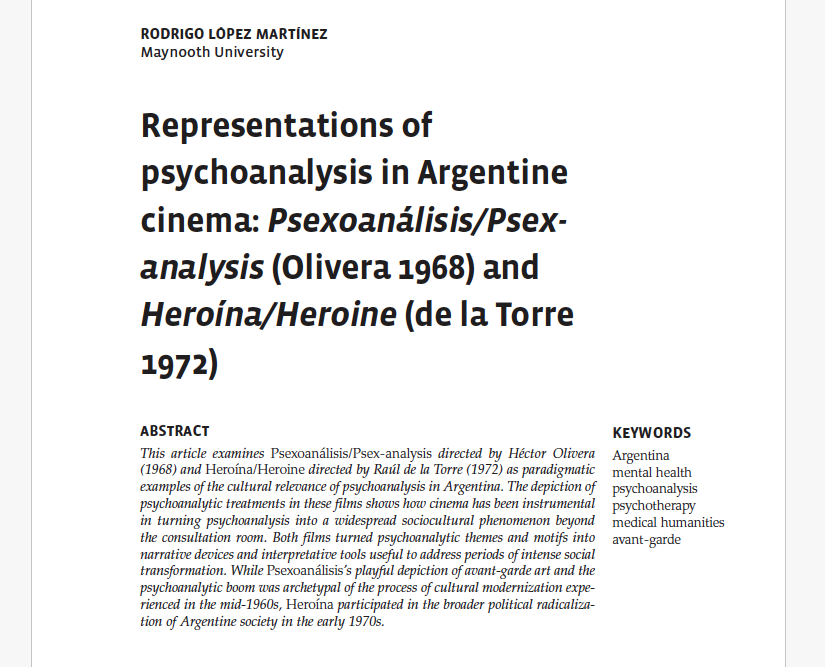
Just published in @StudiesinSLAC! My new article about psychoanalysis and cinema in Argentina, exploring what the therapy session has to tell us about the middle-class subject and its ambivalent stance toward social change: https://t.co/n5vLTwRYWS
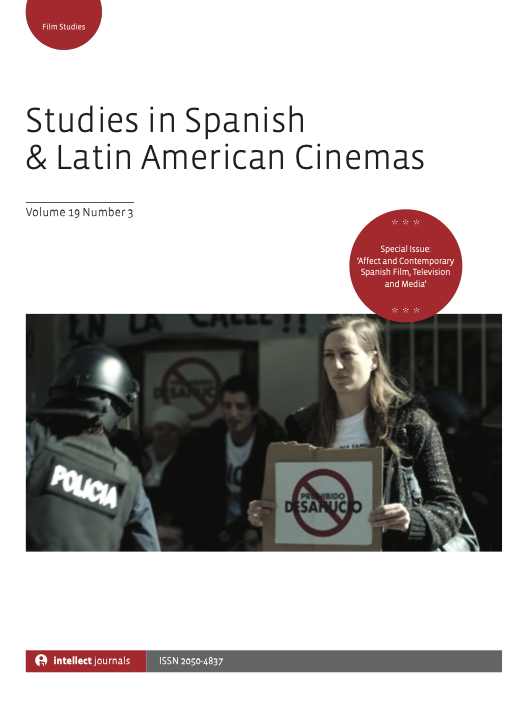
Announcing 19.3, a special issue on Mobilizing Affect in Spanish film and screen media from the Great Recession to the present, ed. Bryan Cameron
Read the special issue's introduction (free!) here: https://t.co/nMCVTokNS4
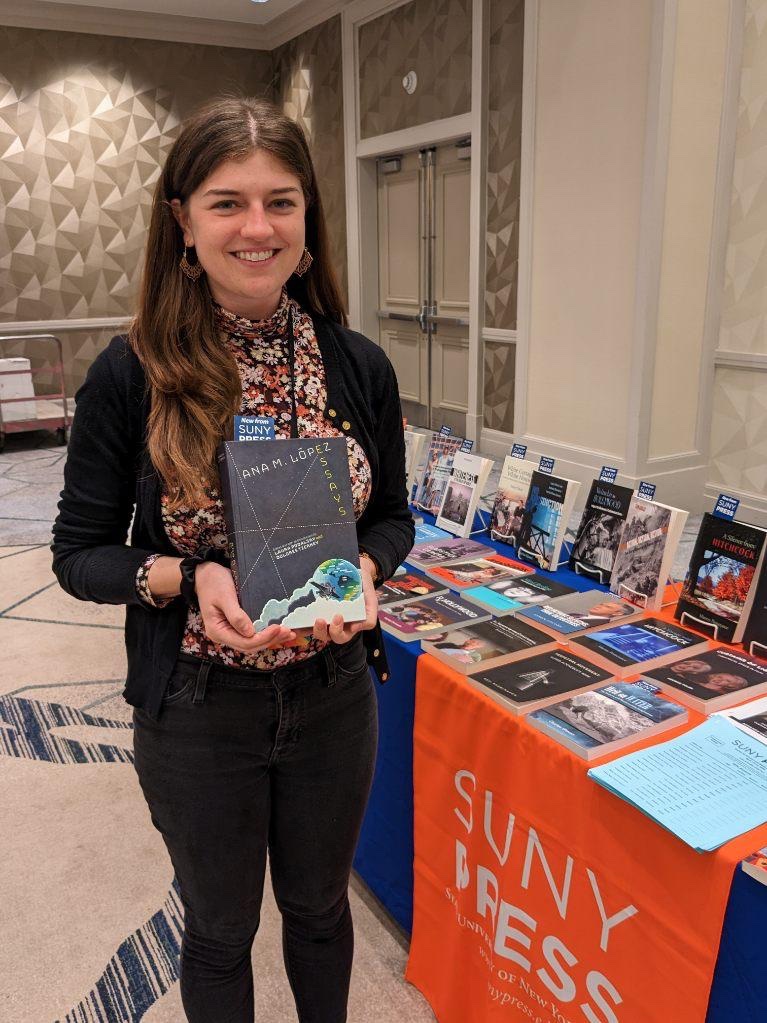
A Celebration of “Ana M. López: Essays”
12th May 1pm CST
Zoom: Registration https://t.co/7lVzWR04zR
1:00 Opening Remarks
1:20 López and Latin American Film Studies
3 BREAK
3:15 Lopez’s Work in the Classroom
4:30 Reception
My review of Deborah Martin's wonderful book, The Child in Contemporary Latin American Cinema, is now online: https://t.co/GJIUpHmLUt via @StudiesinSLAC 📚
QEPD Carlos Saura - recommending today Stuart Davis's "The time of the (orphan)" that reads Cría cuervos (Saura, 1976) alongside Catalan film Estiu 1993 (Carla Simón, 2017)
https://t.co/sVou3833ot