Inflation pass-through from producer prices to consumer prices has gained pace since October 2021 as several leading domestic and foreign consumer brands, including Sanquan, adjusted up their retail prices, while inflationary pressures from the upstream industries eased off
Delving into inflation data today, based on a Bloomberg chart that's been circulating recently showing the relationship of China's PPI vs US CPI. It seems these trends also match EU27 & UK. Makes sense, given China's role in global supply chains / trade relationship w/ the West.
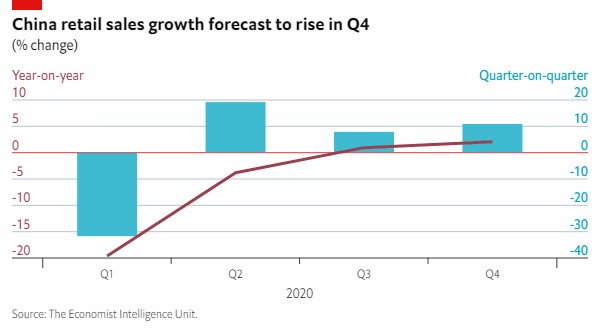
And now, for a break from your regularly scheduled hot takes on China's census data... April inflation data shows some interesting trends. Supply-side recovery is noticeably outpacing demand-side (mom% trend is probably a better illustration than yoy%, owing to base effects).
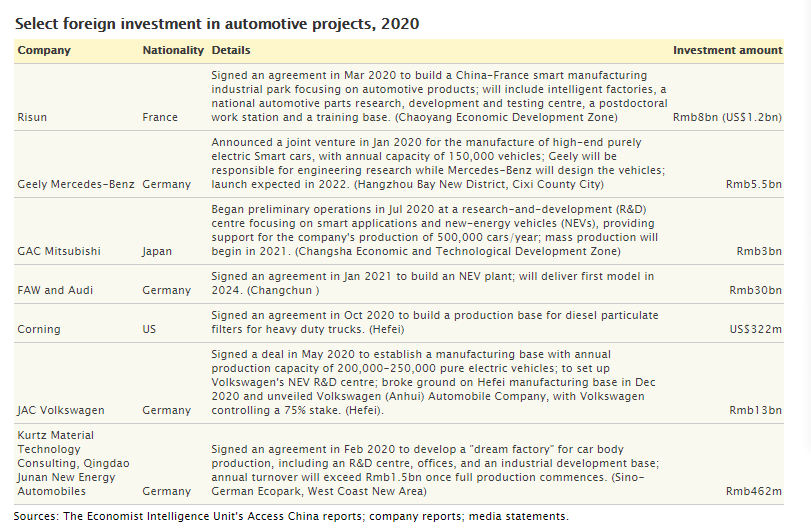
China becomes the world’s top destination for FDI in 2020. EIU project-level data suggest foreign companies are optimistic about China's future domestic demand prospects.
https://t.co/Xmd0AFaMSk
We forecast that most economies in #Asia will take until 2022 or later to achieve widespread vaccination against #covid19. For many developing countries, it could take until 2025 or later. Clients can read about our #vaccine timeline predictions here: https://t.co/1bgsjVLwwp
The revise down of manufacturing suggests the impact of the US-China trade war has been underestimated. The upward revision in IT sector could partly explain why gov recently tightened regulation on tech sector, amid the fears that expansion of sector outpace regulatory control.
H/t @SuYue136: China has revised down its 2019 real GDP growth to 6%, from 6.1% before. Revisions, while common, boost current year growth rates by lowering base of comparison. Conceivable we see growth of 2% for 2020, but more reflects stats adjustments than economic resilience
H/t @SuYue136: China has revised down its 2019 real GDP growth to 6%, from 6.1% before. Revisions, while common, boost current year growth rates by lowering base of comparison. Conceivable we see growth of 2% for 2020, but more reflects stats adjustments than economic resilience
EIU China consumer quarterly Q3. Luxury goods firms should plan for continued repatriation of luxury spending to China in 2020-21 by increasing stock and selection at Chinese stores, as outbound Chinese tourism will not recover to pre-pandemic levels until 2023.
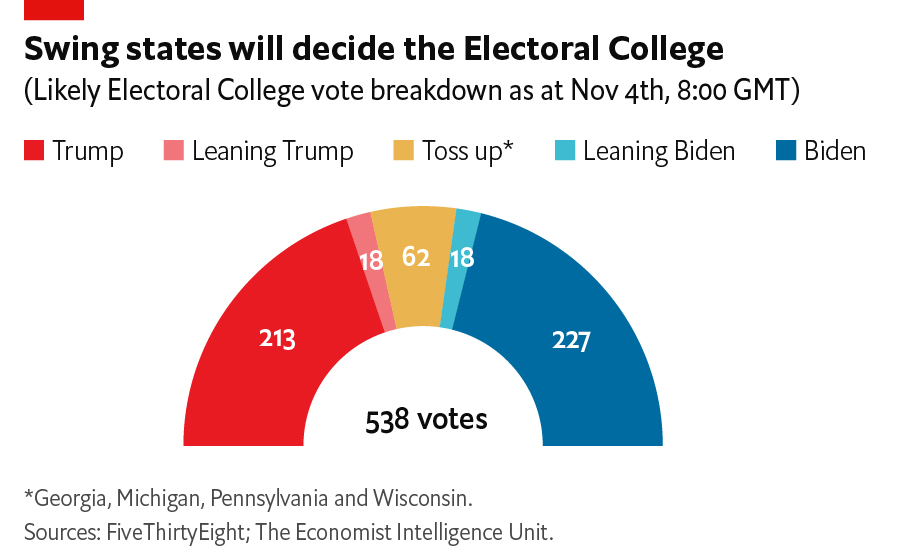
Lots has happened over the last four hours.
Trump has widened his lead in PA (though 25% of votes are yet to be counted) and NC.
Even if Biden loses both, he can still win with 2/3 of GA, MI and WI. Biden has taken a slight lead in WI, and is poised to pull ahead in GA.
The initial results are in - both candidates have managed to hold onto the states that their party won in 2016.
No surprises there, but possibly several yet to come. Biden is likely to flip AZ, but Trump looks set to hold NC.
GA, MI, WI and PA will define it. #Election2020
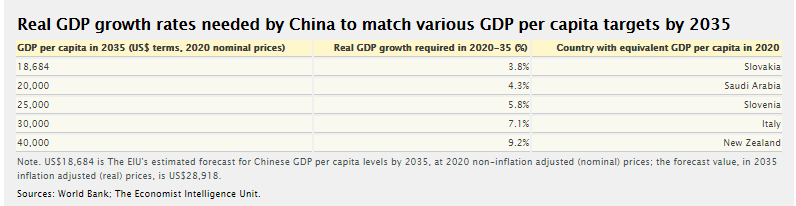
We expect China to set an (either explicit or implicit) GDP per capita target ranging from US$20,000-25,000 (in 2020 prices) by 2035. This will nevertheless require a pace of real GDP expansion ranging from 4.3-5.8% in 2020-35, higher than our fcast annual average of 3.8%.
China's GDP per capita targets for 2035 implies sustaining rapid economic growth. Based on our calculations, we estimate that a minimum real GDP per capita target of around US$23,000(in 2020 price) would be needed for China to reach equivalence with these countries.
XJP calls for an “indigenous & controllable, secure & reliable” domestic production supply system. These terms all part of controversial directives over past 6 yrs promoting substitution away from foreign tech products & services. So about China’s inward turn... H/t @SuYue136