Terracotta fragment of Devi Durga, 200 BCE, Chandraketugarh, Bengal
She wears a headdress with 10 weapons (only 5 shown here because the other half of sculpture is broken off) arrayed in a fanlike fashion. Notice the distinctive Chandrabindu on her forehead,
It’s been over 2000 years yet we still worship Ma in the same form with the same symbols. And yet some charlatans want to dismiss such millennia old civilizational continuity so casually.
India's association with iron extends back through centuries of craftsmanship, innovation, and metalworking traditions. Archaeological discoveries and historical records indicate that iron was produced and used across parts of the Indian subcontinent long before the emergence of modern industrial steelmaking.
#ForgedThroughTime #StoryOfIndianSteel #SteelHistory #IndianMetallurgy #SteelLegacy
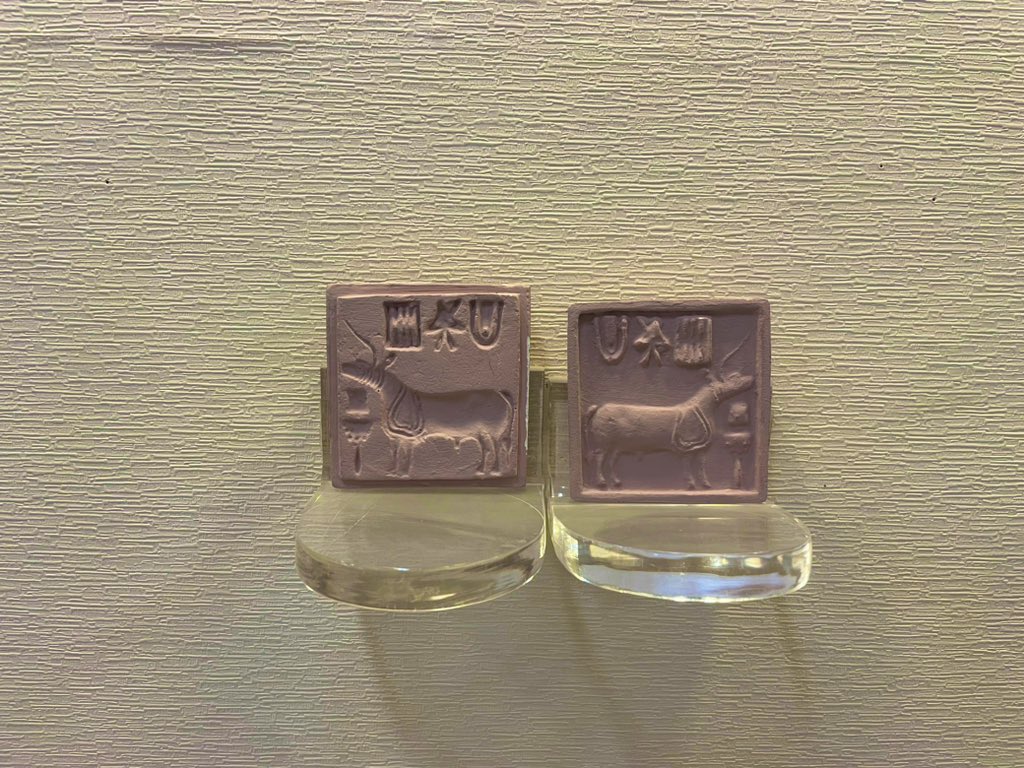
Some 4000 years back people of this subcontinent (or whatever they used to call themselves back then) were using baked bricks, baked pottery, drain pipes, precise weighing stones and seals for business purpose.
Pictures from my visit to Kalibangan of Hanumangarh district, Rajasthan. Which was part of Harappan culture. The wonder that was India.
As Arthur Llewellyn Basham in his book writes;
“The earliest Europeans to visit India found a culture fully conscious of its own antiquity - a culture which indeed
Exaggerated that antiquity, and claimed not to have fundamentally changed for many thousand of years.
To this day legends known to humblest Indian recall the names of shadowy chieftains who lived nearly a thousand years before Christ, and the orthodox Brahmin in his daily worship repeats hymns composed even earlier. India and China, in fact, the oldest continuous cultural traditions in the world.”
A joyous moment for every Indian!
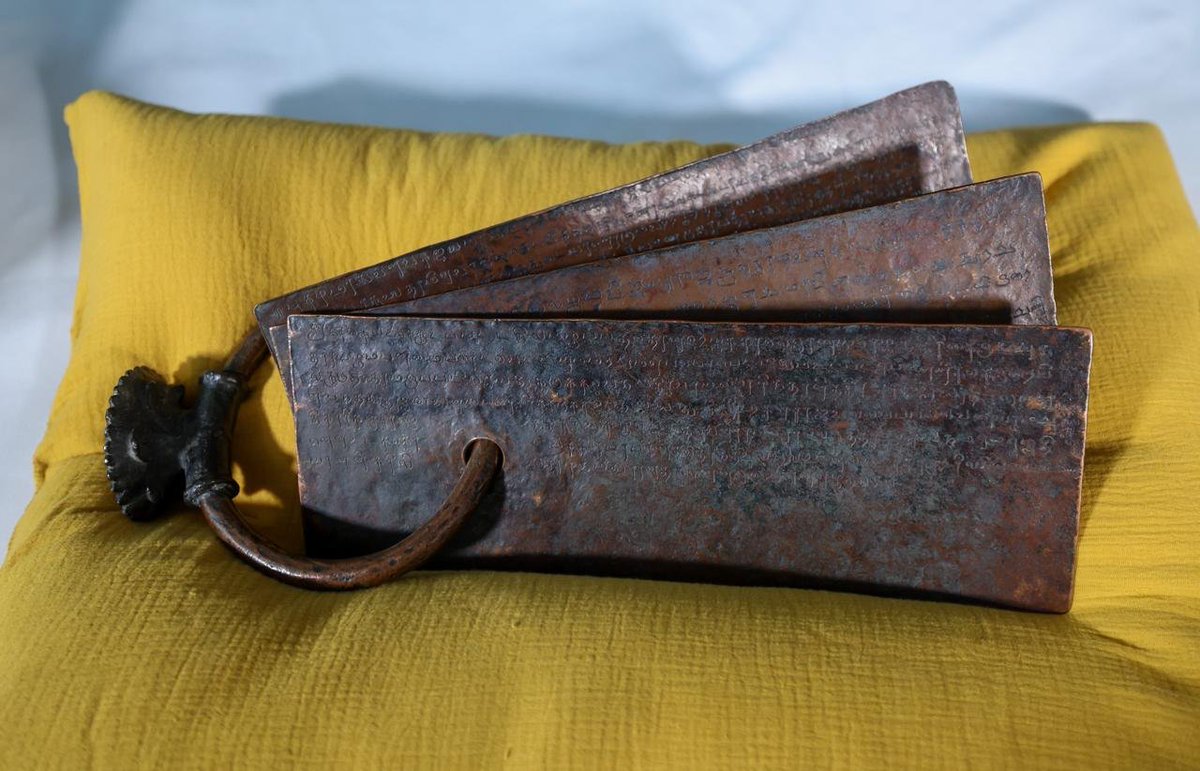
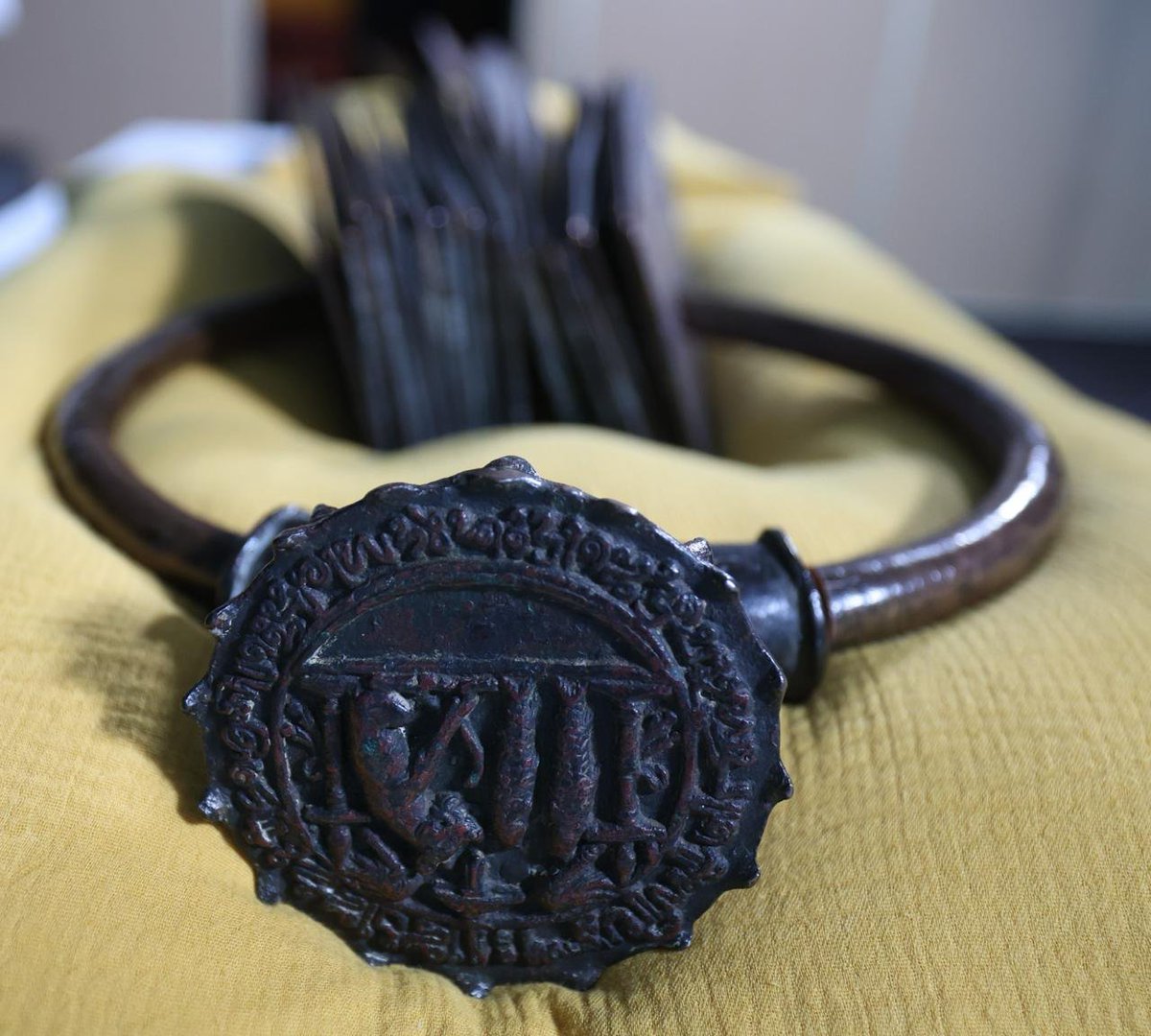
Chola Copper Plates dating back to the 11th Century will be repatriated to India from the Netherlands. Took part in the ceremony for the same in the presence of Prime Minister Rob Jetten.
The Chola Copper Plates are a set of 21 large plates and 3 small plates and largely contain texts in Tamil, one of the most beautiful languages of the world. They relate to the great Rajendra Chola I formalising an oral commitment made by his father, King Rajaraja I. They also showcase the greatness of the Cholas. We in India are immensely proud of the Cholas, their culture and their maritime prowess.
I thank the Government of the Netherlands and Leiden University in particular, where the Copper Plates were kept since the mid-19th century.
@MinPres
जिसे हम सदियों से आस्था की आँखों से देखते आए थे, अब विज्ञान ने उसकी पुष्टि कर दी है।
प्रयागराज के संगम को हमेशा से गंगा, यमुना और अदृश्य सरस्वती के मिलन का स्थान माना गया है। एक त्रिवेणी, जिसमें दो नदियाँ दिखती थीं, और तीसरी सिर्फ़ श्रद्धा में बहती थी।
अब हैदराबाद के CSIR-नेशनल जियोफ़िज़िकल रिसर्च इंस्टिट्यूट (NGRI) के वैज्ञानिकों ने इस पौराणिक मान्यता को एक ठोस वैज्ञानिक आधार दे दिया है। हेलीकॉप्टर से किए गए एयरबोर्न सर्वे और ज़मीन पर की गई कन्फ़र्मेटरी ड्रिलिंग के बाद, डॉ. सुभाष चंद्र की टीम ने पुष्टि की है कि गंगा और यमुना के बीच, ज़मीन से 10 से 15 मीटर नीचे, एक विशाल प्राचीन नदी दबी हुई है। इसकी चौड़ाई, गहराई और आधार स्तर, तीनों गंगा और यमुना के बराबर हैं।
यानी यह कोई छोटी सहायक धारा नहीं थी। यह स्वयं एक मुख्य नदी थी।
विज्ञान इसे "पेलियो रिवर" कहता है। आस्था इसे सरस्वती कहती है। दोनों एक ही सच की ओर इशारा कर रहे हैं।
प्रयागराज अब सिर्फ़ आस्था का संगम नहीं रहा, यह विज्ञान और परंपरा का भी संगम बन गया है। जहाँ हज़ारों वर्षों की स्मृति, और आज की तकनीक, एक ही कहानी कहती हैं।
माँ सरस्वती कभी सूखी नहीं थीं। बस छिप गई थीं। और आज, फिर से सामने आ रही हैं।
पूरी खबर : https://t.co/fGAJa2XC1l
@AaravChoudharyX कैसे चू#t& लोग है चूजे भर के देश कॉकरोच जैसी ताकत से ये कितना आसानी से भारत के लोगो को कंट्रोल करलेते हैअरे भारत जैसे सम्पन्न देश मे हो तुम खुद इन चूजो को कंट्रोल करके भारत को अमेरिका-चीन के टक्कर मे खड़ा कर सकते हो लेकिन मानसिकता देखो इनकी अपना ही पेट काट के इनकी गुलामी कर रहे
@ocjain4 अरब देश कितने मूर्ख है अमेरिका एक तीर से कई शिकार कर रहा है इरान को उकसा कर वेनेजुएला के तेल की मांग और कीमत बढवा रहा है अरब देशों को पिटवा भी रहा है और oil रिसोर्स को नुकसान भी पहुचा रहा है अब ये अरब देश बिलियन डॉलर के अमेरिकन हथियार खरीदे अपनी सुरक्षा केलिए नाक भी रगडें।
🛕Kashmir Smast: Oldest Hindu Monasteries
100 AD, Shiva, Goddess Bhīmā-inspired
This 🧵 summarizes the great cave, temples and ancient India's monastery-university at Kashmir Smast. Mapped in 1960s, looted since 1990s, studied over 1999–2018, Kashmir Smast is now lost.
🛕Location and Discoveries
1️⃣Kashmir Smast is a vast natural cave site in north Gandhara, in the Sakra range above a scenic valley. After a steep hike to 1,100 m, you reach a 20 m-wide, 20 m-high cave entrance. It is 180 m deep.(Note: "Smast" is likely from Pashto word "smats, سمڅی" which means "cave").
2️⃣Inside the cave: ruins of ancient temples, aligned east despite the darkness. The deepest temple requires a short crawl to reach, and a small water tank sits mid-cave. Above the cave mouth are extensive Matha (monastery) ruins with North, Central, and South campuses (see photo).
3️⃣Noted in 19th-century field reports, Kashmir Smast was first systematically mapped in 1962 by a Japanese team led by Seiichi Mizuno. The site was largely undisturbed, and their maps record multiple temples in the main cave, a small valley cave temple, and a vast monastery complex.
4️⃣In the 1990s, vandalized art and inscriptions flooded Peshawar’s black market, traced to Kashmir Smast. Over 1999–2018, scholars like M. Nasim Khan documented what remained.
5️⃣Nasim Khan's monographs identify
– coins from about 200 BC to about 1200 AD (Indo-Greek, Shunga, Kushana, Gupta, Dakshin Koshala, etc).
– Hindu inscriptions in Brahmi, Kharoshthi, Gupta, Sharada and other scripts date from 100 to about 1200 AD, after which the site goes quiet.
– crumbling manuscripts (birch bark) locked inside brick cavities, pots.
– terracotta and stone artworks from various centuries: Bhima devi (not the Mahabharata Bhim), Lajja Gauri, Saraswati, Lakshmi, Shiva linga, Nataraja, Vishnu, Radha-Krishna, Ganesha, Aditya, and more.
– seals with inscriptions, Hindu iconography
– lamps, some inscribed
– gold ornaments, likely donated to the temples
6️⃣In 1959–62 (and still in 1999), the great cave had “beautiful” temple walls, a water tank, pilgrim stairs, and artwork – all ancient. After 2021, the walls, stairs, and art are gone—looters left rubble across all three sections.
🛕Kashmir Smast inscriptions – what do they say?
1️⃣The site is called “Sita Mahaguha” on Sri Minja mountain. Alternate spellings include Sita-Mahakandara, Munja/Maunja Parvata. These echo sites included is in Vedic texts, the Mahabharata, Siddhanta Kaumudi, and more.
2️⃣Three monasteries at this site, say the inscriptions: Kshayani-matha (central, largest campus), Ahani-matha (southern campus), and Para-matha (northern campus)
3️⃣Five Shiva temples appear in pre-400 AD inscriptions. The oldest (100–200 AD) mention a “pious chaitya for Vardhamaneshvara (Shiva),” donations to a matha, and food for students and visitors; an early Brahmi record names “Saliyaka Vardhmaneshvar.” Later inscriptions echo these gifts, plus pay for water reservoirs, repairs to the mathaka, etc.
4️⃣Kashmir Smast donors included men and women of all classes—royalty, senapatis, merchants, and artisans.
5️⃣Donor names in inscriptions resemble modern Hindu names (e.g., Sitarama, Raja, Krishna, Nandi, Chandra, Jvala).
🛕Significance
1️⃣Gandhara was never exclusively Buddhist. Hinduism and Buddhism co-existed in Gandhara. Kashmir Smast, with rare exceptions, is entirely Hindu from start.
2️⃣This site is northwest of Srinagar (J&K); it is the oldest, farthest north monastery-university complex found so far on the subcontinent.
3️⃣Ancient Taxilla monastery-university was not isolated site for higher learning; Kashmir Smast was another.
4️⃣Findings so far suggest Kashmir Smast was mainly a Hindu monastery-university, unlike ancient Taxila University’s mixed and layered Vedic–Buddhist–Jaina past. Prof. Nasim Khan calls Kashmir Smast the “earliest Hindu university in South Asia” (Open Library 26497362M).
5️⃣Based on inscriptions, Kashmir Smast is likely older than Sharada Peeth site – another historic center of Hindu studies. These became linked later.
6️⃣Bhima Devi and Shiva were established near Kashmir before the 2nd century, in temple context, as donation records show.
7️⃣The oldest Kashmir Smast inscription dates to the early 2nd century, but the site is likely older: coins from 300–200 BC have been found, and Mauryan coins probably wouldn’t still be circulating centuries later in northwest India.
8️⃣The presence of Vishnu, Ganesha, Surya and other art and iconography confirms diverse Hindu traditions participated at Kashmir Smast.
9️⃣Kashmir Smast thrived thru the 11th or 12th century; it is mentioned over the centuries, such as the 7th-century Chinese pilgrim Xuanzang, later by Al Biruni.
🔟Kashmir Smast pilgrims and coins trace origins from Northwest to Central India. Hindu tirtha (pilgrimage) tradition is ancient, and ancient Hindus from central India saw Kashmir Smast a part of their sacred geography.
🛕Hindus in ancient Egypt, 250 BC – 500 AD
Berenike excavations, 2018–2024 results
This 🧵 discusses four recent discoveries from ancient Egypt – a Vrishni triad, a Goddess-Tamil-Brahmi inscription, Indian teak and Indian pets. The media already covered the marble Buddha ruins and inscription. Together the evidence says, an Indian community lived in ancient Berenike.
🛕Location
1️⃣Berenike (Berenicé, Trogodytika) lies on Egypt’s Red Sea coast—about 300 km SE of Luxor and 250 km E of Aswan. About 1600 km north of Abbas (Red Sea entrance from south), it was a major Roman-era port city.
2️⃣Berenike was founded by Ptolemy II in the 3rd century BC.
3️⃣Berenike, a Red Sea port excavated since 1994. Over 2018–2024, scholars excavated several spots, including the city’s main Isis temple with a sanctum and large hall. Built in Egyptian style under Tiberius (A.D. 14–37) by merchant Marcus Laelius Cosmus, scholars found stone, wood, metal and marble statues, many inscriptions. Some were Indian.
4️⃣Isis is the Roman guardian deity of sea, ships and seafarers. The town grew around Isis temple. India-origin statue, teak, and pet remains also turned up elsewhere in Berenike.
🛕Discoveries
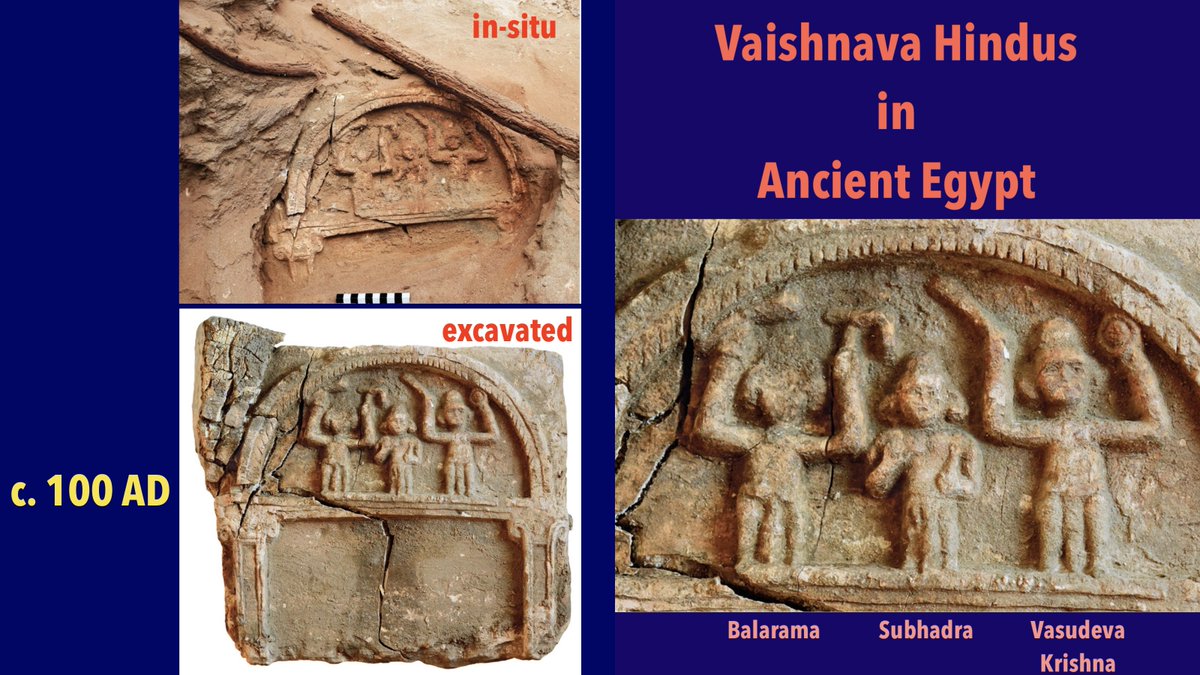
1️⃣Found inside the temple annex: a votive stele fragment (38 cm high × 42 cm wide × 8 cm thick) with half round pediment at top supported by two pilasters with capitals. Inside are three figures – the Vrishni triad.
– The central figure, 11 cm tall, depicts a female as seen from depictions of breasts. Her left hand holds a vessel, and her right is in abhaya-mudra. Her hair is a topknot. She has earrings.
– The left figure, 14 cm tall, depicts a male with a gadda in his right hand and a hala in left. His face is damaged, but we can see his earrings.
– The right figure, 16 cm tall, also depicts a male with a gadda in his right hand and a round chakra-like motif in left. His hair is a topknot, and he too has earrings.
– All three wear dhoti, with central drooping fold.
This is the Hindu Vrishni triad – Saṃkarṣaṇa to the left, Ekānaṃśā in the middle, Vāsudeva on the right (= Balarama–Subhadra–Krishna, Vaishnava tradition). Based on context and style, Berenike Vrishni date: c. 50–150 AD.
2️⃣Two Satavahana coins (c 100 AD, ancient Maharashtra–Gujarat), likely a donation.
3️⃣In 2024, scholars found a bench to the left of temple's entrance with a Tamil-Brahmi inscription for an Indian goddess, which has not been published yet (expected later in 2026). See video below.
4️⃣A lot of ancient Indian textile fragments, along the weaving pattern found only in ancient Indian textiles.
5️⃣Indian teak wood in many parts of Berenike. Used in ships, temples, houses – teak must have been a major import from India.
6️⃣Indian pets based on genome studies.
7️⃣Numerous pottery and jars found with sacred swastika printed on them. Some jars with Indian food – rice, dal, spices. Many Indian cooking utensils. Potsherd with Prakrit and Brahmi graffito, pre-1st century.
🕉️Significance
1️⃣Vaishnava and Shakta tradition Hindus were among the Indian traders, travelers and residents in Berenike, along with Buddhists.
2️⃣The presence of a Sanskrit-Greek inscription in northern Brahmi (Gujarat) which includes the word "Kshatriya", a Tamil-Brahmi Goddess inscription in Isis temple, graffitos elsewhere suggests a substantial presence of literate Indians in Berenike.
3️⃣Both Vaishnavism and Shaktism must be already established in India, in temple context, before 2nd-century – because Indian diaspora in Berenike would only add well established religious symbols and artwork to Isis temple so far away (~4000 km west of Kerala).
4️⃣Under 10% of the Berenike site had been excavated through 2025, says co-director Steven Sidebotham. The next 10-15 years is expected to yield more Indian art. Berenike is important because it preserves information about Indian people, beliefs, technologies and culture, largely untouched since the 6th century.






![Param_Chaitanya's tweet photo. Kṣattriyeṇa (क्षत्त्रियेण)
[Benerik, Egypt] https://t.co/E2GbqtRH5E](https://pbs.twimg.com/media/HKi7venaUAANiuV.jpg)