"भस्म व्हायच्या आधी थोडं जगून घ्या"
आपण रोज धावत आहोत. शाळा, कॉलेज, नोकरी, व्यवसाय, जबाबदाऱ्या, ध्येयं, स्पर्धा—या सगळ्यात आपण जगणं विसरत चाललो आहे.
आपलं आयुष्य म्हणजे एका वाळूच्या घड्याळासारखं आहे. वाळूचे कण वरून खाली पडतायत…आणि एक दिवस ती वाळू संपणारच.
प्रश्न एवढाच आहे – ती वाळू संपेपर्यंत आपण खरंच जगतोय का?
"आपण सगळे जन्माला आलोय, ते एका अनिश्चित एक्सपायरी डेटसह." मग प्रश्न आहे, जेव्हा शेवटी आपल्याला भस्मच व्हायचंच आहे, राखच व्हायचंच आहे, तर आधी खरं जगायचं की नाही?
आपण कुठे धावत आहोत?
सकाळी डोळे उघडले की मोबाईलमधील मेल्स,
कामावर ताण,
घरी आलो की पुन्हा चिंता,
आपलं जगणं "to-do list" मध्ये अडकलं आहे.
“आज ऑफिसमध्ये मीटिंग आहे.”
“टार्गेट पूर्ण करायचं आहे.”
“बिलं भरायची आहेत.”
"मुलांची शाळेची फी भरायची आहे."
आपण धावतच राहतो, पण कुठे पोहोचतो?
माणूस नोकरीमध्ये इतका बुडाला की त्याच्या मुलांचा पहिला बोबडा शब्द ऐकायला तो घरी नसतो, शाळेतला पहिला दिवस त्याने पाहिला नाही आणि वडीलधाऱ्यांसोबत जेवण करायला त्याला वेळ नाही आणि एके दिवशी अचानक हार्ट अटॅक येतो आणि माणूस होत्याचा न्हवता होतो, काही काळात राख होतो. धावपळीत हरवलेलं आयुष्य.
आपल्यापैकी कितीजण असं करतायत?
आपण पैशासाठी धावतो, पण शेवटी पैसे खर्च करायला वेळच उरत नाही. आपण भविष्य सुरक्षित करायला इतके गुंतून जातो की आजचा आनंद हरवतो.
आपण लक्ष दिलंय का? लहान मुलं किती सहज हसतात. ते भविष्याचा विचार करत नाहीत, भूतकाळाचं ओझं घेत नाहीत. ते फक्त "आत्ता मध्ये" जगतात.
आणि आपण?
आत्ता विसरून सतत उद्याची भीती आणि कालचं दुःख यामध्ये अडकून बसतो.
प्रत्येक क्षणाचा आनंद घ्या
आठवा बरं
तुमच्यामुळे कोणाच्या डोळ्यात आनंदाचे अश्रू आलेत का?
तुम्ही कोणाला संकटात मदतीचा हात दिला का?
तुम्ही तुमच्या प्रियजनांसोबत खरंच वेळ घालवला का?
शेवटी, आपण सगळेच भस्म होणार आहोत. आपण राख झाल्यावर लोकांना आपल्याबद्दल काय आठवेल?
आपण किती बँक बॅलन्स ठेवला होता?
की
आपण लोकांना कसं वागवलं, कठीण काळात कोणाचा हात धरला, कोणाला मदत केली, कोणाचे अश्रू पुसले, कोणाला हसवलं?
महात्मा गांधी, सावित्रीबाई फुले, भीमराव आंबेडकर आणि इतर ही महान लोकांकडे प्रचंड संपत्ती नव्हती, पण लोकांच्या हृदयात आजही ते जिवंत आहेत. कारण त्यांनी जगताना, इतरांचं आयुष्य उजळवलं.
आपल्या आईवडिल-भाऊ-बहीण बायको-मुलं, प्रियकर-प्रेयसी मित्रांना आणि मुख्यत्वे स्वतःला वेळ द्या.
पैशाने वेळ विकत घेता येत नाही आणि एकदा गेलेला क्षण परतही येत नाही.
जगात, तुम्ही असताना किंवा तुम्ही निघून गेल्यावरही, कोणी तरी तुम्हाला आठवेल, कारण तुम्ही त्यांना कधी तरी मनापासून मिठी मारली होती, आदरनं-प्रेमानं वागवलं होतं. माणूस पैसा विसरेल, पण तुम्ही दिलेलं प्रेम-आदर विसरणार नाही. प्रेम पसरवा.
लोकं म्हणतात – “मी रिटायर झाल्यावर मज्जा करणार आहे, खूप उधळपट्टी करेन, प्रवास करेन, गाणं शिकेन, आयुष्य एन्जॉय करेन.”
पण होतं काय?
६० नंतर डॉक्टर सांगतात – “मीठ कमी करा, साखर कमी करा, चढउतार टाळा.”
म्हणजे दात होते, तेंव्हा चणे न्हवते
आणि आता चणे आहेत, तर दातांनी निरोप घेतला...😊
म्हणून,
फक्त विचार करत बसू नका, काहीतरी करा. गाणं शिकायचं असेल, तर शिका, प्रवास करायचा असेल, तर करा. स्वप्नं जगा. शरीर तरुण असताना प्रवास करा, नवं शिका. सुरक्षित खेळत बसू नका. आपल्या हृदयाचं, आपल्या शरीराचं ही ऐका.
प्रत्येक दिवसाला भेट म्हणून समजा. आज मिळालेला श्वास उद्या असेलच असं नाही. मग का उद्याच्या चिंता करून आजचा आनंद वाया घालवायचा?
आपण राख व्हायचंच आहे, भस्म व्हायचंच आहे. पण त्या आधी—
एखाद्याला मनापासून हसवा,
एखाद्याला मदतीचा हात द्या,
स्वतःसाठी थोडं जगा,
स्वप्नं जगा. मनमुराद हसा-खेळा-बागडा...
कारण जेव्हा शेवटी राख होणार आहोत, तेव्हा महत्वाचं फक्त इतकंच असेल—
"आपण खरंच जगलो का?"
म्हणून पुन्हा एकदा सांगतो –
भस्म व्हायच्या आधी थोडं जगून घ्या....!!!
I get a salary which is tax deducted. With the leftover salary if I buy something, I again pay tax, say 18%GST. If I try to study something, again 18%GST. If I pay insurance premium, again GST. If I buy some shares, and earn some profit, again pay 20% tax. If I put in FD, again +
Your Kubernetes pods might cost 2x more than you think—not because of instance prices but because of estimation errors
Version 3 of our Instance Calculator now shows you how costs change when reality doesn't match your resource requests
Try it → https://t.co/hERHnaWXH8
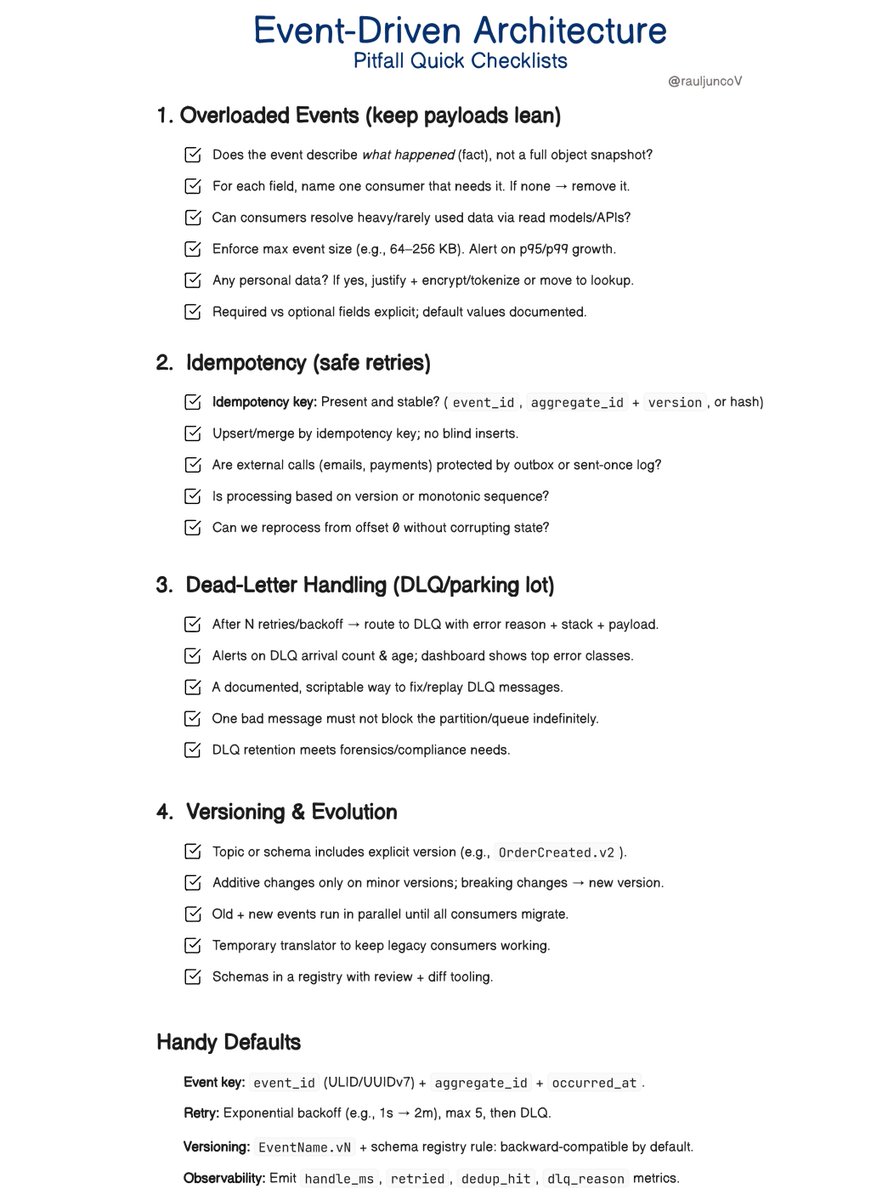
Most Event-Driven Architecture failures aren’t about Kafka, RabbitMQ, or the broker.
They happen because of poor event design discipline.
Here are 4 pitfalls I see over and over, and how to avoid them 👇
1. Overloading Events with Too Much Data
Events bloat, network traffic spikes, consumers pay the cost of parsing irrelevant fields, and schema evolution gets harder.
Fix: Keep the event lean, include only what consumers truly need. Events should describe what happened, not carry entire snapshots.
2. No Idempotency
Retries are inevitable. Without idempotency, consumers double-charge, duplicate records, or corrupt state.
Fix: Use an idempotency key (event ID, aggregate + version). Design consumers so handling the same event twice doesn’t change the outcome.
3. No Dead-Letter Handling
Poison messages can block partitions or silently disappear. You end up blind to errors.
Fix: Always configure a Dead Letter Queue (DLQ). Route failed events there after N retries, alert on it, and have a clear replay path.
4. No Versioning
Events are contracts. Change them without a plan, and you’ll break consumers.
Fix: Version events explicitly (e.g., OrderCreated.v1, OrderCreated.v2). Run old + new side by side until everyone migrates.
If you avoid these 4 pitfalls, you’ll prevent 90% of the headaches teams run into.
Here is my checklist to avoid these pitfalls.
KubeDiagrams is a tool that automatically generates visual architecture diagrams from Kubernetes manifests, Helm charts, and live clusters
It supports 47+ resource types, customizable clustering by namespace and labels, and can handle custom resources
➤ https://t.co/YYlEY4vFmQ
Developers think Software Architects have the easiest highly paid job.
Well... not quite 👇
Here's what devs imagine an Architect does:
- Doesn't write code
- Draws diagrams all day
- Just makes decisions in meetings
- Gets to choose the "cool" tech stack
- Always says "yes" or "no" with confidence
- Doesn't have to deal with bugs
- Works only 4 hours a day
- Has a high salary
But here's what actually happens:
- Writes the core code everyone else will build on
- Spends hours reviewing pull requests for critical changes
- Explains the same architecture to 5 different teams
- Balances business needs with technical debt
- Makes trade-offs nobody will be happy about
- Deals with production issues at 2 AM
- Handles conflicting opinions from stakeholders
- Documents decisions so future devs understand why
- Manages tech stack upgrades without breaking things
- Tracks performance, security, and scalability risks
- Mentors developers while staying hands-on
- Negotiates scope and timelines under pressure
- Reads endless RFCs and framework updates
- Constantly defends architecture choices with data
- Stays accountable when things go wrong
- Learning new things each week to keep up with changing technology
Being a Software Architect is rewarding — but it's far from easy.
It's not just about drawing boxes; it's about owning the outcomes.
What's the biggest misconception you've heard about Software Architects?
—
♻️ Repost to help others learn about Software Architect role
➕ Follow me ( @AntonMartyniuk ) for more
Deep Dive: Docker "run" and "exec" Commands 🔽
Learn how these key Docker commands work under the hood and practice running containers, examining logs, attaching to, and executing commands in containers - all with realistic yet controlled scenarios.
https://t.co/1GieeVjbd0
Most systems don't fail because of bad code.
They fail because of weak architecture under pressure.
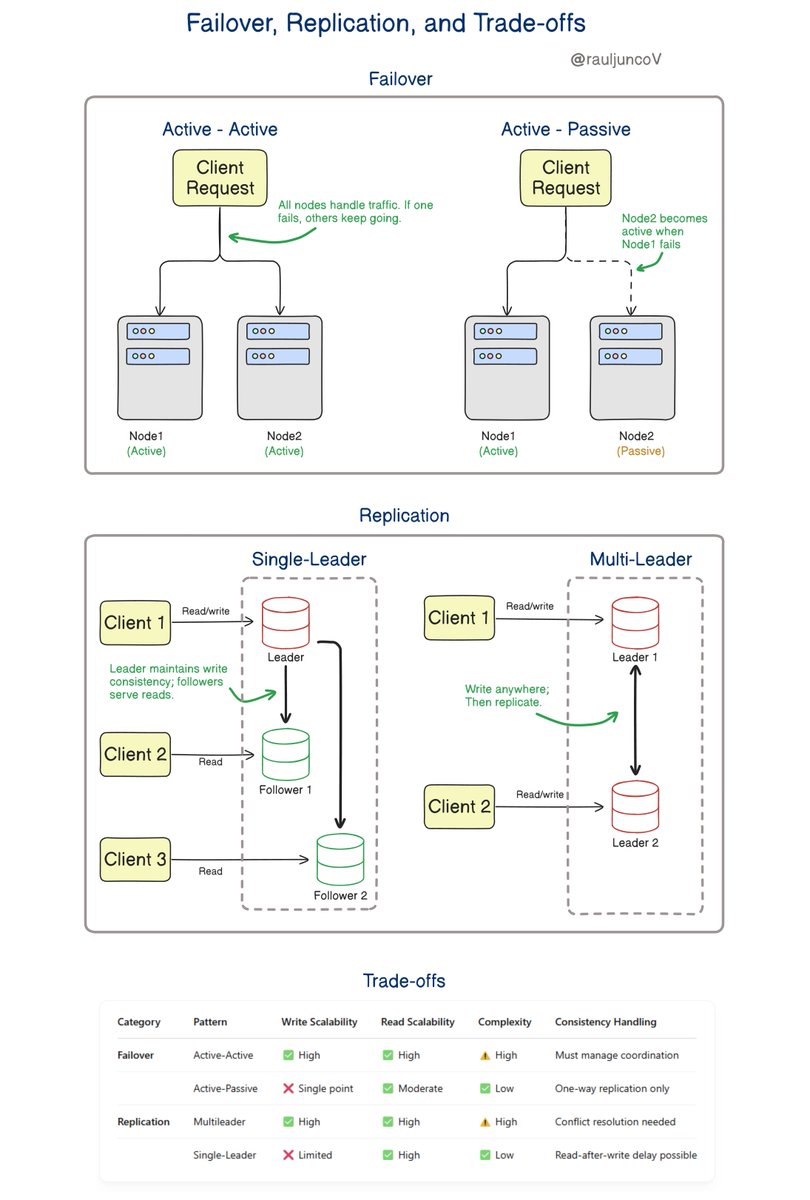
High availability isn't magic. It’s architecture.
Two patterns dominate the conversation: Failover and Replication.
Here’s the problem—many teams throw these terms around without understanding the trade-offs.
➤ Failover is about switching systems when one goes down.
Active-Active: All nodes handle traffic. If one fails, others keep going.
Pros: Zero-downtime, high resource usage
Cons: Complex coordination, risk of race conditions
Active-Passive: One node works, the other waits.
Pros: Easier to manage, fewer conflicts
Cons: Downtime during switchover, possible data loss if replication lags
➤ Replication is about having the same data in multiple places.
Single-Leader: One node writes, others read.
Pros: Simpler consistency
Cons: One write bottleneck, lag on read replicas
Multileader: Multiple nodes can write.
Pros: Write anywhere, higher availability
Cons: Data conflicts, complex reconciliation
Here's what that means for you:
1. Don’t assume replication means zero data loss.
2. Don’t assume failover means zero downtime.
3. Don't pick a pattern based on popularity—pick based on recovery time, latency tolerance, and consistency needs.
Good architecture isn't about uptime. It's about controlled failure.
If you don't understand the trade-offs, you're not as "available" as you think.
What’s one thing your system can’t recover from today?
27 Indian cities hit 42°C in early April.
Yet, ACs are still taxed at 28%.
No subsidy. No policy shift. No relief.
In a country where heat kills,
Cooling isn’t a luxury, it’s a life tool.
So why’s it taxed like sin?
Async systems improve scale. But introduce risks.
Grouping is probably the simplest way to solve some of these issues.
Async processing lets tasks run independently, slashes idle time, and boosts resource utilization.
It enables services to decouple, scale horizontally, and survive under pressure.
But async isn’t a free win. It introduces hidden risks:
• Messages arrive out of order
• Operations collide due to concurrency
These aren’t edge cases; they’re inherent trade-offs that demand explicit design attention.
Here’s what can go wrong:
• A bank processes a withdrawal before a deposit. Transaction fails—even though funds were sent.
• An IoT system gets “door open” and “lock door” at the same time. Now what?
Grouping ensures that related operations are processed in order and follow a strict sequence. Meanwhile, unrelated groups can still be handled concurrently.
It’s a pattern already embedded in major systems:
• SQS FIFO uses messageGroupId for ordered delivery
• Azure Service Bus uses sessions to enforce sequential handling
• Kafka uses partition keys to guarantee per-entity order
Done right, grouping balances correctness and parallelism, though strict ordering may limit throughput.
But misused, it causes hot partitions, throughput bottlenecks, and rebalancing issues.
Example: "Hot partitions arise when a single group (e.g., a superuser) dominates traffic, overwhelming one partition."
Most teams learn grouping the hard way—after the system fails.
What’s your approach to grouping—and how do you handle its trade-offs like hot partitions?
See the CPU execution, Pipeline stages and Caches in action.
This emulator animates the high level CPU and Cache state-machine. You can track the state (fetch, decode, execute, memory access, write back and ) of a given instruction...
Try it here: https://t.co/us1SIKGjYl