"Uncle cane" short story by success.
He is single yet he thinks he understands the rudiments of parenting even more than parents. His office is the supreme Court of the school and his fierce look and harsh tone can make an innocent person to admit to a
Debunking the Phantom Debts and Ecological Loan Fallacy
My attention has been drawn to trending claims by the Anambra State Government that my administration left behind inherited debts, including a ₦2 billion ecological loan, contractor liabilities, and unpaid salaries, gratuities, and pensions. This is completely false.
We systematically liquidated historical gratuities and arrears dating back several years, amounting to over ₦35 billion. At the point of handover, the state owed nothing in salaries, gratuities, or pensions, nor did we owe anything to any contractor for projects duly executed and certified.
The ₦2 billion ecological fund in question was released barely three months before the end of my tenure for the Oko/Umuchiana erosion crisis. Despite pressure to spend the money, I refused, insisting that it should be left for my successor because government is a continuum and the funds were tied to a specific project.
The money was therefore left 100 per cent intact in First Bank, in Account No. 2018779464, with a balance of over ₦2.13 billion.
It is important to stress that funds tied to specific projects or set aside for particular purposes were not even included in the over ₦75 billion in savings we left behind.
If anybody can establish anything to the contrary, I will stop campaigning. -PO
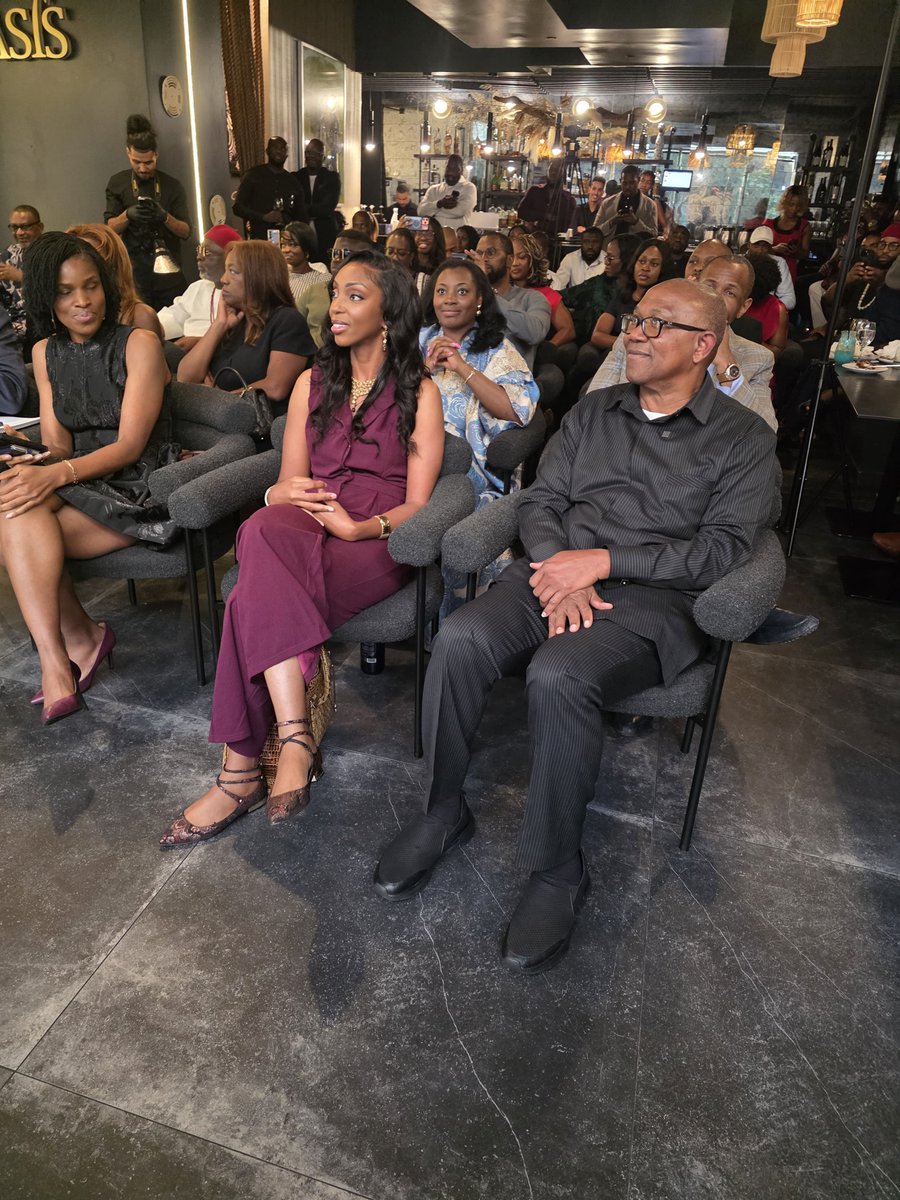
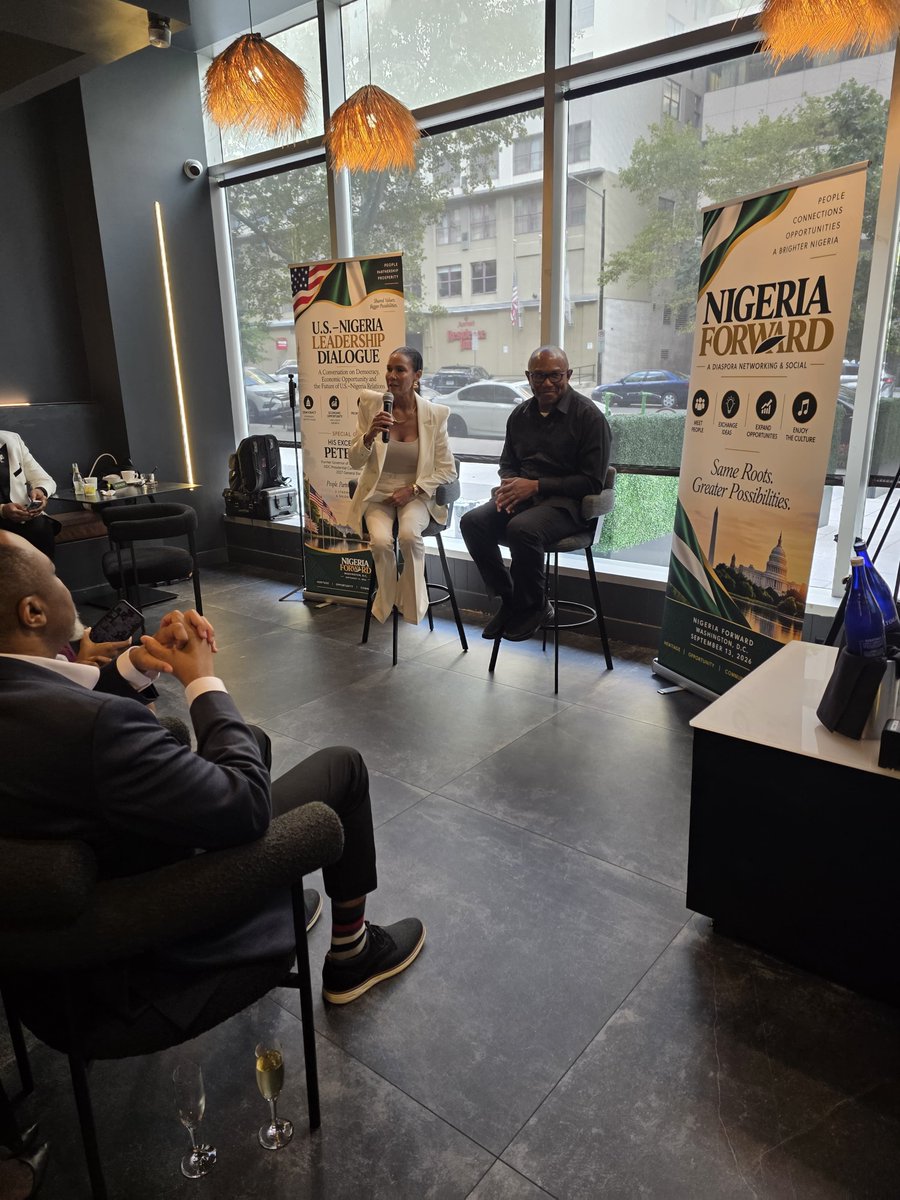
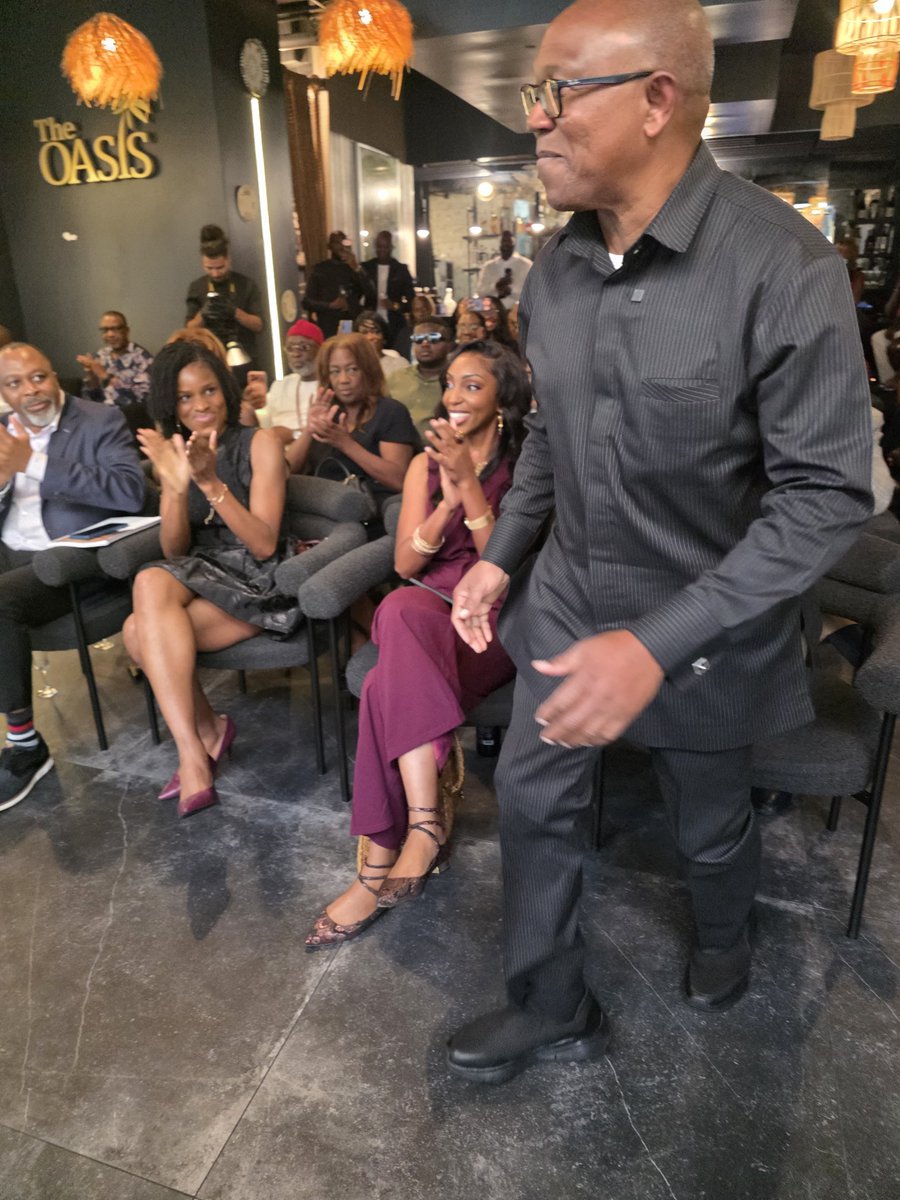
Yesterday, while in Washington, D.C., I had the privilege of meeting with a group of young Nigerian professionals — medical doctors and other healthcare professionals, educators, lawyers, engineers, technology experts, entrepreneurs and business leaders.
It was an engaging and encouraging conversation about Nigeria, the challenges before us, and the kind of country we must work together to build.
Our discussions centered largely on good governance and the urgent reforms Nigeria needs today. I reminded them that, important as our economic, political, and institutional reforms are, the most important reform Nigeria needs is the reform of leadership itself.
No nation can rise above the character, competence, capacity, and commitment of those entrusted with its leadership.
Nigeria is blessed.
We are not lacking in intelligent people. We are not lacking in natural resources. We are not lacking in hardworking and innovative young people. What we have lacked for far too long is leadership that genuinely puts the people first and treats public resources as a sacred trust.
We need leadership that strengthens our institutions, invests seriously in education and healthcare, supports businesses and entrepreneurs, creates jobs and opportunities for our young people, and gives every Nigerian a reason to believe that hard work can still lead to a better life.
Meeting these young Nigerians in Washington once again reminded me of the extraordinary talent our country has produced.
Across the world, Nigerians are making remarkable contributions in medicine, technology, engineering, law, education, business, and many other fields. Our diaspora should never be seen as people who have simply left Nigeria. They remain an important part of Nigeria and must be partners in rebuilding our country.
We must build a Nigeria where our young people do not have to leave their country in order to fulfil their dreams, and where those already abroad can confidently return, invest, contribute and participate in our national development.
That Nigeria is possible.
But it will not happen by accident.
It will require responsible and compassionate leadership, stronger institutions, prudent management of our resources, and, above all, citizens who refuse to give up on Nigeria.
I remain convinced that our greatest resource is not beneath our soil; it is our people.
If we get leadership right, we can get Nigeria right.
We must continue to believe. We must continue to work. And we must continue to demand a country that works for everyone.
A New Nigeria is POssible. - PO
A President and the Endless Question of His Past
As a citizen of no other country, who has never sought foreign citizenship even when doing so became fashionable, my loyalty to Nigeria and my faith in her destiny remain unshaken.
Yesterday, 30th of August, being Sunday, I fervently prayed for our nation and for those entrusted with the solemn responsibility of leadership. I found myself deeply saddened by the direction in which our country is heading.
It is profoundly embarrassing that we have reached a point where a sitting President is asking a foreign court to withhold records concerning his past, particularly records relating to matters of legitimate public interest.
Leadership, in my humble view, demands the courage and humility to confront one’s history — to acknowledge mistakes, provide candid explanations where questions arise, and, where necessary, apologise and seek forgiveness. True authority is strengthened, not diminished, when a leader accepts responsibility rather than seeks to shield uncomfortable aspects of the past from legitimate scrutiny.
This becomes particularly important when questions concern educational credentials. Issues surrounding foundational schooling — primary and secondary — should not remain unresolved or be addressed primarily through legal proceedings. Nigerians deserve clear, credible, and verifiable explanations, especially when such had been submitted in the past.
My deepest concern is the example this sets for more than 200 million Nigerians, particularly the over 30 million young people in schools. The nation’s highest office should exemplify integrity, accountability, transparency, and ethical leadership.
An imperfect past is part of the human condition. What matters is the willingness to confront it with humility, honesty and deep apology, to make amends where necessary and, when circumstances so demand, to place the interests of the nation above personal ambition.
When will our political class fully appreciate that individual ambitions are temporary, while the nation endures? The Presidency is an office held for a season; the moral standards established by those who occupy it can influence generations.
Nigeria is greater than any one person, and the integrity of the Republic must always come before the interests of the individual.
A New Nigeria is POssible. -PO
Celebrating My Eldest Brother at 75
Today, 30th August 2026, I celebrate my eldest brother, Dominic Ositadimma Obi, who turns 75. I celebrate him not merely because he is my elder brother or because of his age, but because he is an exemplary human being.
When I was Governor of Anambra State for eight years, he never came to my office or the Governor’s Lodge for a day seeking favours, as many might have expected. He is a planner and contractor who builds homes for people, yet not once did he ask me for a government contract.
Whenever we met, he would warmly embrace me and tell me that he was fine. He would then solemnly remind me to keep doing what I promised the people and never bring a bad name to the family and my community. He would tell me that whatever difficulties he was going through, many others were worse off, and that I should do my best for society.
I later came to understand that this was not peculiar to him alone. My family members had actually held a meeting and resolved that none of them would take advantage of my position as Governor. They decided that whatever good name I was building for the Obi family and Agulu must be protected. The same principle extended to my children.
Today, at 75, my beloved brother remains deeply concerned about Nigeria. Whenever we speak, he is full of prayers and good wishes. He constantly reminds me that if I have the opportunity to serve Nigeria, I should do so with honesty, integrity, and the interest of the people at heart.
Brother Dom, I thank God for the gift of your life and for the example you have set for our family. Your integrity, humility, contentment, and sense of responsibility are qualities worthy of celebration.
May God Almighty, who has graciously been with you all these years, grant you good health, His abundant grace, and blessings.
Happy 75th birthday, my dearest brother. -PO
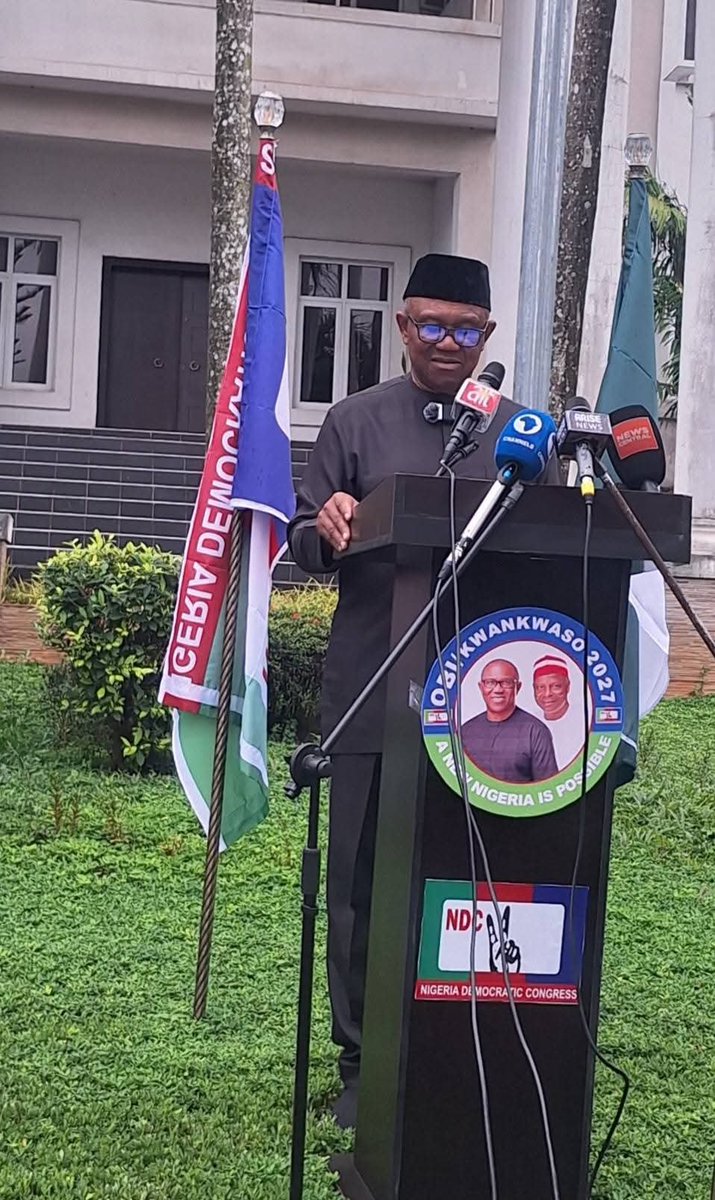
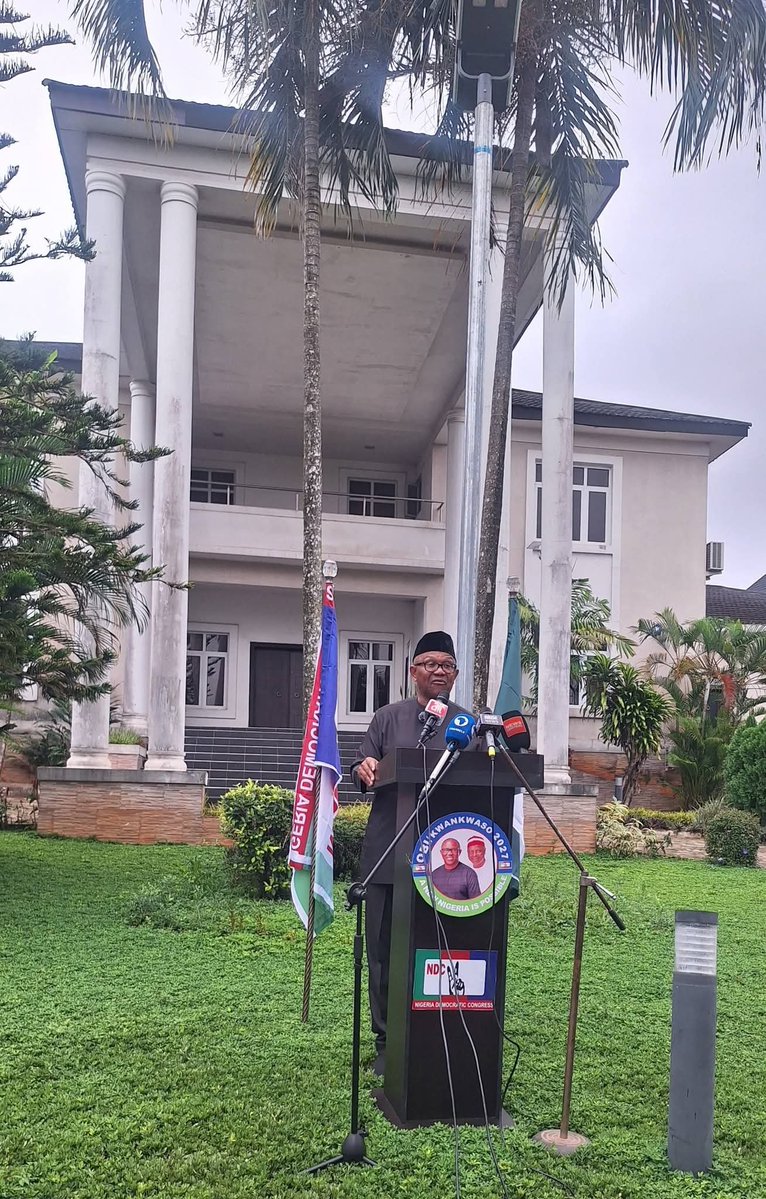
MY ADDRESS TO MARK THE COMMENCEMENT OF THE 2027 PRESIDENTIAL AND NATIONAL ASSEMBLY CAMPAIGNS
21 August 2026
Dear Compatriots,
Members of the Press,
Distinguished ladies and gentlemen,
Wednesday, 19 August 2026, marked the official start of the campaign period for the 2027 Presidential and National Assembly elections.
There is no doubt that this is a defining moment for our democracy. This moment gives Nigerians the opportunity to assess the records, ideas, and plans of those seeking their mandate to lead their country at a time of grave uncertainty in our rapidly changing world.
I consider myself quite privileged to be one of those seeking your mandate to deal with these challenges facing our country.
I enter this contest with one firm conviction: Nigeria can work, and Nigeria must work.
Nigeria faces several serious challenges. Some of them are indeed of existential proportions.
According to the IMF, 63%, or over 140 million Nigerians, live at or below the national poverty line, while humanitarian agencies estimate that 35 million people will need food assistance during the 2026 lean season. About 3.6 million Nigerians remain internally displaced, largely because of conflict and insecurity. Each year, millions of young people enter the labour market, yet too many struggle to find productive opportunities. Weak infrastructure, unreliable power, insecurity, and the excessive cost of doing business continue to burden households and constrain enterprise.
These are more than statistics. They reflect the daily realities of Nigerian families, farmers, workers, students, and businesses.
Yet I do not believe Nigeria lacks the ability to overcome these challenges. We have the people, resources, market, talent, and enterprise. What we must do now is turn these strengths into security, productivity, and shared prosperity.
LEADERSHIP MUST DELIVER RESULTS
My successful private-sector experience, studies in institutions of repute on policy and business matters, and my service as Governor of Anambra State have shaped my understanding of public leadership. Government must manage resources responsibly, set clear priorities, and measure the outcomes of its decisions. Public office is not a reward; it is a responsibility to the people.
In Anambra, I prioritised the foundations of long-term development: education, healthcare, infrastructure, fiscal discipline, and institutional capacity. I do not present that record as perfect, but as an experience from which Nigerians can draw their own conclusions.
Senator Rabiu Musa Kwankwaso brings a different but complementary governing experience.
As Governor of Kano State, he focused strongly on education, technical training, scholarships, infrastructure, and human-capital development. His administration’s investments in education and skills showed an understanding that the people are a state’s most important long-term resource.
Our experiences are different, but our conclusion is the same: Nigeria must invest in its people and manage public resources with discipline.
BUILDING AN ECONOMY THAT WORKS
Nigeria needs more than reactive reforms. We must focus on the questions that matter:
Are Nigerians better off than they were four years ago? Can they afford food, education, and healthcare? Can businesses produce, expand, and create jobs? Can young people find productive work? Can farmers work safely and get their produce to market?
I have been thinking about something lately, and the more I think about it, the more disturbing it becomes.
A lot of Nigerians became poor without doing anything wrong.
They didn’t stop working. They didn’t become lazy. They didn’t suddenly become irresponsible.
They simply woke up one day and realised that the money they had worked for could no longer buy the things it used to buy.
Think about someone earning ₦100,000 a month.
The person still wakes up early every morning, goes to work, puts in the same hours, probably works even harder, gets promoted occasionally and does everything society says a responsible person should do.
Yet every year, that person seems to be able to afford less.
At some point, ₦50,000 could buy a reasonable amount of food for the house. Today, you can enter the market with the same ₦50,000 and genuinely wonder where the money went.
Nothing happened to you.
The economy happened to you.
And I think this is something we don’t talk about enough.
Imagine working hard for years, only for circumstances completely outside your control to quietly reduce the value of everything you have worked for.
You didn’t lose your job.
You didn’t lose your salary.
But somehow, you lost your standard of living.
That is poverty too.
And this is why I struggle with the way we sometimes discuss palliatives.
Of course, when people are hungry, you must find ways to help them immediately. There is nothing wrong with providing temporary relief.
But surely, the bigger question should be:
Why did millions of working Nigerians suddenly need palliatives in the first place?
If a man could comfortably buy a bag of rice from his salary a few years ago and today he needs government assistance to buy that same bag of rice, giving him rice may solve today’s hunger.
But it has not solved the actual problem.
The real problem is that his labour has lost value.
And perhaps that is what we should be obsessed with fixing.
How do we make the Nigerian worker’s income valuable again?
How do we make ₦100,000 buy more next year, rather than less?
How do we make food cheaper by producing more?
How do we reduce the cost of energy and transportation?
How do we build an economy where salaries can actually keep up with the cost of living?
Because when I think deeply about it, perhaps one of the greatest things a government can do for its people is not to keep giving them money.
It is to build an economy where the money they earn has value.
There is dignity in being able to take care of yourself from the product of your own labour.
There is dignity in a teacher being able to feed a family from teaching.
There is dignity in a nurse being able to pay rent from nursing.
There is dignity in a young person working an honest job and gradually seeing life improve.
People should be able to look back after five years of hard work and say, “My life has become better.”
Not, “I earn more money today, but somehow I can afford less.”
That is the part that keeps bothering me.
Millions of Nigerians are not asking to become millionaires overnight.
They just want hard work to make sense again.
And maybe that should be one of the simplest ways we measure whether our economy is actually working:
Is the ordinary Nigerian who works hard becoming progressively better off, or progressively poorer?
Everything else is secondary.
I have followed with deep sorrow and mounting concern the reports surrounding the death of Miss Mary Habila, a 26-year-old Nigerian from Nok, Southern Kaduna, who died on June 27, 2026, within the private residence of the Honourable Minister of Works, Senator David Umahi, in Uburu, Ebonyi State.
First, I extend my heartfelt condolences to the Habila family. No family should have to mourn a daughter taken in the prime of her life while also fighting simply to learn the truth of how she died.
But condolences are not enough. Nigerians deserve answers, and it is on this score that the Tinubu administration has failed, comprehensively and disgracefully.
Consider the facts that are not in dispute. A young woman died in the residence of a serving Federal Minister. For nearly two weeks, neither the Minister, nor the police, nor any arm of government said a word to the Nigerian people. It took the courage of Sahara Reporters to bring this death into public view. Three weeks after her death, no autopsy has been performed. No cause of death has been established. The investigation remains domiciled in the very state where the Minister served two terms as Governor and where his influence is beyond question.
And through all of this, silence from the Presidency. Silence from the Federal Executive Council. Silence from the Inspector-General of Police. Silence from the National Assembly. Not one word. Not one directive. Not one gesture to assure Nigerians that the life of Mary Habila matters to this government.
Instead, the Minister has been permitted to manage the narrative of a death that occurred under his own roof: issuing statements through his personal aides, deploying his private lawyers to correspond with the police, and continuing his official duties as though nothing has happened, while civil society groups, youth organisations, and the family’s own community cry out for an independent inquiry.
Let me be clear: I make no pronouncement on anyone’s guilt or innocence. That is precisely the point. Only a credible, independent, and transparent investigation can establish the truth, and it is the refusal of the Federal Government to guarantee such an investigation that constitutes the scandal before us.
A government’s first duty is the protection of life. Where a life is lost in circumstances touching a high official of state, the burden on government to act transparently is at its heaviest.
President Tinubu’s administration has instead treated this tragedy as an inconvenience to be waited out. If the death of a young Nigerian woman in a Minister’s residence cannot stir this government to act, then Nigerians must ask: whose life, exactly, does this government value?
I therefore demand the following: One, President Bola Tinubu must direct the Honourable Minister of Works to step aside immediately, pending the conclusion of investigations. This is not a punishment; it is the minimum standard of public accountability in any serious democracy. No official under this cloud should preside over a federal ministry as though it were business as usual.
Two, the Inspector-General of Police must immediately transfer the investigation from the Ebonyi State Command to Force Headquarters, with the involvement of independent forensic experts. No investigation conducted in the shadow of the Minister’s home-state influence can command public confidence.
Three, a full, independent, and internationally credible autopsy must be conducted without further delay, with the findings made public. The stalemate over the post-mortem, three weeks after this young woman’s death is an indictment of every institution involved.
Four, the family of Mary Habila must be protected from any pressure, inducement, or intimidation, and must be guaranteed unfettered access to the facts of their daughter’s death.
That girl could have been anything. She had valid dreams.
Heck, she was on track to being a nurse. She was someone's precious daughter.
But a man with unbridled desire thought she was his to have - crushed all of her dreams just for 8 seconds, now she's gone.
The wait is over.
We have 2 golds: Chimdiebube Onwubiko and Don Anele Munachimso.
We are the best in the world!
Egejurum Onyedikachi’s name was omitted. He should have a gold.
Worsening Leadership Crisis in the Country Now Evident
The ultimate cost of uncompassionate leadership, as evident in the country today, is turning citizens’ frustration into deep, volatile resentment. It is even more traumatising when the leader presiding over that collapse demonstrates clear incapacity and a lack of compassion.
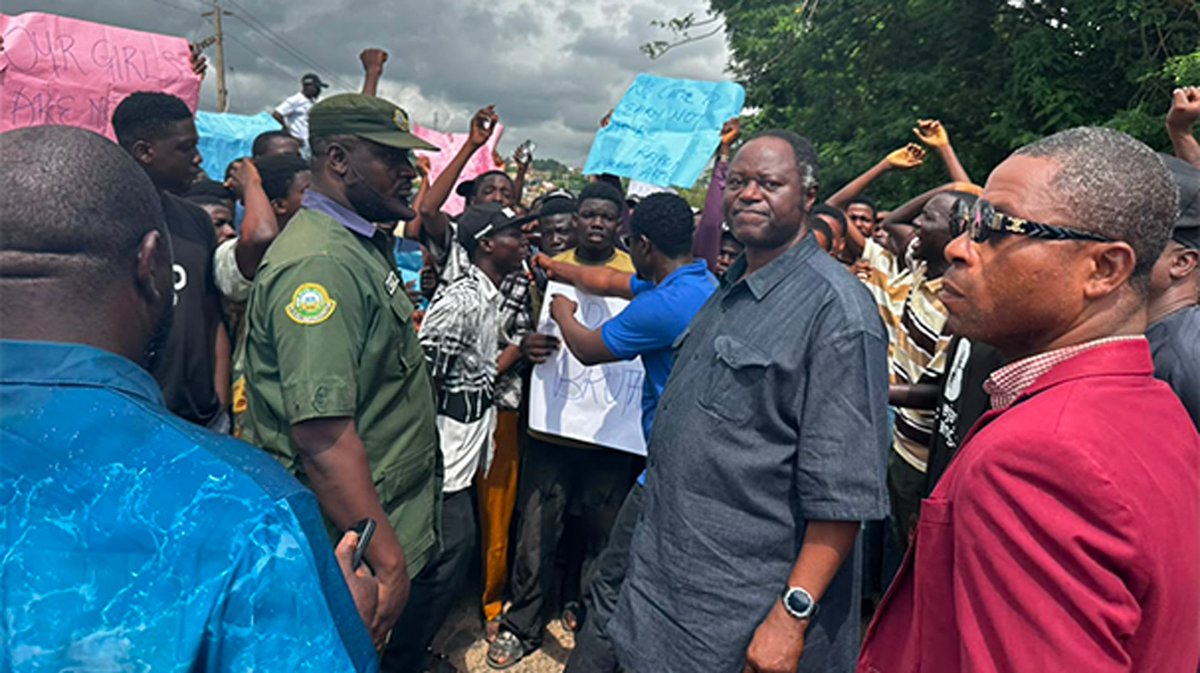
The government and people of Oyo State, more than 50 days after the abduction of the schoolchildren without any tangible effort toward their rescue, should rightly feel bitter and abandoned.
Since this unfortunate incident, I have spoken publicly about it twice, including appealing directly to the kidnappers to release the children. I also called the Governor twice to assure him of my solidarity, understanding that this issue is not just an Oyo problem but a Nigerian tragedy.
On Friday, July 3, I decided to travel to Ibadan with Prof. Pat Utomi to express solidarity with the Governor, as more than 50 days had elapsed without the rescue of the children and with numerous others still being held captive across the country.
During our two-hour meeting, I shared my experience in addressing insecurity as Governor of Anambra State. I recalled how President Olusegun Obasanjo, and later Presidents Umaru Musa Yar’Adua and Goodluck Jonathan, would personally call us several times whenever we faced major security challenges.
But, to my utmost shock, I discovered that, contrary to my assumption that they had been in regular communication over the matter, Governor Seyi Makinde had not received a single call from President Bola Tinubu.
I remember the only case of a school kidnapping during President Goodluck Jonathan’s era - the Chibok girls. It drew local and international attention. Even though the security agencies provided almost daily updates on their efforts, Nigerians and the rest of the world were outraged that it took President Jonathan over two weeks to call the then State chief Executive.
I vividly recall that the current President, Bola Tinubu, led a team of vocal critics who called for President Jonathan’s immediate resignation over the incident, citing his delay in calling the state governor. That call for IMMEDIATE RESIGNATION should actually be the case in this matter.
Today, under President Tinubu, there have been more than 13 school kidnappings, yet the President has found it difficult to call the affected state’s chief executive after more than 50 days (over 7 weeks). This is outrageous. I suspect the same may also have been the case in other school kidnapping incidents.
I cannot imagine any issue more important than the lives of our kidnapped children, their teachers, and the many other Nigerians being held captive across the country. It is now an indisputable fact that governance has completely collapsed under this administration.
The situation reflects a total lack of capacity and compassion, compounded by glaring insensitivity.
Amid such an apparent display of incompetence, the President should either resign or, at the very least, abstain from seeking re-election for the sake of our dear country. This call is patriotic, not political. A new Nigeria is POssible. -PO
Grand Corruption: Nigeria’s Greatest Threat.
The recent report from the IMF consultation further raises concerns about the scale of grand corruption under the Tinubu government. The IMF now reveals that about N8.83 trillion in expenditure undertaken in 2025 is not reflected in the budget. This expenditure is not budgeted and is therefore not under legislative oversight or administrative scrutiny. This is horrible.
N8.83 trillion is as follows:
1.About 2% of our GDP.
2.Over 35% of Nigeria’s 2025 N23.96 trillion capital project budget. In fact, the amount is more than the actual released capital funding for 2025.
https://t.co/Hta3LViCB8 is more than the entire combined budget for education (N3.52 trillion) and health (N2.38 trillion).
If such an amount is properly used and accounted for, it could transform Nigeria’s public health and education sectors. It could create hundreds of cottage industries that can provide jobs for thousands of graduates and build a solid foundation for economic development. But we cannot account for it. This is not an isolated incident.
This is a pattern of grand corruption that has become part of this administration.
We have a lot to worry about regarding the state of corruption under President Tinubu. The sort of corruption that is ingrained in total disregard of elementary rules of public finance management poses a grave danger to national security and the stability of the Nigerian state. The capture of the Nigerian state and the plunder of its resources are actions that undermine the basis of state stability and deepen poverty and state failure.
This recent revelation proves that the APC government is grossly corrupt, incompetent, and insensitive. With the growing poverty and the urgent need for significant upgrades to social and physical infrastructure, a responsible and responsive government would ensure that N8.83 trillion is prudently utilised to address these gaps. But not the Tinubu administration.
A few days ago, I called on President Tinubu to resign from office for incompetence, lack of capacity, lack of compassion, and failure to improve on his campaign promises. Some people thought perhaps the call was excessive. But with the daily revelations of pervasive corruption in this administration and its total lack of commitment to the welfare and security of Nigerian citizens, the only reasonable action is for President Tinubu to resign from office. The collapse of elementary forms of due process under Tinubu and the increased evidence of rampant looting of Nigerian public finances reinforce the need for greater accountability. It is now time for Nigerian citizens to rise within the law and hold this administration to account.
A New Nigeria is POssible. -PO
The Disturbing Reports from Osun State University
I have read with deep concern the troubling reports of soldiers invading students’ hostels at Osun State University, Osogbo, during which students were allegedly assaulted, humiliated, dispossessed of their personal belongings, and female students subjected to degrading treatment, including rape.
Every Nigerian deserves to be treated with dignity and respect. Our Armed Forces are renowned for their courage, discipline, and sacrifice in defending our nation. They are not known for such barbarity against the very citizens they are sworn to protect.
I therefore urge the military high command to conduct a thorough, transparent, and impartial investigation into these allegations. Anyone found culpable should be brought to justice. Holding offending personnel accountable will not only ensure justice for the victims but also preserve the honour and integrity of our Armed Forces while serving as a deterrent against future abuses.
A nation that respects human dignity builds confidence in its institutions. We must never tolerate impunity or the abuse of power.
A New Nigeria is POssible. -PO
This youngster, Don Anele Munachimso Marvelous, was the best Chemistry student in Nigeria in IGCSE. He won the ₦5 million star prize as the best in the 2026 South East Maths Olympiad. He also took first position in the country at the National Mathematics competition in Abuja.
He also won a $100k scholarship in Canada.
He will compete with students from 154 other countries in Rome, Italy, this Saturday.
He is a genius, and the world will know him.