Got cyber risks? We’ve got your back!
Whether it’s testing your defenses, training your team, or securing your assets, we’re here to help.
We believe that OFFENSE is the best DEFENSE.
We hunt flaws, break systems (ethically), and help you fix them before real threats do.
With our globally recognized, certified cybersecurity professionals, you can expect a high-quality, results-driven experience every step of the way.
Don’t wait for a BREACH , partner with us to proactively protect your systems.
MESSAGE us now to start securing your company.
Our Services:
✔️ Vulnerability Assessments
✔️ Web App Penetration Testing
✔️ Mobile App Penetration Testing
✔️ API Penetration Testing
✔️ Network Penetration Testing
✔️ Active Directory Penetration Testing
✔️ Cloud Penetration Testing
✔️ Thick Client Penetration Testing
✔️ Wi-Fi Penetration Testing
✔️ AI/ML Penetration Testing
✔️ Web3 Penetration Testing
✔️ Smart Contract Audits
✔️ Phishing Simulations
✔️ Training & Awareness Programs
✔️ Security Assessment Consultation
We’ve received notice that the Department of Commerce has lifted export controls on Claude Fable 5 and Mythos 5.
We'll begin restoring access tomorrow, and will share an update soon.
We’re grateful to our users for their patience, and to everyone who worked with us on redeploying the models.
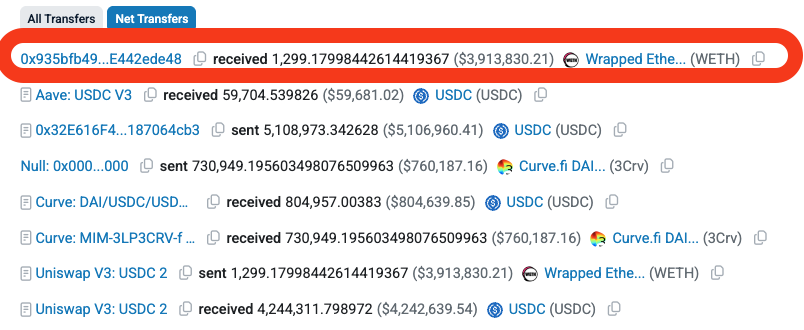
🚨~$4M exploit on DeFi protocol Makina Finance's smart contracts happened ~13 hrs ago
Details show this is a price calculation manipulation exploit, done by using a flashloan.
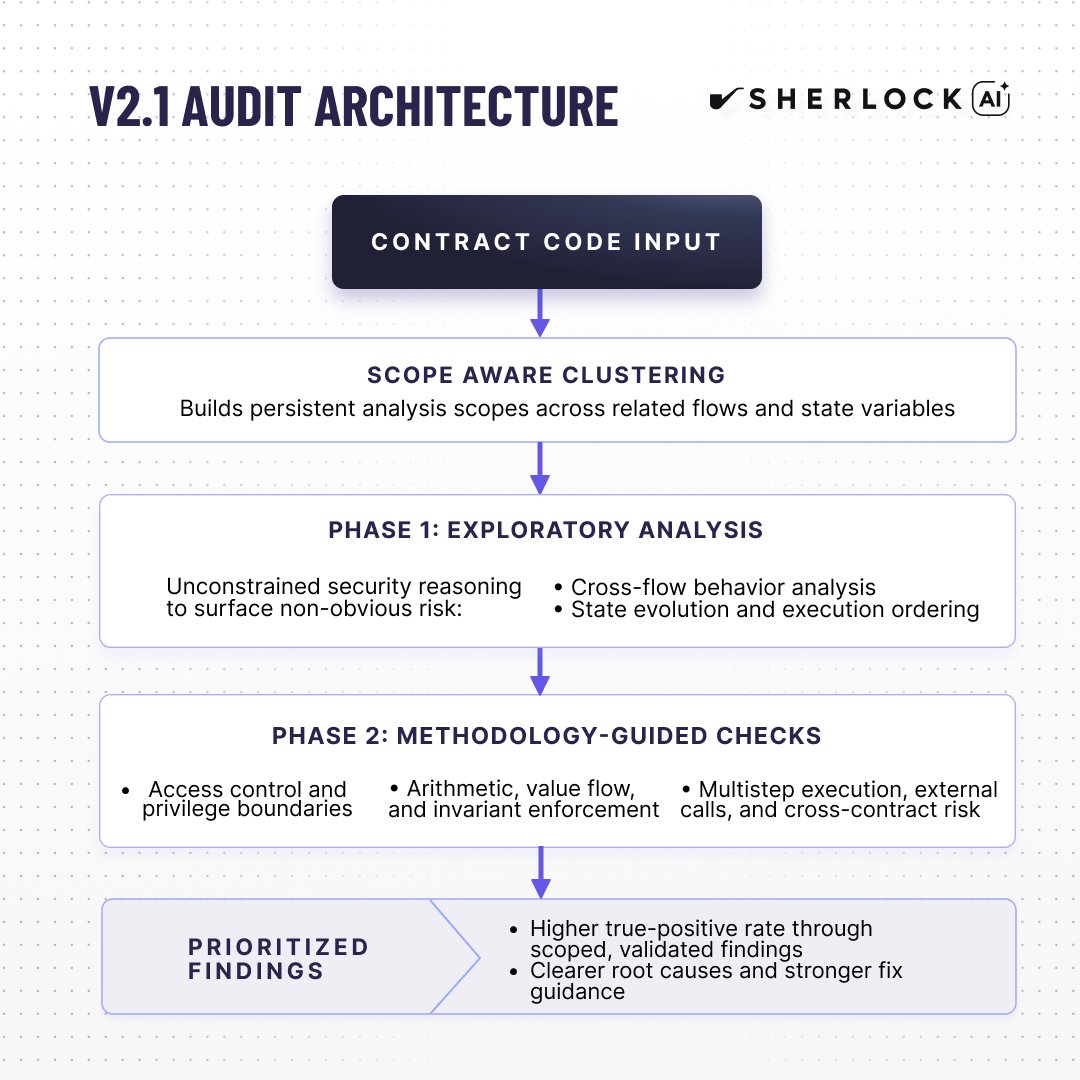
Sherlock AI V2.1
We've shipped another upgrade to Sherlock AI, bringing our model even closer to how experienced human auditors think and work.
This release introduces a new scope-aware research architecture, deeper security methodologies, and improved prompt design that together deliver a major leap in vulnerability detection: now finding 72% of known issues in our benchmarks, up from 40-50% in previous versions.
What's New:
1. Scope-Aware Analysis
The system now clusters related code flows and state variables before analysis, giving the AI better context and improving detection across complex contracts.
2. Two-Phase Audit Architecture
Audits now run in two stages: exploratory analysis to surface potential issues naturally, followed by methodology-guided checks for systematic, comprehensive coverage. This reflects how real auditors reason, not just rule checks.
3. Deep Security Methodologies
We introduced a universal set of security focus areas covering access control, arithmetic correctness, reentrancy, DeFi economic invariants, cross-chain interactions, and more - each with clear principles, audit steps, and common bug patterns.
4. Better Cross-Contract Visibility
External contract calls are now surfaced and analyzed, enabling stronger detection of vulnerabilities that span multiple contracts.
Why It Matters For Our Users
Fewer false positives. Advanced coverage of interconnected contracts, without slowing down your development. More actionable findings with stronger fix suggestions.
Being a hacker is a lifestyle. Everything can get hacked. Hack it first. Disclose the vulnerability safely and ethically. Move on to the next.
Hack things for a living, it's the sh*t🫡
Sudo-Question of the day:
A server is attacked using combinations of values generated repeatedly until the proper sequence is discovered. What is this tactic called?
a. Dictionary Attack
b. Spoofing Attack
c. Rainbow Table Attack
d. Brute-force Attack
The honest story of a project hack in web3, told by a dev with good intentions.
Sharwa got an audit from Pashov Audit Group more than a year ago. It was a strong audit - 4 security researchers found many vulnerabilities and helped the team patch them.
Unfortunately, Sharwa's team added changes post-audit, and since security reviews are never cheap, the changes were not reviewed, so vulnerabilities have slipped. The situation is that security costs ramp up fast, so not everybody can truly afford high-quality reviews.
The result, sadly, was this hack. A hack is not the end though - we've seen projects recover from exploits already. Plus, there are many good people who support the unlucky in bad times. Sharwa will be back🤝
Always do your best to have security experts review every changed line of code you have - no matter your budget, do reach out to us, we will find something for you🫡
These detections from Google’s advanced threat intelligence network, which monitors global campaigns often linked to APT groups such as North Korea’s Lazarus Group, Russia’s APT28/29, China’s APT10, or Iran’s APT35, among others.
I get this warning from Google once in a while. Does anyone know what this is? North Korea Lazarus?
Not that I have anything important on my account. But stay SAFU. 🙏
@cz_binance These detections come from Google’s advanced threat intelligence network, which monitors global campaigns often linked to APT groups such as North Korea’s Lazarus Group, Russia’s APT28/29, China’s APT10, or Iran’s APT35, among others.
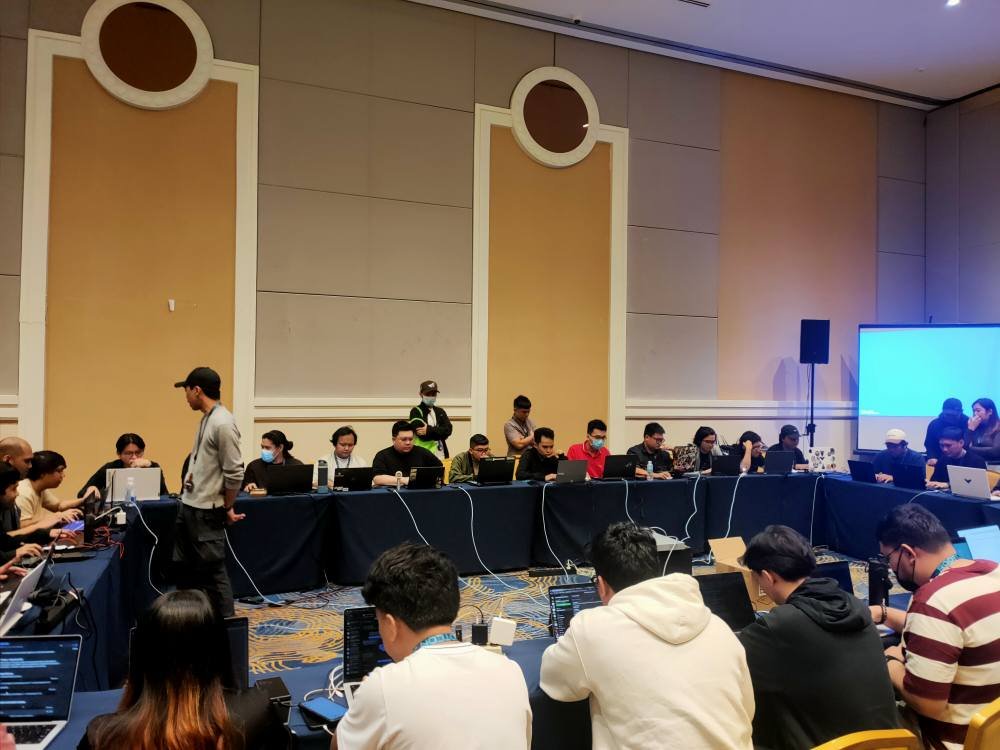
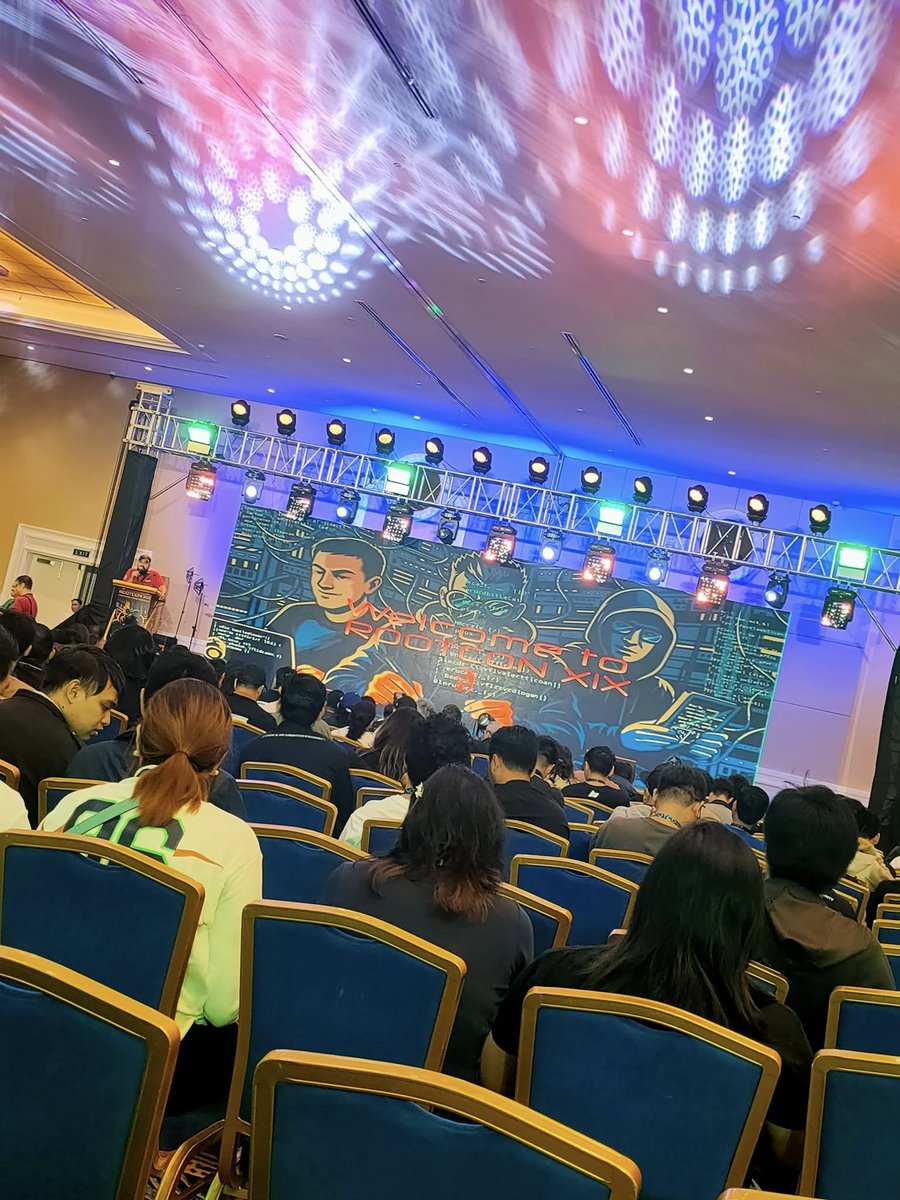
What a Rootcon19 experience!
From epic talks to real-world hacks, knowledge gained, and connections made.
These moments captured the spirit of a hacking community that truly lives and breathes cybersecurity.
#RootconXIX#SudoersSec#CyberSecurity
alright, after a week of work you can now fully simulate Safe transactions _locally_ before signing and verify the transaction hashes in parallel using my `safe-tx-hashes-util` with a single command (use the `--simulate flag` simply). This lets you check exactly how the transaction will execute before you sign. Everything is local. Everything what is executed is printed in the terminal. Transparency at all cost. You trust your RPC provider here so use a trusted endpoint or the preferred solution of running your own node. I know many still do not believe me but local-first, cli-based verification is the way to go. Not hosted UIs. My verification script is _one_ fucking Bash file. Everyone can audit it by looking at exactly one file. No dependency bloat.