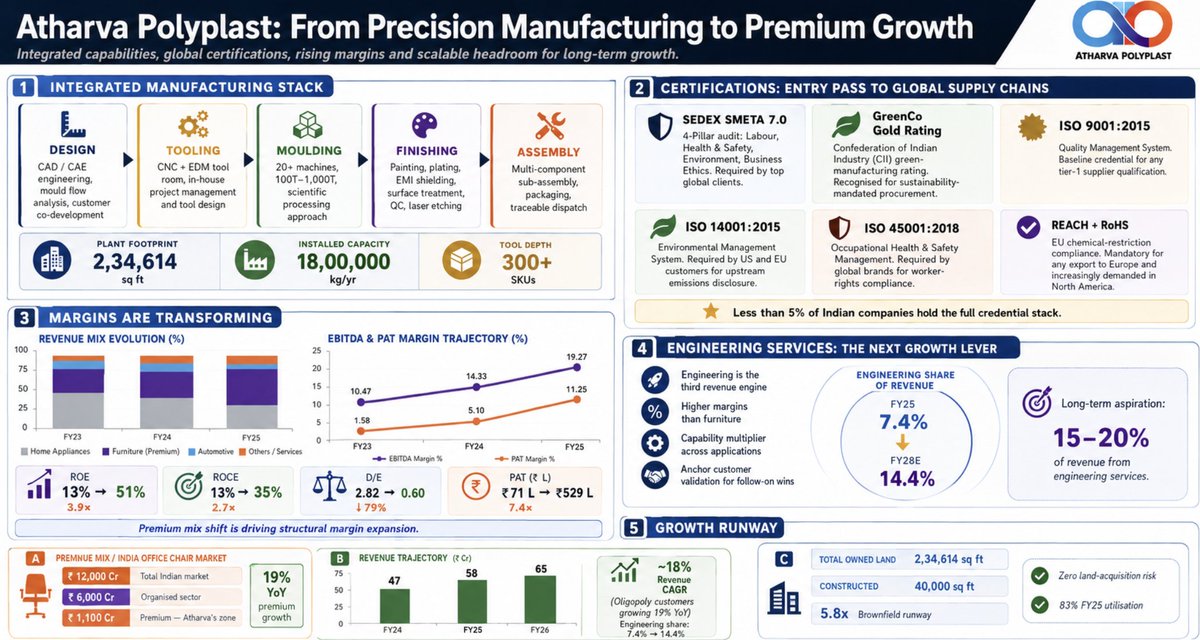
Atharva Polyplast is moving beyond basic plastic moulding into a more integrated manufacturing model.
The company’s key strength lies in its end-to-end capability across design, tooling, moulding, finishing and assembly.
If a listed company like Rajesh Exports, now under scrutiny for alleged financial irregularities worth Rs 15.15 lakh crore, can report revenue at that scale for years, what level of evidence should investors demand before they believe it? https://t.co/CgsXgvilCc
By Sudarshan Bhandari (@SudzzBTS) and Nimish Maheshwari (@nimishshp)
The Rs 15 Lakh Crore Mystery Inside Rajesh Exports’ Global Revenue Machine https://t.co/CgsXgviTrK
How does a listed company report revenue on a massive scale, and what happens when regulators ask for proof? SEBI’s investigation into Rajesh Exports has raised serious questions around overseas revenue, subsidiary accounts, receivables and governance. The company denies wrongdoing and a forensic audit will follow. But the case already points to a larger issue: how much evidence should investors expect before trusting extraordinary numbers?
Read more on The Core's website.
By @SudzzBTS & @nimishshp@BeatTheStreet10
Why should SEBI's investigation into Rajesh Exports’s financial irregularities, worth Rs 15.15 lakh crore, concern investors? https://t.co/CgsXgviTrK
The controversy is no longer just about one company. It is about whether the safeguards designed to protect investors functioned as intended.
Read this analysis by Sudarshan Bhandari (@SudzzBTS) and Nimish Maheshwari (@nimishshp) to understand why the case matters.
@croreclub One of the only community on whatsapp which connects HNI investors with Star Investors
Counts India's top Investros and Traders in the group
LENSKART is expanding the market, not just taking share
6M+ eye tests in a quarter
₹79K Cr current market vs ₹4L+ Cr need based opportunity
500M+ Indians need vision correction (CEO Msg)
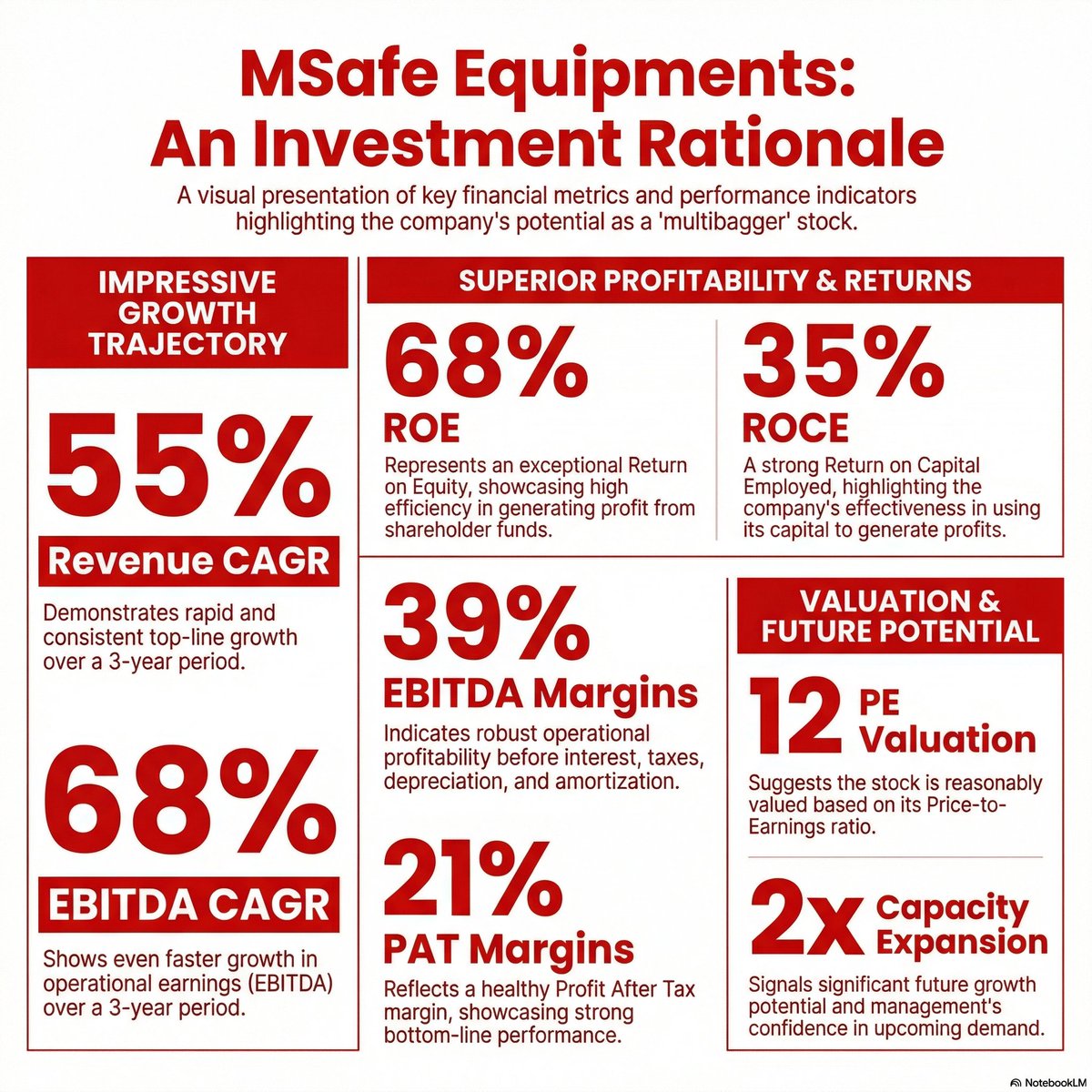
MSafe Equipments IPO - Why you should not miss
Strong anchor book backed by Mukul Agarwal, Sunil Singhania, Samir Vartak
Raising money at 12 PE if we annualized H1FY26 earnings
Consistently remained cash flow positive with efficient working capital management
Why Mumbai’s Luxury Homes Always Finds Buyers?
In this episode of Beat The Street, I sit down with Khilen Shah, promoter of Hubtown, to understand how Mumbai’s premium housing cycle really works
Surely this will be worth your time. 👇
🎥 Watch here: https://t.co/vb43U4ROHi
Avana Electrosystem - Frontrunner in Indigenisation of critical energy components (for Transformers - Manufactures Control & Relay Panels)
Here is what makes them standout
Increasing capacity by 2.5x; Already running near to full capacity
Expanding into more specialised components
~47% revenue CAGR (FY23–FY25)
Healthy order book: ₹52.23 Cr, giving solid revenue visibility
Decent valuations with limited competition
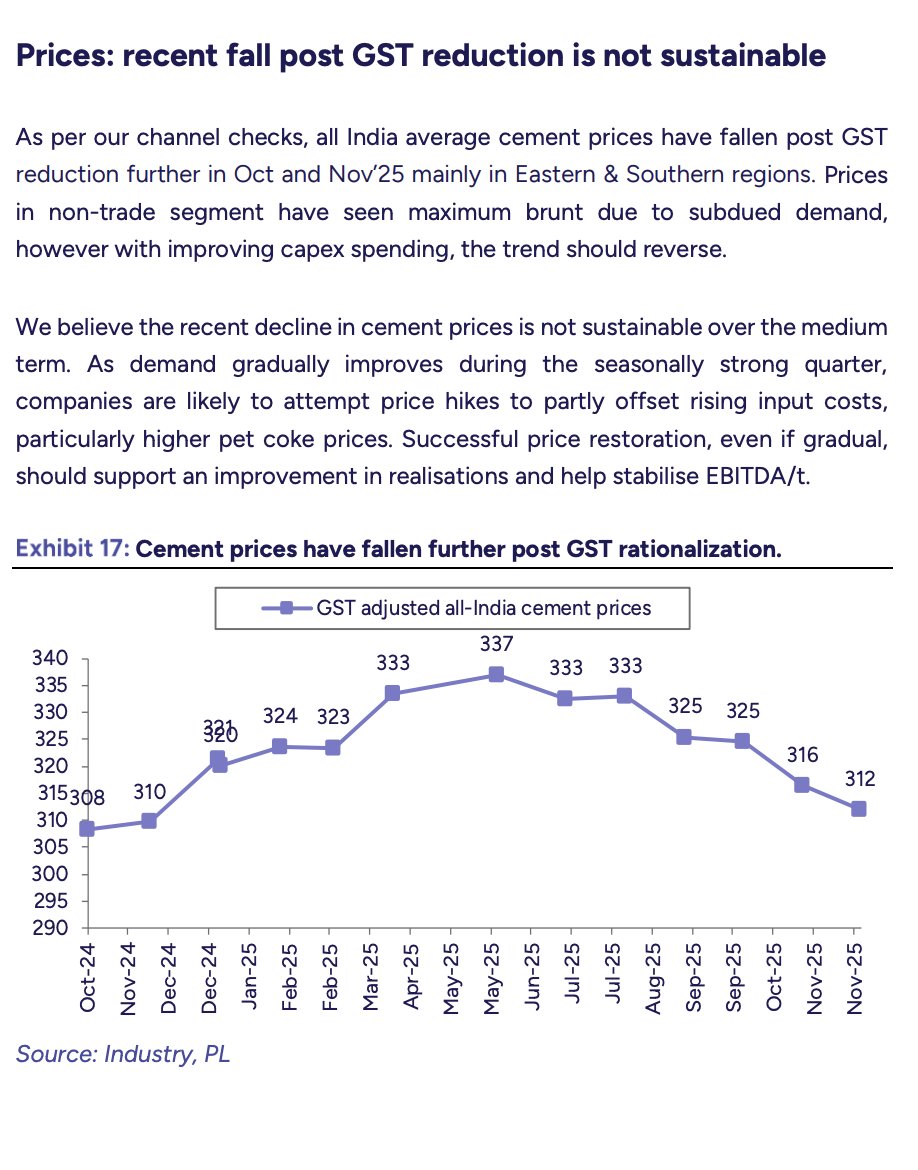
Cement prices fell after GST cuts — but this won’t last.
Post-GST rationalisation, all-India cement prices slipped further in Oct–Nov, especially in the East & South. Weak non-trade demand dragged prices.
But as capex spending improves and the seasonally strong quarter kicks in, price hikes are likely.
Why it matters:
• Recent price fall looks unsustainable
• Rising input costs (pet coke) force price action
• Even gradual hikes can stabilise EBITDA/tonne
Short-term pain, medium-term reset.
Karbonsteel Engineering - New Growth Triggers
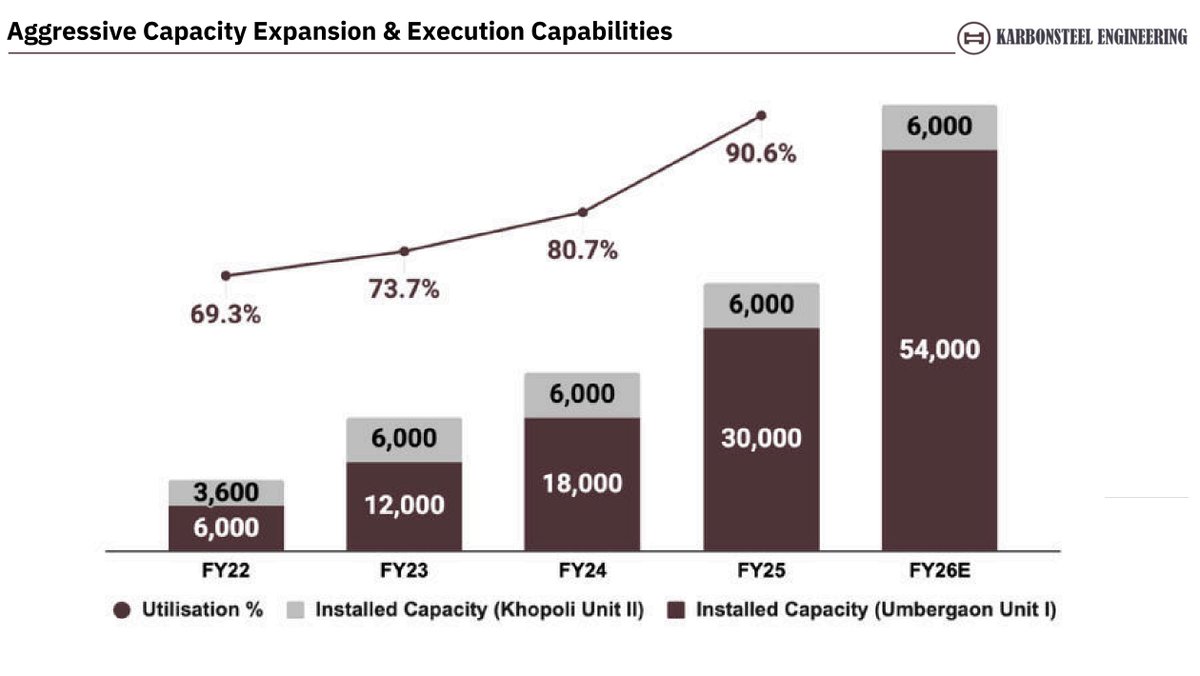
Aggresive capacity expansion plan, taking capacity from 36000 MT to 48000MT (at time of IPO) to further 60,0000MT; the additional capacity will be funded through internal accruals. New Capacity going live in March/April-26.
Currently running at more than 90% capacity
Foraying into defence, exports and the erection of steel bridges, which may expand growth and margins
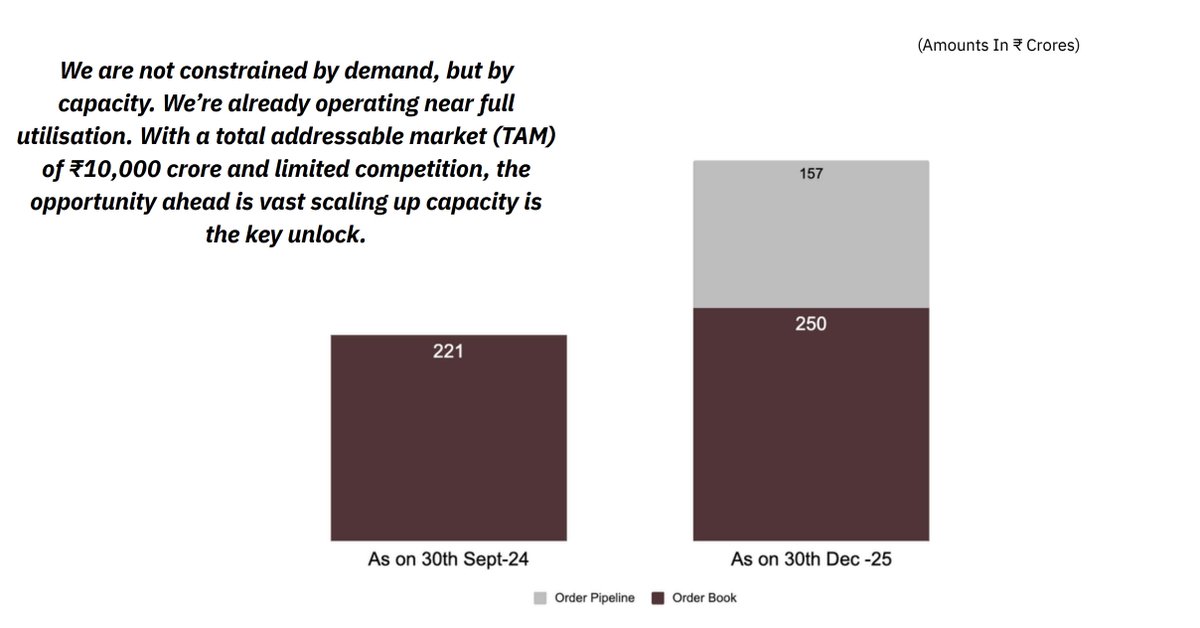
Stands at the order book of INR 250 cr with INR 157 cr in the pipeline
Guides for 40% Growth in FY26
How 100-Baggers Are Really Created and how to Spot them.
2025 reminded us that markets are noisy, emotional and unpredictable.
But history shows that the biggest fortunes were not made by predicting events — they were made by owning great businesses and letting time do the heavy lifting.
They came from owning ordinary-looking businesses that quietly compounded year after year.
Take a simple example.
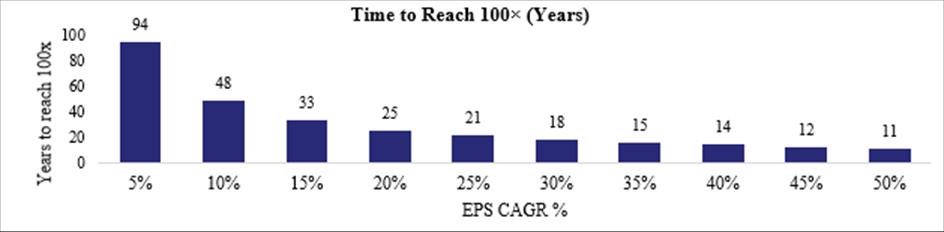
A company that grows its profits at 20% a year does not look exciting in any single year. But if that growth continues for 25 years, the business becomes 100 times bigger. And over time, the stock price tends to follow.
That is what we call a 100-bagger
Over the last 25 years, multiple Indian companies have delivered 100× returns.
These include names like Titan, Bajaj Finance, Pidilite, SRF, Shree Cement and TVS Motor etc. They did not become 100-baggers because of one big event. They became 100-baggers because they kept growing steadily for decades.
No hype. No frenzy. No big story.
The fascinating part is this: most of these companies never looked extraordinary in the beginning.
SAIL 2.0: From Commodity Steel to High-Value Disruptor?
https://t.co/tmstDEL03e
Commodity upcycling, the push into value-added products, and the shift to green steel will drive the Steel Authority of India's revival.