Hot take: if people are still calling it an NFT, it hasn’t reached product-market fit.
Real adoption looks like:
“bought a ticket”
“got access”
“collected something rare”
❌ “minted an NFT onchain”
Same tech. Different framing. Completely different outcome.
How buying on Dutch actually works:
1️⃣ Connect wallet
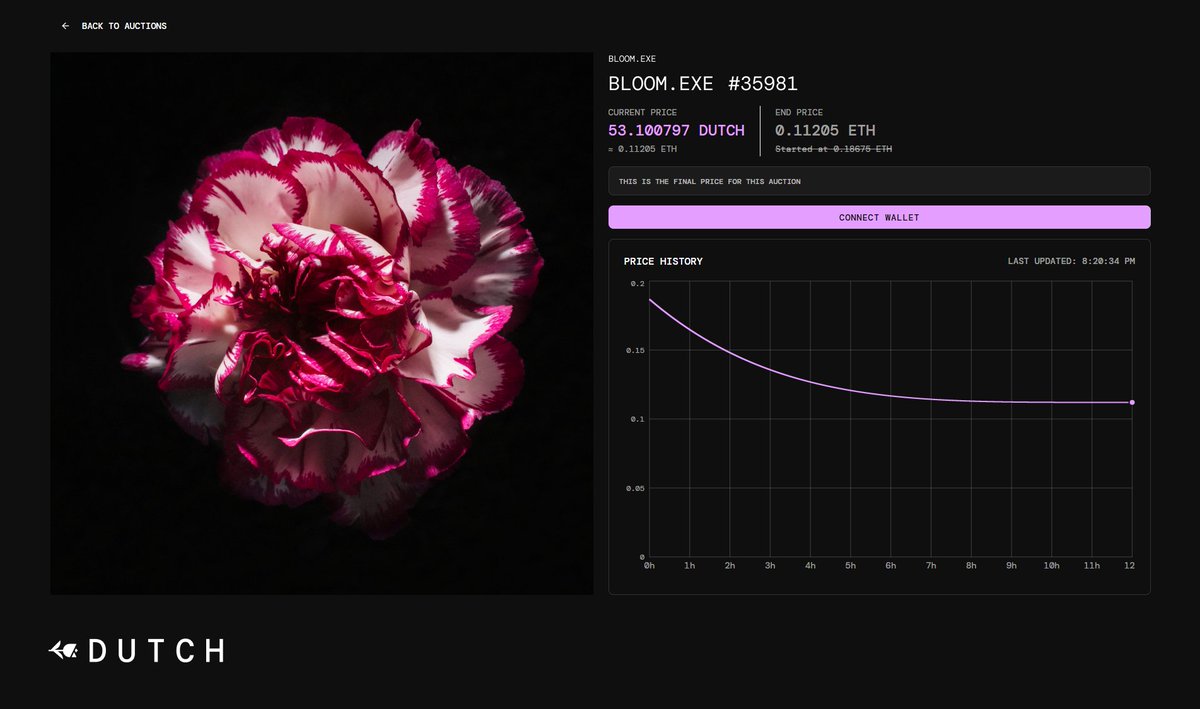
2️⃣ Open a live auction
3️⃣ Watch the price descend
4️⃣ Click when the price makes sense
No bids, offer negotiations or waiting for someone to lower the listing.
Just a visible price path and a decision!
Some of the most interesting market mechanics happen when communities help trigger the next auction.
We’ve been experimenting with a feature that allows collectors to participate in sourcing certain collectibles into upcoming auctions.
More details soon 👀
$500 FREE Giveaway🧧
5 Winners - $100 each💰
Welcome Bonus for New Users
100% Deposit Match up to $50
Only 10x wagering on Original Games
How to enter:
🪺 Follow us 🔔
🪺 RT + tag 3–5 friends
Winners can be announced at ANY TIME⏳
A token without an exchange sounds weird…
until you think about it!
We’re unpacking it live today 👇
(Zealy questers — don’t just listen, listen carefully 👀)
NFT marketplaces ask sellers to guess the price.
You list a collectible, wait days or weeks, slowly lower it until someone bites.
That’s trial and error, not price discovery!
✅ Dutch replaces guessing with a structured 12-hour auction where the market decides the price in real time.
If you’re holding a serious collectible, that difference matters.
NFT markets made one big mistake:
They optimized for activity instead of understanding.
More trades ≠ better market
More noise ≠ more clarity
What actually matters is simple:
Can a buyer look at a market and know what a fair price is right now?
Most can’t.
Season 4 of our @zealy_io sprint with @Suku_world is LIVE! 🎉
Learn how to turn your predictions into P2P challenges on X, and compete for a share of $1,000 USDC!
🎁 $1,000 USDC
🎈 25 winners
⏱️ Mar 18 - Apr 08
📍 Join here: https://t.co/QahyQrBOVq