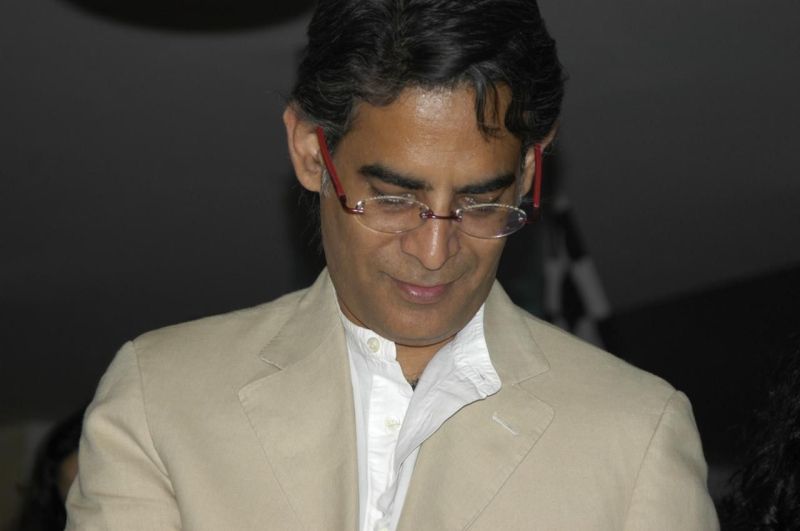
Top Management Professional - Founder/Co-Founder/Chairman/ Managing Director Operational Leadership | Global Business Strategy | Consultancy & Advisory Support
Avoiding Violations for a Better X Experience
As a dedicated X user, I believe in upholding the platform’s rules and regulations to keep it a thriving space for ideas and connection. X’s guidelines are designed to promote respectful, authentic, and lawful interactions, and I’m committed to following them in every post and interaction. Violating these rules—whether through hate speech, spam, or other prohibited actions—harms the community and risks account penalties. To avoid this, I take proactive steps: I review X’s policies regularly, think carefully before posting, and ensure my content respects others’ rights and perspectives. Compliance isn’t a burden; it’s a way to contribute to a platform where everyone can engage without fear. I also encourage others to report rule-breaking content responsibly, as this helps X stay true to its values. Mistakes can happen, but staying educated about the rules and being mindful of our digital footprint can prevent violations. Let’s all commit to making X a space where creativity and dialogue flourish within the boundaries of respect and responsibility. By following the rules, we ensure X remains a platform that empowers voices while maintaining a safe, inclusive environment for everyone.
I usually restrict my advice to leadership, culture and careers, but this is something I’m writing straight from my heart.
The reason is that I’m meeting so many young professionals these days, and a scary lot of them already feel tired, lost, and dejected - at an age when life should feel wide open.
It’s so heartbreaking to watch an entire generation of brilliant young minds convince themselves they're already behind in life before they've even begun.
+ 23-year-olds talking about being "too late" for their dreams.
+ 25-year-olds calling themselves "failures" for changing career paths.
+ 30-year-olds acting like their best years are behind them.
It breaks my heart because I see what they can't: their whole magnificent life still ahead of them.
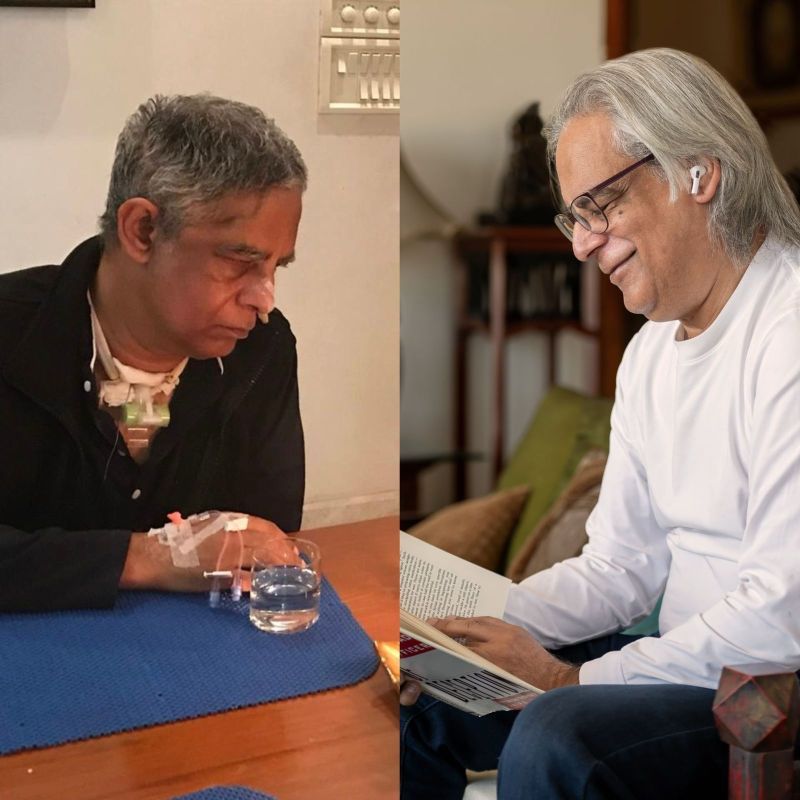
Four decades of building companies taught me many lessons. But nothing taught me more than the day I suffered my sudden brain haemorrhage at the peak of my success, losing my ability to communicate overnight.
Lying in that hospital bed, unable to communicate, facing the possibility that everything I'd built might disappear, I realised something profound:
While I was worried for my life, yes, but I had zero regrets.
Not because my life was perfect, but because I'd lived it at full capacity. Every risk taken, every opportunity seized, every relationship invested in - I’d given it my all.
And that's what I want for every young person reading this.
Stop doubting yourself so early in the race. You can’t feel like a failure when you’ve got your whole life ahead of you to build, explore, and create.
All you have to do is give it your all.
In your work. In your relationships. In your dreams. In living itself.
✅ Take the trips you keep postponing.
✅ Pour your heart into relationships that matter.
✅ Have the conversations you’ve been avoiding.
✅ Start the business you’ve been “preparing” for.
✅ Give your career everything you’ve got, not because your company deserves it, but because you deserve to see what you’re truly capable of.
Time doesn’t negotiate with your fears, and it definitely doesn’t wait for your permission to run out.
So, to every young person feeling dejected, behind, or defeated:
Your energy is finite, but your potential isn’t. Your time is limited, but your impact doesn’t have to be.
I’m in my 60s, and I’m just getting started on my next chapter. Because when you give life your all, age becomes irrelevant (both young and old). That brain haemorrhage couldn’t break my spirit because my spirit had been forged by showing up fully - in work, in love, in dreams, in life.
So here’s my plea:
Stop holding back.
Stop waiting to “feel ready.”
Live fully. Work deeply. Love fiercely.
Because “I wish I had” are the four most painful words in any language.
And “I’m glad I did” are the four most powerful.
Why do we ask women to “prove” they’re ready for leadership…
while we assume men will grow into it?
I’ve spent four decades in boardrooms, leadership reviews, and succession discussions and one pattern still frustrates me deeply:
For men, leadership potential is often enough.
For women, leadership proof is demanded first.
A man is promoted because he seems “promising.”
A woman is asked to wait until she has already been doing the job unofficially for two years.
Very recently, it was Mother’s Day and while reading posts from new mothers in corporate roles, something just struck me.
Behind the beautiful stories was another reality quietly hiding underneath:
So many women still feel the need to overperform just to be seen as equally committed.
To prove motherhood hasn’t reduced their ambition.
To prove flexibility won’t reduce performance.
To prove leadership and femininity can coexist.
I specifically remember one post where the lady spoke about managing late-nights with her toddler, early morning meetings, and still delivering exceptionally at work.
It was heartfelt and inspiring to read.
But somewhere underneath it was another unspoken reality:
She still felt the need to prove she could do both.
Meanwhile, men are often trusted with potential long before they’ve fully proven capability.
That’s the bias.
And until organisations confront it honestly, we will keep exhausting brilliant women by forcing them to repeatedly justify what many men are freely assumed to possess.
Women don’t need more resilience training. They just need fairer leadership standards.
Because leadership should not depend on who gets doubted less.
It should depend on who is capable of leading well.
I fired someone for the first time in 20 years, not for performance issues but for something I'd tolerated for far too long.
I still remember that day as fresh as if it happened yesterday - they were brilliant, a top performer, and delivered exceptional results quarter after quarter.
But they were destroying team morale with behaviour I'd been excusing as "passion" and "high standards."
That was the day I learned: Tolerating toxic brilliance isn't leadership. It's cowardice.
So I made a decision - no more letting talented losers poison the culture because they hit their numbers.
Here's what happened:
This person was objectively excellent but their team was quietly suffering:
- Never supporting them in meetings.
- Dismissing junior colleagues' ideas.
- Creating an environment where people were afraid to speak up.
3 talented people quit under their leadership and that was proof enough to me. Their exit interviews all said the same thing.
Four decades in leadership taught me this the hard way:
Tolerating one toxic high performer tells your entire team exactly what you actually value.
Not culture, not respect, and definitely not psychological safety.
Just results - at any human cost.
When I finally let them go, something interesting happened.
Productivity didn't drop. It, infact increased.
Because people weren't spending energy navigating one person's ego anymore. They were actually working.
I stopped tolerating toxic brilliance that day because I learned something crucial: You can replace a high performer but you can't replace the culture they destroyed while you looked the other way.
So, to every leader making excuses for someone's behaviour because they're "too good to lose":
You're not losing one person. You're losing everyone else who sees you tolerate it.
The brilliant jerk isn't the problem. Your willingness to keep them is.
What do you think?
I fired someone for the first time in 20 years, not for performance issues but for something I'd tolerated for far too long.
I still remember that day as fresh as if it happened yesterday - they were brilliant, a top performer, and delivered exceptional results quarter after quarter.
But they were destroying team morale with behaviour I'd been excusing as "passion" and "high standards."
That was the day I learned: Tolerating toxic brilliance isn't leadership. It's cowardice.
So I made a decision - no more letting talented losers poison the culture because they hit their numbers.
Here's what happened:
This person was objectively excellent but their team was quietly suffering:
- Never supporting them in meetings.
- Dismissing junior colleagues' ideas.
- Creating an environment where people were afraid to speak up.
3 talented people quit under their leadership and that was proof enough to me. Their exit interviews all said the same thing.
Four decades in leadership taught me this the hard way:
Tolerating one toxic high performer tells your entire team exactly what you actually value.
Not culture, not respect, and definitely not psychological safety.
Just results - at any human cost.
When I finally let them go, something interesting happened.
Productivity didn't drop. It, infact increased.
Because people weren't spending energy navigating one person's ego anymore. They were actually working.
I stopped tolerating toxic brilliance that day because I learned something crucial: You can replace a high performer but you can't replace the culture they destroyed while you looked the other way.
So, to every leader making excuses for someone's behaviour because they're "too good to lose":
You're not losing one person. You're losing everyone else who sees you tolerate it.
The brilliant jerk isn't the problem. Your willingness to keep them is.
What do you think?
I collapsed at a dinner table in October 2020, mid-conversation with friends.
One moment, I was laughing and the next, I was unconscious on the floor.
It was brain hemorrhage.
What followed was four-months of coma, and two years of not knowing if I'd ever work again or walk, or remember my own life.
Few days ago was World Health Day, I need to tell you what almost dying taught me about living - not to scare you but to remind you that:
Health is everything!
Here's what actually happened that night:
Everything was completely normal, until it wasn’t. A sudden, blinding headache and I didn’t even get the chance to say something was wrong.
I just collapsed.
Four months of my life gone. My family sitting beside a hospital bed, not knowing if I’d wake up…or who I’d be if I did.
When I finally woke up, nothing worked the way it used to:
- Couldn't walk without support.
- Couldn't remember basic things.
- Couldn't work or do anything that had defined me for 40 years.
Just hospitals, physiotherapy, rehabilitation, yoga, JOGO, reflexology, and the terrifying question: Will I ever be whole again?
It took me two years.
Two full years of rebuilding myself from zero.
And during those two years, lying in hospital beds and rehab centers, I kept thinking about all the warning signs I'd ignored:
- The stress I'd normalised as "just work."
- The exhaustion I wore like a badge of honour.
- The signals my body kept sending that I kept dismissing.
And here's what those five years of recovery taught me:
Health isn't everything but without it, everything else is absolutely nothing because your body doesn't send a formal warning. It just stops. One moment you're fine. The next, you're fighting for your life.
I'm not sharing this to scare you. I'm sharing it to wake you up because I wish someone had told me this before that dinner in October 2020.
I got a second chance but most people don't get it - so, on this World Health Day, do what I didn’t:
✅ Say no when you need to, without guilt
✅ Listen to your body before it has to scream
✅ Prioritise rest before your body forces you to
Don't wait for a hospital bed to start taking your health seriously.
Stay alive. Everything else can wait.
I met someone last week who just quit after 18 years with the same company.
Not because he couldn’t do the job but…
because he was overlooked for promotion for the third time.
He was in his late 40s.
A middle manager by title.
Fifteen years in the organisation.
Consistent results. No drama. No politics.
He paused for a moment, then said in a voice that barely held together,
“I think I’ve become invisible.”
He wasn’t angry but there was a pain in his voice, and a tiredness in his eyes - the kind that comes from fighting to stay relevant in a room that's already decided you're outdated.
He told me about how every time a new role opens up, they look past him. They say they want fresh energy. New perspective. Someone more…”visible.”
He also told me about sitting in strategy meetings where his suggestions were met with polite nods, then dismissed. Two weeks later, a younger colleague would make the exact same suggestion, and everyone called it innovative - exactly what the company needs.
"I stopped speaking up after a while," he said. "What's the point? They've already decided I'm yesterday's thinking."
Then he added something that stayed with me:
“The younger ones speak louder. They’re confident and they network well.
So people assume they’re better leaders.
People like me just keep the system running.”
This is the unsaid grief of so many experienced professionals.
Not fired
Not failing
Just…overlooked
+ They train the next generation.
+ They mentor & stabilise teams.
+ They carry institutional memory.
+ They solve problems before they become crises.
But because they don’t shout,
because they don’t posture,
because they don’t play politics,
they slowly disappear from the promotion list.
I’ve watched this happen across organisations:
The ones who built the foundation are quietly replaced by the ones who know how to present the slides.
Youth brings speed.
But experience brings judgment.
And leadership needs both.
This man didn’t leave because he hated his work.
He left because he felt unseen doing it.
So here’s my reminder to leaders:
Look again at your middle layer.
And ask:
Who is carrying the load without applause?
Who is teaching without credit?
Who is loyal without leverage?
Because when experience is ignored,
organisations lose wisdom.
And when wisdom leaves,
mistakes get louder.
The future of work cannot belong only to the loudest voice in the room.
It must also honour the deepest one.
And sometimes, the most radical leadership act
is simply to say to someone who’s been overlooked too long: “I see you. And you still matter.”
Every woman leader I've met has two jobs: leading…
and defending her right to lead.
As we approach Women's Day on Sunday, here's a hard truth I would like everyone to acknowledge:
The women who make it to leadership aren't just excellent at their jobs. They're exhausted from having to be. Because excellence isn't enough, they have to be excellent and constantly prove they deserve to be there.
Here's what I've watched happen repeatedly:
> A woman presents a strategy and the room is skeptical.
A man presents the same strategy the next week and the room calls it innovative.
> A woman makes a tough decision and suddenly she's "difficult."
A man makes the same decision, he’s "decisive" and "strong."
> A woman negotiates her salary, she's "aggressive" and "not a team player."
A man does the same…he’s "knowing his worth."
The pattern is so consistent it's predictable. And it's destroying brilliant careers.
A senior woman leader once told me about her journey to the C-suite:
"I had to be twice as prepared for every meeting. Three times as strategic in every decision. And still, people questioned if I belonged there. My male peers could be 'works in progress.' I had to be flawless from day one. They got credit for potential. I only got credit for perfect execution."
Here's what breaks my heart:
These women aren't just fighting external battles. They're fighting internal ones too.
Questioning themselves in ways their male colleagues never do:
- "Was I too assertive in that meeting?"
- “Did I come across as too ambitious?"
- “Should I have been softer in my delivery?"
Four decades of watching women leaders, and the pattern is clear:
They manage up, down, and sideways like everyone else. But they also manage perceptions, stereotypes, and constant scrutiny of their leadership style in ways men never face.
+ They lead teams, and defend their tone.
+ They deliver results, and defend their ambition.
+ They make decisions, and defend their right to make them.
It's exhausting. And it's why we're still losing talented women from leadership pipelines.
Here's what needs to change:
✅ Stop calling assertive women "aggressive" while calling assertive men "confident."
✅ Stop questioning women's decisions more harshly than you question men's.
✅ Stop making women prove they belong in rooms men enter without question.
To every leader - regardless of gender - reading this:
This Women's Day, the best thing you can do isn't post about "celebrating women leaders." It's noticing when women are interrupted, questioned differently, or held to different standards. And using your voice to change it.
And to every woman leading while also defending her right to lead:
I see you.
I respect you.
And I hope the world becomes lighter for you - not because you became tougher, but because we became better.
Happy Women’s Day!
Yesterday, I met a founder whose company is now valued at $9B USD and I remember telling his manager years ago: "That boy will run a company one day."
His manager laughed at it back then but I was sure of it. Infact, I’d been waiting for this conversation since the day I met him, years ago.
Here's what happened that day:
At one of my earliest organisations, a client project had gone sideways - and it was a massive error from the client side. Leadership was furious, looking for heads to roll.
The blame somehow landed on a junior employee - young kid, barely six months into the job. I was in that meeting - twenty people around the table and senior leadership ready to terminate this junior employee.
Then this young executive - mid-level at best, no real authority, everything to lose - stood up and vouched for his team member.
The room froze - dead silence.
Even his own manager's face went white and the CEO stared at him for what felt like an eternity.
But this guy didn’t budge and held his ground for his teammate. That moment - that single moment told me everything about him.
After that meeting, I pulled that young executive aside and asked him, "Do you know what you just did?" He looked shaken and said, “Probably ended my career?"
And I said, "No. You just started it - the real one."
That day made something clear to me: being a boss is a job but being a leader is a choice.
You can be promoted into authority - you get the title, the team, the decision-making power. But leadership? That's something you choose, every single day, regardless of what your business card says. That young man chose it that day.
Years passed.
He got promoted, as people like him always do.
Then he left, started his own company and very recently connected with me on LinkedIn.
And yesterday, we met and he told me his company is now valued at $9B USD.
It all made me realise how it’s not just the performance metrics that make one a leader, but the choices they make when no one's forcing them to make them.
The boss manages because that's the job description. But the leader leads because that's who they are.
That conference room moment years ago?
That’s where his $9B company was truly born.
In the choice to lead before anyone asked him to.
My advice to anyone reading this:
The next time you're in a room where someone vulnerable needs protecting, where taking responsibility means risking something, where doing the right thing isn't the safe thing - choose it anyway.
Because titles create bosses,
whereas choices create leaders.
And the future you build depends on which one you decide to be.
I once met an employee who hadn’t taken a single leave in 8 months - entirely by her own choice.
When I asked why, she said, almost proudly, “If I stop, the work stops and I actually like to fulfill my responsibilities.”
I smiled and asked, “But 8 months is a very long time…you don’t mind that? Not even a little?” She paused for a moment, then said something that stayed with me long after that conversation ended:
“No, I don’t mind the work.
What I mind is that no one notices.”
And then she added, with a softness that felt heavier than anger: “My manager checks on my work every day…but he’s never once checked on me.”
I asked her if she had ever felt like walking away. She looked down and whispered, “I’ve thought of quitting at least five times this year. Not because the work is hard…because doing it alone is harder.”
Her voice didn’t sound angry.
It just sounded lonely.
And standing there, listening to her, a simple truth hit me harder than any leadership book ever has: The biggest leadership failure I see today isn’t bad strategy. It’s bad humanity.
We obsess over deadlines, dashboards, deliverables…but forget the one thing that actually keeps teams alive: people.
This young woman loved her work. She wasn’t tired of the role - she was tired of being invisible in it. All she needed was one manager to say, “You’ve done an incredible job. You deserve a break.” One moment of acknowledgment… and her potential would have multiplied.
It made me realise something painfully obvious:
A good leader checks in on the work.
A great one checks in on the person.
And most forget the second entirely.
Believe it or not but people rarely break because of workload. They break because nobody notices they’re breaking.
➡️ I’ve seen high performers crumble while still hitting targets.
➡️ I’ve seen teams deliver extraordinary outcomes while quietly burning at both ends.
➡️ I’ve seen brilliant minds spiral when nobody asked them a simple, “How are you… really?”
And every time, the signs were there. But many leaders don’t see them - because they’re only looking at output, and never at the human producing it.
We all need to understand that great leadership isn’t about asking, “Is the work on track?” It’s about asking, “Are you okay?” - and actually meaning it.
Because if more leaders checked in on the person instead of the task, we’d see:
✅ less burnout
✅ less attrition
✅ more honesty
✅ more courage
And above all, more humanity at work
So here’s my simple reminder:
Your team is not a machine. They’re human beings carrying whole worlds inside them.
And sometimes, the most powerful leadership move you can make is not a strategy, or a decision, or a plan -
It’s a conversation.
This is corporate hypocrisy at its finest.
Companies spend millions recruiting "diverse talent," then spend years trying to make them think exactly like everyone else.
It’s almost comical….you can’t hire rebels for their spark and then punish them for not behaving like candles. And yet…that’s exactly what so many companies do.
I’ve watched this pattern unfold more times than I can count: Organisations proudly say, “We want fresh thinking. We want innovation. We want someone different.”
And then the moment that “different” person joins, the real message becomes clear: “Sure, be different…just like the rest of us.”
And it shows up in small, quiet moments:
- The consultant who joined from manufacturing - told to "understand retail first" before sharing insights.
- The startup founder who joined corporate - every innovative idea met with "we need more process around that."
- The international hire - cultural suggestions dismissed as "not understanding the local market."
Slowly, difference stops being an asset and becomes something uncomfortable to manage.
Because here’s the unfiltered truth:
Companies love the idea of diversity, but they struggle with the reality of it.
Because difference is noisy.
+ Difference questions things.
+ Difference challenges comfort zones.
+ Difference doesn’t fit neatly into templates, SOPs, and “how we’ve always done things.”
And many leaders want creativity…
just not the discomfort that comes with it.
I remember a candidate we hired years ago - unconventional background, sharp mind, fresh voice. Within months, the feedback from his manager was: “He’s brilliant, but he doesn’t fit in.”
Translation:
“He thinks differently, and that scares me.”
That moment made me realise the real problem that exists in corporate culture.
Hiring for difference but forcing conformity is like buying a sports car and complaining that it’s too fast. And after four decades of watching teams rise, break, and rebuild, here’s what I know for sure:
People don’t leave because they’re different. They leave because organisations don’t know what to do with differences.
✅ They leave when curiosity is labelled defiance.
✅ They leave when questions are treated as disrespect.
✅ They leave when individuality is tolerated during hiring…and corrected during probation.
✅ They leave when “culture fit” becomes a sophisticated word for “please behave like everyone else.”
If you truly want innovation, you have to embrace the inconvenience that comes with it.
Let them question.
Let them challenge.
Let people think differently.
Let them push your comfort zones a little.
Because sameness feels safe - but it never builds anything legendary.
So the next time you hire someone “for their fresh perspective,” ask yourself honestly: Are you ready to let them be different? Or are you preparing to mould them into another version of everyone else?
Your answer determines whether you build a workplace…
or just another assembly line.
I once hired someone based on a 20-minute conversation and a gut feeling - no assessments, no scorecards, no AI screening.
That hire became one of the best leaders I've ever worked with, stayed for 12 years, and built a team that transformed the organisation.
Today, that same person might not have made it past the ATS.
Back then, we didn't have AI or data dashboards. But we had something most HR tech still can't replicate - intuition
And I'm starting to wonder: Are we losing it?
Four decades ago, hiring looked completely different. You sat across from someone and watched how they answered not just with words, but with their entire presence.
+ The pause before a difficult question.
+ The way they carried themselves when discussing failure.
+ The light in their eyes when they talked about what they loved.
We made decisions based on what data couldn't measure: energy, authenticity, hunger, potential.
Now, we have algorithms that scan resumes in milliseconds, platforms that predict performance, and AI that ranks candidates by matching keywords.
And we've never been more confused about who to hire.
Here's what I see happening:
➡️ The candidate who took an unconventional path? Filtered out because algorithms don't recognise non-linear careers.
➡️ The person who'd bring fresh perspective? Rejected because they don't match the "ideal candidate profile" built from people who already work here.
The diamond in the rough? Never gets polished because screening tools only recognise diamonds already shining.
You see, I’m not anti-technology. I've built HR systems, and I understand the value of data. But somewhere between optimising and analysing, we stopped trusting ourselves.
- We've replaced observation with dashboards.
- We've traded intuition for algorithms.
But the uncomfortable truth is that data might tell you what happened but intuition tells you what could happen. And the future of any organisation depends on the "could," not the "did."
After four decades in the people’s business, here's what I can say with absolute certainty: The person across from you will never be fully captured in a dashboard.
And sometimes the best hiring decision you’ll ever make is the one that defies the spreadsheet - and listens to the gut that’s spent years learning what potential sounds like.
So to every young HR professional out there — trust your instincts.
Let data guide you, not govern you.
Because the future of HR isn’t human or digital.
It’s human with digital.
Where technology gives it insight - but humanity gives it meaning.
If you can’t read people, you can’t lead people.
Simple truth - but one that I strongly believe and is getting lost in the noise of leadership jargon and dashboards these days.
Over the last four decades, I’ve sat in hundreds of boardrooms and across thousands of people. And the best leaders I’ve ever seen shared one quiet superpower:
Emotional Intelligence
Not the kind you put on PowerPoint slides. The kind that:
+ sees potential long before performance does
+ lets you sense when someone’s afraid to speak up
+ catches the tremor in a voice before a resignation letter arrives
Leadership has always been about reading what’s unsaid. Reading people is not a soft skill. It's THE skill.
✅ It's knowing when to push and when to pause.
✅ It's recognising that the quiet person in the corner has something important to say but needs to be invited to speak.
✅ It's understanding that your star performer's recent drop in quality isn't laziness, it's burnout you should have caught three weeks ago.
I've seen brilliant strategists destroy teams because they were blind to human signals:
+ The CEO who kept piling work on his top performer because she never complained, until she quit from exhaustion.
+ The executive who missed that his "constructive feedback" was delivered so harshly that people dreaded one-on-ones.
+ The leader who thought silence meant agreement when it actually meant "I've given up trying to tell you what's wrong."
You can't learn any of this from a dashboard or an algorithm
The leaders who excel at this do three things consistently:
1️⃣ They observe: Not just what people say, but how they say it. Not just outcomes, but the energy behind them.
2️⃣ They ask: Real questions that create space for real answers. Not "Are you okay?" but "You seem quieter than usual - what's on your mind?"
3️⃣ They adjust: They change their approach based on what they're sensing, not rigidly following a plan when the humans aren't responding.
But in today’s age, where AI writes reports and dashboards track behaviour, this ability - to really read people - is becoming a lost art.
If you want to build loyalty, trust, and performance that lasts - learn to see beyond words.
Look people in the eye.
Listen between the lines.
Because leadership isn’t about managing work.
It’s about understanding humans.
And if you can’t read people, you’ll never truly lead them.