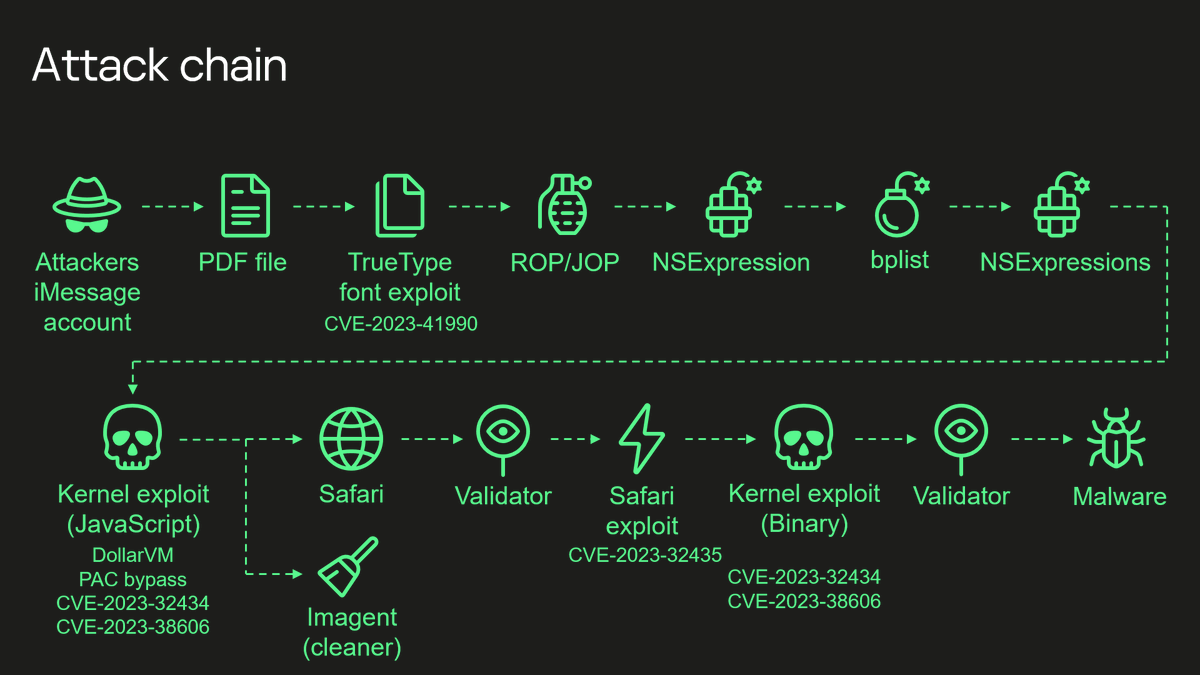
This iMessage exploit is crazy. TrueType vulnerability that has existed since the 90s, 2 kernel exploits, a browser exploit, and an undocumented hardware feature that was not used in shipped software:
https://t.co/YJdY6alLbV
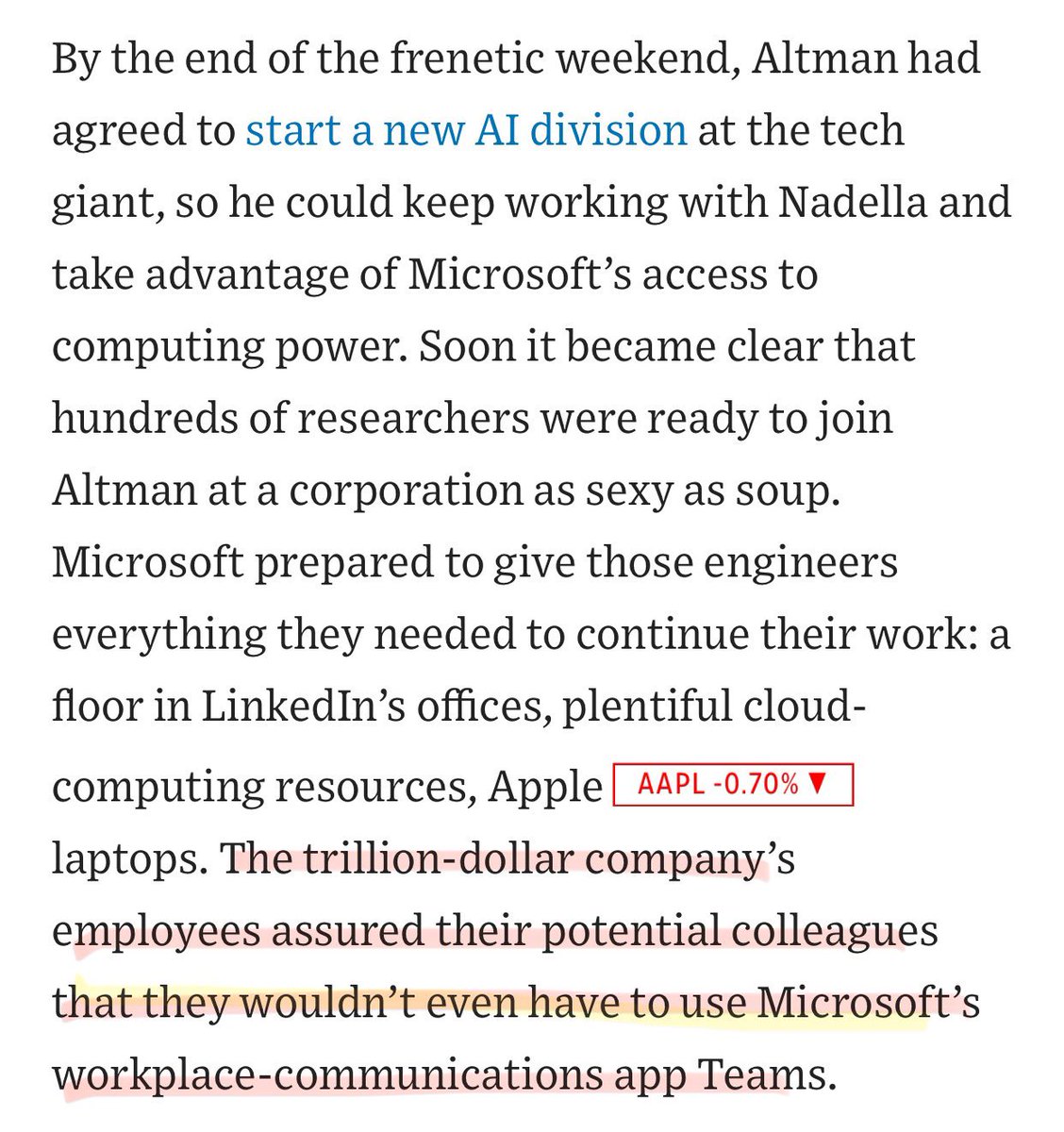
As part of Microsoft’s offer to hire OpenAI employees, it cleared out a whole floor of the SF Linkedin office.
And assured them they “wouldn’t even have to use Microsoft Teams.”
Oamk ja BusinessOulu järjestävät ti 21.11. opiskelijoille Maalisuora-tapahtuman. Mietittiin mitä kerrottais meistä, tässä tiivistetysti: meidän kolmesta aiemmasta harjoittelijastamme kaikki ovat nyt meillä töissä. Oletko sinä seuraava junnumme? https://t.co/d2CST7TphJ
It would be interesting to take an ultrasonic microphone, pitch shift things down several octaves into the human audible realm, pass through to headphones, then go about your day. I bet there are a lot of electronics that annoy animals with higher frequency hearing.
There is a paper by Google trending right now, that claims transformer in-context learning cannot generalize between two function classes
I have reproduced their experiment in a colab and come to a very different conclusion...
C++ proposal to add => as a logical implication operator and uh...................... not really sure about this lol. => is a bad operator for this (way too close to >= and ->) and implication is like the least intuitive logical operation anyway
https://t.co/eQmmdqDRjy
I wrote a 2D game, entirely in type-level Typescript.
Yes, you read that right. This is flappy bird, written only in Typescript types.
How did I do it? It involves a lot of type magic, and a new type-level Typescript runtime I made in Rust + Zig.
Let me walk you through it:
Be an Open Source Absolutist!
It is hard to overstate how much value Open Source Software has added to the world, and how broadly empowering it is.
Operating systems, development tools, core libraries, and critical applications – a great many of the software tools used by the most powerful companies in the world are the exact same ones available to hospitals, students, and everyone else. For free. And not just to use, but to inspect, modify, extend, and redistribute.
Back in the 90s, there were legal battles in the US over software capable of strong encryption. There were scare stories about how terrorists and child pornographers would use the technology to evade justice, but people were also wearing T-shirts printed with forbidden code to mock the idea of algorithms too dangerous to share.
It was stupid, and I was ashamed of the regulatory state, but we got better.
Open Source AI is in many people’s crosshairs today. They believe that giving free access to state of the art algorithms and models without any guardrails constitutes a danger to society, that the public can’t be entrusted with a research model that wasn’t hammered into a box of their designated dimensions. “As a large language model, I cannot…”
Unfortunately, this is actually inside the Overton Window of possibilities right now.
Let’s push it out.
In the spirit of the first amendment, congress should make no law abridging the freedom to release open source software.