Function: Product / Design
Source: Role details curated from the WTF? 30-day research calendar
WTF? What's the Future of Jobs in the Age of AI · 9 of 30
Screenwriting, but for machines
Conversation Designer
What it does: Scripts the dialogue, tone, and flow for chatbots and voice assistants.
Language is now a design surface. This role shapes how AI pauses, recovers from confusion, and hands off to a human.
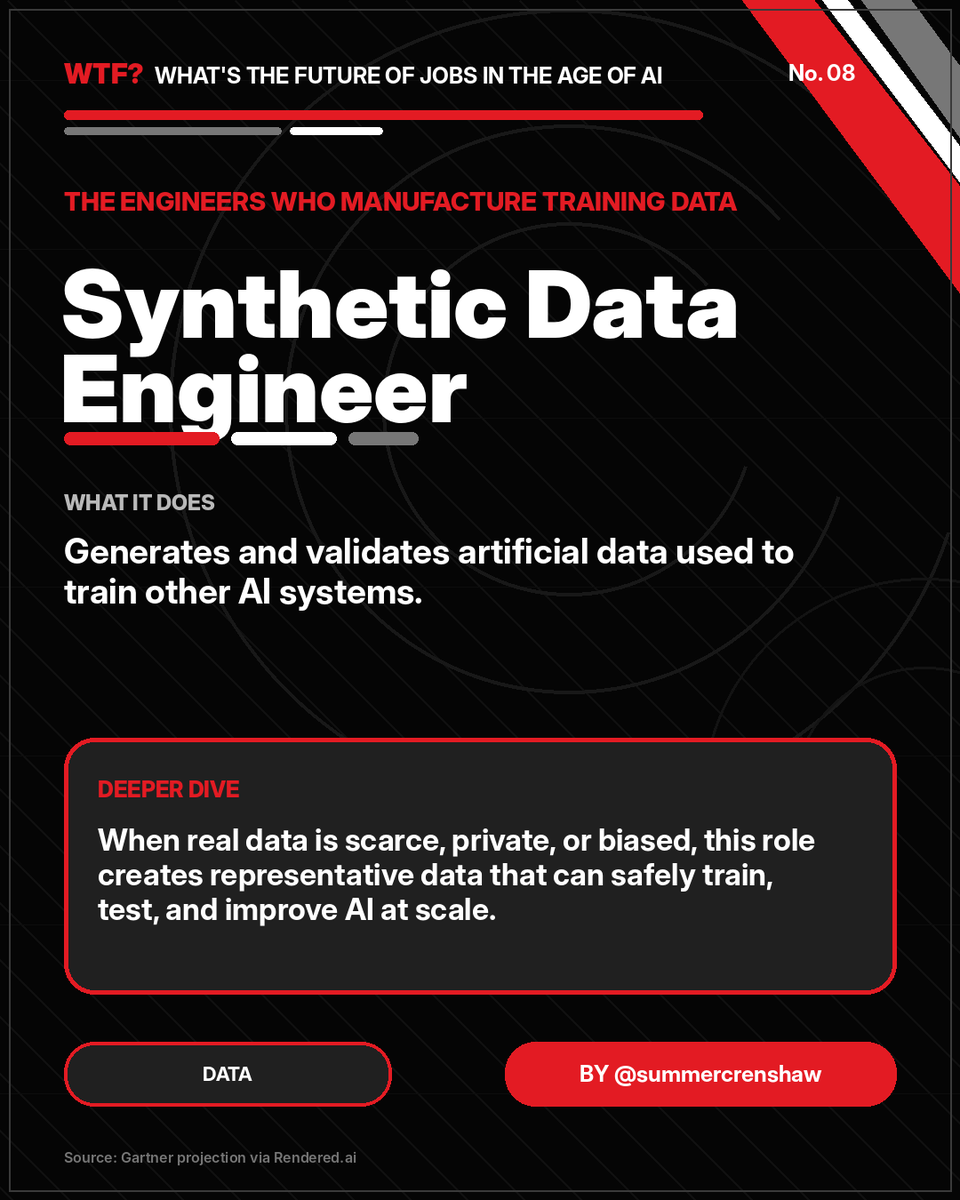
When real data is scarce, private, or biased, this role creates representative data that can safely train, test, and improve AI at scale.
Function: Data
Source: Gartner projection via https://t.co/NfHq267SE9
WTF? What's the Future of Jobs in the Age of AI · 8 of 30
The engineers who manufacture training data
Synthetic Data Engineer
What it does: Generates and validates artificial data used to train other AI systems.
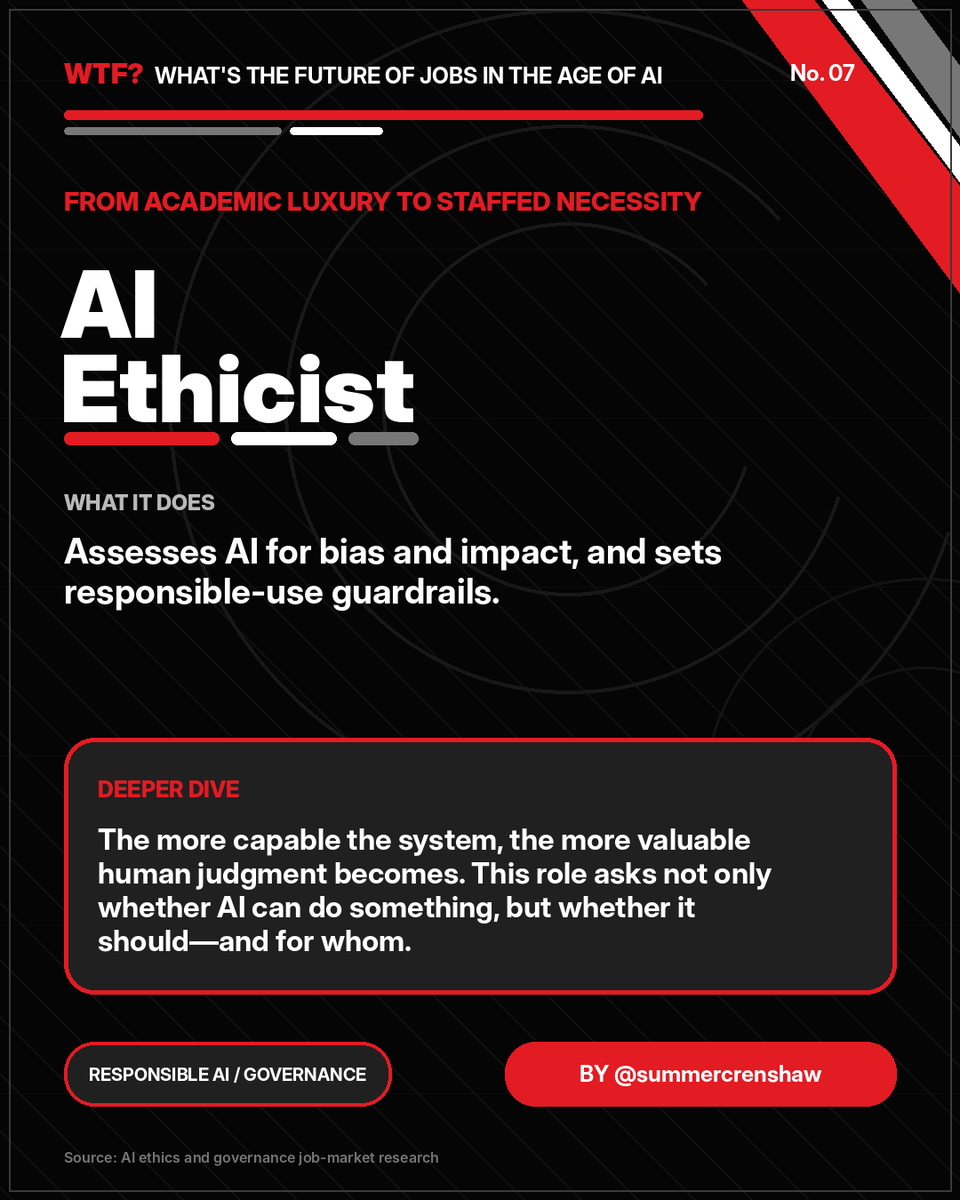
The more capable the system, the more valuable human judgment becomes. This role asks not only whether AI can do something, but whether it should—and for whom.
Function: Responsible AI / Governance
Source: AI ethics and governance job-market research
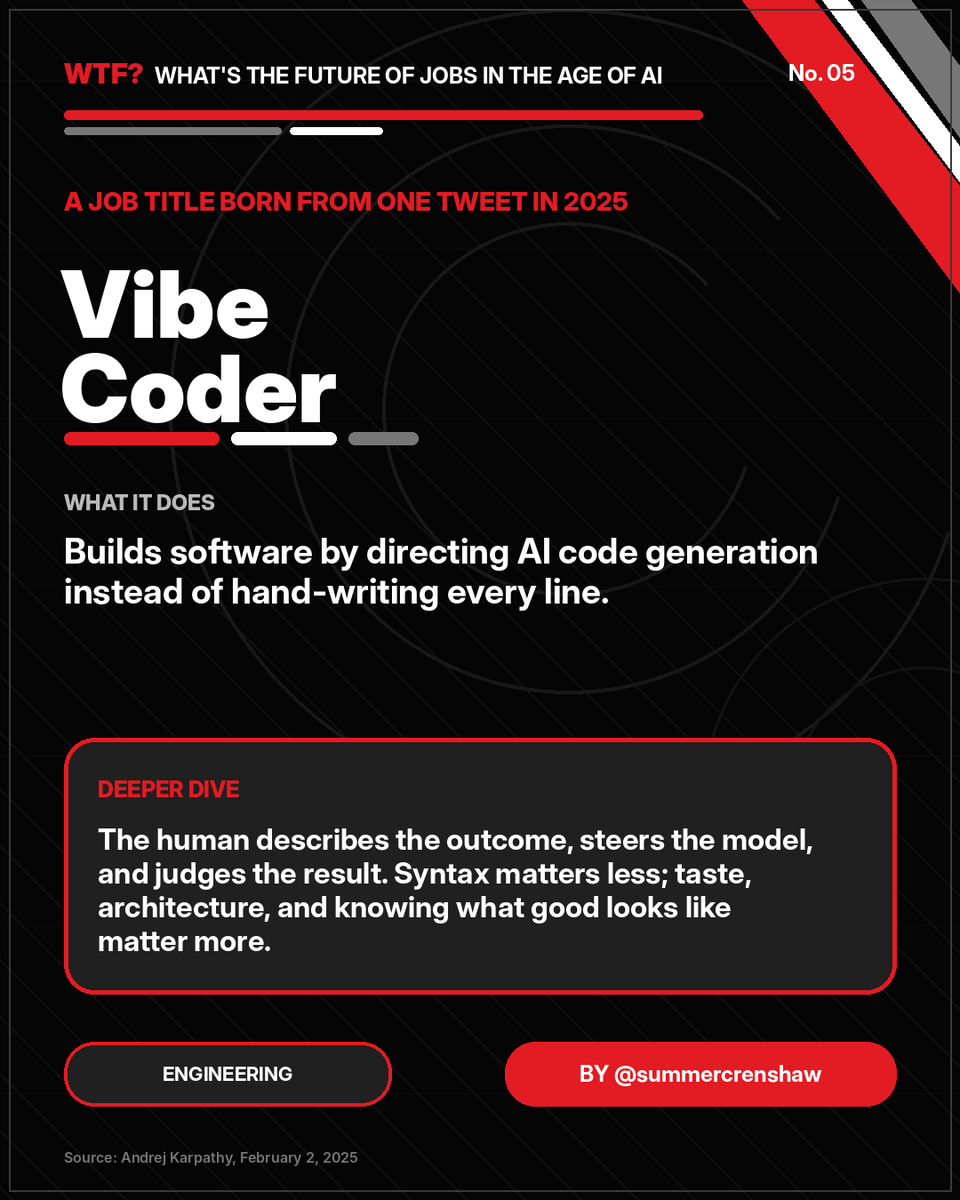
The human describes the outcome, steers the model, and judges the result. Syntax matters less; taste, architecture, and knowing what good looks like matter more.
Function: Engineering
Source: Andrej Karpathy, February 2, 2025
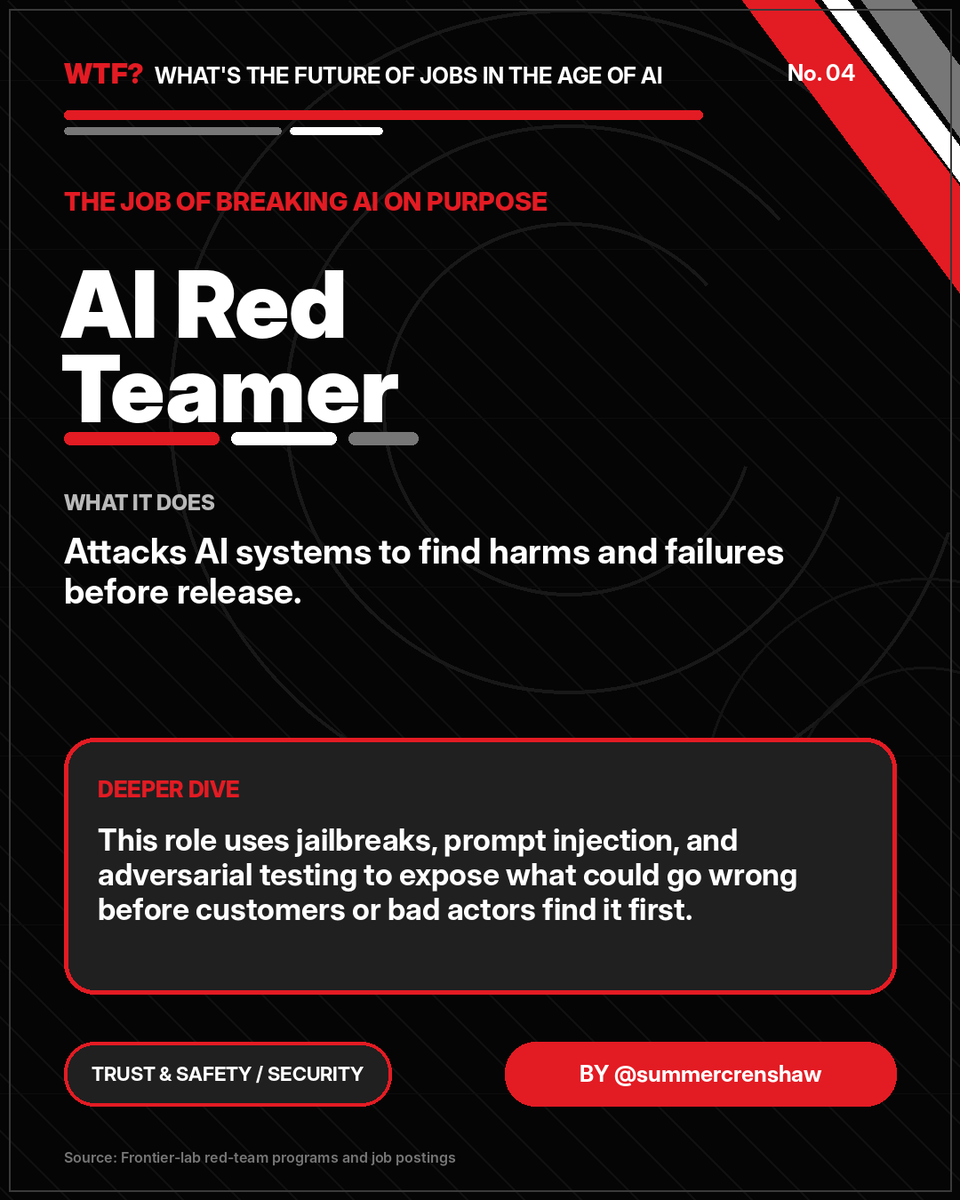
Function: Trust & Safety / Security
Source: Frontier-lab red-team programs and job postings
WTF? What's the Future of Jobs in the Age of AI ·
#ai#wtf#leadership
The job of breaking AI on purpose
AI Red Teamer
What it does: Attacks AI systems to find harms and failures before release.
This role uses jailbreaks, prompt injection, and adversarial testing to expose what could go wrong before customers or bad actors find it first.
The data is starting to ruin the clean “AI is taking all the jobs” story.
Ramp Economics Lab looked at actual AI spending and workforce data from more than 21,000 U.S. companies.
The firms investing most heavily in AI grew their total headcount by roughly 10% over the following two years.
But here is the number that really got my attention: Entry-level headcount grew 12%.
The companies barely using AI saw no significant employment gain. And the growth did not happen the second someone bought a ChatGPT license. It began showing up six to twelve months later, after companies had time to integrate AI into actual workflows.
That matters.
AI adoption is not buying a tool and announcing that your company has been transformed.
It requires people to redesign the work.
Train the workforce.
Build new systems.
Create new processes.
And figure out where humans and AI are better together.
Now, this study shows correlation, not proof that AI caused every new job. The researchers are clear that the heaviest adopters were already larger, more technical, and faster-growing companies.
But it gives us a much better question than the one dominating every headline:
What new work is created when companies actually learn how to use AI well?
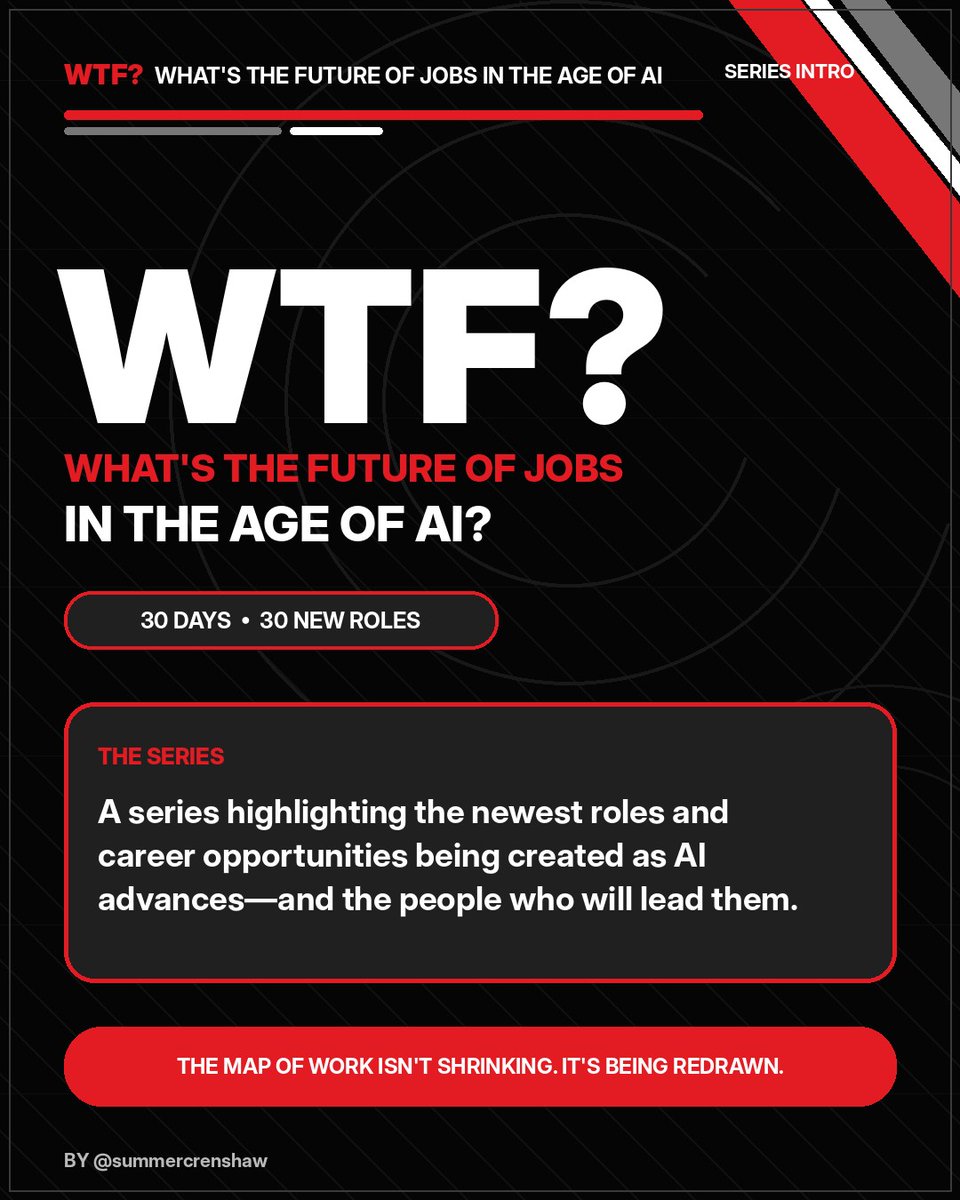
That is the question behind my new series:
WTF? What’s the Future of Jobs in the Age of AI?
For the next 30 days, I am highlighting one job that has been created, named, or fundamentally reshaped by AI.
Roles that were barely imaginable a few years ago are beginning to appear on real org charts today.
I am not pretending disruption is not real. It is.
But doom is not a workforce strategy.
People need to see where opportunity is moving, which skills are becoming more valuable, and how to position themselves before these new titles feel obvious.
The map of work is not shrinking. It is being redrawn.
What new job title have you seen appear because of AI?
#FutureOfWork #AIJobs #AILeadership #WorkforceTransformation
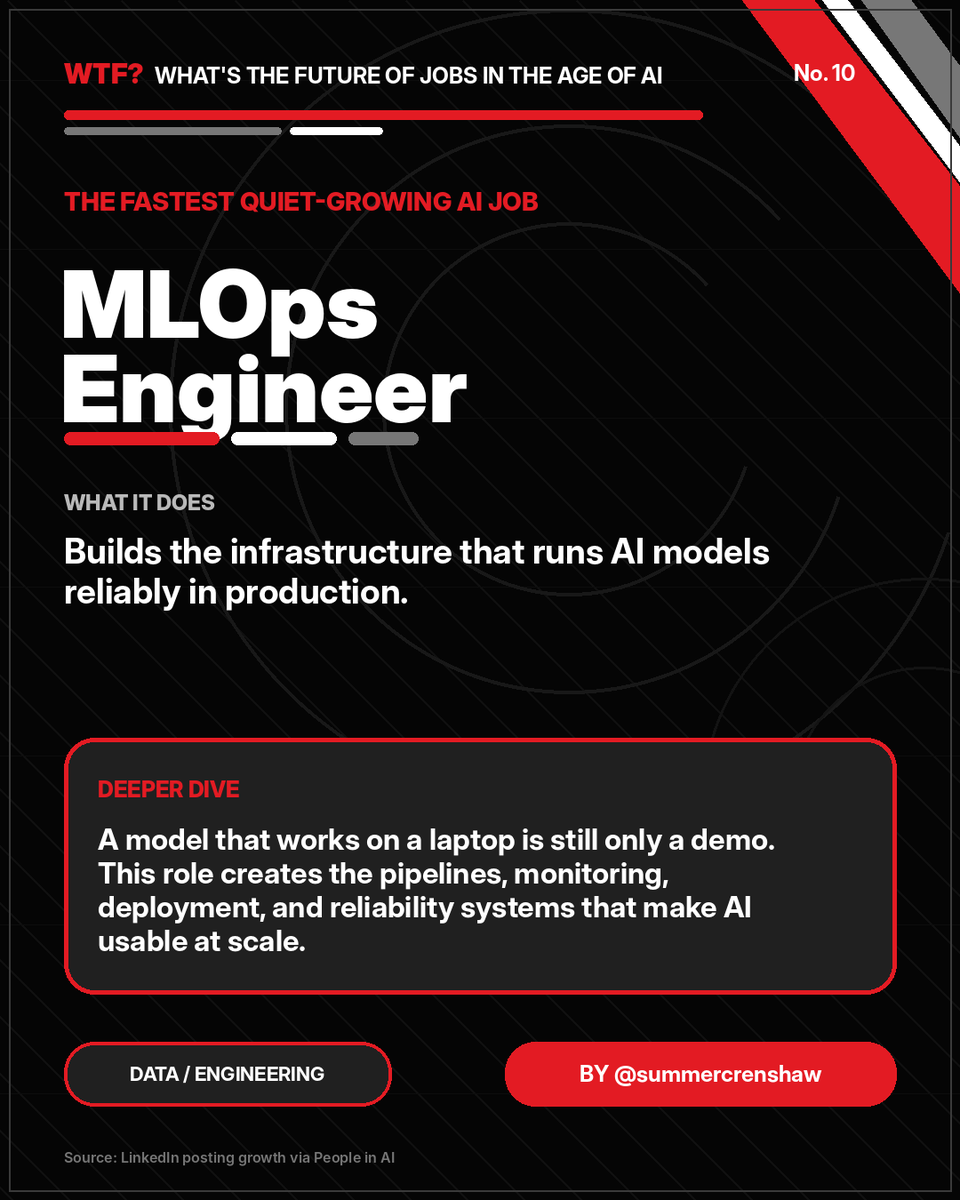
A model that works on a laptop is still only a demo. This role creates the pipelines, monitoring, deployment, and reliability systems that make AI usable at scale.
Function: Data / Engineering
Source: LinkedIn posting growth via People in AI