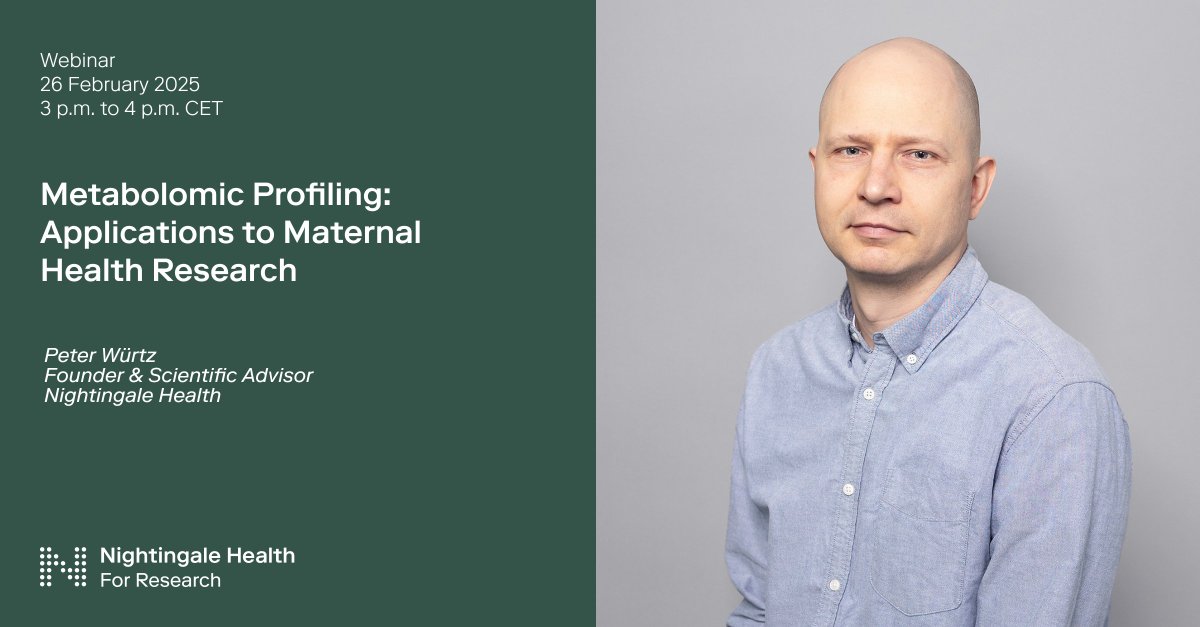
Our webinar “Metabolomic Profiling: Applications to Maternal Health Research” by Peter Würtz is next week! Remember to sign up and join us on 26 February at 3 p.m. CET. Learn more and sign up: https://t.co/r8Ovpkzfxk
Are you attending the @uk_biobank Scientific Conference in London on December 10?
Nightingale Health has completed the analysis of all 500,000 UK Biobank samples creating the world’s largest blood biomarker database for chronic disease research and prevention. Our Founder & Scientific Advisor, Peter Würtz, and Head of Global Medical Research Business, Helena Sundberg, will be at the event and would love to connect with you and tell more!
Book a meeting to discuss more: [email protected]
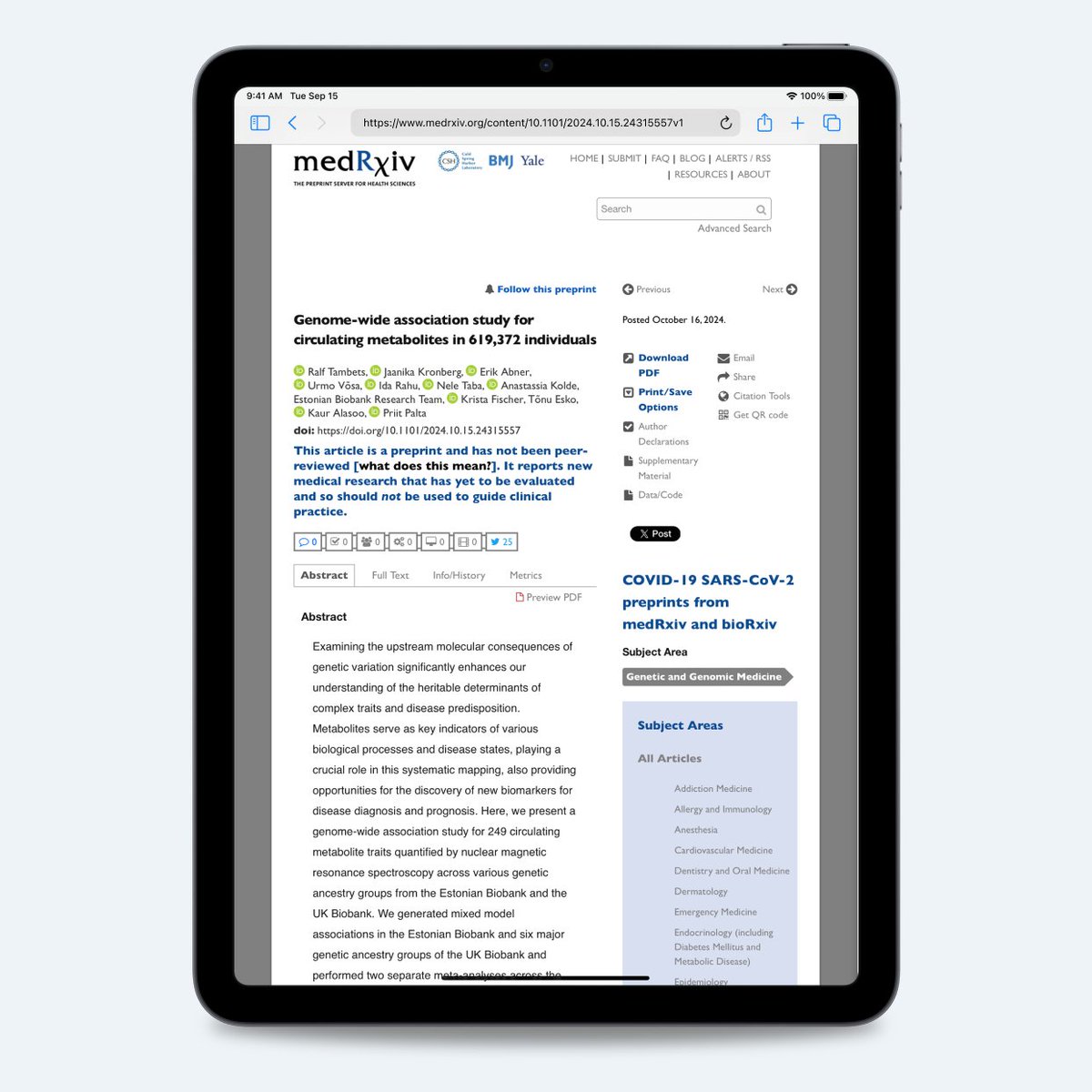
💡 New research highlight combines the data analyzed by Nightingale Health in @ESTbiobank and @uk_biobank: unlocking genetic links to metabolite traits in a groundbreaking genome-wide association study!
Researchers in a recently published pre-print have conducted a comprehensive genome-wide association study (GWAS) on 249 circulating metabolite traits in over 619,000 individuals from the Estonian and UK Biobanks. The study identified 89,489 locus-metabolite pairs, of which 4,184 are novel associations. Importantly, 12.4% of lead variants were rare, highlighting the need to study low-frequency variants in metabolic biomarker research. This resource is a major step forward in understanding genetic contributions to disease risk and drug target discovery.
Access the full preprint: https://t.co/xBBJ6Hzn2H
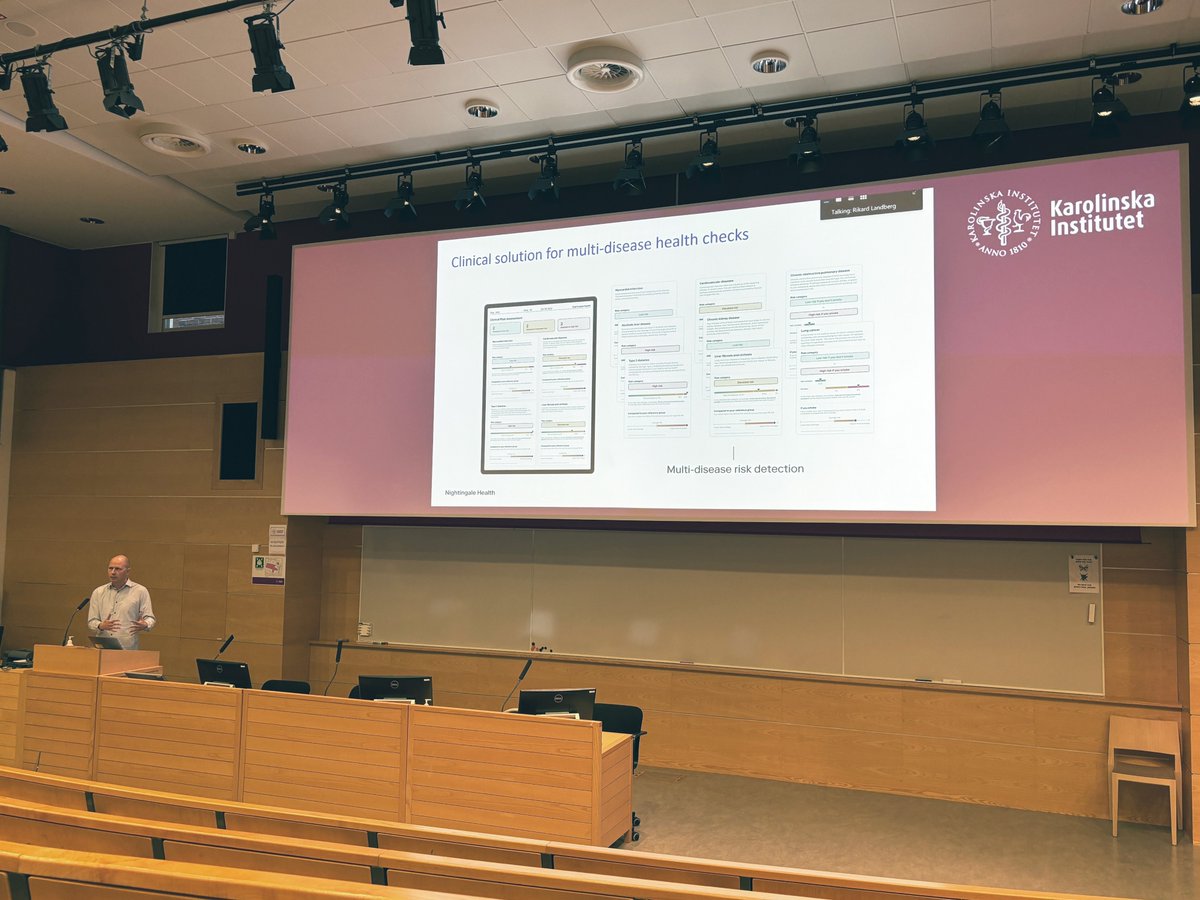
Last week, we had the pleasure of attending a seminar on metabolomics and microsampling, hosted by @scilifelab and @SocietyNordic at @karolinskainst in Stockholm. Our Founder @PeterWyrtz introduced Nightingale Health's end-to-end remote blood collection solution, RemoteOmics. RemoteOmics includes blood-collection device, accessories, and return pouch, and provides data for a full metabolic profile. Thank you all for the great event!
Learn more about RemoteOmics by Nightingale Health from our website: https://t.co/3nAq5O7xQ7
Are you coming to the fourth Nordic Metabolomics Conference 2024 in Turku on August 26-28? We'll have a presentation by our Senior Data Scientist Sini Kerminen. You can also meet our team at the event!
Are you attending EACR Congress (June 10-13, 2024)?
We'll have a poster presentation by our Data Scientist Kirsten Schut at the event. You can also meet our team at booth 44.
Learn more: https://t.co/TKxK6eIapL
Are you attending EASL Congress (June 5-8, 2024) in Milan?
Come meet our team at booth D1 and hear more about Nightingale Health’s affordable metabolomics and scalable remote blood collection.
Welcome to our webinar Urine metabolomics by Nightingale NMR - consistent biomarkers for cardiometabolic disease and underlying risk factors across cohorts on 7th May at 2 p.m. CEST!
In this webinar, @PeterWyrtz will cover the newest science using NMR metabolomics in cohort studies from US, Europe, and Asia.
Learn more about the webinar and sign up: https://t.co/W9kAQPKNf1
We will also send a recording to all participants after the webinar.
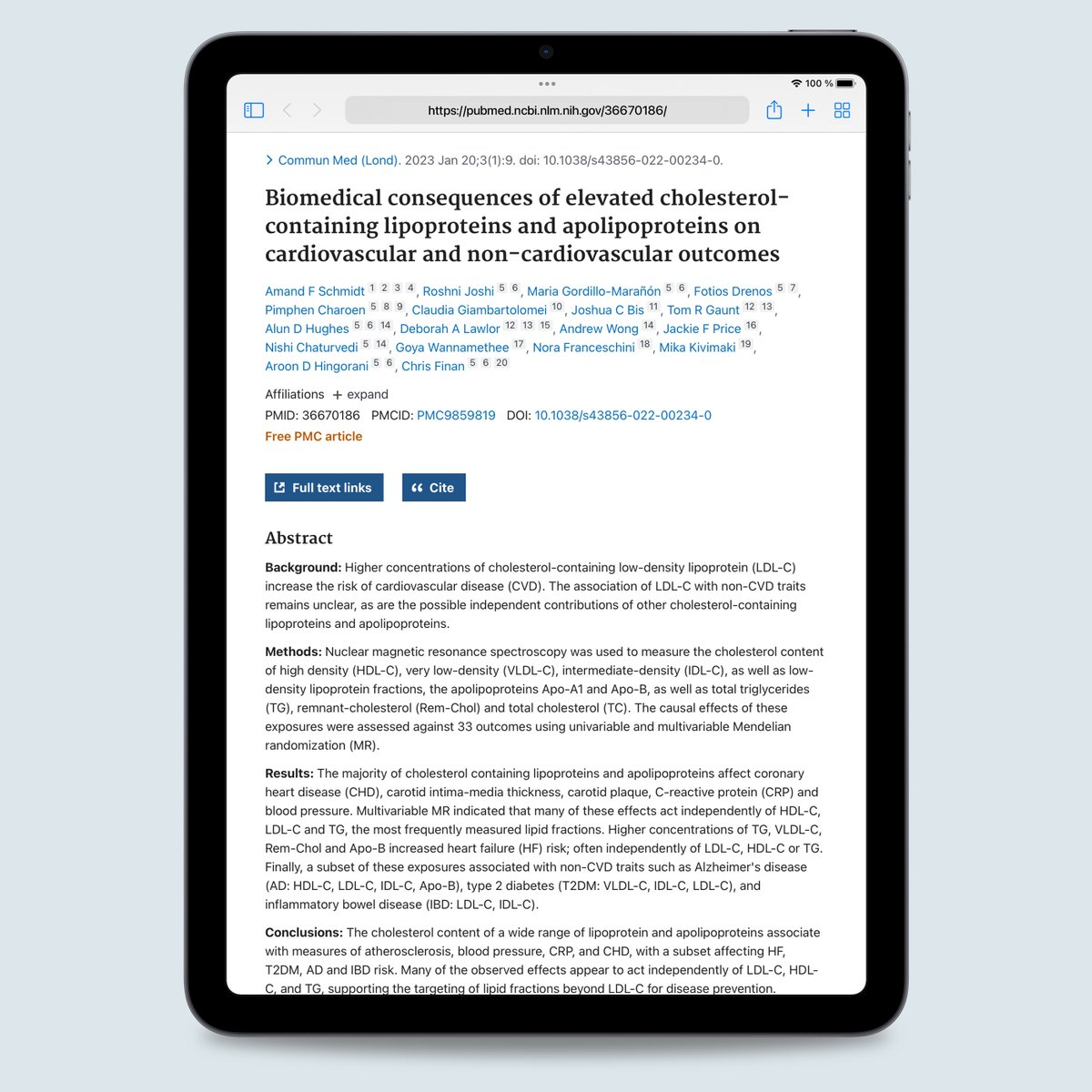
Lipid research highlight: Various diseases would benefit from measurements beyond LDL Cholesterol
New research explores how various cholesterol-containing lipoproteins and apolipoproteins influence not just cardiovascular disease but also a range of other diseases and processes like Alzheimer’s disease and inflammation. The study considered different cholesterol components, including HDL Cholesterol, VLDL Cholesterol, IDL Cholesterol, LDL Cholesterol, along with apolipoproteins and triglycerides, which were measured using Nightingale Health’s blood analysis technology.
💡 Key findings:
- Cholesterol in lipoproteins and apolipoproteins significantly affected coronary heart disease, carotid artery health, C-reactive protein levels, and blood pressure.
- Many effects were independent of commonly measured lipids like HDL Cholesterol, LDL Cholesterol, and total triglycerides.
- A connection was also found between these cholesterol components and diseases unrelated to the heart, including Alzheimer's disease, type 2 diabetes, and inflammatory bowel disease.
This study highlights the importance of looking beyond LDL Cholesterol in lipid profiles for a comprehensive understanding of different disease risks and prevention strategies.
Access the publication here: https://t.co/DapxpIJ5ej
Our webinar by @jcbarret and @charlie_lees is next week! Remember to sign up and join us on the 4th of April at 4 p.m. GMT +1.
Learn more about the webinar and sign up: https://t.co/abwCIqkyow
Nightingale Health for Research: Order metabolic biomarker analysis of serum, plasma or urine samples conveniently through our online Order Form. Learn more: https://t.co/sRmRvcZjHr
Welcome to our webinar Predicting onset and progression of inflammatory bowel disease using genomics & metabolomics on 4th April at 4 p.m. GMT +1!
In this webinar, @jcbarret and @charlie_lees will present metabolomic insights from the UK Biobank dataset on inflammatory bowel disease, predictive modeling, and implications for proteomic biomarker research.
Learn more about the webinar and sign up: https://t.co/jbRUdhrVAj
We will also send a recording to all participants after the webinar.
Are you attending the Alzheimer’s & Parkinson’s Disease Conference (AD/PD) in Lisbon on March 5-9?
Our Head of Global Medical Research Business, @SundbergHelena, will be at the event and would love to connect with you! Book a meeting to discuss more: https://t.co/KmGlT0x8N1
Nightingale Health for research: metabolic insights from one sample for multi-disease prediction. One 100 µl blood sample, one test, 250 biomarkers, including 39 clinically validated biomarkers. Replicate and publish your research findings, adding to over 450 prior publications from UK Biobank and hundreds of other cohorts. Enjoy our affordable pricing from EUR 24 per sample.
Nightingale Health for Research: Exploring Metabolomics in Cognitive Health and Dementia
Unsurprisingly, the main risk factor for cognitive decline is age. Luckily, we are not pre-ordained to cognitive decline as we get older: there are also other factors involved, some of which we can influence. In our latest blog post, we share insights on cognitive health and metabolomics by comparing previous research with Nightingale Health’s internal findings and two new pre-printed studies.
Read our blog to learn more: https://t.co/QBX3EVHqyB
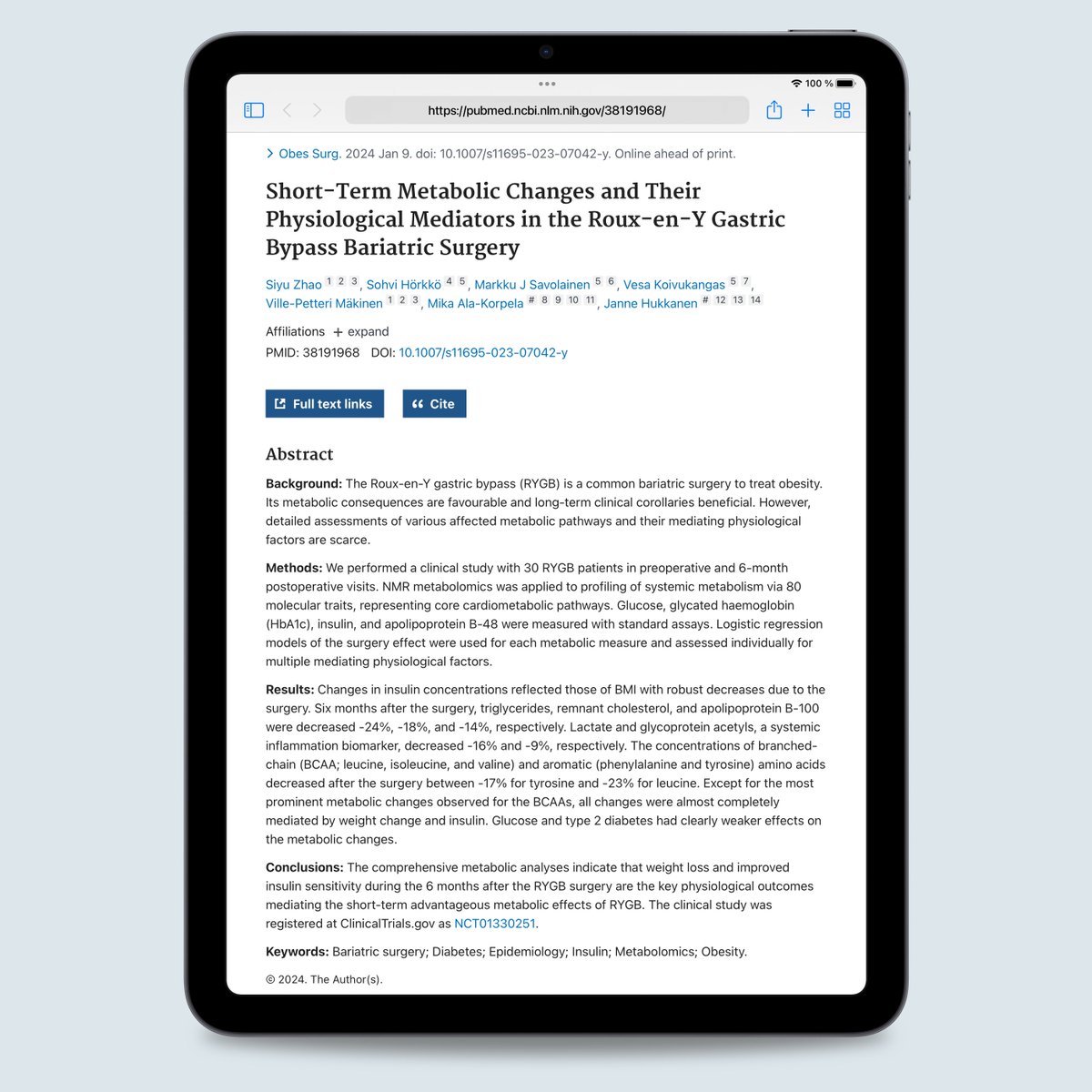
New in obesity research: Clinical study shows effects of gastric bypass surgery on metabolism
A recent clinical study sheds light on the metabolic transformations following Roux-en-Y gastric bypass (RYGB), a common weight loss surgery. The study included 30 patients who were assessed before surgery and six months after.
Key findings:
- Significant post-surgery changes were observed not only in well-known cardiometabolic pathways like lipid metabolism but also in amino acids, ketone bodies and inflammation.
- Improved insulin sensitivity and lowered BMI were the key mediators of better cardiometabolic health.
- Notable reductions in triglycerides (24%) and remnant cholesterol (18%) were observed six months post-surgery.
- Lactate levels dropped by 16% and glycoprotein acetyls, a marker of systemic inflammation, dropped by 9%.
- Branched-chain and aromatic amino acids were reported to decrease too, with leucine showing the most significant drop (23%).
The clinical study reveals that weight loss and improved insulin sensitivity are pivotal in driving several different beneficial metabolic effects observed in the first six months after RYGB surgery. Due to the study’s use of Nightingale Health’s blood biomarkers, they could support earlier findings related to standard clinical lipid measures as well as assess more detailed metabolic changes.
Access the publication: https://t.co/8DHfzPEJRh
New in genetics research: A genome-wide study of urinary metabolites uncovers the molecular pathways of kidney function
The new pre-print, co-led by researchers from the University of Helsinki and the University of Edinburgh, is the largest study of its kind to explore genetic associations with urinary metabolites. The study provides a catalogue that can aid in understanding how genetic makeup contributes to kidney function and disease. The study features genome-wide analyses of around 8,000 individuals, for whom concentrations of 53 metabolites were measured in urine samples analyzed by Nightingale Health.
Key findings:
- Discovery of over 30 new genetic associations to urinary metabolism.
- Kidney function was shown to have a causal impact on the concentrations of 13 urinary metabolites, including four amino acids.
- One urinary biomarker (1-methylnicotinamide) was suggested to have a causal impact on BMI.
The study demonstrates the value of large-scale urinary biomarker profiling to understand kidney function on a more detailed level and the relationship between urinary metabolites and health and disease. This relevance was recently also supported by other epidemiological studies using urinary metabolites (https://t.co/Wxfe2NR7EB and https://t.co/nFJ9e3mVUd).
Access the pre-print: https://t.co/Oc0xUsUGiK
What is the hidden spectrum of risk in people with moderately increased blood pressure?
Nearly a third of adults in the UK have high blood pressure, which is a risk factor for cardiovascular diseases like heart attack and stroke. In our new research blog post, our scientists learned from the @uk_biobank data how blood biomarkers can help identify the individuals with moderately increased blood pressure who would benefit most from treatment.
Learn more from our latest blog post: https://t.co/MoFRLzBnuu
Yesterday, Nightingale Health for Research team members Peter Würtz and Haroon Allybacus attended the UK Biobank Winter Conference in London.
Our collaboration with @uk_biobank is a pillar in our mission to prevent chronic diseases globally. A new milestone was reached yesterday, when we announced that we have completed analyzing 500,000 UK Biobank samples. The wide scientific use of Nightingale Health's biomarkers has already enabled our technology to be routinely adopted in clinical settings and makes us the leading source of blood biomarker data for scientific research.
Read more: https://t.co/AHLHcDmdGw
The UK Biobank data offers an excellent replication opportunity for research projects. UK Biobank biomarker data analyzed by Nightingale Health is available for approved researchers here: https://t.co/FuQBdpPldr
Our services will soon be more accessible in the UK than ever before as we are opening a UK lab with full operations beginning in early 2024 – stay tuned!
📣 We have reached a significant milestone by completing the analysis of all 500,000 @uk_biobank samples. This accomplishment creates the world's largest blood biomarker database, advancing research and prevention of chronic diseases.
Renowned for its vast and continuously growing dataset of biological, health, and lifestyle data, the UK Biobank is an invaluable resource for over 30,000 researchers from over 90 countries. By making the analysis results from 500,000 samples available via the UK Biobank, we further solidify our role as the leading source of blood biomarker data for scientific research.
The broad scientific use of Nightingale Health's biomarkers has also facilitated the use of our technology in clinical settings. This is demonstrated in our collaborations with @Terveystalo in Finland and Innoquest Diagnostics and Pathology Asia in Southeast Asia, marking a new era in preventative healthcare.
Read the full press release: https://t.co/AHLHcDmdGw
New in metabolomics research: the link between oral health and metabolism 🦷 🩸
Exciting findings from a recent study provide novel insights into how oral health is closely linked with metabolic biomarkers measured by Nightingale Health. The link between oral health and metabolism has not been widely studied previously and this will be an interesting research topic for scientific discoveries in the upcoming years.
The study, published in the Journal of Dental Research, encompassed two distinct groups – the Health 2000 survey (6,229 participants) and the Parogene cohort (452 participants). The study used biomarker data analyzed by Nightingale Health to examine blood concentrations of 157 metabolites of the study participants.
Key findings of the study:
1. Oral health indicators: Dental health measures such as decayed teeth, root canal fillings, and periodontal health showed significant correlations with various metabolic markers, including LDL, VLDL, and HDL cholesterol as well as fatty acids.
2. Longitudinal impact: Baseline oral health conditions like caries were predictive of long-term changes in metabolic markers over 11 years. This may help to explain how oral health contributes to future health status and risk for many common diseases.
3. Oral health and systemic inflammation: Indicators of oral diseases, especially periodontitis, were linked to metabolic profiles typically associated with systemic inflammation, suggesting a role in the susceptibility to cardiometabolic disorders.
This study sheds light on the importance of oral health, not just for maintaining a healthy smile, but as a factor in our overall metabolic health and influencing the risk of chronic conditions.
We are looking forward to seeing future research undercovering the links between metabolism and oral health. To learn more about our blood analysis service, please visit our website for researchers: https://t.co/MQ1y7Ghsqz
Read the publication from Journal of Dental Research: https://t.co/8RA8GmNlu3
#OralHealth #Metabolism #Dentistry #HealthTech #NightingaleHealthforResearch