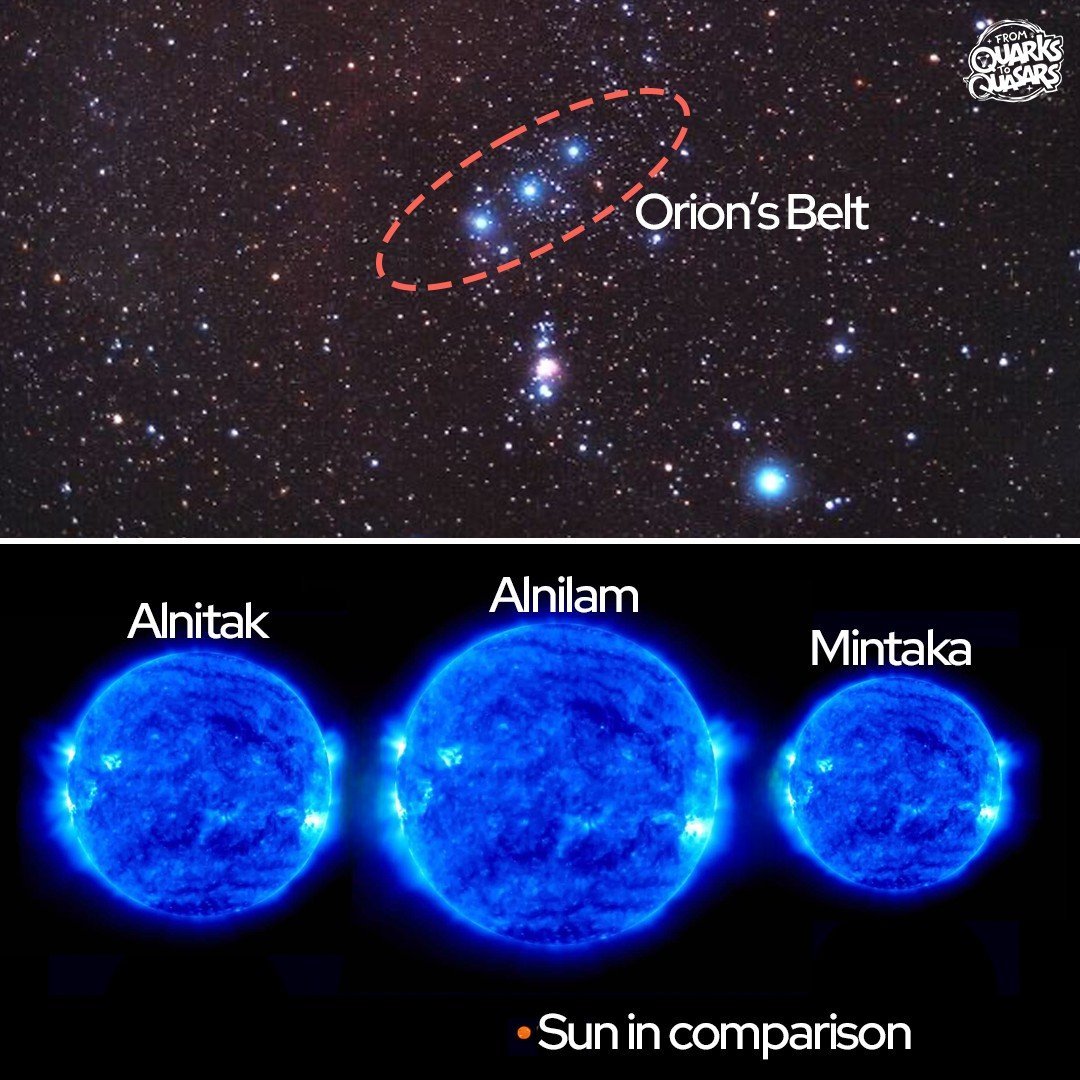
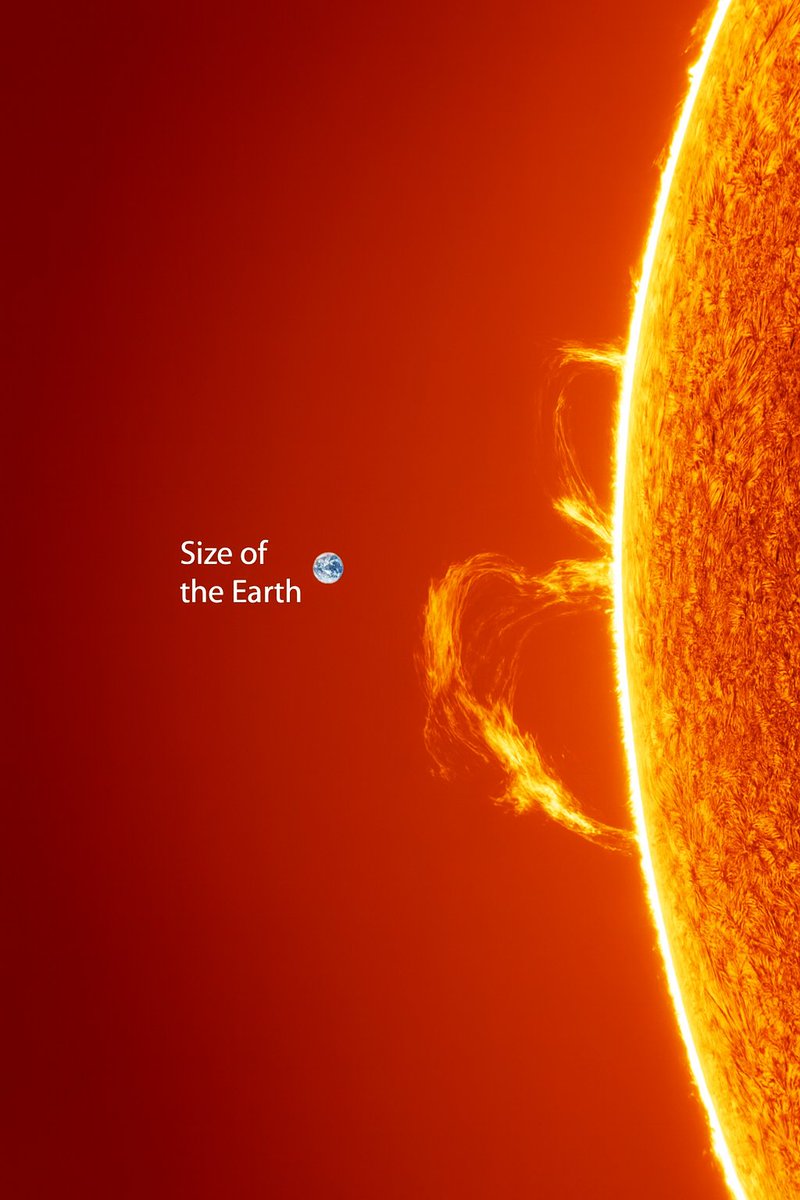
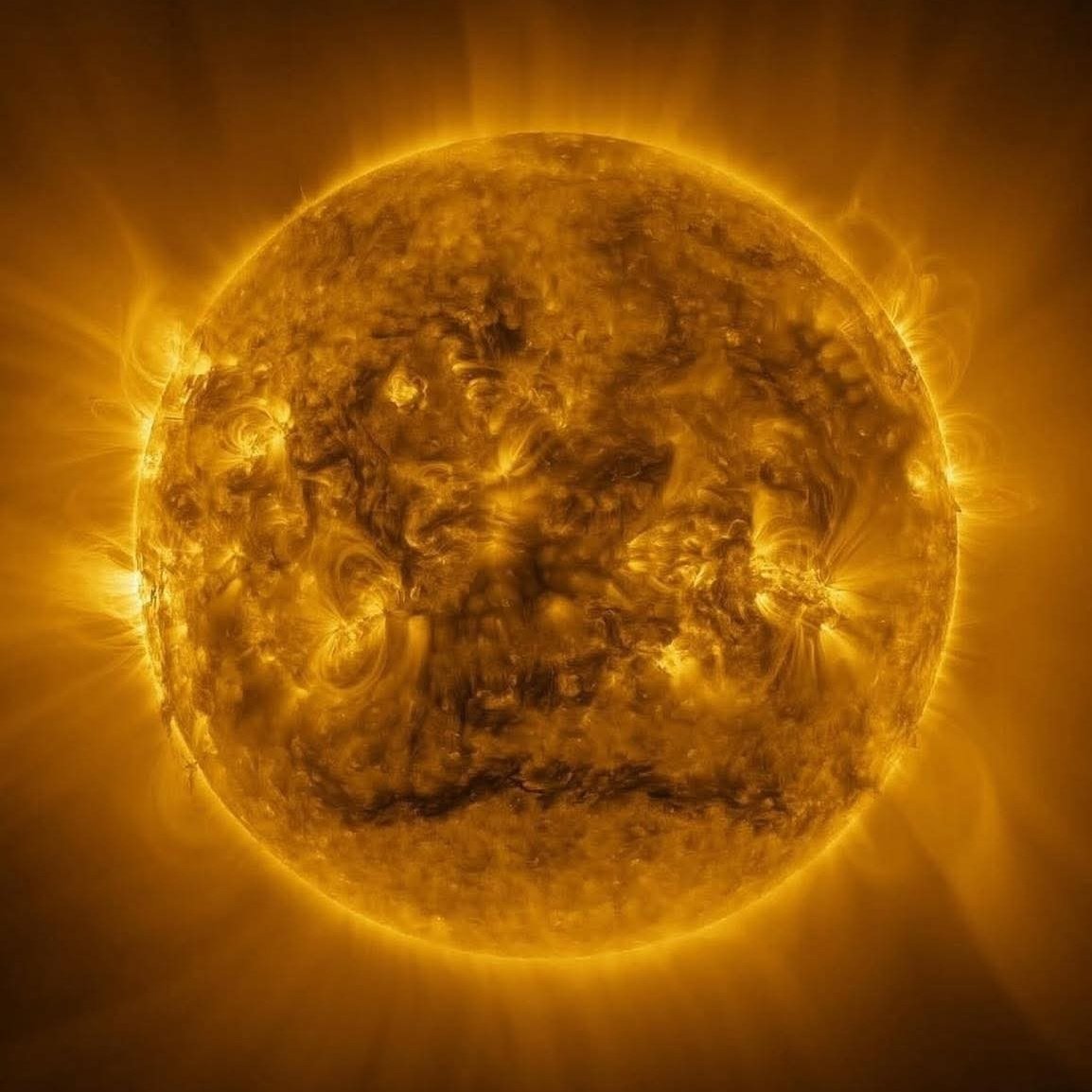
The stars of Orion’s Belt—Alnitak, Alnilam, and Mintaka—are tens of times larger and hotter than the Sun. If one replaced the Sun, its radiation would wipe out every planet in our solar system.
The Amazon at dawn — a view from orbit.
NASA shared a photo of the Amazon taken from the International Space Station during sunrise.
The river looks like a thin golden line cutting through the endless green ocean of the tropical forest. Clouds float above the trees, like soft waves. The territories of Peru, Colombia and Brazil are visible in the photo.
What an incredible photograph.
It was taken by British amateur photographer Nima Sarikhani and it won the Wildlife Photographer of the Year People's Choice Award in 2023.
Astronomers just watched a star explode - and saw its insides exposed.
For the first time in history, scientists got a direct look inside a star at the moment it went supernova - revealing inner layers that had, until now, only existed in theory.
A massive star 2.2 billion light-years away reached the end of its life and exploded in a brilliant burst of light. But something was off. When researchers analyzed the spectrum of light from the explosion, they didn't see the usual lighter elements like hydrogen, helium, or oxygen.
Instead, they saw silicon. Sulphur. Argon. Elements normally buried deep inside a star's core.
This wasn't supposed to be possible.
According to stellar models, massive stars - those at least eight times the mass of our Sun - are layered like onions. Their cores are packed with heavy elements like iron, while progressive lighter layers of silicon, oxygen, and carbon sit above. Hydrogen and helium form the outermost shells. These outer layers usually obscure everything underneath.
Astronomers believe the star violently ejected its outer layers in the final stages of life – not just the hydrogen and helium, but even the middle shells that hide the deeper interior. It’s possible that extreme instability in stars more than 100 times the mass of our Sun could cause this kind of shedding. While similar “pre-explosion outbursts” have been seen in other stars, this is the first time they’ve exposed the inner structure so clearly.
The supernova was first detected by the Zwicky Transient Facility in California. Within 24 hours, astronomers triggered rapid follow-up observations with Hawaii’s Keck Observatory and captured the light signature before the explosion faded.
That speed was critical. Supernovae evolve quickly, sometimes over just a few hours, and once the star’s material expands and cools, the deeper layers disappear from view.
Read the study:
Schulze, Steve, et al. “Extremely Stripped Supernova Reveals a Silicon and Sulfur Formation Site.” Nature
Credit: Keck Observatory/Adam Makarenko
This is the most detailed view of a human brain to date.
A team of researchers used electron microscopy (EM) to image a cubic millimeter-sized piece of human brain tissue at high resolution and this is a single neuron with 5,600 of the nerve fibers that connect to it.
Photographer Wu Yung-sen has been deep sea diving and photographing marine life for four years.
On a blackwater dive—unable to see the bottom and surrounded by impenetrable space—he chanced upon a rare larval Wunderpus octopus, totally transparent.
Most terrifying space photo. Astronaut Bruce McCandless II floats untethered away from the space shuttle, with nothing but his Manned Maneuvering Unit keeping him alive. The first person in history to do so.





![Rainmaker1973's tweet photo. Aurora exploding over Black Church, Iceland
[📸 Navaneeth Unnikrishnan] https://t.co/GCyOraMBCR](https://pbs.twimg.com/media/G1RyRu1XMAAn7Gt.jpg)