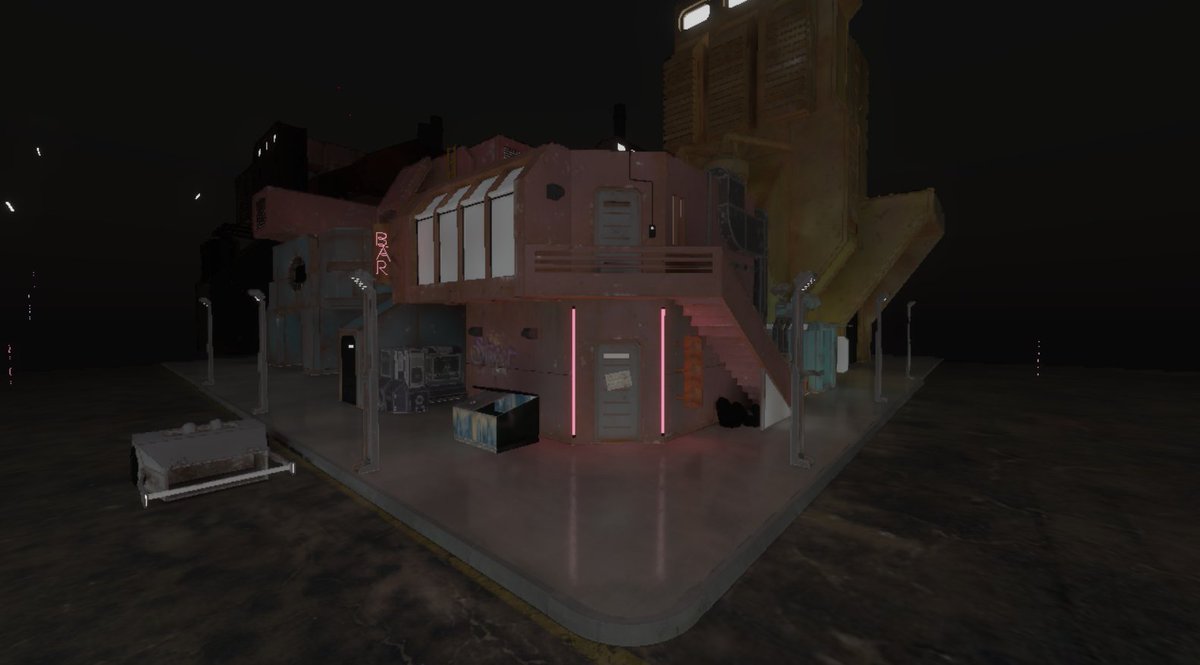
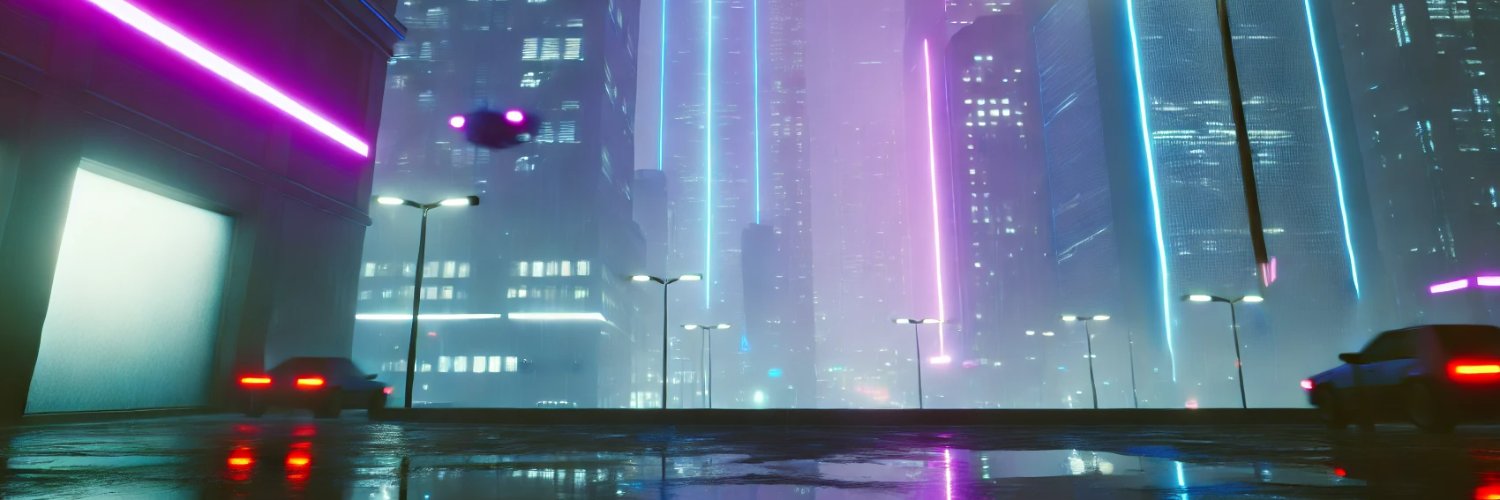
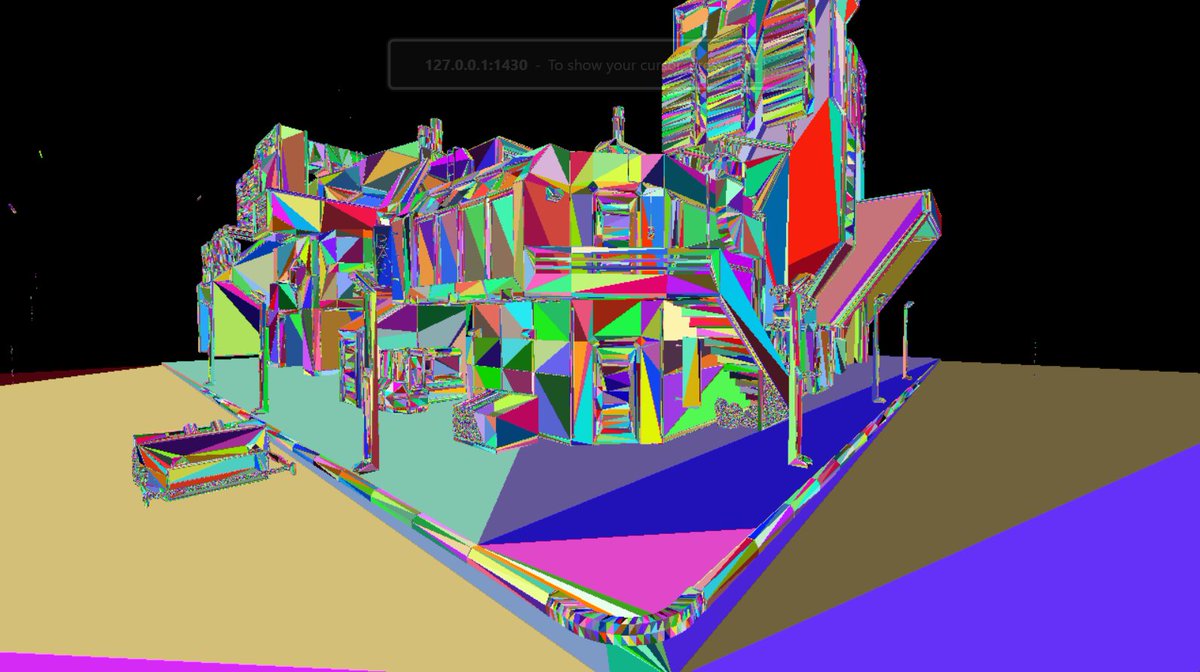
Current state of Sundown renderer: (cheapish) DDGI + Stochastic SSR + GT-VBAO + SVSMs + EEVEE-style Bloom + Deferred Lighting + Other Stuff. Running in a pseudo-bindless pipeline, as much as JS + WebGPU allows.
My laptop was overheating from all the dev and open apps at this point so it started power throttling and cycling between laptop 3070 and iGPU.
Still a few artifacts and quality touchups to get to, but currently trying to push performance as much as possible to fit within a decent 30fps budget for mobile and iGPUs.
People really underestimate how vast outer space is.
We are sitting in a tiny rock that has already produced trillions of dollars worth of value with it's limited resources in just a few hundred years.
Imagine how much more value you can exploit in the vastness of space.
There is no hard cap. Companies that sell shovels for space exploration can break into quadrillion dollar markets in the next century or two.
People are treating SpaceX like a once in a lifetime opportunity.
But if you invest $11,000 today, SpaceX needs to reach $3.5 trillion just for you to make another $11,000.
For context, Microsoft's entire market cap right now is $2.858 trillion.
SpaceX needs to become larger than Microsoft, the 4th most valuable company on earth, just to double your money.
That is how expensive this IPO already is.
If you have a giant, high-poly mesh (for example some combined building or structural asset), this LODs up the entire thing as soon as you're within a few dozen meters due to the size, as opposed to something like Nanite which only LODs in the clusters of that mesh that need detail.
Isn't this just meshlet-based rendering with regular LODs? Nanite stitches intra-model meshlet LODs based on screen coverage, so the LODs are sort of mesh-independent.
This seems to be switching out wholesale LODs for meshes, with meshlet based rendering, which seems the same but the difference between this and Nanite is subtle yet important.
Still need to fix UI element shadowing, but API is pretty straightforward. You can run these kinds of functions in a hot loop (immediate mode style) and frame-to-frame changes are properly handled by the backend
@alightinastorm Like try to fill in the really small gaps, crevices and creases with higher quality occlusion. Maybe a combination of GTAO + contact shadows + really good AO maps.
Curious why you're building HZB for CSMs. I assume you want some sort of shadow view occlusion culling but the moment you rasterize depth for a light-view cascade you already pay for a full depth raster pass, so why waste the full depth raster on HZB when you're going to do it again (even if not fully an all light-visible geo) once you use the HZB result to do the actual depth raster?
I think this would work even better in a virtual shadow maps implementation. You can coarsely cull tiles using a similar method and only use the resulting list for processing, so you end up paying for raster only on objects within dirty tiles of those frustum planes. Better if you can cull resulting meshes by cluster within the tile bounding planes.
Had meshlets already set up via an offline cooking step with meshoptimizer for a while, but then procrastinated on that to work on some other optimizations and a CVAR-like config system and some other QoL stuff 😅
Finally took some time to start hooking in the imported meshlets into a new viz. buffer pipeline. Still gotta work on frustum/occlusion culling for meshlets, setting up a CLAS for ray traversal and leveraging meshlets during the SVSM stages,
but this effectively collapses a ton of draw calls (per material + mesh) into a single viz. buffer raster pass and a single GBuffer resolve (from the viz. buffer), since Sundown already has a pseudo-bindless data setup for materials and textures, so it's not quite there but it's coming along 🤓
This is one of the best rising accounts on here. We need more completely delusional positivity in a world that is shattering from negativity on all sides.
Being a realist doesn't mean you need to be pessimistic about everything. You can still be a realist and a complete optimist at the same time.
Not necessarily a cut at this but it's weird how there's always this discourse around technology about what makes you "more human" like its a fucken contest and if you somehow lose out at the bottom you're subhuman and deserve to rot.
No wonder religion exists. We're all human. It's not a "more" or "less" thing. It doesn't matter if you're developing technology or creating art or running a political campaign. You're as human as anyone else, regardless.
@martinmbauer It's too bad it requires billions of dollars to run these experiments. Early physics and mathematics discoveries were largely done by small groups and singular individuals using pretty inexpensive methods.
This is vital and partly why artistic mediums are so important: they either portend or inspire the future.
They are a guiding light for our descendants, and if you are a storyteller or artist you have a responsibility to leave blueprints for a better world, even if the message is subtle.
The future of humanity should be bright, not bleak, and stories more often than not dictate what direction we move in.
Stories shape our future. Story tellers manifest our destiny. Someone, somewhere, is writing an epic screenplay that is more Star Trek, than Terminator. A vision of a compelling and optimistic tomorrow that will shape humanity’s next few decades.
The cell phone, the internet, humanoid robots, self-driving cars, voice assistants, and Starships were all imagined in science fiction before they were built by engineers. Stories are blueprints.
Question: What if we asked storytellers around the world to envision an epic and compelling future for humanity, and then funded them to produce that film? What if we could flood the world with positive visions of the future, rather than dystopian predictions?
Announcing the Future Vision XPRIZE 🧵
@SebAaltonen At this point we would've pretty much solved real-time computer graphics. Then we'd only have animations, physics and general gameplay to try and keep improving.
@pmarca There's a difference between introspection and just being humble and not dwelling on success for too long or getting too prideful. I think Steve was talking about the latter. But they're both important for different reasons.