A weight loss drug may have just opened a new conversation around alcohol use disorder.
In a new Lancet study, researchers tested once-weekly semaglutide, the drug sold as Wegovy, in people with both obesity and alcohol use disorder.
The results were hard to ignore.
Patients receiving semaglutide went from an average of about 17 heavy drinking days per month to roughly 5 after 26 weeks.
The placebo group improved too, dropping from about 17 to roughly 9 heavy drinking days per month.
That matters because both groups also received cognitive behavioral therapy focused on motivation, cravings, and relapse prevention.
So this wasn’t “drug versus nothing.”
It was semaglutide plus therapy compared against placebo plus therapy.
And the semaglutide group still saw a larger reduction.
They also reduced total alcohol intake by an extra 467 grams per month compared to placebo, had fewer drinks per drinking day, and reported lower craving scores.
Researchers believe this may have something to do with GLP-1 receptors in the brain’s reward pathways.
In plain English: The same system involved in appetite, cravings, and reward may also influence the drive to keep drinking.
That could help explain why some people taking these medications report losing interest in alcohol, even when that wasn’t the original goal.
Still, this is early.
The trial focused on people with obesity and alcohol use disorder, so we need larger studies, longer follow-up, head-to-head comparisons, and research in people without obesity before this becomes a standard addiction treatment.
But as an early signal, it’s a big one.
This post is for educational purposes only and should not be taken as medical advice. Always speak with a qualified medical professional before starting, stopping, or changing any medication or treatment plan.
Longevity science is moving fast. Access is lagging behind. Peter Ward is closing the gap.
We are proud to welcome Peter as a moderator at Super Human Summit 2026.
As the co-founder and CEO of Humanity Inc., Peter is building the longevity AI platform with the mission to add one billion healthy years to humanity by 2030. The platform uses AI, wearables, and biological data to measure and slow aging - making the most advanced longevity science accessible to everyone.
June 13 | Super Human - The Global Human Improvement Summit 2026 | Invite-only
Dr. Vali didn't just study the skin. She invented a patented technology to transform it.
Speaking at Dr. Vali has spent her career proving that skin health and biological longevity are the same conversation. She created the patented BAC12® molecule a technology that uses your own cells to fix you and built a by-invitation-only clinic that has become the best kept secret in longevity medicine.
June 13 | Super Human - The Global Human Improvement Summit 2026 | Invite-only
Shout out to @Super_Human_Net for bringing this information out.
If you're someone who wants exclusive info on elite human performance, longevity, and health optimization, make sure to follow them.
Disease hits women 25% harder than men...
Causing exhaustion, joint pain & mood swings doctors blame on aging.
Luckily these 3 experts exposed what makes women sick & how to predict disease 10 years before it happens (THREAD):
The FDA just approved a daily eye drop that could make reading glasses optional for some adults.
The drop is called VIZZ, and it was approved for presbyopia, the age-related loss of near vision that usually starts in your 40s.
That’s the reason so many people eventually start holding menus farther away, bumping up the font size on their phone, or reaching for reading glasses just to see small text clearly.
What makes VIZZ interesting is that it doesn’t work like glasses, contacts, or surgery.
It works by gently shrinking the pupil, creating what’s basically a pinhole effect inside the eye.
That smaller pupil increases depth of focus, which can help sharpen close-up vision without permanently changing the eye.
In late-stage clinical trials, the drops reportedly started working in about 30 minutes and lasted up to 10 hours.
According to the published review, 71% of trial participants gained three lines or more of near vision at 30 minutes and 3 hours, while 40% still had that level of improvement at 10 hours.
That’s a pretty big deal for something that wears off the same day.
It means this may become a flexible option for people who want help reading, working, using their phone, or looking at screens without constantly grabbing readers.
Of course, this doesn’t mean reading glasses are gone tomorrow.
VIZZ is still a prescription medication, and people need to talk with an eye care provider first.
The most common side effects included eye irritation, dim vision, and headache.
Long-term safety, real-world use, cost, and how patients stick with it over time still need more data.
But this approval is still a major moment.
For decades, aging near vision has mostly meant glasses, contacts, or procedures.
Now, a once-daily eye drop is entering the conversation.
Source: Aslam et al., 2025, Annals of Medicine and Surgery.
A growing body of research is challenging one of the oldest assumptions in medicine: that aging only moves in one direction. Scientists are now exploring how biological age might be slowed, paused, or even partially reversed by targeting the underlying mechanisms inside our cells.
Work from leading labs shows that aging may be driven by a loss of epigenetic information, meaning cells forget how to function properly over time
Instead of treating aging like damage, researchers are treating it like corrupted information that can potentially be restored. Experimental approaches are already showing that cells can be “reprogrammed” to behave more like younger versions of themselves, improving tissue repair and function. In animal models, this has included restoring nerve function and reversing visible signs of aging at the cellular level.
Other strategies focus on boosting molecules like NAD+, which play a critical role in energy production and DNA repair, both of which decline with age.
There is also ongoing work targeting senescent cells, often called “zombie cells,” that accumulate over time and contribute to inflammation and disease.
The bigger picture is where this gets interesting. Instead of treating individual diseases one by one, these approaches aim to target aging itself as the root cause. That could mean a future where conditions like Alzheimer’s, heart disease, and metabolic disorders are delayed or prevented altogether.
Some of these therapies are already moving toward human trials, while others are being tested in animals with the goal of eventual clinical use. The timeline is still uncertain, but progress is accelerating quickly.
What once sounded like science fiction is now being studied in real labs, with real results.
Source: Dr. Unutmaz w/ Jon Hernandez
We will be the first generation to never die.
That's what 3 of the world's leading longevity pioneers just confirmed.
In this thread I'll explain how by 2030 we stop aging, by 2045 we reverse it completely by solving these 3 aging causes (make sure to read till the end):
The future may be unknown, but the stress often comes from what the brain predicts will happen next.
From a longevity perspective, that matters because repeated fear can keep the body in a state of tension, affecting sleep, hormones, inflammation, and recovery.
The hidden work is learning to separate real danger from old patterns, so the body is no longer aging inside a story the mind created.
We’re thrilled that @Peter_Crone will be speaking at Super Human Summit 2026! Known as The Mind Architect, Peter has spent over 20 years working with elite athletes, CEOs and leaders to dissolve the subconscious limitations holding even the highest performers back. Not through strategy or tactics. Through something far deeper that reaches a new level of human potential and awakening.
June 13 | Super Human - The Global Human Improvement Summit 2026 | Invite-only
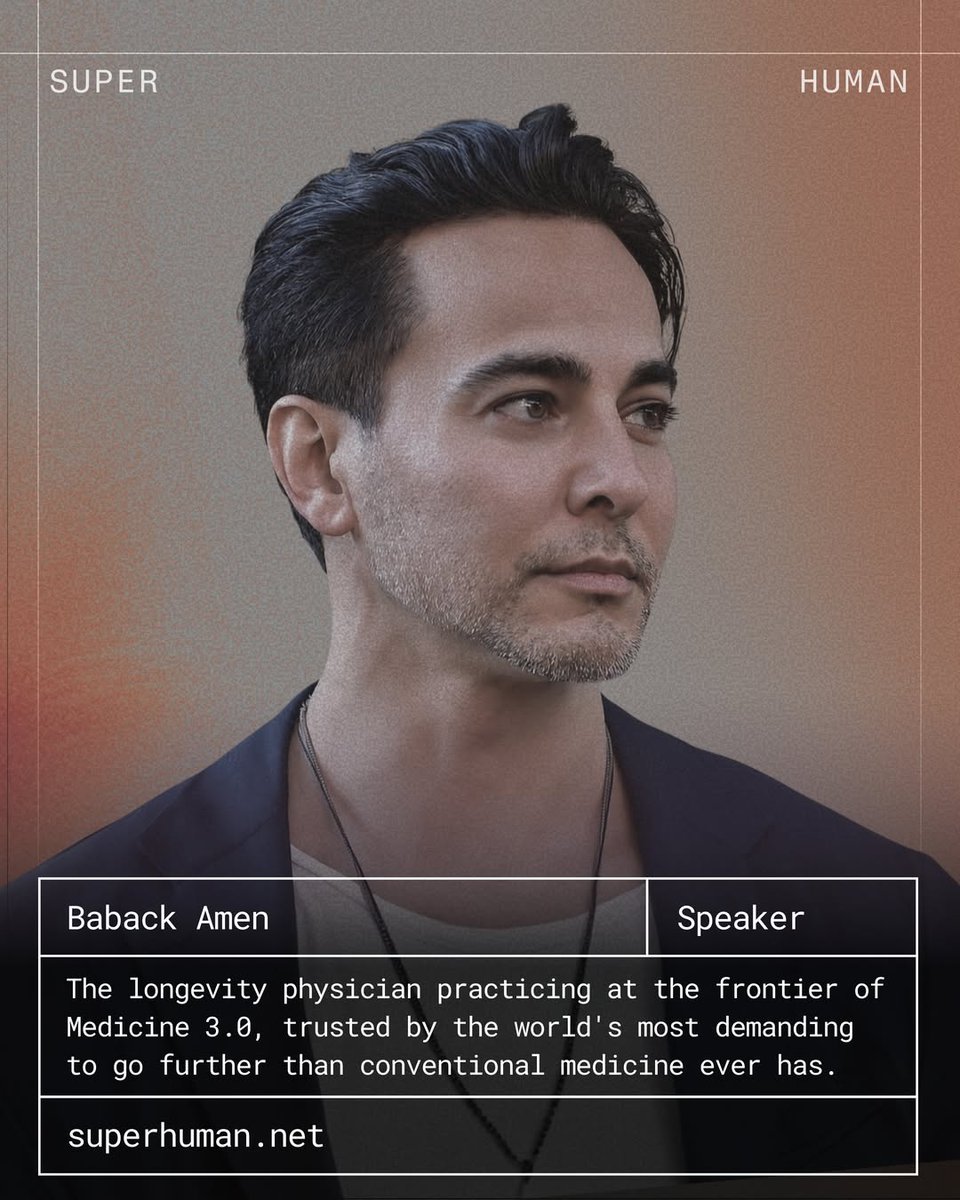
There is a new era of medicine emerging. Dr. Baback Amen is already practicing it.
We are proud to welcome Dr. Baback Amen as a speaker at Super Human Summit 2026.
A board-certified anaesthesiologist and longevity physician, Baback has built a practice trusted by the most demanding — integrating advanced biomarker testing, regenerative medicine and precision longevity into a single clinical framework that goes beyond anything conventional medicine offers. As co-founder of Hathor, he is now building the infrastructure through which Medicine 3.0 will be delivered at scale.
June 13 | Super Human - The Global Human Improvement Summit 2026 | Invite-only
A one-time gene edit just took a direct shot at one of heart disease’s biggest drivers.
This was an early Phase 1 trial, so we are still very far from this becoming something doctors can hand out tomorrow.
But the concept is massive.
LDL cholesterol is one of the major drivers of plaque buildup in the arteries, which raises the risk of heart attacks, strokes, and long-term cardiovascular disease.
For decades, the answer has mostly been management.
Take the pill. Get the injection. Watch the numbers. Adjust the dose. Repeat for the rest of your life.
This study points at something different.
Researchers are testing whether they can use one infusion to edit PCSK9, a liver gene tied directly to LDL cholesterol levels, and reduce the problem closer to its source.
That is why this feels bigger than another cholesterol treatment.
It hints at a future where heart disease prevention may start looking less like lifelong maintenance and more like precision medicine aimed at the biological machinery behind the risk.
Again, this is early.
The study was small. Safety needs more research. Long-term durability still has to be proven.
But if results like this hold up, cholesterol treatment could enter a completely different era.
What lives in the mouth doesn't stay in the mouth. Ronald Bonilla has proved that.
Speaking at Super Human, Ronald discovered that chronic inflammation, a disrupted oral microbiome, and toxic materials don't stay in the mouth - they drive disease throughout the entire body. That discovery became Vinova Longevity and the Torus Concept, now healing his patients' chronic diseases through the mouth - proving that oral health is the most powerful and overlooked gateway to human longevity.
We're proud to welcome Dr. Ronald Bonilla to Super Human Summit 2026!
June 13 | Super Human - The Global Human Improvement Summit 2026 | Invite-only
Holding in emotions is often treated as a personality trait, but a long-term study suggests it may also belong in the broader conversation about health and longevity.
Researchers analyzed a nationally representative U.S. sample and followed participants for 12 years to see whether emotional suppression was associated with mortality risk. Emotional suppression, in this case, refers to the tendency to hold back emotional expression rather than openly process or communicate what someone is feeling.
The results were notable. Higher emotional suppression scores were linked to a 35% higher risk of death from any cause during the follow-up period. The association was even stronger for cancer-related mortality, where higher suppression was linked to a 70% higher risk.
That does not mean suppressing emotions directly causes disease, and it does not mean every person who keeps things inside is facing the same risk. But the study does suggest that emotional patterns may interact with the body in ways that deserve more attention.
The researchers pointed to several possible explanations, including unhealthy coping behaviors, increased stress reactivity, blood pressure changes, and neuroendocrine dysregulation. In plain terms, chronic emotional suppression may keep the body under pressure while making it harder to release stress in healthy ways.
Longevity is usually framed around sleep, diet, exercise, biomarkers, supplements, and metabolic health. Those all matter. But this research adds another layer: the way people handle grief, anger, fear, resentment, and stress may also shape long-term health over time.
Taking care of the body may also mean taking seriously what the mind has been carrying.
Source: Chapman et al., Journal of Psychosomatic Research, 2013.
The longevity industry is moving faster than anyone can follow. Except Phil Newman.
We are proud to welcome Phil Newman as a moderator at Super Human Summit 2026.
Phil identified the longevity megatrend in 2018 and built the world's leading media and research platform to track it. Today, @LongevityTech reaches 5 million and sits at the center of every major breakthrough, investment, and discovery in the race to extend healthy human life. From diagnostics and AI to cellular reprogramming and drug discovery, Phil has an unmatched view of where the science and industry are heading.
June 13 | Super Human - The Global Human Improvement Summit 2026 | Invite-only
Men who drank green tea for decades had 16% higher testosterone.
Researchers in rural Hubei Province, China studied 280 middle-aged and older men to see how long-term green tea drinking was connected to hormones, mood, inflammation, sleep, and brain health.
The testosterone finding stood out.
Men who drank green tea long term had average testosterone levels around 575 ng/dL, compared to about 496 ng/dL in men who rarely or never drank green tea.
That works out to roughly 16% higher testosterone.
But this was not about drinking one cup of green tea and expecting a hormone spike.
The tea-drinking group had consumed green tea for at least 20 years, at least 6 days per week, and at least 500 mL per day.
In other words, this was a long-term habit, repeated for decades.
The bigger longevity angle is that testosterone was only one part of the pattern.
The green tea group also had lower BMI, lower systemic inflammation, better sleep quality, lower depression scores, and higher gray matter volume in a brain region tied to memory and visual processing.
That matters because healthy aging is rarely about one biomarker in isolation.
Testosterone can influence energy, mood, motivation, muscle maintenance, and overall vitality as men get older.
But the larger story may be the pattern around it:
Better sleep. Less inflammation. Healthier body composition. Lower depression scores.Possible protection against age-related brain changes.
Researchers are not saying green tea is a magic testosterone booster. This study shows an association, not proof that green tea alone caused the difference.
But it does suggest that one small daily habit, repeated over decades, may be part of a much bigger aging story.
Source: Wan et al., Frontiers in Public Health, 2025
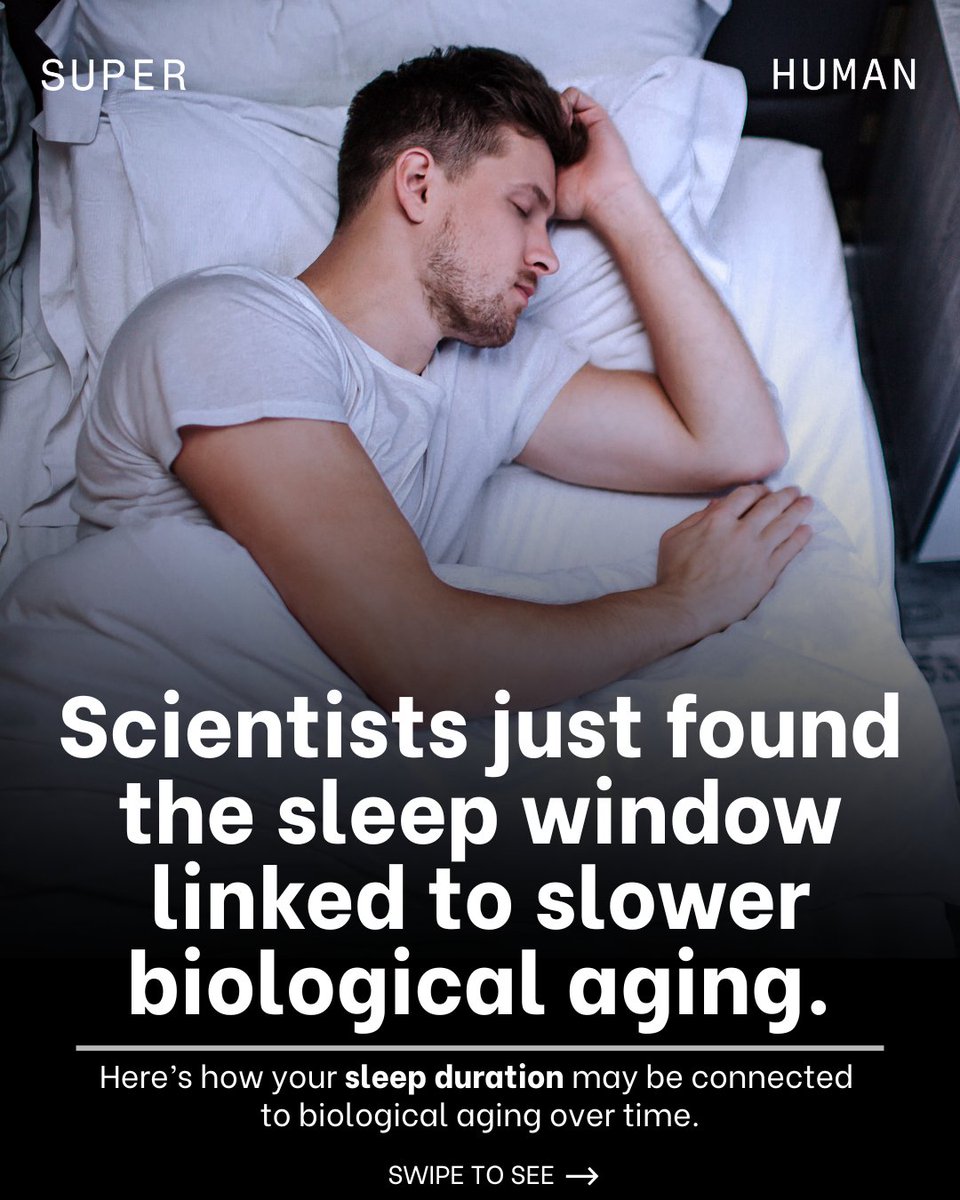
Scientists just found the sleep window linked to slower biological aging.
A new Nature study looked at how sleep duration may be connected to biological aging across the body, not just how rested people feel the next morning.
Researchers compared sleep duration with aging clocks built from brain and body imaging, blood proteins, and metabolites.
The lowest biological aging signals generally appeared around 6.4 to 7.8 hours of sleep, depending on the organ system and whether participants were male or female.
That matters because aging shows up across multiple systems at once.
- Brain health
- Metabolism
- Immune function
- Hormonal systems
- Liver function
- Pancreas health
- Body fat and inflammation patterns
Short sleep was linked with broader risks across cardiovascular, metabolic, psychiatric, pulmonary, and digestive conditions.
Long sleep was also linked with higher aging signals, but researchers noted it may sometimes reflect underlying health problems rather than simply “too much recovery.”
So the takeaway here is not “sleep as much as possible.”
It is that consistent, moderate sleep may be one of the daily patterns tied to healthier aging across the body over time.