Could the way we arrange crops boost future food security?
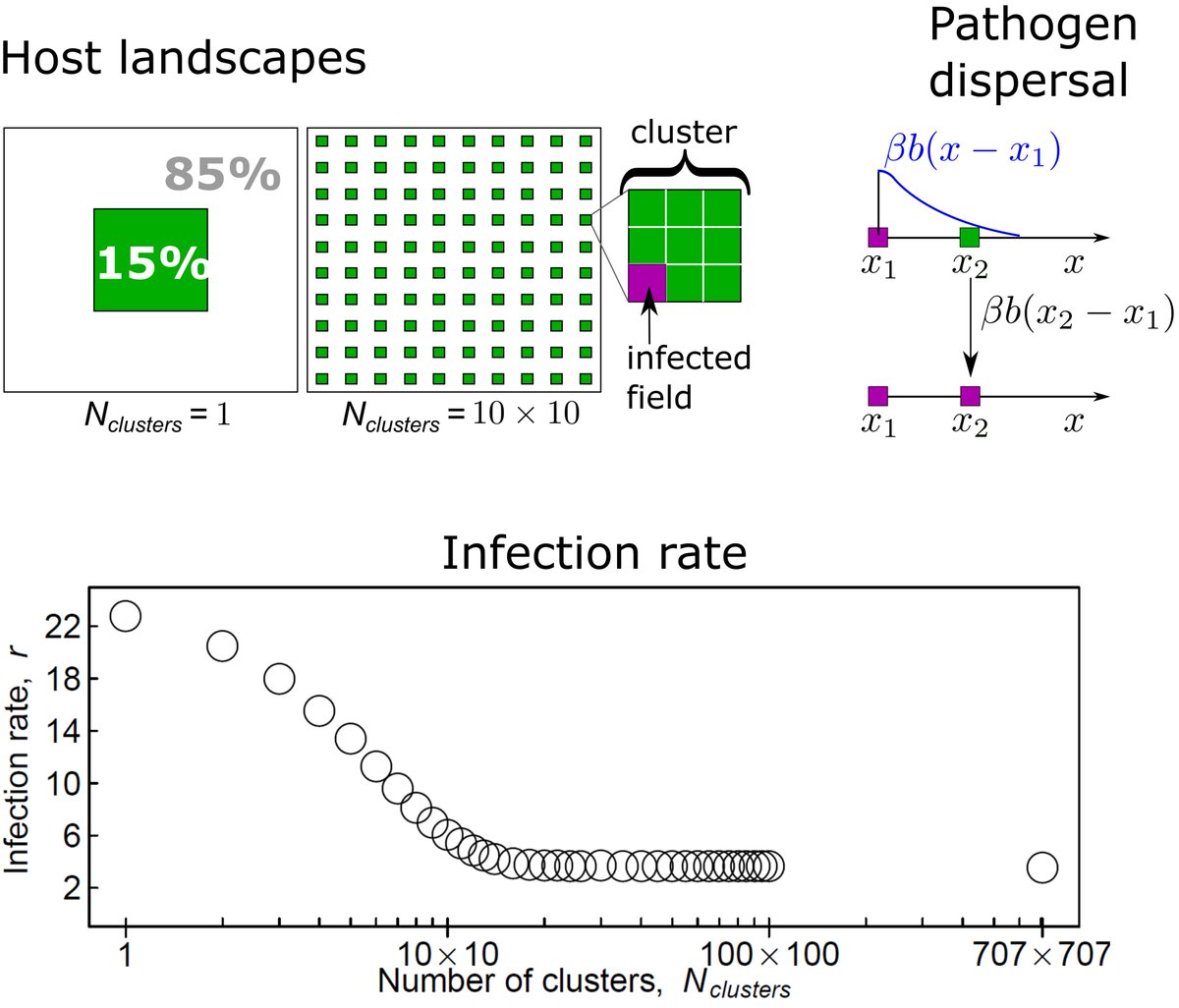
New work from @camplantepidem looks at how crop layout in landscapes can dramatically slow plant disease spread without relying on chemicals or costly interventions.
Find out more: https://t.co/8qiS156ErX
The russian occupiers will continue the wars until they are made unable to continue them. We all thank Ukrainian defenders for resisting Russia and delaying future invasions. Support Ukraine! Here are my suggestions where to donate
https://t.co/QZpcwbfdj2
https://t.co/gOAUshh6vm
Ukrainian warriors eliminated 1,000,000 russian occupiers since February 24, 2022.
russia's 3-day 'Special Military Operation' is going according to the plan.
Where to refine spatial data to improve accuracy in crop disease modelling: an analytical approach with examples for cassava | Royal Society Open Science https://t.co/0QGevcUyi1
"Most people have the will to win, few have the will to prepare to win."
Bobby Knight
The combat losses of the enemy from February 24, 2022 to March 21, 2025.
Russia does not want to end the war, and the Trump administration has shown no ability to induce Russia to end the war. And so, predictably, the Trump administration blames the victim, blames Ukraine.
I'm gonna get a lot of hate for this post, but it has to be said: none of this is actually Trump's fault.
He's been very consistent about Ukraine since his first presidency—nothing is free, and Zelenskyy has to do favors for him to get anything (Javelin sales, dirt on Biden, etc.). He picked some of the most anti-Ukraine figures (RFK Jr., JD Vance, Tulsi Gabbard) for high positions, and he's been a Putin fanboy at least since they met in Helsinki in 2018. The writing was on the wall; most of us just didn't want to see it.
The blame should be on weak European politics. Putin warned us as early as 2007, but everyone just wanted cheap energy. We believed in the power of Ostpolitik and completely ignored the invasion of Georgia in 2008. Only when Russia took Crimea in 2014 did Europe respond—with the weakest sanctions possible.
This sent a clear signal to Putin: keep going, because Europe is too weak to stop you. Even our response to the full-scale invasion in February 2022 was too weak and too slow, mostly because we hadn't prepared for war. We were too comfortable with rising wages, cheap energy, and trade with China.
Only after this year's Munich Security Conference did EU leaders finally realize that the US won't be there to save us this time. Russia has a bigger army than the entire EU, spends 100 times more on information warfare, and has fully reshaped its society—including its education system—around fascism.
Meanwhile, most EU countries are still failing to meet NATO's minimum defense spending requirements. Everything we send to Ukraine comes too late and in insufficient quantities. Yet we hypocritically criticize the Biden administration for 'not sending enough aid'—even though Ukraine probably wouldn't even exist without it.
There are plenty of people who know how Ukraine can win against Russia, and now is the time for European leaders to listen to them. Trump and his administration are just noise that should be ignored for now—there’s no help coming from that direction, and we have to do this on our own. My guess is that we're still living too comfortably and will need a 'Pearl Harbor' moment to truly wake up. But by then, it might be too late.
Slava Ukraini.
Highly commended Early Career Entomologist awards for Agricultural and Forest Entomology went to Yevhen Suprunenko @Forest_Research for work on the spread of an invasive forest pest, oak processionary moth https://t.co/6KlhPXwY9B [Photo from Forest Research]
How does landscape structure influence the rate and spread of crop diseases? See Suprunenko et al. Predicting the effect of landscape structure on epidemic invasion using an analytical estimate for infection rate @plantsci@LivUni_IVES@RSocPublishing https://t.co/JXChZJDIRW
How does landscape structure influence the rate and spread of crop diseases? See Suprunenko et al. Predicting the effect of landscape structure on epidemic invasion using an analytical estimate for infection rate @plantsci@LivUni_IVES@RSocPublishing https://t.co/JXChZJDIRW
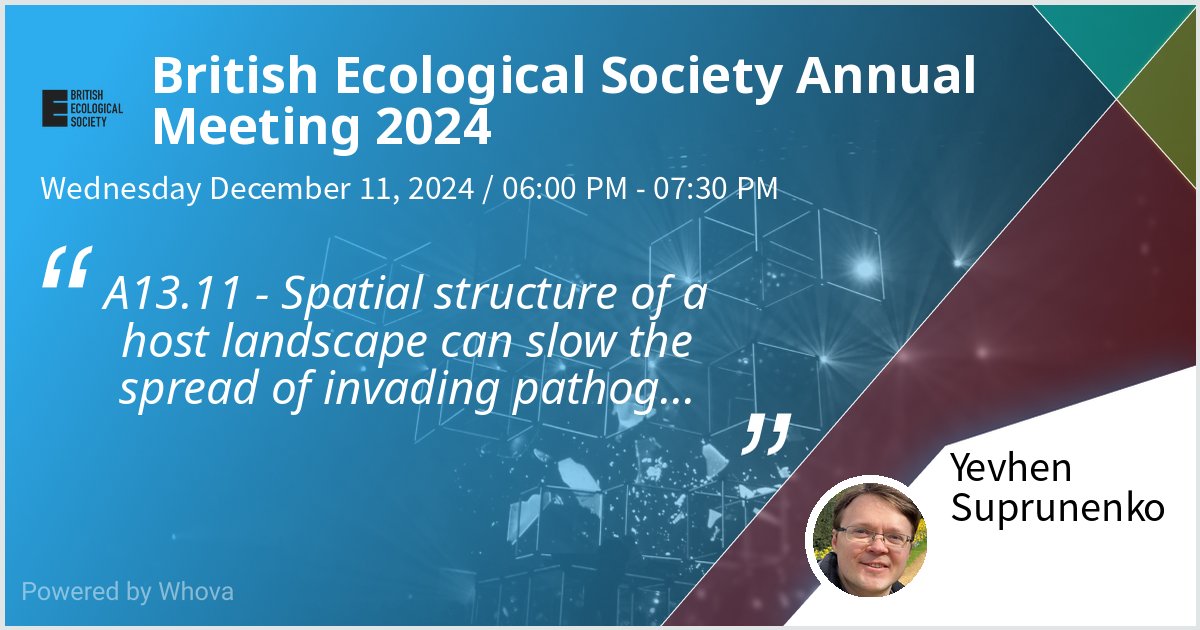
Gave a talk at British Ecological Society Annual Meeting 2024 on A13.11 - Spatial structure of a host landscape can slow the spread of invading pathogens (such as cassava brown streak virus in sub-Saharan Africa). Thanks for the great turnout! - via #Whova event app @BES2024
Happy to receive Highly commended Early Career Entomologist award! Thank you
@royentsoc! Thank you to my co-authors @profcagilligan@Cerian_W Matt Castle Julia Branson and Andrew Hoppit, and thanks to the support from @cam_plantepi
Huge congratulations to all of our #EarlyCareer#JournalAwards winners, and to those who have been awarded Highly Commended mentions for their fantastic papers 🦋
Read more about all our winners and the #VirtualIssue on our news page 🔽
https://t.co/LBOYmyLHje
"The music is not in the notes, but in the silence between."
Wolfgang Amadeus Mozart
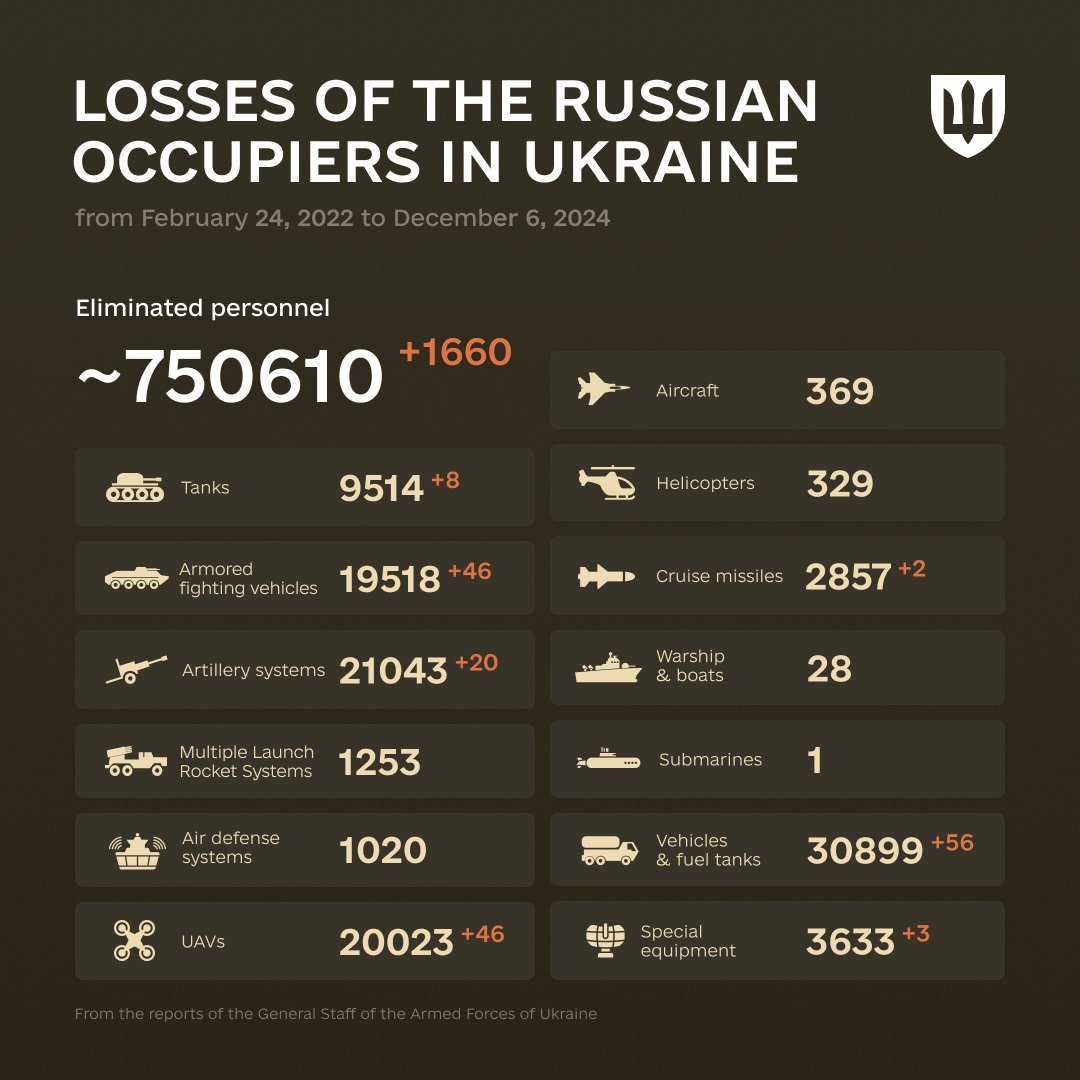
The combat losses of the enemy from February 24, 2022 to December 6, 2024.
"Believe in yourself! Have faith in your abilities! Without a humble but reasonable confidence in your own powers you cannot be successful or happy."
Norman Vincent Peale
The combat losses of the enemy from February 24, 2022 to November 3, 2024.
Far too many Western editors, academics, and cultural commentators continue to view Ukraine through the distorting lens of Russian imperialism, writes @OKhromeychuk for #UkraineAlert.
Read more. ⬇️
https://t.co/X7wyeliE0u


![AFEntomology's tweet photo. Highly commended Early Career Entomologist awards for Agricultural and Forest Entomology went to Yevhen Suprunenko @Forest_Research for work on the spread of an invasive forest pest, oak processionary moth https://t.co/6KlhPXwY9B [Photo from Forest Research] https://t.co/mWYNPMXcHu](https://pbs.twimg.com/media/Gemo1ORWIAAednC.jpg)