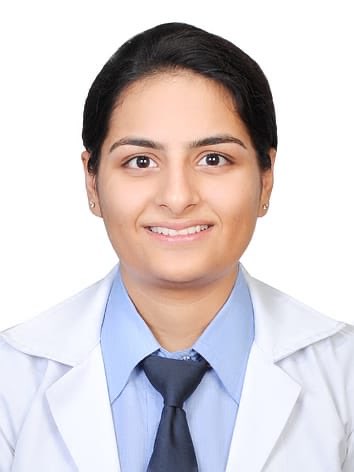
THE SGRR DEHRADUN CASE!
A CRYING FATHER....
A father who sells his land to educate his daughter is the only one who truly understands this pain.
Medical colleges are increasingly turning into suicide hubs.
Teachers once revered are now crushing students under ego and power.
The tragedy is deeper when the victim is poor ,no one stands up.
And when the system stays silent, the abuse doesn’t stop… it grows.
STAND FOR HER 👬👭🧑🏼🤝🧑🏼
#JUSTICEFORDRTANVI
NEET-PG has 200 questions. Four marks for a correct answer, one deducted for a wrong one.
So even with zero knowledge, blindly marking A for all questions will, statistically, still fetch around 40–60 marks by random chance.
You need to be a special kind of idiot to score 1 in such a scenario. This shows that you have neither medical knowledge nor common sense. And the biggest irony is that we are making such people specialist doctors. What a country, and what a system, man!
Imagine your mother is due for a total hip replacement. On the way to the OT, you learn the orthopedician operating on her had scored 4/800 in the PG entrance. Would you still have the courage to let the surgery proceed?
This is no longer hypothetical. An MS Orthopaedics seat at a govt institute in Rohtak was allotted in the third counselling to a candidate with just 4/800. At a premier Delhi medical college, a Gynaecology seat went to someone who scored 44/800, and a General Surgery seat was filled at 47/800.
It’s high time patients started asking about the NEET PG scores of their doctors. Your health should not be left at the mercy of social justice or buisness policies of the republic.
Kailash Vijayvargiya:
On a question about deaths due to contaminated water in Indore: “Chhodo yaar, tum phokat ke sawaal mat karo. Kya ghanta hoke aaye ho tum?”
On the Australian women cricketers’ molestation incident (Oct 2025): “It’s a lesson for the players as well that they should not go out without informing the local administration.”
On rape and killings during post-poll violence in Bengal (2021): “Azadi ki ladaai mein bhi logon ne balidaan diya tha. Bengal mein bhi prajatantra bachane ke liye balidaan logon ko hi dena padega.”
He has repeatedly demonstrated a disturbing habit of trivialising suffering and deflecting responsibility. Clearly unfit to be a leader.
BJP won Indore by a record 11.72 lakh votes in the 2024 Lok Sabha election, the highest margin in the country.
And what did Indore get in return?
Kailash Vijayvargiya — zero accountability, zero urgency, zero concern.
Shameful. 💔💔💔
Never expected any Indian Journalist to give it back to someone as powerful as Kailash Vijayvargiya, Amit Shah's man.
Seeing this video of an Indian Journalist questioning and holding power accountable brings hope.
@Anurag_Dwary ✊
The Resident Doctor👨🏻⚕️
This would seem like a basic post for the majority of #MedTwitter, but it is targeted for non-medical people out there. The former could give inputs to this, if need be.
Often, patients (and their relatives) get confused with regard to who the person across from them is.
Most of the time, people come in with a recommendation saying they wish to meet a particular specialist doctor and are disappointed at not being sent to them straightaway.
Before I get to that, let's clarify a few things.
After junior college/high school, students take an entrance examination (NEET, etc) and get into medical school/college.
They become medical students. They have no degree yet, and they'll roam around the hospital aimlessly taking notes and asking about things and observing procedures, (sometimes accompanied by a senior who is teaching them.)
They don't play any major role in patient care.
However, before they graduate, they serve as interns for a year.
They are trained, and note down histories, check pulse and blood pressure, collect blood samples, do minor procedures such as inserting urinary catheters, Ryle's tubes, IV lin,es etc
They do this with a (Provisional) Medical License, so don't worry.
Then once they graduate, they give another entrance examination if they wish to, and are allocated medical colleges/hospitals where they pursue a Specialty.
This could be Surgery, Gynaecology, Dermatology, Paediatr,ics etc
They are now what we call Resident Doctors, or simply, Residents.
They form the backbone of a healthcare institute's clinical workforce.
They are qualified doctors (MBBS) who have a basic training in medicine and surgery, and are learning the ropes of their chosen specialty.
Their job is to coordinate and arrange the patients and their documentation and provide primary care, before the patient can be attended to by a senior.
In a teaching institute, these are the doctors one encounters first. They take a basic history, see that all scans and reports are in order, note down what is missing, and then document it, and prepare it/present it to their seniors.
They are filtering out information for the senior doctors out there. Because it is impossible for a single person to see scores of patients on a single, day right from scratch.
There are levels to resi,dency of course, no one starts doing major things right off the bat on their first day!
For instance, there could be a division of Junior and Senior Residents. The former pursuing a Specialty course after MBBS, and the latter doing a Superspecialty course after an additional Specialty degree.,
Then withi,n that there would be a First Year Resident, Second Year Resident... so on.
As the seniority increases, the type of work may differ, and the roles change. Often, the juniormost residents are doing work just a step ahead of Interns, and the seniormost are doing work just a step back from Consultants/Specialists, in some aspects.
A common rumour is that teaching hospitals allot patients to 'student doctors' and end up with poor quality work. This is not true; like I mentioned, the people working are qualified for what they are doing, are trained in doing that, and are under the supervision of someone senior whom they usually fear (and who is there to salvage the situation in case something goes amiss).
So, in my opinion, the work quality is under stricter control, and hence, better.
These doctors are called Residents because they live within the campus of the institute (ideally, or really close by), and are available round-the-clock for any emergency. They receive a fixed stipend, irrespective of the amount of work they are doing/hours they are working.
The reason these doctors appear in the news often is because of certain apparent inhuman working conditions coming to light, no respite from the continuous day-night grind, and sometimes, the lack of learning opportunities.
Hope this was informational, please post queries if any!
I saw a case of obsessive-compulsive disorder (OCD) that had been misdiagnosed by an alternative medicine doctor as an allergy to water.
The lady washed her hands after touching any object she thought was contaminated and also had hand dermatitis. She spent approximately 1–3 hours per day washing her hands and bathing, and it took her 4–8 hours to cook food(obsessive slowness).
Her family first took her to a baba/ojha, suspecting possession by a ghost!
When there was no improvement, they consulted alternative medicine practitioners and general physicians.
At least one baba ji referred her to me (due to family relations).
Her total illness had lasted 6 years!
The lady and her family never considered consulting a psychiatrist because some doctor had told her husband, "Psychiatrists always prescribe sleep medicine, and you will never recover."
Her Yale-Brown Obsessive Compulsive Scale (YBOCS) score showed marked improvement.
The lady is fine now, but why did she have to wait 6 damn years to enter a psychiatrist's clinic???
Then-some people make jokes on Mental health.
Throwback to 2015-16 when we were working on a project/presentation to present at various symposiums across various medical colleges.
Our survey included asking pharmacists about this practice. Most of them, unsurprisingly, said that they did not indulge in such practices.
We had sent out 2 survey teams. One team had returned that evening after interviewing 40 pharmacists, each more or less conforming to the standard narrative.
The other team returned earlier, with gloomy faces. They had been able to interview only 1 pharmacist.
What he had said had demotivated them against the project,
"I prescribe antibiotics without a prescription, and I will continue to do so. Those other rascals also do it, but will never come clean about it. Bloody liars."
Then he went on to narrate, " You might not be knowing this, but India is a very poor country. The average person who comes here for treatment, is a daily wage labourer. They earn 300 Rs a day. Divide it among a family of 5, and you get Rs. 60 per head; that is not even half the price of the fancy coffees you have. Now suppose this person falls sick. They have to forfeit their labour for that day. Plus, they have to spend 20 for one one-way trip to the city centre. That is 40 rupees. Then 20 rupees for the OPD case paper. There goes the 60 rupees of that person. And then you give them tablets of 200-250 rupees, because the government does not have a full stock of all. So take expenses as a total of another 300. So a wasted day AND a day's worth of the family's income down the drain. 2 days gone. And these other people; those doctors and pharmacists push for expensive drugs as they get a cut of those profits. This is a direct kick in the stomach of the hungry.
Instead I'll prescribe the same antibiotic that the local doctor gives them for a standard price, that's 20-30% of the cost the usual trip to the hospital will take.
And the authorities? You complain to them that I prescribe antibiotics without a prescription. I'll show them their flaws... "
(He fetched a list of irregularities in the supply chain, improper records of expired medicines etc)
"... then we'll see who holds up in court."
He went onto narrate some cases he had experienced in the months before. The team had returned to us stunned, unable to make their point there.
While everything he said was up for debate, it made us realise one thing. All antibiotic-awareness programmes say stuff like, "Complete your course of antibiotics. Do not take antibiotics for viral fever. Take antibiotics only if prescribed by a doctor."
And that is more or less what is said in every conference there is, or in every awareness campaign, and all of it is correct.
However, the problem of antibiotic resistance is rooted deep and is not a matter that can be tackled by 'just' making people aware. It requires a multidisciplinary approach at various levels.
Aspirin came from willow bark. But that doesn’t mean chewing willow bark is medicine.
The active ingredient ‘salicin’ was isolated, purified, studied in trials, and precisely dosed for safety and effect.
In herbal preparations:
No standard dose
No toxicity data
No controlled trials
And often, it’s polypharmacy = multiple active compounds mixed together, with unpredictable interactions.
If something is strong enough to work, it’s strong enough to cause harm.
#MedTwitter