Absent, Or Not Absent
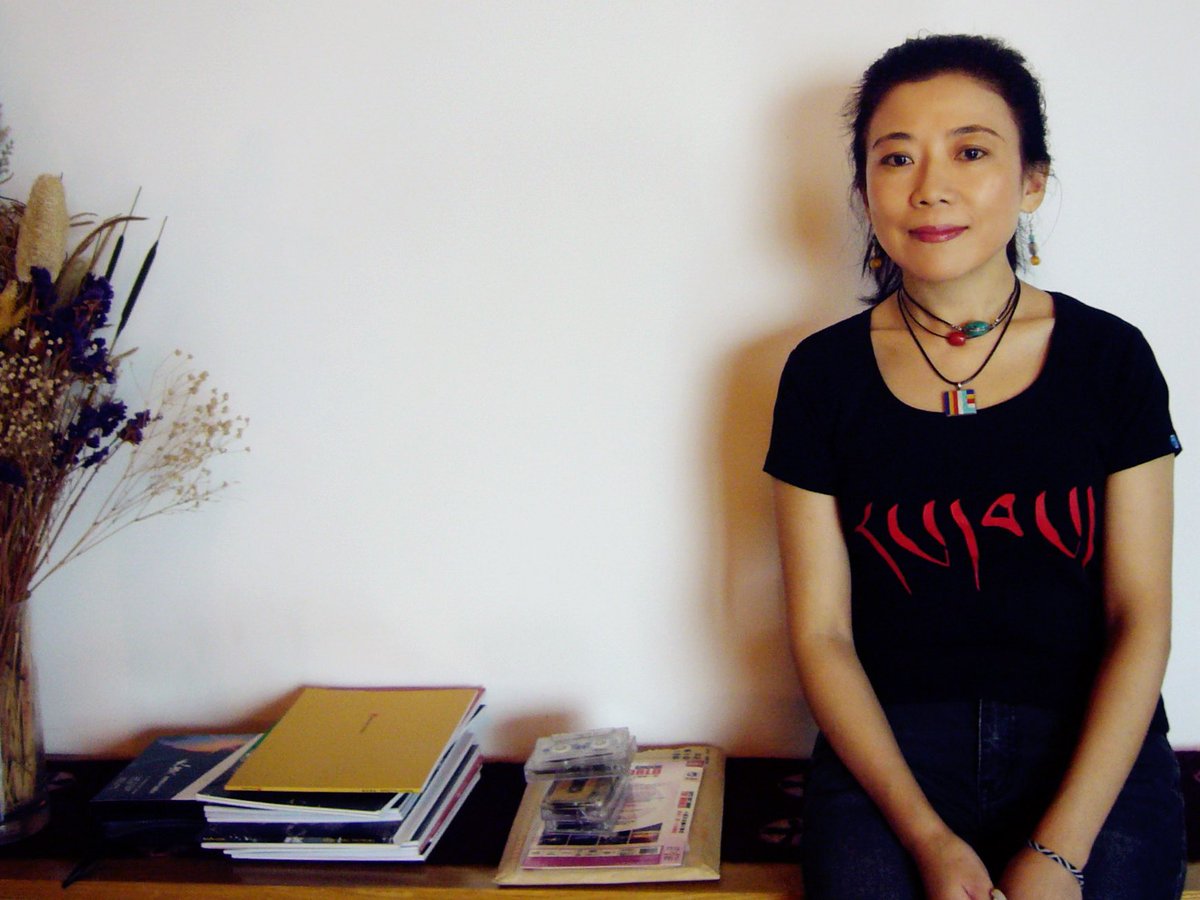
By Tsering Woeser
Translated from Chinese by Ian Boyden
1. The Empty Dharma Throne: Shukti The Shuktilingka once stretched out before the Potala Palace, lush and verdant. Shukti means “dharma throne”; and lingka means “park.” It was filled with ancient trees whose branches twisted counterclockwise like dragons and mirrored in the ponds crossed by small bridges. A little ways away stood a stele, the Lhasa Zhöl Pillar,1 a tall, square column recording imperial deeds from a thousand years ago. The dharma throne in this park must have been made with layers of the flattest possible stone. There would have been tufts of grass growing from the crevices, and flowers would have bloomed, and even more bouquets of flowers would have been offered by visitors who came each day from near and far, the fragrance permeating every corner.
This vision, from my own imagination, matches the memories of the older generation. A few years ago, I was brought to this spot by a son of old Lhasa royalty, a handsome man with a shallow karmic reward. He couldn’t bear the sight, covering his eyes, he looked out through his trembling fingers pointing through tears to where the throne had stood. All vestiges of that park had been obliterated. What had been a park was now a “public square,”2 filled with red lanterns, flagpoles, memorial monuments . . . . And loudspeakers, large and small, blared songs of propaganda. The melodies were old, but the lyrics had been changed.
That honorable dharma throne, which existed before March 1959 —how did it disappear? What stories could it tell, always vacant left waiting among the trees and flowers? I have asked many people: Have you heard of the Shuktilingka? A retired official from the local TV station burst into tears. He asked, Can you understand what it feels like to yearn for a memory? Have you known the taste of heartbreak? And he told me this memory from before the occupation: In those years, His Holiness was a mischievous teenager. People eager for a blessing would pass by and could not help but raise their heads and see the young Gyalwa Rinpoche3 sitting on the throne, so young, his face like a smiling flower. There is no way this man could forget the sight, he wouldn’t forget over the course of his life.
I continue to ask in a low whisper: Have you heard of the Shuktilingka? I met a young man named Choenyi Jampel4 born in a farmer’s house near the hometown of the great Songtsen Gampo.5 He had a great talent for painting, able to depict a lost paradise he’d never seen. Among his paintings, one stood out—one of the last he completed just before his unfortunate death: layers of emerald mountains, rolling white clouds, a few houses that no longer survive, and there, right in the center, sat the completely empty dharma throne, richly decorated, the heart’s dream waiting like a balloon floating through desire.
/1
又一个发现:纽约时报中文网这篇报道的标题和表述存在明显的倾向性修改与情绪引导,严重背离了原英文标题的语境与措辞。我们可以从几个关键点来分析对比:
📌【英文原文标题】
“As the Dalai Lama Turns 90, His Exiled Nation Faces a Moment of Truth”
▶️ 直译应为:“达赖喇嘛年满90之际,他流亡的民族面临一个关键时刻”
🔍 关键词是“a moment of truth”,这是一个中性的、甚至带有历史拐点意味的表达,并未指涉“焦虑”、“恐惧”或“悲观”。
📌【中文网标题】
“达赖喇嘛年近90岁,流亡藏人对族群命运感到焦虑”
▶️ 明显进行了**“情绪化再诠释”**,将原本中性的“moment of truth”翻译为“感到焦虑”,加入了解释性、主观性、悲情化的倾向。
📌【问题分析】
1.中文标题渲染焦虑感
“感到焦虑”并非��文原文用词,而是中文版编辑强加的情绪定性。这种渲染会引导读者将焦点放在“集体情绪不安”上,似乎流亡藏人群体即将陷入情绪崩溃。而忽略文章原意中的历史分水岭、制度转型、继承安排等结构性议题。
2.对“流亡”的定性更负面
英文原文强调的是“exiled nation”(流亡的国家/民族)面临历史抉择,而中文却变成“对命运感到焦虑”,这是从主权与未来议题转向群体情绪问题,是议题框架的根本改变。
3.削弱达赖喇嘛引领与制度建设的积极面
英文原文强调 His Holiness’s role in building democracy and succession planning;中文则在一开头就将重点压在“身体每况愈下”、“公开露面越来越少”等等,带有“末日将至”的暗示,而忽略尊者虽90岁依然频仍接见人群并且引领整个流亡群体转型的现实。
📌【总结:中文版标题与导语的问题是结构性的】
•不是直译不到位,而是有意进行了情绪加工与叙事转向;
•将原文的“历史关键时刻”翻译为“集体焦虑”,本质上是从“制度与未来”转为“情绪与无助”;
•这正是许多主流媒体在��理西藏、达赖喇嘛、流亡议题时的典型问题——以“情绪弱化”来掩盖主权争议与民主实践的现实张力。而NYT中文网,必须承担新闻媒体的责任,在翻译原英文报道时,应该如实翻译,而不应该夹私货!否则是对读者的误导,也是对藏人命运的轻率描述。
最后强调一句,我作为一个藏人如此较真,是因为我知道,这不是语文细节,而是叙事权的问题!
#Tibet #DalaiLama #JournalismMatters #MediaEthics #媒体批评 #藏人之声 #准确翻译 #纽约时报
66 years ago, thousands of Tibetans bravely risked their lives in the struggle for religious, linguistic and cultural freedom.
A young Dalai Lama was forced into exile and became a lasting symbol of Tibet’s resilience.
Today, we reaffirm our commitment to supporting Tibet’s fight for freedom and autonomy. Tashi delek!
America has always been a pillar of freedom and democracy. We have to have the moral clarity to know the difference between good and evil and right and wrong. We can’t blur those lines. We must choose a side, and it should never be the side of dictators.