Incoming MSc. Political Science @LSEnews, 2026-27. Political Science @AshokaUniv '26. JN Tata Scholar 2026-27. Interned at @reporters_co and @htTweets.
@pstanpolitics Ukrainians are actually increasing integrating AI into their Delta battlefield management software - technology which even the US government has admitted it doesn't have. It's not a silver bullet by any means but it's definitely changing the face of warfare.
Exactly 61 years ago, on one of these open jeeps, Havildar Abdul Hamid and his team took out 7 Patton and Chaffee tanks at the Battle of Asal Uttar before being killed by the 8th. He was posthumously awarded the Param Vir Chakra.
A personal and professional note.
I have personally felt bored, tired, and irritated over the last couple of years, sitting in rooms that endlessly discuss how bad the state of Indian journalism is and the challenges it faces. It does. But there is so much to be done.
I feel we are also living a new phase of Indian journalism. One with hope and innovation. One that can be done with much lower capital investment, with much more rigour and by a more diverse set of people. I am happier discussing and sharing how we can do more of it and what is already happening. And there is so much of it already happening that we must spend our energies building on it.
In parallel, at The Reporters' Collective @reporters_co, largely driven by my co-trustee @journomayank, we have asked what practices can make us a better collective, and not just a better newsroom. Three answers to it have been simple:
1. We must pay fair remuneration, and the best possible for us as a Collective, to courageous journalists who undertake investigative journalism. We pay a base rate of Rs 40,000 plus reporting and legal costs at TRC for commissioned work. We pay interns, translators, local journalists in distant areas who support us, and everyone else who works with us. Everyone's labour is (and should be) recognised. This is the bare minimum.
2. We must share even our modest financial resources with the larger fraternity, even as we struggle to collect donations for TRC's team and work. Through fellowships and awards, we have instituted a range of them over the past six months.
3. Even as we learn at work (and we are learning a lot everyday), we must share what we have learnt from doing our journalism - our skills, our methods and approach. Gatekeeping has been the bane of Indian journalism. It must end.
For some years, we have been informally helping fraternal colleagues from other newsrooms do their investigations, when and if they approach us. But that meant supporting a few sporadically.
So, when some donors told us they would donate to support us in training journalists across the country for investigative reporting, we jumped at the opportunity. They had read our hearts.
Funded by citizens, we have begun undertaking training for courageous journalists from across the country (not just the metropolitan towns).
We have three or four larger purposes in mind, besides sharing the skills we deploy at The Reporters' Collective.
1. Show with proof that younger journalists can undertake investigative reportage given the opportunity and resources; it's no quantum physics. We can all do it.
2. Working journalists at TRC share their methods and skills (not just older grey beards like me), so we all learn to share and build a community.
3. We exchange learnings. There are brave journalists working outside metropolitan towns, whom we want to learn from and work with. There are young colleagues who are more capable in deploying new forms and technology (such as Insta and AI) for good journalism. We want to learn from them too.
4. We enable other fraternal colleagues through solid legal support (and not just fellowships) to deal with the tough legal terrain that we tread during investigative work.
Here 👇 is a glimpse of our first intensive 3-day workshop on investigative reporting held for journalists from all northern and central states.
Given the resources, we want to do more such intensive workshops across the country. We are keen to do one for colleagues in southern states and another in the northeast of India.
If you think this is a worthwhile adventure, please fund The Reporters' Collective. Enable us to support other courageous journalists.
Also, do tell us how we can do this better.
Donate at https://t.co/ToOfqI8q4C
@TankerTrackers At the beginning of the war, global oil markets were oversupplied to the tune of around 6 million bpd. I assume that's not true anymore?
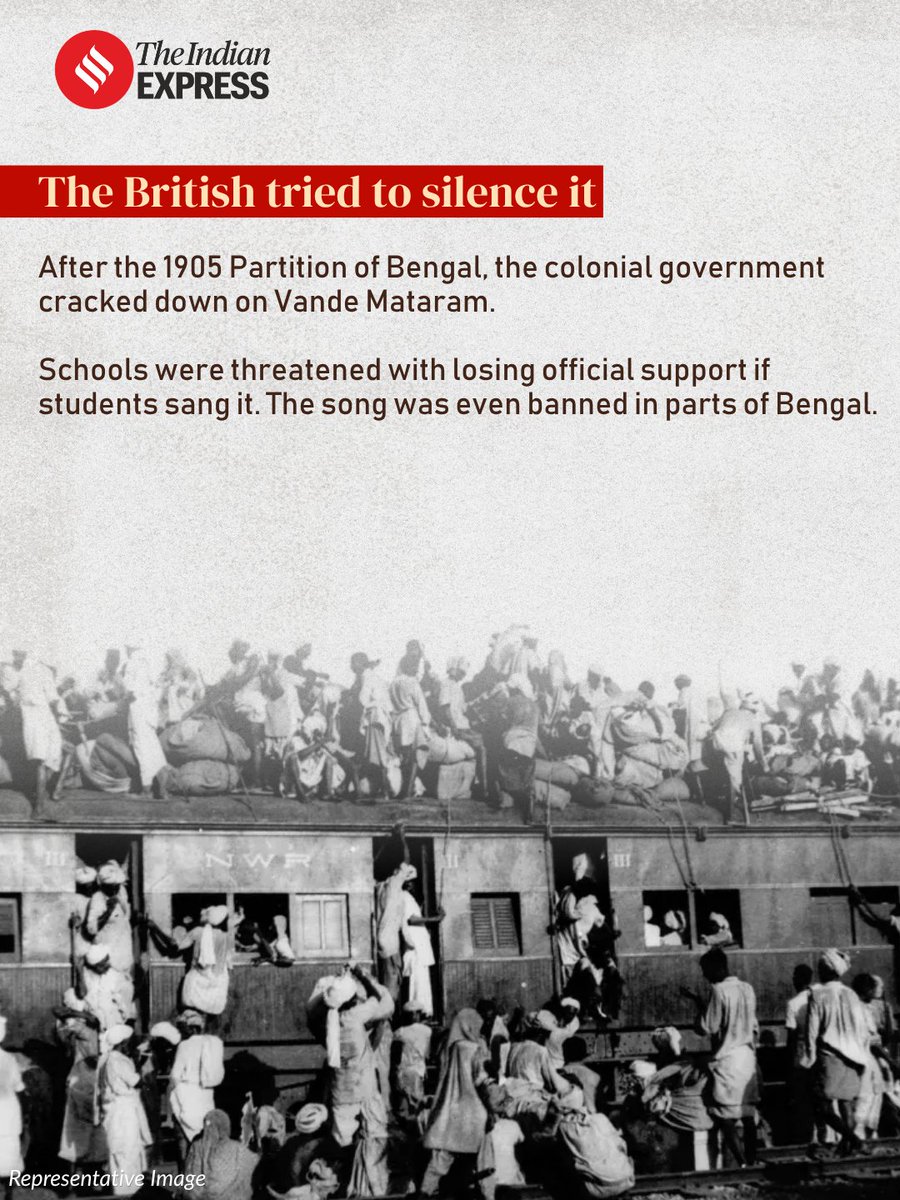
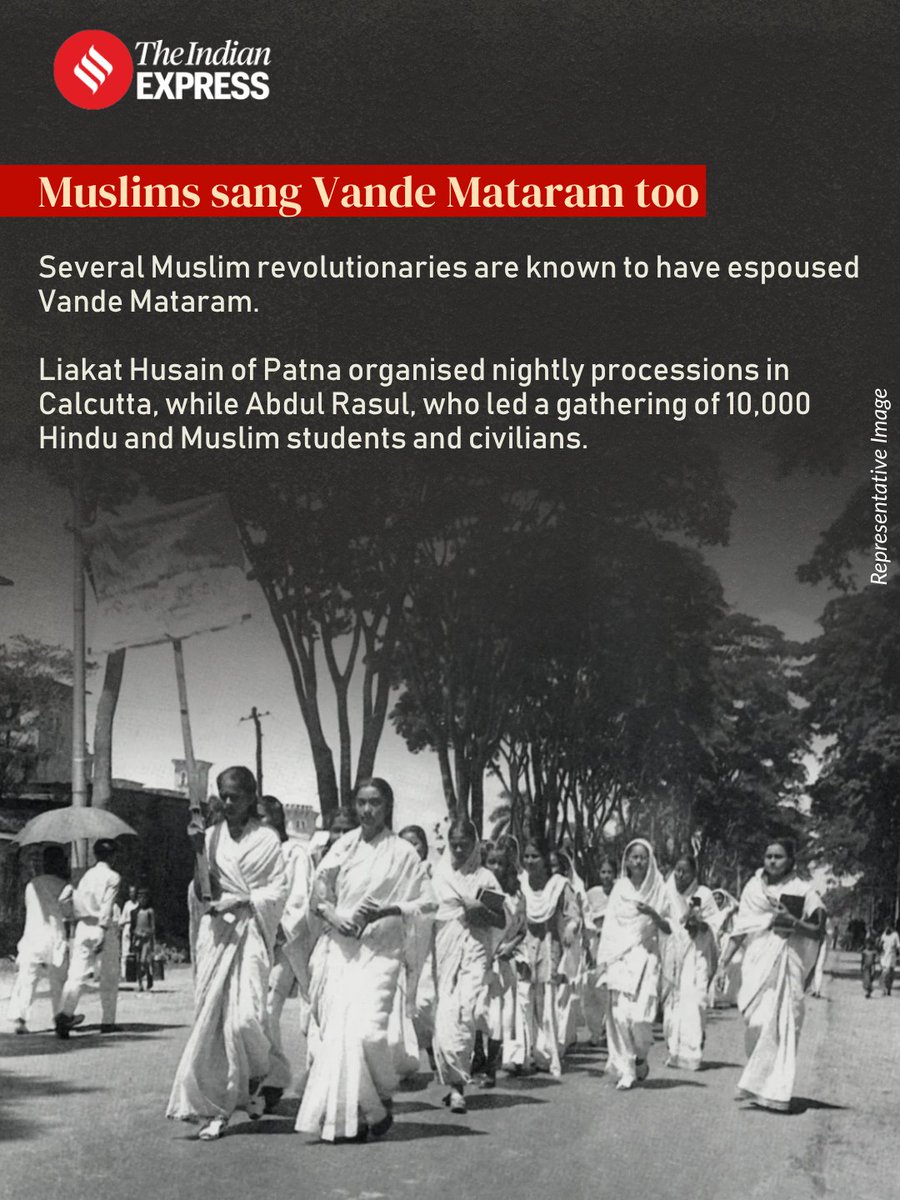
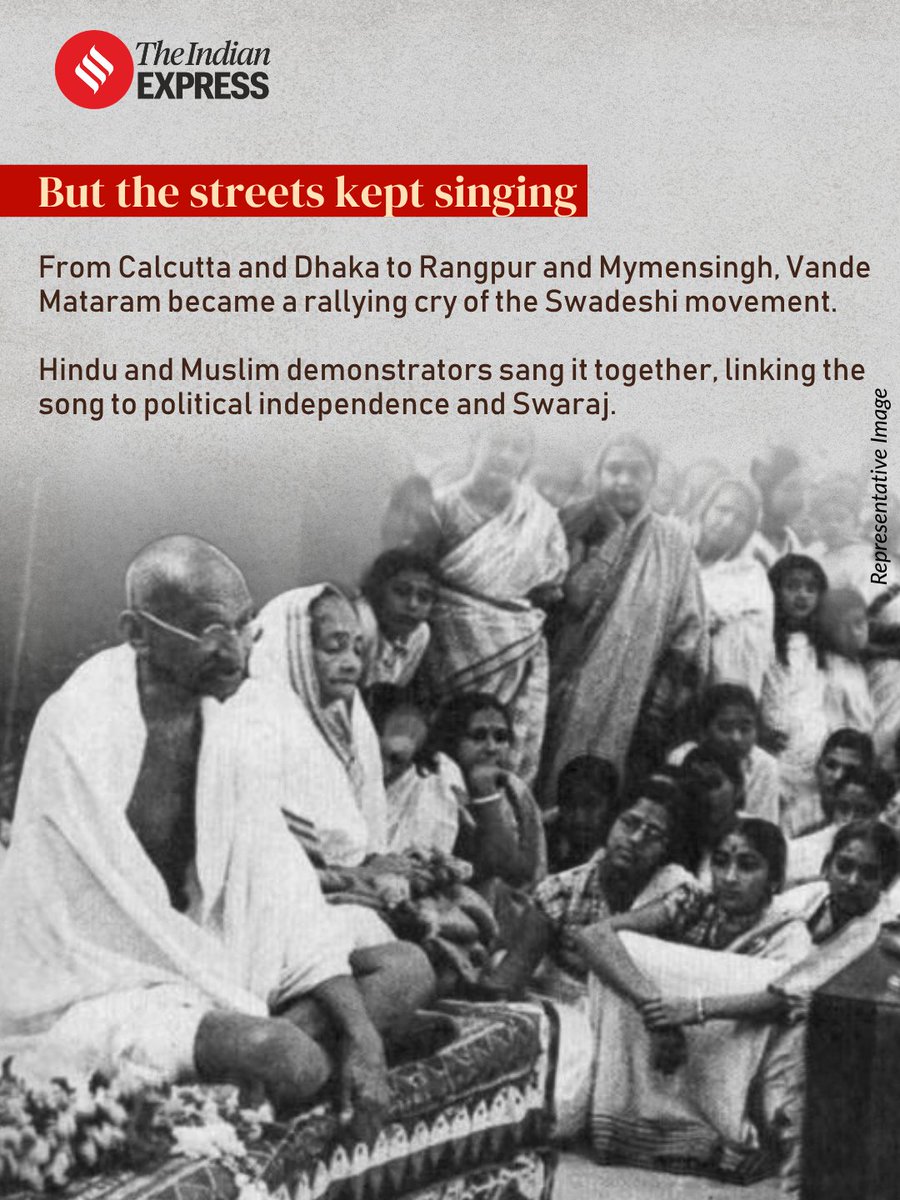
#ExpressResearch | Vande Mataram was once sung by Hindu and Muslim protesters as a rallying cry against British rule during the Swadeshi movement. Historian Sumit Sarkar’s work traces how the song became a powerful symbol of anti-colonial resistance, Hindu-Muslim unity and, later, communal division.
Click on the 🔗 below to read the full article.
https://t.co/VdehSvxC0k
Written by: Arup K Chatterjee
Design by: Violina Bora
Mr Anurag Kumar @CPDelhi@DelhiPolice ,
Informing an individual's family during interrogation or detention is a legal mandate, not an optional courtesy.
Yesterday, I was taken for interrogation after my morning walk under the assurance that it would take very little time. However, as the hours stretched on, my repeated requests to inform my wife of my whereabouts ,the concerned Police Officials/Officer simply stated they were "following instructions."
I was only permitted to make a call at 6:38 PM, leaving my family & friends in total panic the entire day.
I request that you issue clear instructions to all units directing officers to strictly uphold the legal duty of immediately informing the family of any person taken for interrogation , so that no citizen’s family has to endure the distress that mine suffered.
The very curios case of BJP agents’ ‘forged’ objections against Muslim voters
In Haridwar’s Jhabrera constituency, nearly 40% objections came from 35 people. All of them now say their names, EPIC numbers and signatures were forged. Most of the voters targeted were Muslim.
@Basantrajsonu & @AshwineSingh with another 💣
https://t.co/BPpGFwgXUr
NCLT clears Subhash Chandra's ₹6.5 cr payout against ₹22,006 cr claims
Now, my dear, try defaulting on even a basic personal loan EMI and see how the banking system unleashes itself on you.
‘Garib lehron par pehren bithaye jaate hain samundaron ki talashi koi nahi leta.’ – Waseem Barelvi
My book Bad Money starts with the following paragraphs.
John Maynard Keynes, an oft-quoted but less-read economist, who lived in the first half of the twentieth century, is said to have remarked: ‘If you owe your bank a hundred pounds, you have a problem. But if you owe your bank a million pounds, it has.’
The Economist, which likes to call itself a newspaper, but is actually a magazine, a few years ago came up with the modern-day version of what Keynes had said: ‘If you owe your bank a billion pounds everybody has a problem [emphasis added].’
PS: What's with trying to recover Rs 6.5 crore?
https://t.co/iecnMeRqzA
91% of all appeals against SIR deletion have succeeded so far. 7 lakh people filed appeals for their names to be re-instated. Assuming 90% success rate across the sample, that's 6.3 lakh eligible voters who couldn't vote in this election. Margin of victory for BJP was 3.7 lakh.
Colonel (R) Rajesh Kalia, who retired from the Indian Army in January 2025, writes of how a lifetime of protecting India is outweighed by @ECISVEEP’s demand that he provide his identity via the #SIR :
“Anyone can be born in India. But it takes a special kind of endurance to survive the ultimate test of belonging initiated by the Election Commission of India (ECI). For those who have never faced this bureaucratic machinery, the grand interrogation is not a standard background check, it’s a deep-dive into your entire existence, requiring a level of ancestral detail that makes a top-secret military clearance look like a casual chat.”
https://t.co/g0pgN43ifp via @thewire_In