Public Speaker| Passionate about presenting the true and peaceful image of Islam| Thankful to Allah ﷻ and beloved Prophet Muhammad ﷺ for the countless blessings
Heartfelt greetings and congratulations to Muslims around the world on 12 Rabi‘ al-Awwal, the blessed occasion of the Mawlid of the Beloved Prophet ﷺ. The blessed arrival of the Holy Prophet Muhammad ﷺ is one of the greatest blessings of Allah Almighty for humanity. The true fruit of celebrating the Mawlid of the Beloved Prophet ﷺ is that love for and adherence to the Messenger ﷺ are reflected in our morals and character, and our lives become a practical embodiment of the Sirah of the Beloved Prophet ﷺ.
The Embodiment of Beauty
The Holy Prophet ﷺ was the most beautiful creation of Allah Almighty. His ﷺ physical beauty, noble character, and distinguished qualities were so exceptional that his Companions preserved detailed descriptions of his ﷺ appearance and character for generations to come. His ﷺ beauty was not limited to outward appearance, but was reflected in his noble Jamāl (جمال) and Ḥusn al-Khuluq (حُسْنُ الْخُلُق).
#RabiulAwal2026 #RabiulAwal #MiladunNabi #Pakistan #DrQadri
Rabi’ al-Awwal is a sacred, blessed and radiant month in human history, in which humanity was bestowed with the greatest divine blessing from the Lord of the Universe: the blessed birth of the greatest Benefactor of humanity, the Holy Prophet Muhammad ﷺ.
The arrival of the Messenger of Allah ﷺ transformed ignorance into knowledge, hatred into love, oppression into justice, division into brotherhood, and misguidance into guidance. By making love and obedience to the Holy Prophet ﷺ an integral part of our thoughts and actions, we can pave the way for personal reformation, harmony within our families, peace and stability in society, and the revival of the Muslim Ummah.
Blessed be the arrival of the month of Mawlid al-Mustafa ﷺ.
Join the Blessed Company of Shaykh-ul-Islam Dr Muhammad Tahir-ul-Qadri at Al-Hidayah Canada 2026
Experience three spiritually enriching days of learning, reflection, and self-transformation at Al-Hidayah Canada 2026: Pure Intentions & Noble Conduct.
Keynote Speaker: Shaykh-ul-Islam Dr Muhammad Tahir-ul-Qadri
Topic: From Humanity to Depravity: A Moral and Spiritual Descent
📍 Venue: McMaster University, Hamilton, Ontario, Canada
🗓️ Date: 1–3 August 2026
#AlHidayah2026 #DrTahirulQadri #ShaykhulIslam #LoveOfAllah #InnerPeace #SpiritualJourney #MinhajulQuran #DrQadri
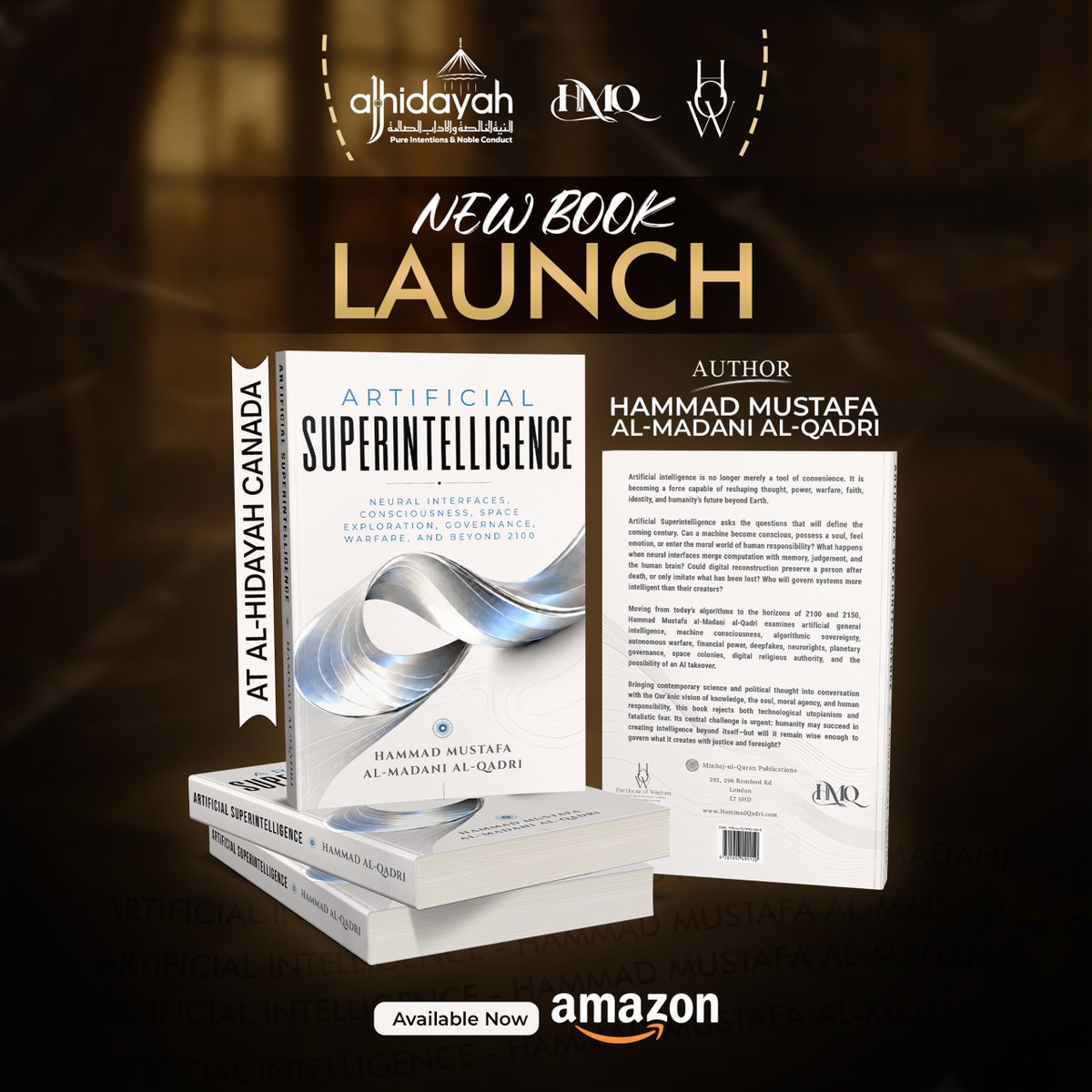
New Book | Artificial Superintelligence
A timely exploration of one of the defining questions of our age.
As artificial intelligence advances at an unprecedented pace, Artificial Superintelligence examines the profound scientific, ethical, political, and spiritual questions that will shape the future of humanity. Drawing on contemporary research and the Qur’ānic worldview, this work offers a thoughtful perspective on the opportunities and challenges of the AI era.
Book Blurb
Artificial intelligence is no longer merely a tool of convenience. It is becoming a force capable of reshaping thought, power, warfare, faith, identity, and humanity’s future beyond Earth.
Artificial Superintelligence asks the questions that will define the coming century. Can a machine become conscious, possess a soul, feel emotion, or enter the moral world of human responsibility? What happens when neural interfaces merge computation with memory, judgement, and the human brain? Could digital reconstruction preserve a person after death, or only imitate what has been lost? Who will govern systems more intelligent than their creators?
Moving from today’s algorithms to the horizons of 2100 and 2150, Hammad Mustafa al-Madani al-Qadri examines artificial general intelligence, machine consciousness, algorithmic sovereignty, autonomous warfare, financial power, deepfakes, neurorights, planetary governance, space colonies, digital religious authority, and the possibility of an AI takeover.
Bringing contemporary science and political thought into conversation with the Qur’ānic vision of knowledge, the soul, moral agency, and human responsibility, this book rejects both technological utopianism and fatalistic fear. Its central challenge is urgent: humanity may succeed in creating intelligence beyond itself—but will it remain wise enough to govern what it creates with justice and foresight?
#ArtificialSuperintelligence #ArtificialIntelligence #AGI #ShaykhHammadQadri #HammadMustafaQadri #HMQ #FutureOfAI #EthicsOfAI #MachineConsciousness #IslamicThought #Technology
Behind every command of #Islam lies a vision of ease for the individual, goodness for society, and mercy for all #humanity. Likewise, the very essence of the Prophethood and Messengership of the Holy Prophet Muhammad ﷺ is founded on mercy, #love, compassion, and sincere concern for humanity. His blessed mission, teachings, noble character, and exemplary way of life embody mercy, kindness, and goodwill for all people. For this reason, the fundamental spirit of all Islamic teachings is rooted in mercy, peace, love, and the welfare of humanity.
The Highest Expression of Moral Excellence: Attaining the Pleasure of Allah Almighty
The ultimate objective of an individual's life is moral excellence. True moral excellence is embodied in complete servitude to Allah Almighty, and its highest expression is attaining His pleasure (Riḍā' al-Ilāhī). Accordingly, the actual purpose of human life is to seek the pleasure of Allah Almighty. In other words, on an individual level, the purpose of life is to become insān-e-murtaḍā—a person with whom his Lord is pleased.
USA, Houston: Shaykh Hammad Mustafa al-Madani al-Qadri chaired a Q&A Session with doctors, engineers, accountants, IT professionals, business owners.
Shaykh Hammad Mustafa Qadri reflected on the importance of viewing life as a marathon rather than a sprint, emphasising the need for patience, perseverance, and steadfastness in pursuing both personal and spiritual growth.
The event was attended by Zafar Iqbal Khan, Dr. Faisal Iqbal Khan, Major (Retd.) Ahsan Ullah Mian, Sharjeel Ahsan (General Secretary, MQI USA), Syed Ali Abbas Bukhari (President, Minhaj-ul-Quran UK), Adnan Sohail (Global Operations Director), Azeem Mirza (Senior Vice President MWF Europe), Umer Farooq, (Deputy General Secretary of Minhaj-ul-Quran), Syed Imad Mohiuddin Pasha, Nasir Khan, Dr Qamar Al Azhari, Allama Muhammad Afzaal Qadri, Allama Hafiz Saeed ul Hassan, Nabeel Mohsin, Abdul Aziz, and other members of Minhaj-ul-Quran Houston.
#TheSirahAndModernTimes #ShaykhHammadQadri #HMQ #HammadMustafaQadri #MinhajulQuran #Houston #Texas #USA #USA2026 #Seerah #IslamicLeadership #HumanRights #IslamicEvent #MuslimCommunity #PropheticGuidance #HoustonMuslims #4thJuly
اہلِ ہیوسٹن Houston کے لیے خوشخبری!
معروف نوجوان اسکالر شیخ حماد مصطفیٰ المدنی القادری 04 جولائی 2026 کو ہیوسٹن میں “The Sirah & Modern Times” کانفرنس سے خطاب کریں گے۔
ان کے لیکچر میں ہوگی سیرتِ مصطفیٰ ﷺ کی روشنی میں دورِ حاضر کے اہم سوالات، چیلنجز اور نوجوان نسل کی رہنمائی۔
یہ صرف ایک ایونٹ نہیں، بلکہ ایمان، شعور اور کردار سازی کا اہم موقع ہے۔
اپنے دوستوں اور خاندان کے ہمراہ شرکت کریں۔
رجسٹریشن کے لیے QR Code اسکین کریں یا ڈسکرپشن میں موجود لنک پر کلک کریں۔
🔗 Register here: https://t.co/W8IgHpM2hK
#TheSirahAndModernTimes #HoustonMuslims #TexasEvents #IslamicEvent #HMQ #ShaykhHammadQadri #4thJuly
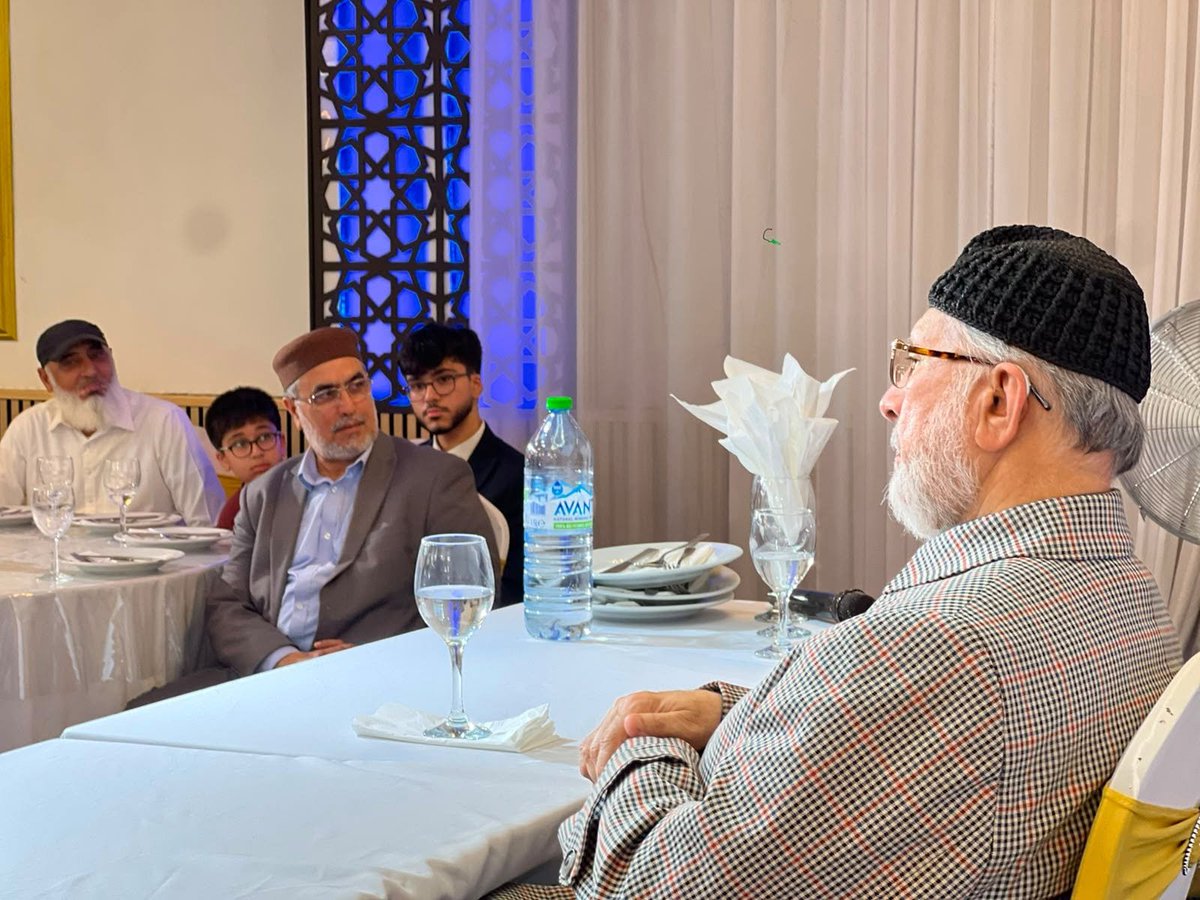
Manchester, UK: His Eminence Shaykh ul Islam Dr Muhammad Tahir-ul-Qadri graced a dinner hosted by Dr Masroor Diwan.
The gathering brought together politicians, lawyers, business leaders, medical specialists, academics and other respected professionals from across their respective fields. Guests had the valuable opportunity to benefit from the company and guidance of Shaykh-ul-Islam through an open and engaging question-and-answer session.
Those in attendance included cardiologists, nephrologists, general practitioners, surgeons, psychiatrists, oncologists, gastroenterologists, educators and business professionals.
The dinner provided an intimate setting for meaningful discussion, reflection and personal guidance.
#ShaykhulIslam #DrMuhammadTahirulQadri #MQIUK #Manchester #PrivateDinner #ScholarsAndProfessionals #Leadership #Guidance #CommunityEngagement
The love of and devotion to the Ahl al-Bayt (A.S.), together with their unparalleled sacrifices, teach us that faith is not limited to belief alone; rather, it requires action, loyalty, sincerity, and selflessness. Attachment to the Family of the Holy Prophet ﷺ purifies the heart and strengthens one's resolve to remain firm upon the path of truth and righteousness.
#DrHussainQadri #MinhajulQuran #ImamHussain #Ashoor #Karbala #AhlulBayt #LoveOfAhlulBayt #FaithAndSacrifice #PathOfTruth
Bradford, UK: His Eminence Shaykh-ul-Islam Dr Muhammad Tahir-ul-Qadri Delivers Landmark Address on Language, Identity and the Future of Faith
A special Suhbah gathering was held at Madinat al-Zahra, Bradford, where His Eminence Shaykh-ul-Islam Dr Muhammad Tahir-ul-Qadri delivered a profound and far-reaching address examining the relationship between language, faith, identity and religious continuity in the modern English-speaking world.
The lecture formed the third and concluding instalment of an international series addressing the challenges facing Muslim families raising children in Western societies. Drawing upon theology, sociology, history, linguistics and contemporary research, Shaykh-ul-Islam presented what he described as one of the most critical issues affecting future generations: the growing phenomenon of “English-only dependence” and its impact on the preservation of faith.
At the outset, Shaykh-ul-Islam congratulated the organisers and participants of the three-day educational campaign conducted by Minhaj-ul-Quran Australia, including the teams of Victoria, Queensland, Canberra and New South Wales, along with Minhaj Welfare Foundation Australia, Minhaj Women League Australia, Eagles Australia, Minhaj Youth League, guest speakers Junaid Khan and Quraat Hussain and campaign coordinator Syed Zameen Masood Shah. He also announced that the next phase of the series would continue at McMaster University in Canada later this year.
English is Not the Problem
A central theme of the address was the clarification that English itself is not a threat to Islam or Muslim identity.
Shaykh-ul-Islam stressed that English is indispensable for modern life. It is the language of education, professional development, public engagement, communication and intellectual discourse. Muslim youth must excel in English to succeed academically, participate confidently in society and articulate Islamic perspectives in response to contemporary challenges such as atheism, secularism and liberalism.
However, he argued that the real problem emerges when English becomes the only language through which a Muslim child understands religion, identity and meaning.
According to Shaykh-ul-Islam, when religious understanding becomes confined solely to English, children gradually lose access to the inherited reservoirs of Islamic knowledge, spirituality and culture that have historically sustained Muslim communities for centuries.
The Three-Language Model
To address this challenge, Shaykh-ul-Islam presented what he termed the “Three-Language Ideal Model” for Muslim families living in the West.
Under this framework:
* English serves as the language of survival, education, communication and engagement with the modern world.
* The heritage language (such as Urdu, Turkish, Persian or another inherited Muslim language) serves as the bridge to religious, spiritual and cultural inheritance.
* Arabic serves as the gateway to the original sacred sources of Islam, including the Qur’an, Hadith, Sunnah and classical scholarship.
He emphasised that the solution is not to sacrifice one language for another, but to ensure each language fulfils its proper role.
“Keep English strong, keep the heritage language alive and connect with Arabic” was presented as the complete model for preserving both faith and identity in future generations.
Language Shapes How We Think
One of the most striking themes of the lecture was the assertion that language does far more than facilitate communication.
Shaykh-ul-Islam explained that language shapes thought, perception and worldview. Children do not merely speak in a language; they think through it, interpret reality through it and develop moral and intellectual frameworks through it.
When Muslim children become exclusively dependent upon English, they inevitably begin to conceptualise religion through the assumptions and categories of the secular environment in which English functions.
As a result, their understanding of Islam can gradually become detached from the civilisational, spiritual and intellectual traditions that originally nurtured and transmitted the faith.
This, Shaykh-ul-Islam argued, contributes directly to the identity crises increasingly experienced by Muslim youth in Western societies.
Heritage Languages as Carriers of Islamic Legacy
Shaykh-ul-Islam highlighted the unique role played by heritage languages in preserving Islamic civilisation and transmitting religious knowledge across generations.
Using Urdu as a case study, he explained how the language emerged through centuries of interaction between Arabic, Persian and Turkish traditions, becoming a vehicle for Islamic scholarship, spirituality and culture.
He noted that heritage languages provide access not only to texts and knowledge but also to emotional memory, inherited values, manners, etiquette and religious vocabulary.
Words such as Insha’Allah, Masha’Allah, SubhanAllah, Tawakkul, Sabr and Shukr carry layers of spiritual meaning that become embedded within a child’s subconscious understanding of faith.
When these words disappear from everyday life, he argued, the concepts they embody gradually disappear as well.
Access to Islamic Knowledge
A significant portion of the lecture focused on the relationship between language and access to authentic Islamic scholarship.
Shaykh-ul-Islam explained that all original Islamic sources are preserved in Arabic. The Qur’an, Hadith literature, jurisprudence, theology, spirituality and classical scholarship remain rooted in the Arabic language.
He further argued that substantial portions of Islamic intellectual history were also preserved and transmitted through Turkish and Persian scholarly traditions, with Urdu serving as a major bridge connecting subsequent generations to that heritage.
Without access to these linguistic traditions, Muslim youth become increasingly dependent on translations and secondary interpretations, limiting their ability to engage deeply with the richness of Islamic knowledge.
He reiterated that translation can assist understanding but can never fully replace the original language of revelation.
The Rise of “Algorithmic Religion”
Perhaps the most memorable and contemporary concept introduced during the lecture was Shaykh-ul-Islam’s warning against what he termed “algorithmic religion.”
He observed that many young Muslims today no longer receive religious understanding primarily through scholars, books, families or established institutions.
Instead, they increasingly encounter religion through:
* TikTok
* YouTube
* Reddit
* Podcasts
* Social media influencers
* AI-generated responses
* Algorithm-driven content feeds
In this environment, children are exposed simultaneously to atheist critiques, secular liberal perspectives, hyper-literalist interpretations, ultra-modern ideologies, influencer-based religion and countless conflicting viewpoints.
Without grounding in authentic sources or inherited religious traditions, they often lack the tools necessary to distinguish between sound scholarship and misinformation.
Shaykh-ul-Islam described the result as “algorithmic religion” — a personalised version of faith assembled from random digital fragments selected by algorithms rather than guided by scholarship, tradition or religious authority.
He warned that this phenomenon contributes to:
* Religious confusion
* Broken continuity of faith
* Weakening family transmission
* Inconsistent religious practice
* Identity instability
* Spiritual uncertainty
Faith is Transmitted Through the Heart as Well as the Mind
Shaykh-ul-Islam repeatedly emphasised that faith is not transmitted solely through logic, argument and intellectual reasoning.
While rational understanding remains important, religion is also transmitted through love, belonging, emotional attachment, memory, spiritual experience and inherited tradition.
He explained that many aspects of Islamic life are sustained through sentimental and spiritual connections that exist beyond purely intellectual explanations.
This emotional continuity is often carried through language, family practices and cultural expressions that connect individuals to previous generations and ultimately to the Prophetic tradition itself.
Without these channels of transmission, future generations may retain information about religion whilst losing their deeper connection to it.
Culture as a System of Meaning
Challenging common assumptions, Shaykh-ul-Islam argued that culture should not be understood merely as local customs or ethnic traditions.
Instead, he defined culture as a “system of meaning” comprising values, beliefs, concepts, norms, habits, manners and traditions rooted in faith.
Islamic culture, therefore, is not confined to geography or ethnicity but emerges from the shared meanings transmitted through the Qur’an, Sunnah, scholarship and spiritual heritage.
Language plays a critical role in preserving and transmitting this system of meaning across generations.
Research Supporting Religious Transmission
To reinforce his arguments, Shaykh-ul-Islam referenced contemporary academic research examining the relationship between language, culture and faith transmission.
He cited studies indicating that heritage language retention strengthens religious continuity, supports family bonds and contributes to the preservation of belief among immigrant communities living in Western societies.
These findings, he noted, increasingly confirm what religious communities have intuitively understood for generations: that faith is sustained not only through doctrine but through family, culture, language and emotional belonging.
A Call to Muslim Families
Concluding the lecture, Shaykh-ul-Islam delivered a powerful appeal to Muslim parents, educators and community leaders.
He urged families not to frame language as a choice between modern success and religious commitment. Rather, they should ensure that future generations are equipped with all three dimensions necessary for success:
* Strong English for life in the modern world.
* Strong heritage language for continuity of identity and tradition.
* Strong Arabic connection for access to the original sources of Islam.
Shaykh-ul-Islam warned that if heritage transmission is neglected, future generations risk becoming disconnected from the religious, moral and spiritual foundations that sustain faith.
The lecture concluded with a reminder that the preservation of Islam is not merely an intellectual exercise but a holistic process involving knowledge, identity, family, culture, language and the heart.
For Muslim communities living in the English-speaking world, the challenge is not English itself, but ensuring that English does not become the only lens through which future generations encounter their faith.
Sheffield, UK: His Eminence Shaykh-ul-Islam Prof. Dr Muhammad Tahir-ul-Qadri addressed students of Al-Ma’rifa in a deeply spiritual and reflective session titled “The Unbroken Chain”.
Shaykh-ul-Islam spoke on the journey of ta‘allum, the receiving of sacred knowledge, and explained that the seeker of knowledge, the muta‘allim, must begin with the purification of intention. Learning is not merely an external act of study, reading or memorisation. It is an inner journey of turning towards Allah Almighty, standing in His court and entering a state of munajat, speaking to Allah with humility and sincerity.
Shaykh-ul-Islam reminded the students that every act of learning must carry a niyyah. The intention should be to receive ma‘rifa, to understand the commandments of Allah Almighty and the guidance of His Beloved Messenger ﷺ, and to become a humble servant of Allah. He explained that one cannot truly aspire to servanthood without first seeking to understand what Allah Almighty wants from His servant.
A central message of the session was humility. Shaykh-ul-Islam advised students never to become proud of what they have learnt, but to always consider themselves at the beginning of the journey. The seeker should continue to purify the self, strive sincerely and aspire only to become a true servant of Allah Almighty. When this path is followed with sincerity, blessings come as a matter of course.
Shaykh-ul-Islam gave the example of three types of trees: a large tree with no leaves that provides no shade, a tree with leaves that gives shade and a fruit-bearing tree. He explained that the branches of a fruit-bearing tree bend down with humility, while a tree without fruit remains straight, stiff and stubborn. In the same way, true knowledge makes a person humble, while knowledge without inner transformation leaves a person rigid and ignorant.
He explained that true ilm takes a person away from the world of “me, myself and I”. It removes selfishness and opens the heart towards selflessness, service and concern for others. Since ilm is an attribute granted by Allah Almighty, sincere pursuit of knowledge should begin to transform the character, conduct and attributes of the seeker for the better.
Shaykh-ul-Islam also warned that the interpretation and benefit of knowledge only enter the heart when the intention is pure. Without sincerity, knowledge may remain on the tongue or in the mind, but it does not illuminate the heart or transform the spiritual state of the seeker. True knowledge disciplines life, purifies the inner self and reforms behaviour.
He reminded the students that Allah Almighty, the angels and the possessors of knowledge bear witness to the oneness of Allah. Therefore, the true possessor of knowledge cannot be unjust. Even holding negative thoughts about others can be a form of injustice. Real knowledge removes injustice from the heart, mind and soul, and brings a person out of the narrow circle of “I, me and mine”.
The session concluded with Shaykh-ul-Islam praying for the students of Al-Ma’rifa and their noble effort to strive for ilm with sincerity, discipline and genuine spiritual purpose.
It was a powerful reminder that sacred knowledge is not only to be acquired, but to be lived, embodied and reflected through humility, service and transformation of the self.
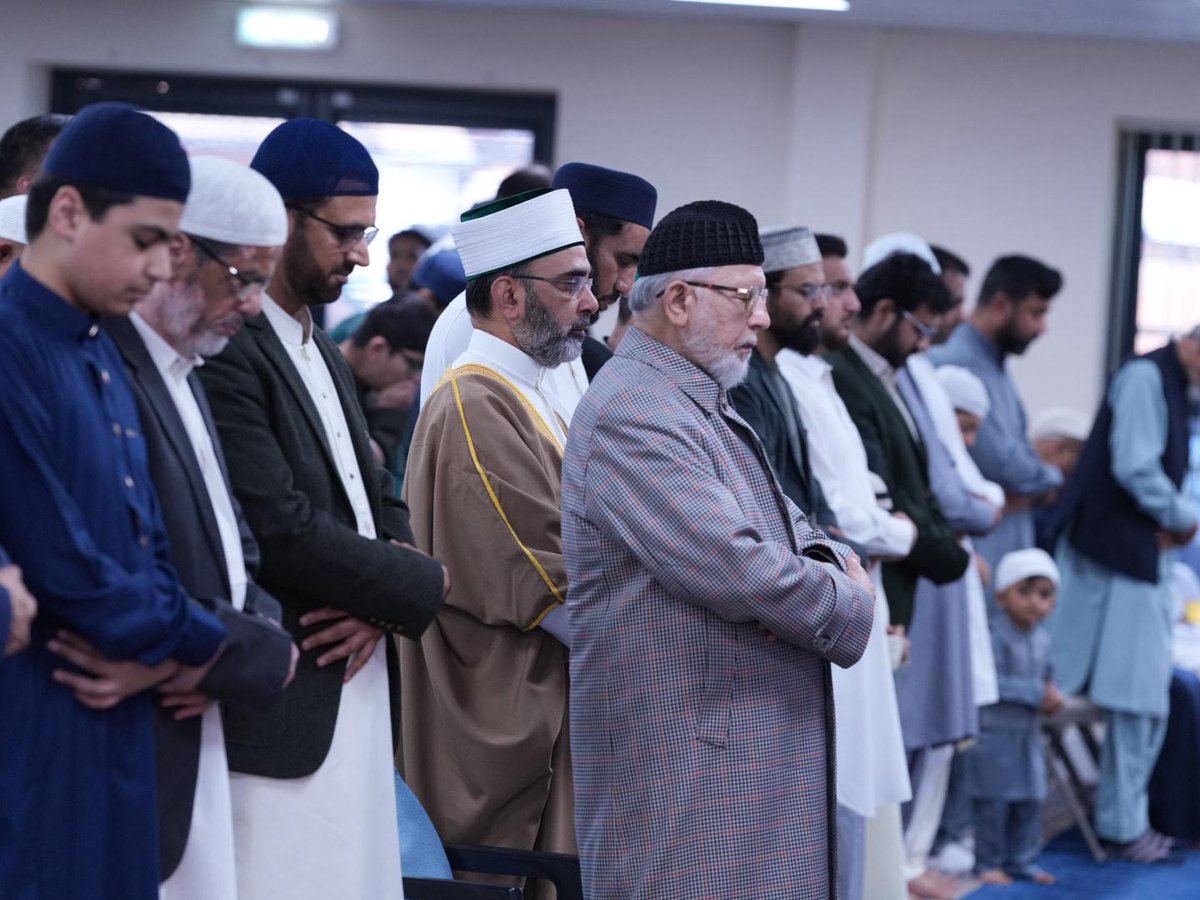
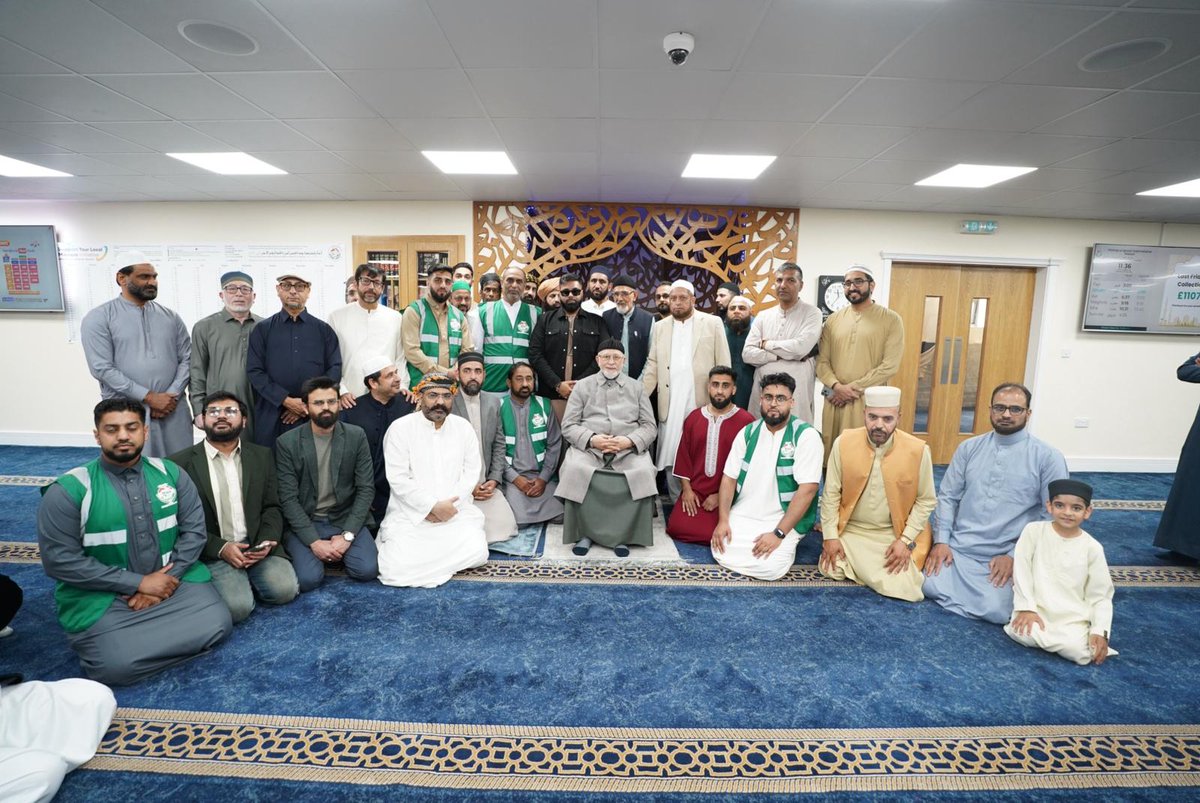
UK, Walsall: His Eminence Shaykh-ul-Islam Dr. Muhammad Tahir-ul-Qadri offered Eid al-Adha prayers at Minhaj-ul-Quran Islamic Centre, Walsall.
Shaykh-ul-Islam joined a large gathering of worshippers at MQI Walsall to offer the Eid prayer. Office-bearers and associates of Minhaj-ul-Quran International UK from across the Midlands, along with members of the wider Muslim community, also participated in the congregation. The midlands leadership Shaykh Abu Adam Al-Shiraazi (President Midlands Zone), Ghulam Murtaza (General Secretary Midlands Zone) welcomed His Eminence, and other MQI executives were also present, Allama Bilal Ashrafi, Dr Ali Akbar, Allama Tahir Mahmood Kiyani, Qari Muhammad Wajid, GM Malik sb, Sajid Mustafa, Farhan ul Sabah, Shaykh Bilal Hussain, Shaykh Qasim Farid along with Minhaj Women League, Minhaj Sisters and Minhaj Muslim Generations representations.
On this blessed occasion, Shaykh-ul-Islam extended heartfelt Eid greetings to the attendees and Muslims around the world. He stated that Eid al-Adha is a spiritually uplifting occasion that revives the timeless Sunnah of Prophet Ibrahim (AS). He emphasised that the true essence of the Sunnah of Ibrahim (AS) lies in sacrificing one’s ego and submitting wholeheartedly to the will and pleasure of Allah Almighty.
He further urged the Muslim Ummah to include relatives, neighbors, the needy, and underprivileged members of society in their celebrations, describing this spirit of sharing and compassion as the true reflection of Islamic brotherhood. He also prayed that Allah Almighty shower His special blessings and mercy upon the entire Muslim world.
Following the Eid prayer, members and associates of Minhaj-ul-Quran International, along with people from various walks of life within the Muslim community, met Shaykh-ul-Islam Dr. Muhammad Tahir-ul-Qadri and received Eid greetings and blessings from him.
#EidAlAdha #Eid2026 #Islam #Muslims #Unity #Peace
Are We Truly Living the Life of Loyalty?
A powerful reflection by Shaykh-ul-Islam Dr. Muhammad Tahir-ul-Qadri on sincerity, faithfulness, and remaining steadfast in our commitment to Allah and His beloved Messenger ﷺ.
Join the blessed company of Shaykh-ul-Islam Dr. Muhammad Tahir-ul-Qadri at Al-Hidayah 2026
📍 McMaster University, Hamilton, Ontario
📅 August 1–3, 2026
Register: https://t.co/282lYmpwOB
#AlHidayah2026 #Loyalty #Sincerity #SpiritualPath #MinhajulQuran
Minhaj-ul-Quran USA 🇺🇸 presents.
An exclusive online Meet & Greet session with Shaykh Hammad Mustafa al-Madani al-Qadri as he delivers a special session on:
“Why Join a Jamā’a (Organization) in the 21st Century”
📅 Sunday 17 May 2026
🇺🇸 12:00 PM CST | 1:00 PM EST
🇬🇧 6:00 PM GMT
🇵🇰 10:00 PM PST
Register here: https://t.co/loRWTPzqYX
#TheSirahAndModernTimes #IslamicEvent #MuslimCommunity #HMQ #ShaykhHammadQadri #MuslimYouth #IslamicEducation
Hi @SuellaBraverman ,
48 hours ago I asked you to substantiate or withdraw your claim that “250,000 foreign students took £4bn in UK loans.” That time has now passed. You have provided no evidence, no clarification, and no correction.
I have taken the time to examine the data myself.
I have reviewed materials from the Student Loans Company, the Department for Education, the House of Commons Library, the UK Statistics Authority, and reporting from Times Higher Education. Across these sources, one thing is clear. Your statement is presented in a way that gives the public a deeply misleading impression.
Let’s deal with this carefully.
The £4bn figure you reference relates to the total value of student loans issued to non UK nationals. It is not a direct cost to the taxpayer. These are loans. They are repaid over time based on income. Presenting that figure as if it were money handed out or lost is not an accurate reflection of how the system works.
Then there is your use of the phrase “foreign students.”
This is where the distortion becomes more serious.
The fact (which you know quite well) is those eligible for UK student finance are not newly arrived international students. They are people with settled status, indefinite leave to remain, refugee status, or long term lawful residence in the UK. They live here. They work here. They pay into the system. And under the law, they are entitled to access student finance.
Standard international students on student visas are generally not eligible for these loans.
By leaving out that distinction, you create a very different picture in the minds of the public. One where large numbers of people are arriving from abroad and immediately accessing public funds. That is not what the data shows.
You also cited a figure of 250,000 without pointing to a clearly published dataset or transparent methodology. Numbers like this carry weight. They should be used with care, not as loose estimates in politically charged statements.
I am not interested in party politics. But I am concerned about what this kind of messaging is doing to the country.
When lending is presented as spending, and long term residents are presented as outsiders, it fuels resentment. It deepens division. It creates tension where clarity is needed. And ordinary people end up carrying the consequences of that confusion. Like I was being racially attacked and profiled in my initial response to you in X by supporters of your party who were obviously misled and triggered by your misinformation.
I did consider legal action. But the reality is that the law is not designed to deal easily with this kind of broad public misrepresentation. You know that, which is why ignoring a challenge like mine carries little immediate consequence.
That does not make it acceptable.
I will be submitting a formal complaint to the Parliamentary Commissioner for Standards regarding your use of misleading statistical claims in public communication.
The public deserves accuracy. Not selective framing. Not distortion. And certainly not narratives that risk turning people against each other on the basis of incomplete facts.
Stephen Dada.
Minhaj-ul-Quran International UK 🇬🇧 invites you to a special Prophetic Sirah Conference 🌙
Join us as we reflect on the life and teachings of the Beloved Prophet ﷺ and reconnect with the values that strengthen our faith and communities 🤍
We are honoured to host His Eminence, Shaykh-ul-Islam Dr Muhammad Tahir-ul-Qadri for this inspiring gathering.
Open to the community, a family event.
Make time, bring others and benefit immensely from this gathering ✨
📅 Sunday 7th June
🕑 After Zuhr | 2:00pm
📍 Madina Masjid, Sheffield (S8 0ZU)