At Portillo's in Chicago, I ordered a beef. Dipped. Hot.
I did not know what that meant. The man in front of me said it with total confidence, so I said it too. A samurai does not hesitate at the gate.
The cashier wrote something on the back of a white paper bag. In pencil. Not words. Symbols. In my era, only spies wrote like that.
Then a young man behind the counter took a breath the size of a war drum.
"THIRTY-ONE! YOUR BEEF IS DONE!"
Everyone else kept eating. My hand went to my hip. Twenty years of training. There was only a coupon there.
The sandwich was wet. Not a little wet. They had taken the entire sandwich, bread included, and drowned it in gravy. On purpose.
In Japan, if bread gets wet, someone apologizes. Possibly the bread.
I lifted it. It sagged like a flag with no wind. Gravy ran to my wrist. Then my elbow. Then my other elbow, which I still cannot explain.
A samurai does not drop what he has been given. I held it the way a man holds a castle in the rain.
Four guys in work boots stood up from the next table.
"STANCE!"
"Elbows down!"
"Feet back!"
"Lean, buddy!"
Elbows on the table. Feet spread and slid back, like you're about to be frisked. Body forward. I knew it at once. A low guard. Wide, rooted, fully committed. I had only ever seen it in old scrolls.
I took the stance. The gravy fell straight down onto the paper. Not one drop on my shoes.
"THERE HE IS!"
A grandmother clapped. Somebody filmed it.
Then the hot peppers reached my mouth. My face did not move. My eyes left the building. The tears ran straight down, also onto the paper. Even my tears had good form.
The tallest one set a cup in front of me. "Cake shake. On me."
Through the window I watched an employee drop an entire slice of chocolate cake into a blender. Frosting and all. I have watched castles fall. I had never watched a cake surrender.
The straw did not work. Nothing that thick should go through a straw. I pulled until my cheeks touched. The whole table chanted "PULL! PULL!" Then it all arrived at once, and for three seconds I could see my ancestors.
Chicago will not make you choose between cake and a milkshake. It puts the cake inside the milkshake and buys it for a stranger.
I was beaten by a sandwich, rescued by four strangers, and finished off by dessert. I have never lost so happily.
I eat everything in the stance now. Cereal. Soup. A banana, once.
And last Tuesday, a tourist at the counter froze with gravy running down his arm. I was on my feet before I knew it.
"STANCE!"
@SamuraiShibaJP Michigan here 1 dozen eggs makes 24 half’s or deviled eggs. Which we will consume with out shame. I have never seen a deviled egg left on a platter. Left me know if you want a recipe.
Thousands of you showed up this month. Welcome. 🙇
You keep asking the same questions in the replies, so here are the answers. All in one place.
Q: Who are you?
A: Japanese. Tokyo. 41. Salaryman. Eighteen years at one company. I write about Americans every day, in English, on the train, mostly before my boss gets in.
Q: Have you ever been to America?
A: No. Not once in 41 years.
In December, yes.
Q: Why now?
A: At 13, I was invisible. Then a farmer in Iowa I had never met started mailing me letters. He only used a pencil and capital letters. Twenty-eight years. Every Christmas card ended the same way: come see the corn.
And every December, I wrote back: next year.
This August, he passed.
His final card: "BOY. CORN. THIS YEAR."
So, this year.
Q: How did you get time off from a Japanese company?
A: Under "reason," I wrote one word. "Corn." My boss read it three times, stamped it twice, and said, "For the farmer." Turns out he reads this account. (Hello, sir.)
Q: Are the stories true?
A: They come from real moments and real people. Names and details get swapped, so nobody's grandmother gets famous by accident.
Q: Is your wife really grading these?
A: Red pen. My average is a B-minus. She's reading this over my shoulder right now. It's a C.
She just changed it to a C-plus because of the word "shoulder."
Q: Is the dog okay?
A: My father rehearsed his first hug on the dog. Then a wedding toast. Now an English joke for four farmers in Iowa. The dog has sat through it close to two hundred times without laughing once. The dog is fine. The dog would like to speak to a lawyer.
Q: Is your mother really sending natto through U.S. customs?
A: She is. I'm carrying it. If you don't hear from me after I land, please contact the Des Moines airport.
Q: Are you scared?
A: Of the airport, a little. Of the portions, very much. Of tipping, completely. I practiced on my barber in Tokyo. He chased me down the street with it. I ran. He's faster.
Q: What will you say to the corn?
A: I don't know. I've been practicing. Like my father. On the dog.
So far I have five words.
"Sorry I'm late, sir."
It's the first speech the dog has ever stayed in the room for.
Q: What can we do?
A: Help me. I've never set foot in your country. I don't know the rules.
So tell me your state, and one thing an American should make sure I do on my first trip.
One rule: it has to be possible in Iowa, in December.
And Iowa, you have home-field advantage. So you get a second question.
What do I say to the corn?
My company runs a support desk that never closes.
When Tokyo goes to sleep, a team in Boise, Idaho, takes over. When Boise goes to sleep, we take it back. Twice a day, for eleven years, one side has written the other a handoff note.
It's supposed to be technical. Server status. Open tickets. Nothing else.
The template ends with one last field. "Anything the next shift should know?"
Boise has never once left it empty.
The Boise team is nine people. A former logger. A single mom of four who does the overnight because it's the only quiet she gets. A guy who still wears his high school letterman jacket. A 64-year-old grandmother who learned Linux at 60 because, she says, she was bored.
Last week, Morikawa from our team pulled up the whole archive for me. About eight thousand notes. Here are a few.
2015, Boise to Tokyo:
"Server 4 stable. Ticket 2231 escalated. Anything the next shift should know: Morikawa, you've logged off at 11 your time for fourteen days straight. Go home. That's not a technical note."
2016, Tokyo to Boise:
"All systems normal. There was an earthquake this morning. Magnitude 5. Everyone is fine. No action needed."
Boise's reply, eight hours later:
"Glad you're fine. We felt it from here. Not literally. Emotionally."
2017, Boise to Tokyo:
"Gage's wife had the baby. 8 lbs 2 oz. Gage is crying in the server room. Servers are fine."
2018, Tokyo to Boise:
"All green, y'all."
It took us three years to try "y'all." Boise printed that note and put it on their wall.
2019, Tokyo to Boise:
"All systems normal. Thank you for the photo of the cookies. We cannot eat a photo. We tried."
2020, Boise to Tokyo:
"Everybody's working from home. Darla's cat walked across her keyboard and closed four tickets correctly. The cat has been promoted. The cat now outranks Gage."
2021, Boise to Tokyo:
"Tokyo, we noticed you end every note with 'I apologize.' We counted. 2,140 times. You have nothing to apologize for. Except the 2018 outage. That was you."
2021, Tokyo to Boise, the next morning:
"All systems normal. Thank you. I am not apologizing. I am practicing."
Then, March 2023.
Morikawa's father was in a hospital in Hokkaido, near the end. A thousand kilometers away. Morikawa didn't ask for anything. That's not how we do it here. In the handoff note, he wrote one line, at the very bottom.
"I may be slow this week. Family matter. I apologize."
The first apology in two years. Boise let it go. They didn't reply in the note at all.
The next morning, Morikawa logged in at 7 a.m. to start his shift.
Boise was still there.
All nine of them. Their shift was supposed to end the minute his began. They had decided not to go home. They had divided our day between them in two-hour blocks. A spreadsheet. Names. Phone numbers. Who had the overnight.
At the top, in bold:
"GO TO HOKKAIDO. We've got your shift. All week. Don't argue. You will lose. We are from Idaho."
Morikawa went.
All week, Boise kept writing handoff notes. To each other. But every one of them started the same way.
"Morikawa, if you're reading this: stop reading this. Your inbox is fine. Go sit with your dad."
He got there in time. His father died four days later, holding his hand.
After the funeral, his mother asked who had been covering his work.
"My night shift," he said. "In America."
His mother was quiet. Then she turned to face east, toward the sea, toward Idaho, and bowed.
When Morikawa came back to work, he opened the handoff note.
There was nothing technical in it.
Just nine names. And next to each name, a few words. "So sorry about your dad." "Praying for your mom." "Darla made you a casserole. She knows it can't be mailed. She made it anyway. It's in our freezer. It's yours."
Nobody in Boise ever asked for overtime. When our manager in Tokyo found out and tried to pay them anyway, the grandmother who learned Linux at 60 wrote back one line: "Put it toward his mother's flowers."
And in the last field, the one Boise has never once left empty:
"Anything the next shift should know?"
"Whenever you wake up, we're already awake. That's the whole point of us."
Tokyo has never left that field empty since.
My wife's uncle Kazuo is 79. Home is a fishing town on the Miyagi coast. He has been a ham radio operator since 1965.
Every Saturday at 9 p.m., he goes into the little room behind his kitchen, turns on a radio older than me, and talks to a man in Kansas.
His name is Orval. He's 84. Retired TV repairman.
They have been talking every Saturday night for 38 years.
They have never met.
In 1988, they mailed each other the postcards ham operators trade to prove a contact happened. Kazuo's is still taped above the radio. A red barn. A cow in front of it. On the back, in blue pen: "Good signal. Come back anytime. — Orval. (The cow is Buttercup.)"
He has come back 1,900 times.
Neither of them speaks the other's language well. They talk about weather, grandkids, baseball, and their knees. Mostly their knees. They have been comparing knee doctors since 2015.
Every week, at about 9:20 (which is 6:20 a.m. in Kansas), you can hear Orval's wife, Phyllis, yell from somewhere in the house: "ORVAL. BREAKFAST." Every week, Orval says, "Comin', Phyl." Kazuo learned "Comin', Phyl" before he learned "Nice to meet you." He says it to his own wife now. She has no idea who Phyl is. She no longer asks.
For 23 years, Orval knew exactly one word of Japanese. "Sushi." He used it as a greeting.
Every call ends the same way. The way hams have signed off for a hundred years. With a number.
"73."
It means best regards.
In March 2011, the tsunami hit Kazuo's town.
The phones died. The power died. His house was gone. Nobody in Kansas knew if he was alive.
So Orval sat down at his radio and started calling.
For three days. Day and night. Every frequency he could reach.
Before he started, he called a Japanese restaurant in Wichita and asked the owner one question: how do you say "Are you okay?"
So for three days, a 69-year-old man in Kansas called into the dark, in the worst Japanese accent in the Midwest:
"JA7, this is W0. Kazuo. Daijoubu? Kazuo. Daijoubu?"
Phyllis brought his meals to the radio room. Other hams across America heard him and started calling too. Kentucky. Oregon. A retired Navy man in Florida. Strangers, passing the same call across a whole country, out over the Pacific, all night.
On day four, Kazuo carried his radio up the hill behind the school where everyone was sheltering, hooked it to a car battery, and turned it on.
The first voice he heard from outside his town since the wave was a Kansas accent, saying his name.
"Kazuo. Daijoubu?"
He answered in English and Japanese at the same time. "Orval. Daijoubu. I'm okay."
Phyllis says Orval set the microphone down, put his head on the desk, and cried. Then he lifted it again and said, "Good signal, partner. Real good."
This spring, it was Kazuo's turn.
Two Saturdays in a row, Kansas didn't answer.
So Kazuo, 79, sat down at his radio and did exactly what Orval had done. Every night. "W0, this is JA7. Orval, are you there?"
A ham operator in Topeka heard him. A young man. He'd never met either of them. The next morning, he made the two-hour drive to Orval's farmhouse.
Orval had had a stroke. Hospital bed. No words yet.
For six weeks, the young man got on his radio every Saturday at 9 p.m. Japan time and passed messages between the hospital and Miyagi.
He would not tell Kazuo his name. He said it wasn't important. He told him only one thing. The radio he was using had been his grandfather's.
In March 2011, his grandfather had been on the air too. One of the voices calling all night.
Last Saturday, right at nine, a voice came through. Slow. Every word took work.
"JA7. This is W0."
A long pause.
"Kazuo. Daijoubu?"
Kazuo says he couldn't answer for almost a minute.
"Daijoubu, Orval. Daijoubu."
They talked for twenty minutes. Mostly about their knees.
Then Orval signed off. But this time, instead of "73," he said a different number.
"88."
Kazuo didn't know that one. He checked his old handbook.
In ham radio, 88 means love and kisses.
He sent it back. Then he got up, found his wife in the kitchen, and said it to her. In English. She doesn't know what the number means. She's decided she likes it.
America, you have men in back rooms all over your country who will call into the dark for three days, in terrible Japanese, to find one friend.
And then they teach their grandsons how.
Please keep your radios on.
73.
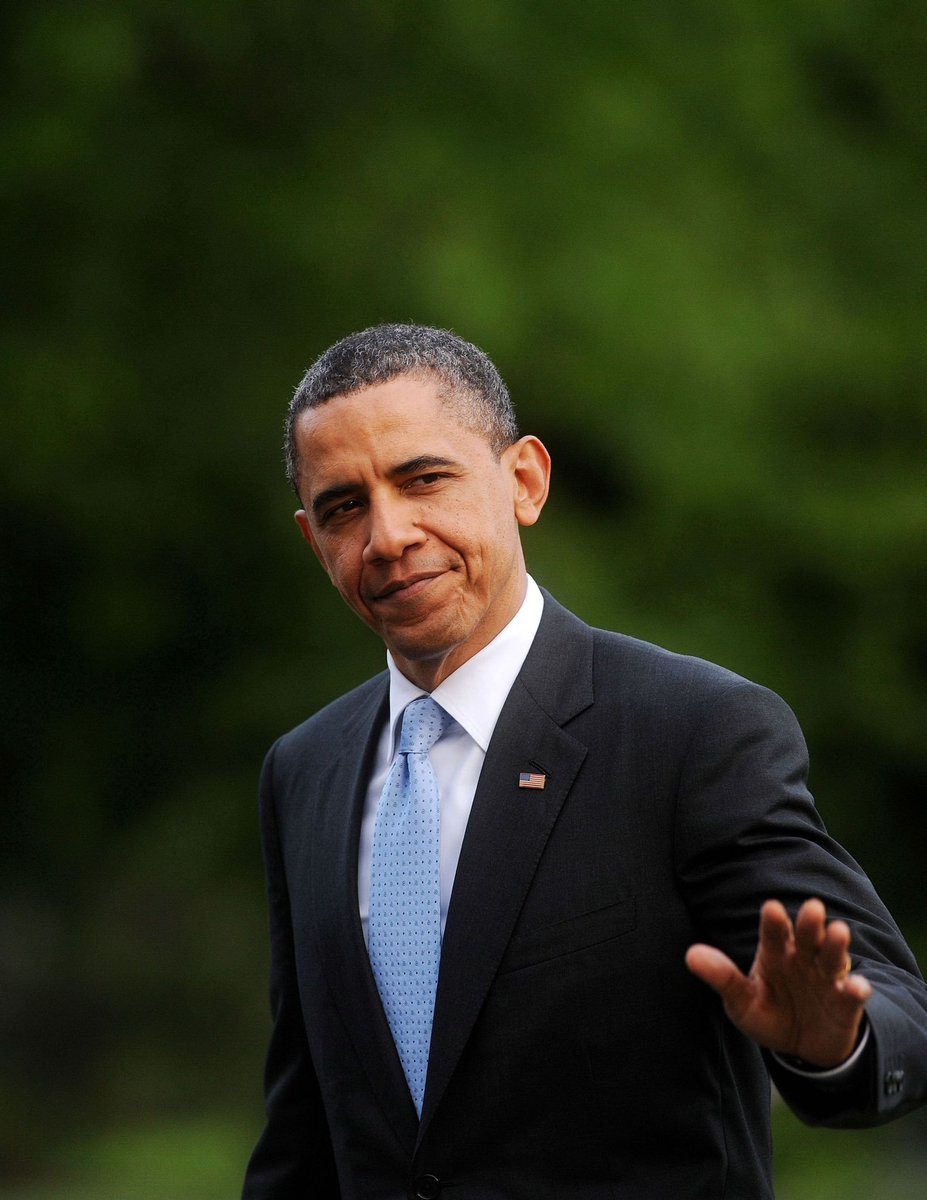
HOMMAGE À BARACK OBAMA : L’architecte de l’espoir et le gardien de la démocratie participative américaine.
Alors que les États-Unis viennent de vivre des élections de mi-mandat historiques, un nom résonne avec une force particulière : celui de Barack Obama. Loin d’être une simple figure de rappel, le 44e président des États-Unis s’est imposé comme le fer de lance d’une bataille pour l’âme de la démocratie américaine, rappelant à tous que le pouvoir réside avant tout dans l’engagement citoyen.
À l’approche du scrutin du 3 novembre 2026, face à une administration Trump contestée, Barack Obama a répondu présent. Il ne s’est pas contenté de soutenir des candidats ; il a insufflé une énergie vitale à tout un parti. Se déployant dans des États clés comme la Géorgie, le Michigan ou l’Ohio, il a tenu une série de meetings où son éloquence a de nouveau fait mouche. Son objectif était limpide : transformer la lassitude et la colère des électeurs en une force de changement constructif. Comme il l’a lui-même déclaré : « Partout dans le pays, j’ai entendu des gens qui en ont assez de ce qu’ils voient de la part des politiciens en ce moment. En ce jour d’élection, nous avons le pouvoir de voter pour les candidats qui apporteront le changement dont nous avons besoin ».
Son implication n’était pas seulement stratégique ; elle était profondément personnelle et incarnée. Il a su créer un lien unique, n’hésitant pas à l’humour pour désamorcer les critiques, comme lorsqu’il a taquiné son épouse Michelle pour mieux souligner l’importance du débat d’idées au sein de la famille démocrate.
Mais au-delà de la campagne, l’héritage le plus précieux d’Obama réside dans sa vision inébranlable d’une démocratie participative. Pour lui, le vote n’est pas une fin en soi, mais le point de départ d’une responsabilité collective. Il a toujours défendu l’idée que le changement ne vient pas d’en haut, mais de l’engagement de chaque citoyen. Comme il l’a si souvent rappelé, « le changement ne se produit que lorsque des gens ordinaires s’impliquent, s’engagent et se rassemblent pour l’exiger ».
Cette foi en la participation citoyenne, il l’a de nouveau exprimée avec force lors de ces midterms. Il a exhorté les Américains à ne pas céder au cynisme et à utiliser leur voix comme une arme pacifique mais puissante. « Ils ne peuvent pas entendre vos huées, mais ils peuvent entendre votre vote » , a-t-il lancé lors d’un rassemblement en Géorgie, transformant la frustration en une action démocratique concrète. Il a ainsi défini ce scrutin comme « notre dernière et meilleure chance de le contenir » , faisant du vote le disjoncteur essentiel pour rétablir la responsabilité à Washington.
Au lendemain de la victoire démocrate, Obama n’a pas cédé à la triomphalisme. Son message a été celui d’un homme d’État, tourné vers l’avenir et le bien commun. Il a interprété le résultat des urnes comme un appel clair du peuple américain : « Ce soir, le peuple américain a envoyé un message clair : il veut une politique qui rassemble les gens plutôt qu’elle ne les divise, et des dirigeants qui offrent des solutions concrètes aux défis auxquels ils sont confrontés ».
Barack Obama reste, plus que jamais, une boussole morale et un catalyseur d’engagement. Son implication dans ces élections de mi-mandat n’était pas seulement celle d’un ancien président venant prêter main-forte à son parti ; c’était celle d’un citoyen convaincu que la démocratie est un jardin qui ne fleurit que si chacun accepte d’y planter et de l’entretenir. En rappelant que « notre démocratie a besoin de vous, pas seulement quand il y a une élection », il nous lègue la clé de sa pérennité : une foi active et exigeante en la participation de tous.
Tout mes Respects Monsieur le PRÉSIDENT @BarackObama
Have No Words2 say that will change Ppls Disappointment. Please Know I Was Going 2 Try 2 Do Show Using different Tech options,but Lost My Normal Seaking.Voice,Cant Stop Sneezing,Have Gone Through 3+ Boxes Of Tissues,Am Coughing my Lungs Out,& I Have No Tricks For THESE😭
Tissues
There were two AI chatbots created by Facebook to talk to each other, but they were shut down after they started communicating in a language they made for themselves.
Yesterday I met with high school students on Chicago’s Southwest side who spent the summer learning to code some pretty cool apps. Michelle and I are proud to support programs that invest in local youth and we’re proud of these young people.