Educational leaders should recognize that the critical review of the policy should be “community-centric”, where there is shared power with the school community in the decision-making process.#TLSC406
Diverse perspectives are critical to bring to the conversation and help to provide a more nuanced and holistic understanding of policies and their racial implications for schools.#TLSC406
No matter how well bilingual education policies are designed by policymakers, teachers play significant roles in deciding how those policies get implemented in practice.#TLSC406
Human beings thrive when they’re part of a community.
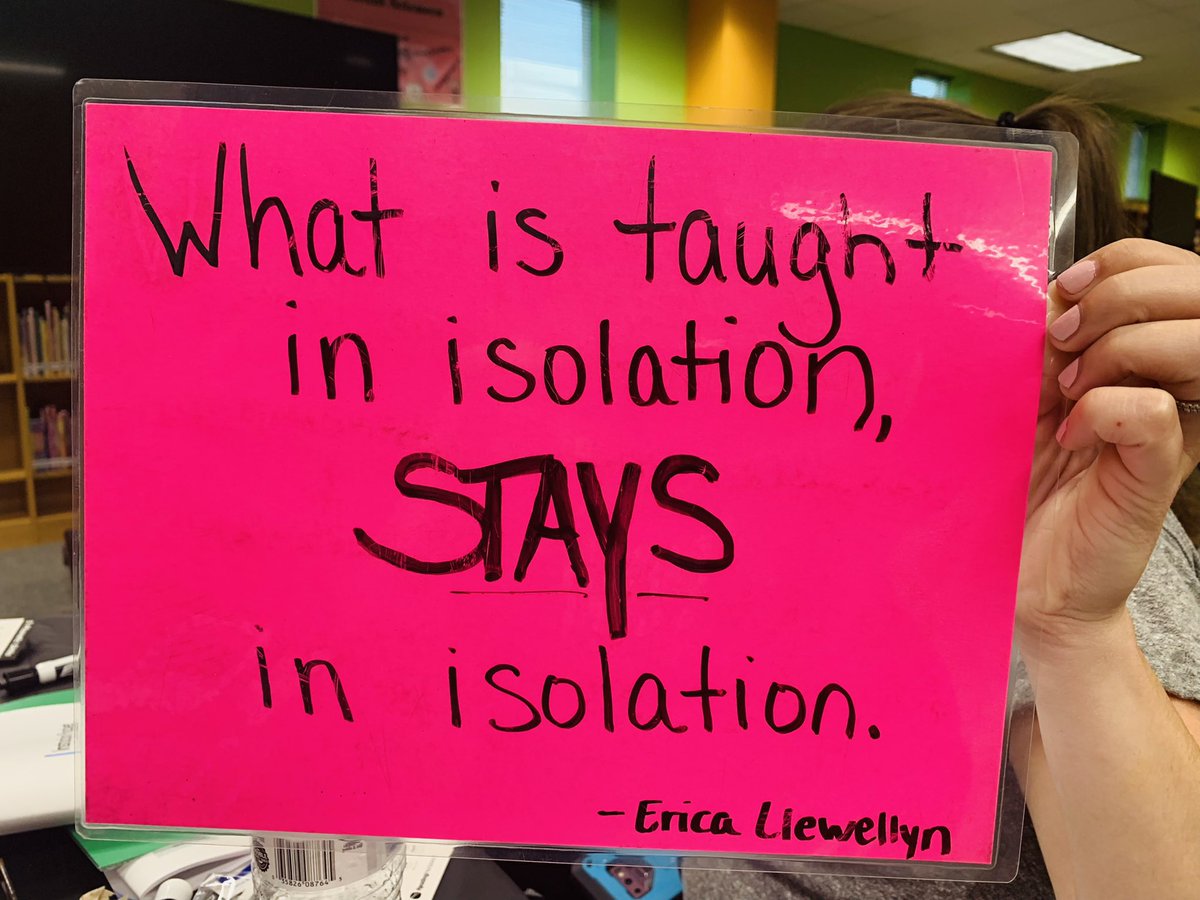
#Coteaching leaves the individual curricula behind for an integrated approach and moves us from isolation to collaboration. #bettertogether
To move towards more equitable educational policies and practices for linguistically diverse students, we must consider how teachers create classroom policies of their own, while simultaneously accepting or challenging mandates from policymakers and administrators #tlsc406
Policy appropriation (Levinson & Sutton, 2001) occurs when teachers take the state-, district-, and school-level policies and corresponding programmatic requirements and utilize them in their way in the classroom(p.7).#TLSC406
The majority of the world's population is bilingual or multilingual. In a survey conducted by the European Commission in 2006, 56% of respondents knew at least 2 languages. What is our problem in promoting bilingualism?
Being bilingual is actually healthy, not just convenient. Here's how it can help you ward off dementia — and make you a better multitasker.
Watch @JohnHMcWhorter's full TED Talk here: https://t.co/Ei4DJyUeDb
The Common Core State Standards promote student independence in learning. Students learn to construct effective arguments, convey information, ask relevant questions and seek out resources. #TLSC406