💉🩺Rapid sequence intubation in 2026: we are no longer “protecting the airway.”
We are managing physiology under extreme stress.
The latest evidence challenges one of the oldest dogmas in critical care.
RSI was designed to prevent aspiration.
But today, the real enemy is often hypoxemia and cardiovascular collapse.
1. Aspiration is no longer the central problem
For decades, RSI was built around one fear: aspiration.
But emerging data suggest:
RSI may not significantly reduce aspiration
It may increase hypoxemia and hemodynamic instability
The paradigm is shifting:
👉 From aspiration avoidance → to physiologic optimization
2. First-pass success is everything
Every additional attempt increases:
Hypoxia
Hemodynamic collapse
Mortality
Modern RSI is built around one goal:
Get it right the first time.
That means:
Videolaryngoscopy first-line
Stylet routinely
Team choreography, not improvisation
3. Preoxygenation is now a therapeutic intervention
Not just a step—a determinant of survival
NIV > face mask
HFNO as adjunct
Semi-upright positioning
And one key shift:
👉 Gentle ventilation is no longer taboo
Done correctly, it reduces hypoxemia without increasing aspiration risk.
4. Hemodynamics matter more than ever
Up to 40–50% of patients experience peri-intubation instability.
The modern approach:
Avoid propofol in unstable patients
Favor etomidate or ketamine
Consider prophylactic vasopressors
Fluid loading?
Not routinely beneficial.
5. Cricoid pressure: from dogma to doubt
No clear benefit in preventing aspiration
May worsen laryngoscopy and ventilation
Current thinking:
👉 Use selectively, or not at all
6. RSI is no longer a rigid protocol
It is now:
Patient-specific
Physiology-driven
Team-dependent
With tools like:
Gastric ultrasound
POCUS-guided decisions
Structured airway protocols
7. The real determinant of success: human factors
Preparation, communication, and coordination matter as much as drugs.
Because in critical care:
The airway is not just anatomy.
It is a moment of systemic vulnerability.
🤓Final message
RSI has evolved:
From speed → to precision
From protocol → to physiology
From individual skill → to team performance
And ultimately:
The goal is no longer just to intubate.
It is to intubate without killing the patient.
📃Reference
Boulos NM et al. Anaesth Crit Care Pain Med. 2026. https://t.co/KWUfUtAMyP
Star trail exposure from the ISS, marked by the thick white path of the Moon, Starlink satellites flashing far right, golden city lights streaking across Earth, and arcing stars.
When Muslims pray, they turn towards Mecca. The Islamic term for this direction is qibla.
Islamic astronomers created Qibla Finders to indicate the direction prayer. They were objects of function as well as beauty.
Here are 17 exquisite Qibla Finders
A thread…
Hesitate when you hear methemoglobinemia??
I promise, I ll make it a piece of cake for you.
Here you go. Learn and live , students and residents.
Easy peasy😇
#MedTwitter
Hi, ER Doc here.
I don’t know who needs to hear this but New York Presbyterian Hospital keeps an actual @Spotify playlist of “Songs to do CPR to” for timing chest compressions during CPR
https://t.co/hOSvWpD5vo
Repost to save a life!
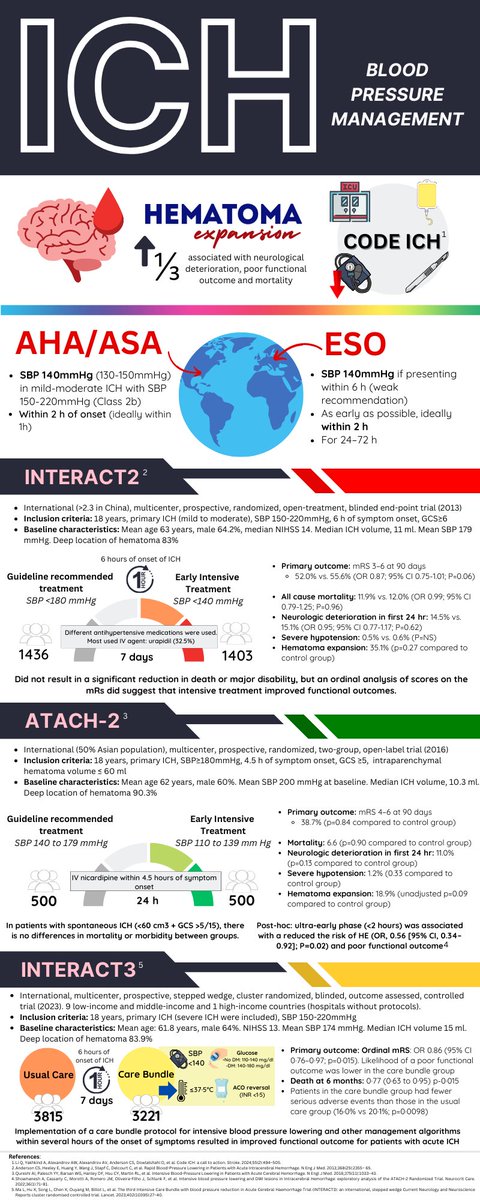
American Heart Association proposes to omit the following terminologies in it's latest scientific statement (May 2014)
❌️ 𝙃𝙮𝙥𝙚𝙧𝙩𝙚𝙣𝙨𝙞𝙫𝙚 𝙪𝙧𝙜𝙚𝙣𝙘𝙮
❌️ 𝙃𝙮𝙥𝙚𝙧𝙩𝙚𝙣𝙨𝙞𝙫𝙚 𝙘𝙧𝙞𝙨𝙞𝙨
Use of subjective emotive language such as 𝙘𝙧𝙞𝙨𝙞𝙨 and 𝙪𝙧𝙜𝙚𝙣𝙘𝙮 fail to acknowledge the nuances of treatment decisions and may encourage unnecessary antihypertensive treatment.
Therefore in a statement paper from AHA in May 2024, it is proposed the following objective terminology:
✅️ 𝙃𝙮𝙥𝙚𝙧𝙩𝙚𝙣𝙨𝙞𝙫𝙚 𝙚𝙢𝙚𝙧𝙜𝙚𝙣𝙘𝙮
🔸️SBP/DBP >180/110–120 mm Hg with evidence of new or worsening target-organ damage
✅️ 𝘼𝙨𝙮𝙢𝙥𝙩𝙤𝙢𝙖𝙩𝙞𝙘 𝙢𝙖𝙧𝙠𝙚𝙙𝙡𝙮 𝙚𝙡𝙚𝙫𝙖𝙩𝙚𝙙 𝙞𝙣𝙥𝙖𝙩𝙞𝙚𝙣𝙩 𝘽𝙋
🔸️SBP/ DBP >180/110–120 mm Hg without evidence of new or worsening target-organ damage
✅️ 𝘼𝙨𝙮𝙢𝙥𝙩𝙤𝙢𝙖𝙩𝙞𝙘 𝙚𝙡𝙚𝙫𝙖𝙩𝙚𝙙 ���𝙣𝙥𝙖𝙩𝙞𝙚𝙣𝙩 𝘽𝙋
🔸️SBP/DBP ≥130/80 mm Hg without evidence of new or worsening target-organ damage.
Source : The Management of Elevated Blood Pressure in the Acute Care Setting: A Scientific Statement From the American Heart Association
https://t.co/LCXjHA2nE6