I don't usually weigh in on Pakistani TV, and I wasn't familiar with Nadia Khan's show before this. But this felt worth saying.
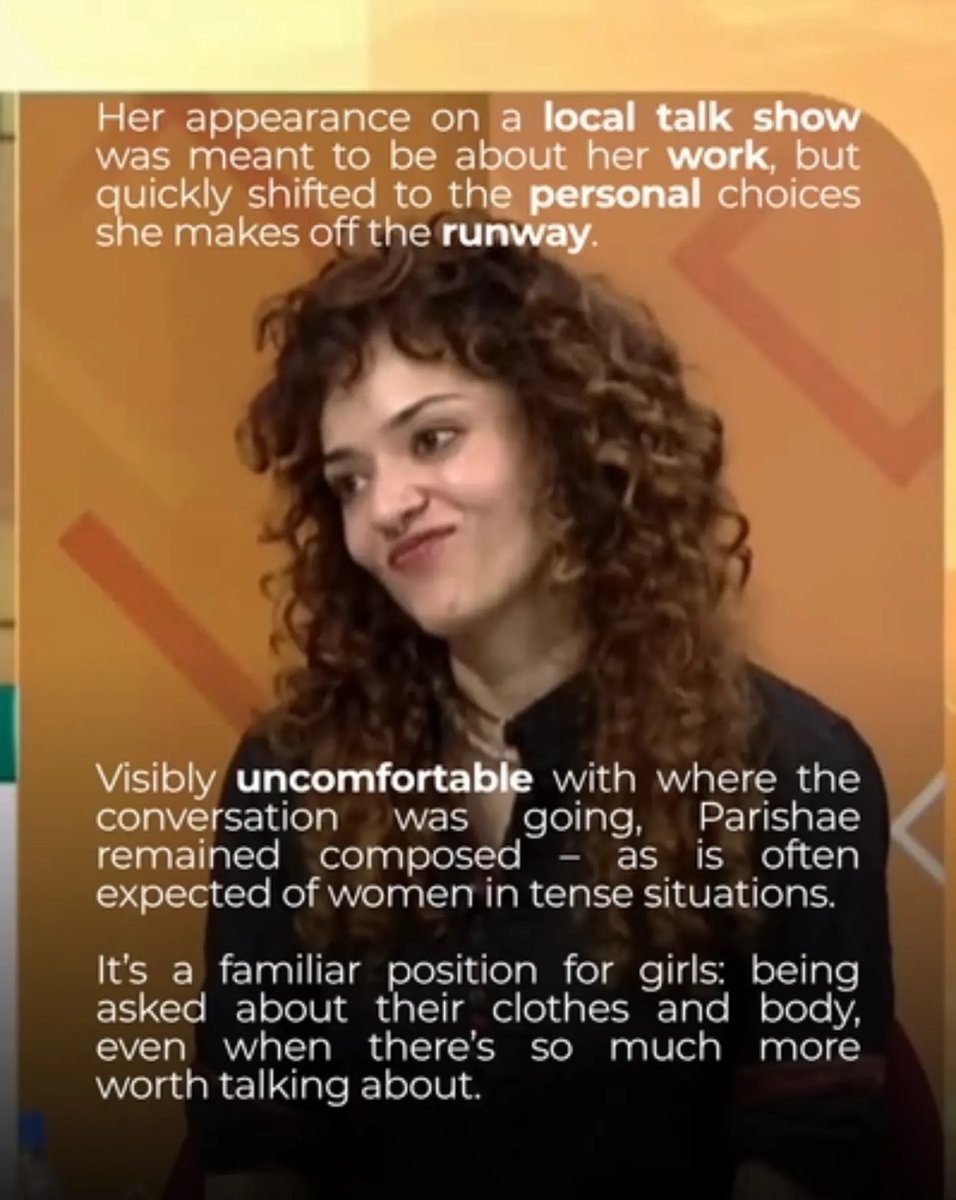
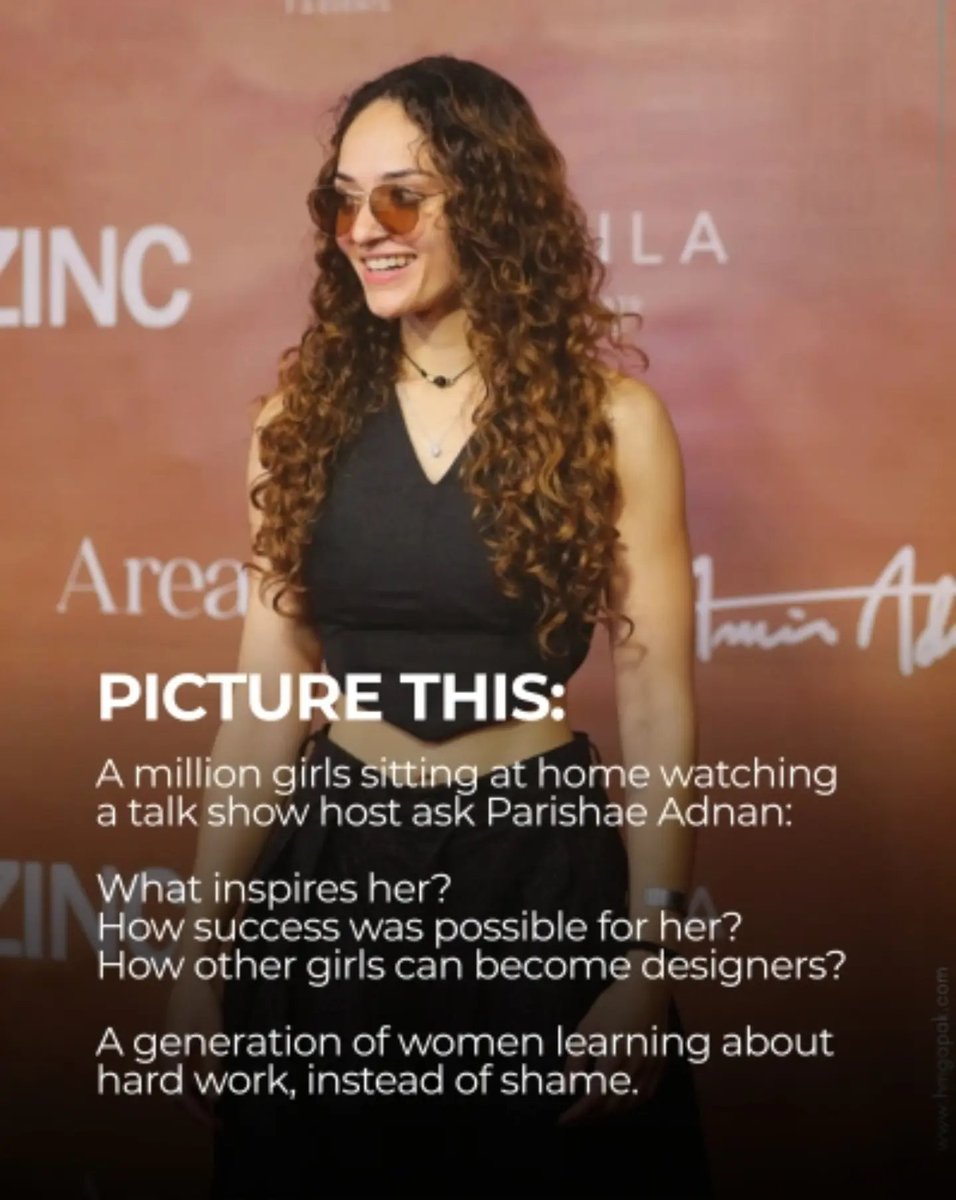
Parishae Adnan is a young Pakistani designer who has just made it to New York Fashion Week. Her talent, craft and achievement should be the story.
Instead, Nadia made it about what Parishae wears to the gym and whether her parents “allow” her to dress that way.
A young woman achieves something remarkable on an international stage, and we turn it into a morality lecture about her clothes.
And apparently this isn't Nadia's first rodeo when it comes to this sort of controversy. She's been 'cancelled' a few times before too but always emerges intact. Unflushable.
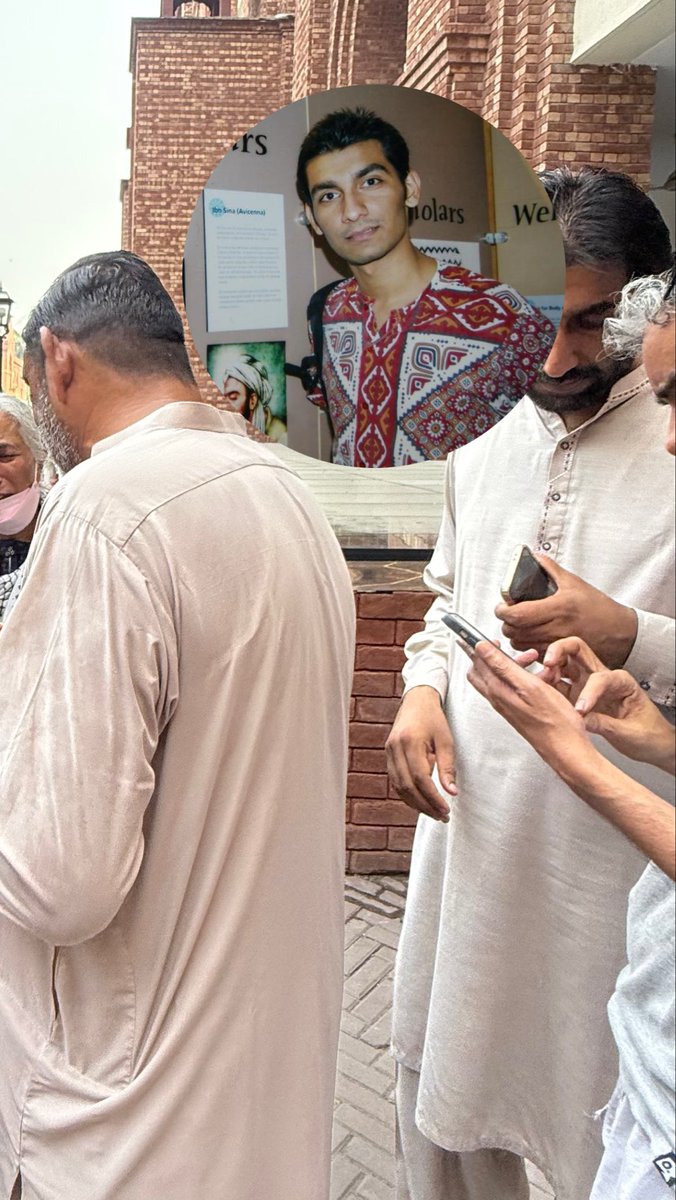
Today, I went to the Lahore High Court to cover the hearing of Junaid Hafeez’s appeal and after years of waiting, there was finally a substantive hearing of the case in Lahore.
The court admitted the appeal and issued notices to the prosecution, asking it to address two important questions at the next hearing: the legal distinction between a Facebook page and a Facebook group, and the forensic basis for the social media posts attributed to Hafeez. The next date has yet to be fixed.
But beyond the courtroom proceedings, what stayed with me was seeing Junaid’s father and brother there. His father was in tears after the hearing. For a family that has spent more than 13 years living with this case, the wait for justice has come at an enormous human cost. Junaid has remained imprisoned since his arrest in 2013 and has been on death row since his conviction in 2019. His appeal was filed in 2020.
There were also people from civil society present in court in solidarity, a reminder that this case is being watched not only as a legal proceeding, but also through the lens of due process, the right to a fair and timely hearing, and the safety of everyone involved in such cases.
Today’s hearing did bring some hope. But it also raised an uncomfortable question about the years that have already passed. The judges noted that notices to the parties had not been issued after the case was transferred to Lahore, and questioned why the appeal had not been properly pursued for an early hearing despite its age.
For Junaid’s family, however, this is not simply an old case on a court file. It is more than 13 years of a life interrupted and years of waiting for the judicial process to reach its conclusion.
The hope outside the courtroom today was simple: that the case will now move forward, the evidence will be examined, and justice will ultimately prevail.
A false blasphemy accusation, six years on trial, almost seven years on death row, his lawyer's assassination, extreme solitary confinement & mental health struggles (like most blasphemy prisoners)-- all because Junaid Hafeez's intelligence threatened the mediocre minds at Bahauddin Zakariya Uni where he taught English literature. Junaid's arrest in March 2013 and incarceration also overlapped with the rise of violent blasphemy politics in Punjab, and highlights the organised defence of the draconian blasphemy law by lawyer bodies, and how violent their campaign of intimidation has been. Hoping that, in a few hours today, the Lahore High Court addresses this heinous miscarriage of justice and acquits him.
#JusticeforJunaidHafeez
میں رضوان کا ناقد نہیں میرا ایک بہت ہی سادہ سوال ہے، ایک کھلاڑی بورڈ کے پیسوں سے بیرون ملک پیشہ وارانہ ذمہ داریاں نبھانے جاتا ہے اسے کھیلنے کا معاوضہ دیا جاتا ہے لیکن وہ بورڈ کے پیسوں سے بیرون ملک جا کر پیشہ ورانہ زمہ داریاں پیچھے چھوڑ کر تبلیغ کرنے پہنچ جاتا ہے، یہ ٹھیک کیسے ہے؟
@atsillypoint You missed out on another excellent knock; 122 at the MCG in 1990, when he almost saved the game for Pakistan. Chasing 429, Pakistan were bowled out 20 minutes before stumps on the 5th day for 336, thanks to the superb knock by Ijaz.
@atsillypoint Basit Ali scored a magnificent 139 (off 78 balls) in the same game. In his case, however, this innings proved to be a false dawn as Basit never became the batter he seemed to have the potential for.
21 people lost their lives yesterday in Kohat when an explosives-laden vehicle detonated near a mosque in Kohat Police Lines. The Chief Minister of the province is busy making TikToks in Punjab.
A while back, he was asked about rising terrorism in Khyber Pakhtunkhwa and he started laughing. He said, "We are here for Imran Khan; what questions are you asking?"
You are not even allowed to ask about the lives of the people of KP. They will die, nobody will care. Their elected government will be busy in Islamabad and on TikTok.
Multiple times PTI leaders have been asked questions about education, health, and service delivery in KP, and they have always brushed them off and said they have been elected to free Imran Khan and not because of these issues.
When an entire party only exists to please one man, then should we be surprised at the dismal levels of education, health, and living standards in KP?
The people of KP are a pawn to be used by the PTI for protests. The people of KP protested against the TTP, but Imran Khan decided to free TTP prisoners, welcome Taliban fighters from Afghanistan, and resettle TTP terrorists in the province.
Now Pakistan is suffering, and the elected representatives of the people dying are enjoying Butt Karahi at Lakshmi Chowk.
At Just 15, She Became the Voice of an Entire Generation. By 35, She Was Gone. The Heartbreaking Story of Nazia Hassan. 💔🎤
One song changed her life forever.
When Aap Jaisa Koi from Qurbani hit the screens in 1980, a 15-year-old Pakistani girl with a magical voice became an overnight sensation across India and Pakistan.
That girl was Nazia Hassan.
The song became a cultural phenomenon. Millions danced to it, radio stations played it nonstop, and Nazia became the youngest recipient of the Filmfare Award for Best Female Playback Singer.
She wasn't just a singer.
With albums like Disco Deewane, Nazia became one of South Asia's first true pop superstars. Her voice united fans across borders, languages and generations.
Fame, success and admiration followed.
But behind the spotlight, her personal life was far from perfect.
After her marriage in 1995, Nazia faced difficult years marked by public disputes and health struggles. While various allegations and rumors surrounded her final years, official records stated that she died from cancer-related complications.
On 13 August 2000, Nazia Hassan passed away in London at just 35 years of age.
She left the world far too early, but her voice never left us.
Even today, whenever Aap Jaisa Koi begins to play, an entire generation is transported back in time.
Some singers become stars.
Nazia Hassan became a memory that refuses to fade. ❤️
@uroojjawed12 Are you seriously defending Rizwan? Someone who is under contract with PCB, travels to other countries at PCB's expense and then spends his time preaching. Is that what he is being paid for? How come we never see him doing it on his own time & his own expense?
@MNasAwan555 Good question. Also, how come these 'preachers' always go preaching on PCB's expense? I have never seen any of these players spending money out of their own pocket and travel to other countries for preaching. Because of them this country has become a butt of jokes.
My friend Saira Iftikhar, along with the living encyclopedia of films, Mohan Churiwala, has started a new show and I’m hosting it. Please show us some love!
https://t.co/CNmagLWPaE
Having batting depth is important but it is not as important as having four proper bowlers in Tests. It is a straightforward risk vs reward math.
The danger that comes with playing with three specialist bowlers is far bigger than whatever benefit you get from an extra batter, having a first-class batting average of 26 (read Imran Randhawa).
On a good day, Randhawa might contribute 40-50 runs in the current England conditions but his weak bowling, combined with only three frontline bowlers, will end up gifting the opposition far more than those 40-50 runs he might add with the bat.
Given Pakistan's batting failures and the fact that they haven't reached 200 in a single innings on this England tour, the instinctive reaction is to add depth to batting but that is a surface-level fix that misses the real problem.
If we look at the standard risk factors, having someone who can bat a bit at No. 8 is understandable. Having someone at No. 9 primarily because he can contribute a few runs is akin to carrying four spare tyres while driving.
Razaullah, who has scored a first-class century as an opener, was perfectly capable of batting at Number 8. Instead, Pakistan slotted Randhawa into that spot and pushed Raza down to Number 9 to add strength to batting.
Pakistan seem to have anxiety of batting collapses regardless of format or opponent. After they were bowled out for 114 against India in the T20 World Cup this year, they played the next match, against Namibia, with just two specialist bowlers (Usman Tariq and Salman Mirza) and five all-rounders.
Imagine stacking your batting all the way to Number 9 against a team ranked No. 15 and that in T20 cricket of all formats.
If the top order isn't posting competitive totals, adding a player with limited batting ability isn't going to fix that but four genuine bowlers give you a real shot at making matches competitive.
Pakistan really need to reconsider their strategy of going with too many all-rounders. Chasing a false sense of security by picking batters who can bowl a bit and bowlers who can bat a bit is harming their chances of success.