The lesson from Ebola wasn't about response.
It was about preparedness.
In a crisis, people spend weeks raising funds, sourcing supplies, and fixing logistics.
Preparation saves time. Time saves lives.
What are you doing now that your future self will thank you for?
Funding cuts forced staff reductions, exposing a major risk: we relied on people, not systems.
When staff left, vital knowledge vanished.
We used AI to build SOPs and protect our equity. Don't wait for a crisis to build institutional resilience.
If any part of this video hit close to home, the free Mission to Systems™ Founder Toolkit gives you the tools to start fixing it: 13 downloadable governance frameworks at https://t.co/Jx3kMQ92h0.
Burnout doesn't happen because you care too little.
It happens because you carry too much for too long.
If an organization only survives by draining its founder, it isn't sustainable.
What's helped you avoid burnout while building something meaningful?
👉 Link in comments
External partners don’t just fund you; they shape you.
Reporting systems, accountability, and discipline often come from outside pressure before they become internal culture.
Who is raising your standards right now?
👉 Get free toolkit here: https://t.co/UYuG8UjtMX
Frederick entered @developafrica's program in Primary Two.
His mother had 4 children, limited income, and nowhere to turn.
A scholarship + an interest-free loan helped change their future.
16 years later, Frederick graduated as a geologist.
What opportunity changed your life?
Compassion without capacity is not kindness.
In 2015, we opened an orphanage for 22 Ebola orphans. It was the right response, but outside our core mission.
The lesson: good intentions need systems.
Have you ever had to choose between urgency and sustainability?
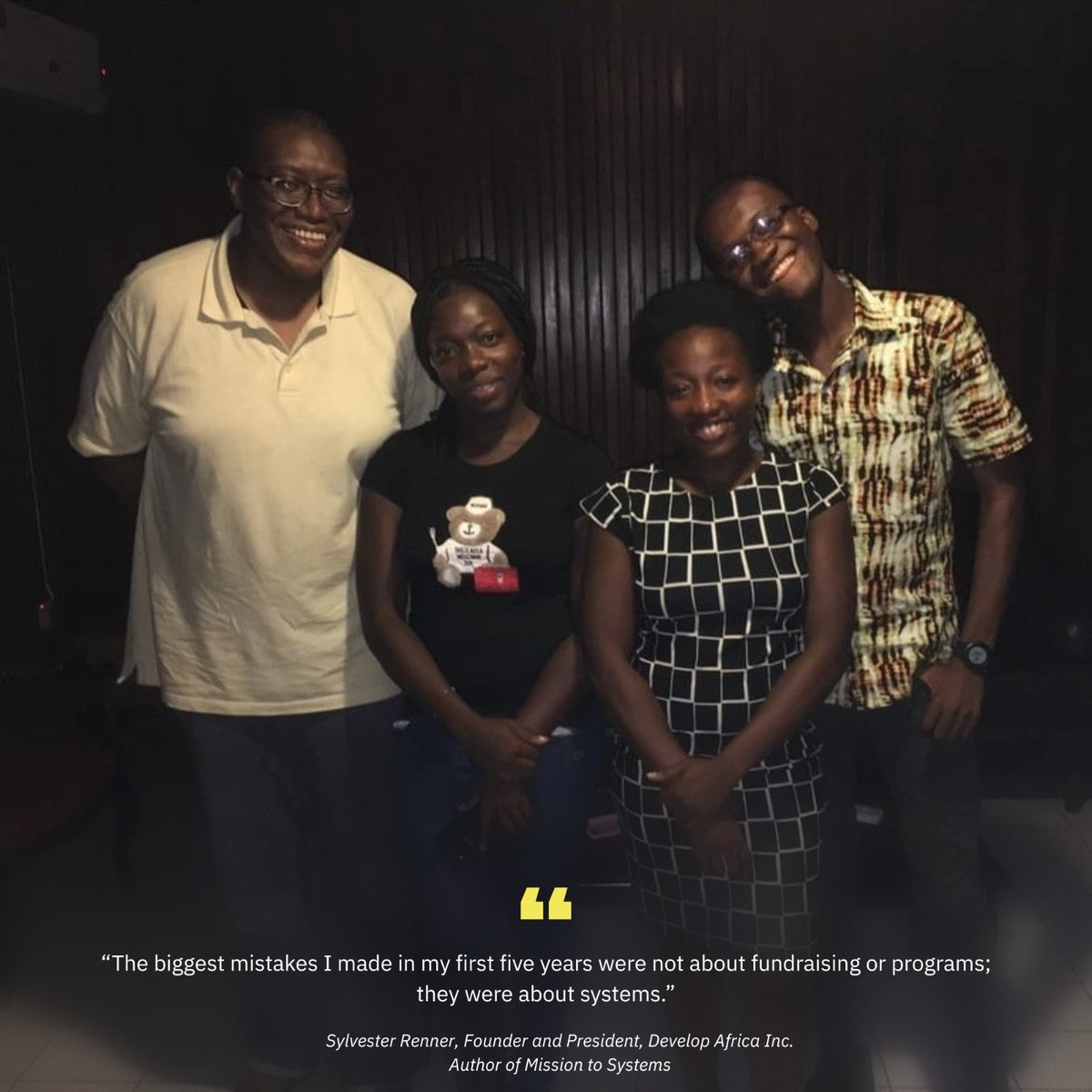
One of my biggest mistakes as a founder:
Too much knowledge is stored in people's heads.
When a team member left, key processes left too.
Document systems before you need them.
What process in your organization still depends on one person?
👉 Link in the comment
Most nonprofits don't fail because the mission was wrong.
They fail because the systems were never built.
After 20 years, I've learned that governance, financial discipline, & documented processes matter more than passion alone.
What's one system you wish you'd built earlier?
A weak board drains more energy than a lack of funding.
Unclear roles lead to founder overload, weak accountability, and slow decisions.
Boards need structure, not titles.
What has your experience been with nonprofit boards?
Fundraising will not fix a broken system.
More money exposes weak governance, unclear roles, and poor processes.
What sustains nonprofits: clear structure, simple systems, and defined leadership.
Good intentions don’t last. Systems do.
https://t.co/gCxTCPWEiK
2010: Isata Kamara enters @developafrica's sponsorship at age 11.
2026: She graduates after setbacks, pregnancy, and restarting in vocational school.
16 years of support made the difference.
What does long-term support look like to you?
The Five Stages of Nonprofit Maturity:
1. Problem clarity 2. Governance structure 3. Program integrity 4. Financial discipline 5. Institutional durability.
Most organizations sit at 2–3.
Where are you?
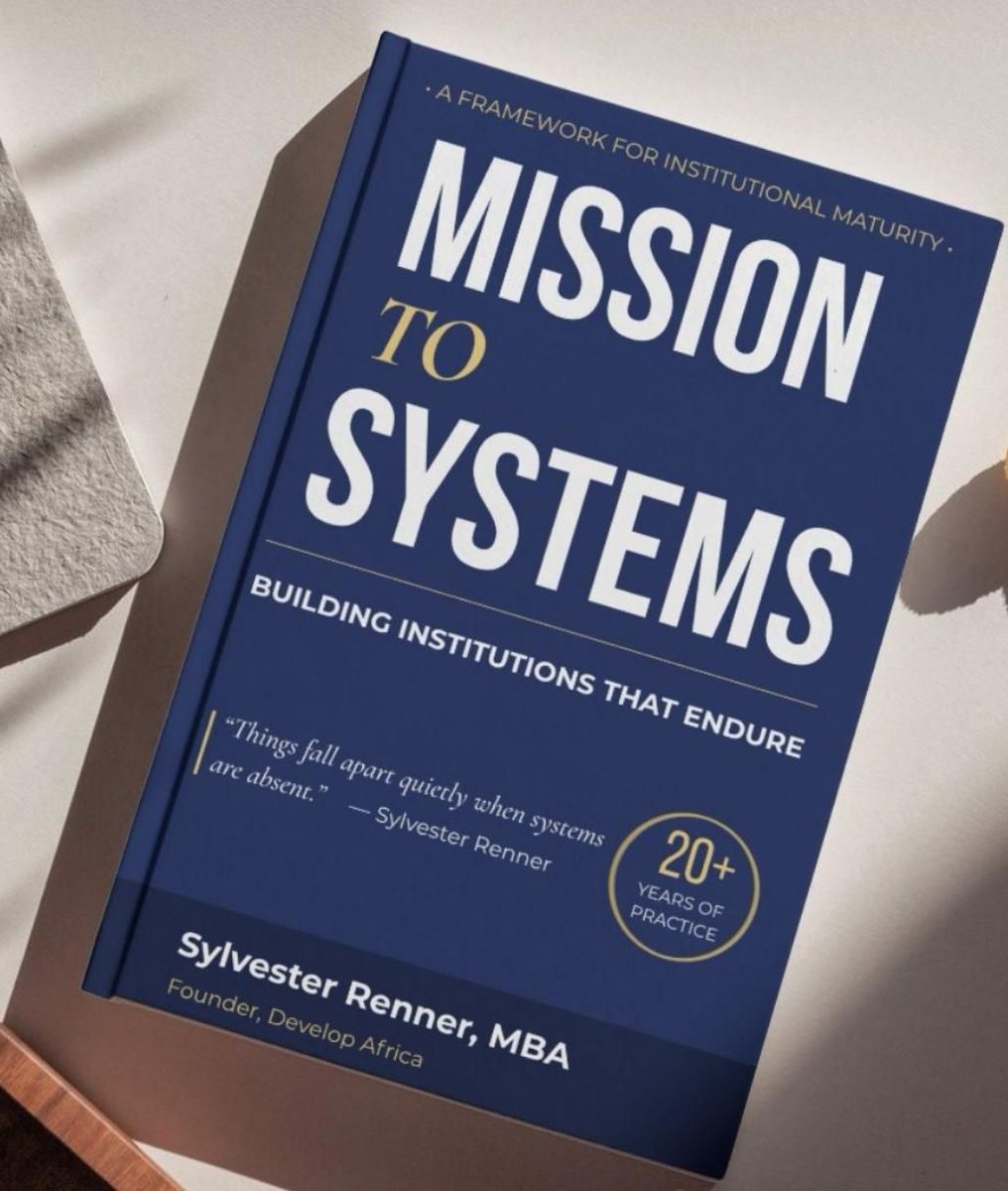
Mission to Systems on Amazon: https://t.co/gCxTCPW6tc
Most nonprofit boards exist. Few actually govern.
Real governance means accountability, financial oversight, and documented systems.
A crisis forced us to build ours.
If your founder vanished for 30 days, what would your board know?
2003, Howe Street, Freetown.
A girl asked for food. I kept walking. That moment stayed with me & became @developafrica.
20 years later: 100k pencils, scholarships, & $857k+ raised.
All documented in Mission to Systems: https://t.co/IvNBcwTNl0
15% royalties fund scholarships.
Most nonprofits don't fail because the mission is wrong. They fail because the systems were never built.
After 20 years in the field, I wrote Mission to Systems™ to help founders build structure and stop burnout.
Get the book, course, & tools here:👇 https://t.co/IvNBcwTfvs
Joining the Dots:
Leadership is not about convincing everyone to see what you see.
It’s about having the clarity to apply the wisdom you’ve gained — and continuing forward with quiet confidence