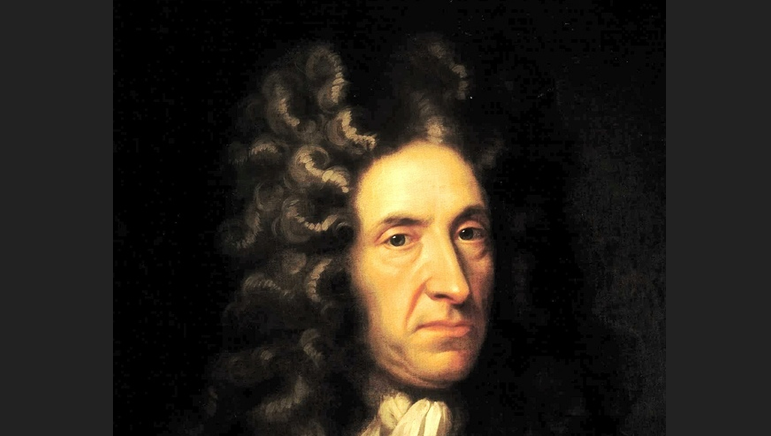
What if Scotland's idea that the monarch is subject to the political community wasn't an isolated medieval curiosity - or some later invention to be dismissed?
What if it was a constitutional tradition developed over centuries, with consequences that reach far beyond the Middle Ages?
The evidence leads us from Duns Scotus and European conciliarism to John Mair - and directly into the intellectual world of George Buchanan.
And from there, the trail leads on to 1689, the Claim of Right, and ultimately the breached condition precedent of the 1707 'Union' itself.
The Community Above the Monarch is now live:
https://t.co/GKwRxTfsRT
You were lucky yes, this tradition has been completely buried - for obvious reasons.
Clearly The Claim of Right didn't come out of nowhere but in order to minimise its significance its deep roots and consequences have been generally ignored.
That, of course, suits the purposes of the annexing state, and continues to do so.
What if Scotland's idea that the monarch is subject to the political community wasn't an isolated medieval curiosity - or some later invention to be dismissed?
What if it was a constitutional tradition developed over centuries, with consequences that reach far beyond the Middle Ages?
The evidence leads us from Duns Scotus and European conciliarism to John Mair - and directly into the intellectual world of George Buchanan.
And from there, the trail leads on to 1689, the Claim of Right, and ultimately the breached condition precedent of the 1707 'Union' itself.
The Community Above the Monarch is now live:
https://t.co/GKwRxTfsRT
A response to Yes United’s revised Discussion Paper 1: An Independent Scotland’s Foreign Policy https://t.co/AqKbSO43Bz
The Yes United Discussion Paper 1: An Independent Scotland’s Foreign Policy, by Jim Sillars, revised and reissued on 12 November following feedback [23], is a better paper than the June draft [24]. Here is where I think the revision is right, where it hasn’t yet gone far enough, and where we’ll have to agree to disagree, taken in the paper’s own order. Where I give my own view, it is one voice for the people to weigh: every choice in this paper is theirs to make, by vote.
The Draft note
The Draft note at the head of the revised paper says it is a Draft because “old certainties are being demolished by the turbulence now evident in world political and economic life” [23]. Agreed, and that was the heart of my July response to the June draft [32]: the twentieth-century realism of a deal with the biggest power in the room no longer fits the world Scotland will meet. The two wars the note names, in Ukraine and Iran, make the same point, and so does its admission that NATO and US-European relations may never “go back to how things were”. Where it hasn’t gone far enough is in following that through. If the alliance’s future “will not be known until after the US 2028 election”, and elections in France, Germany, and Italy may unsettle both the EU and NATO, then declaring NATO membership a fixed tenet of our foreign policy, as the paper does later, binds Scotland to the very structures the note says are in question. The certainties being demolished belong to the Western-led order, and power is moving east and south as they go.
The Draft note says that no sage “has produced guidance for small powers in how they might navigate in very troubled international waters” [23]. Here we differ. The guidance exists, and it is a principle rather than a position: equal standing for every nation, a level playing field, and no vetoes over other nations, whoever holds them. Some will call that unrealistic, yet much of the world already lives by it: the Non-Aligned Movement, founded on the principle of equality among nations [12], counts around 120 member states, nearly two-thirds of the United Nations [13, 14], and neutral nations such as Ireland, Austria and Switzerland stand outside every military bloc [3, 5, 6]. The principle doesn’t need inventing, only joining up, and someone has to start.
A small nation’s strength in a turbulent world is its footing, not its alignment, and a policy built on the sovereignty of its people holds steady while alliances shift.
That is also why the foundation of this paper should not need redrafting with every election the note expects between now and 2030, even if its details will.
Guiding principles
The paper proposes a Scottish Foreign Affairs and Trade Department, with trade part of every embassy’s work [23]. For a small nation that is sensible, and I agree. I’d go further on the structure.
Call the department international relations rather than foreign affairs, a name inherited from the Westminster model that sets the rest of the world apart as outsiders, and give trade and exchange a body of their own, a ‘National Exchange Institution’ [37].
There is more to trade than economics: when a nation shares its skills and knowledge, the links between peoples that follow increase trade, as the research on trade networks shows [28, 29, 30]. Replacing the June draft’s “no friends only interests” [24] with “enlightened state interests” [23] is a real improvement. It doesn’t yet go far enough, because a state’s interests are its people’s interests, and the paper never says whose interests the state serves or who decides what they are.
The paper lists the “realities that dictate inter-state relationships” as “geography, size (economic and physical), state interests, spheres of influence, security”, and concludes that “certain decisions about relationships with others are inescapable” [23]. Here we differ. The list leaves out the two realities that decide everything else: the people, and the law. “Spheres of influence” is a coloniser’s map, a record of who presumes to own whom, and a nation that starts by accepting it has conceded the argument before making it. Very little in a sovereign people’s foreign policy is inescapable. Most of it is chosen, and it should be chosen by them.
The coloniser’s map of spheres of influence explains the paper’s turn to relations in “the western hemisphere” [23]. The order that map describes is fading. The nations that lead it and refuse to adapt will fade with it; Western nations that adapt, as Norway has by holding its resources for its own people [7], will not. Power is moving east and south, through China, the rest of BRICS, and the rising nations of the Global South, and Scotland, exercising her sovereignty, should face every direction on an equal footing, open to all and held hostage by none.
The paper’s commitment to stay out of “political or military involvement in world regions where we have no strategic state interest” [23] is right, and it fits the paper’s new commitment to divest ourselves of “the intervention mentality”.
Neighbours and the wider world
The paper puts good relations with our neighbours first, and I agree. It speaks of “our immediate UK and Irish neighbours in the British Isles” [23]. Our neighbours are Ireland, Wales and England, each a nation in its own right, and each should be named as itself.
The paper makes relations with the United States and Canada a priority of foreign policy [23]. Here we differ. Scotland should trade with both on the same equal footing as everyone else, with no priority, no alignment and no deference. The question the paper never asks is what others want from Scotland. The United States is the world’s largest oil producer [8]; it doesn’t need our oil. What it wants is the “unsinkable aircraft carrier” the paper itself describes later: a platform to launch from. In January 2026, US forces brought a seized tanker into the Moray Firth, with US military aircraft using Scottish airfields during the operation, and the First Minister, John Swinney, learned the tanker was there from the press [25, 26]. That is what being a platform means: decisions taken over Scotland, not by her. Neutrality closes the platform, not as a bargaining chip, but as Scotland’s own decision.
The paper’s embassies in the capitals of the major powers, there to keep Scotland informed [23], look at the world from the top down.
A small nation does better reaching everyone on an equal footing: a mission at the United Nations, regional posts spread for reach, digital embassies, and relations with peoples, not just their governments, through the sharing of skills and knowledge.
The paper seeks “a useful role within the Commonwealth” [23]. On that, we differ outright. The Commonwealth is a relic of the empire, still headed by King Charles III [22], and Scotland should stay out of it, as Ireland left it in 1949 [4]. Its peoples can be reached directly, on equal terms, without the empire’s frame around the table.
The intervention mentality, aid, and the staff college
The paper’s commitment to divest ourselves of “the intervention mentality that was part and parcel of our make-up during the period of empire and the UK union” [23] is the most welcome line in the revision. It doesn’t yet go far enough. The sentence puts both in the past, and neither is over. What is usually called the period of empire was its peak, not its end: the extraction carried on under other names [33], through finance, bases, and the military spending model, and Scotland is still administered from Westminster today [9]. That mentality was conditioning, never simply our make-up. The empire drew Scots into its service as soldiers, administrators, and colonial intermediaries, and the habit of seeing the world through the empire’s eyes lives on because the empire does. Divesting it means more than avoiding foreign adventures. It means no longer measuring Scotland by her usefulness to other powers, a habit the paper itself hasn’t yet shed, as its section on NATO shows.
The paper commits 0.7% of GDP to international aid [23]. Here we differ: for a decade at the very minimum, no money should leave the country. This won’t be a popular view with many, but it’s a necessary one, given the underdevelopment of Scotland documented by Professor Alf Baird, co-convenor of the Liberation Scotland Committee [31]. The United Nations set the 0.7% target in 1970 for each “economically advanced” country [17]. Scotland, after three centuries in which Westminster has drawn her wealth south [33], is a nation that needs at least a decade of investment to rebuild, not one in a position to send money abroad. That doesn’t close Scotland’s door. We can take in refugees, we can send Scots out to help, and the paper’s point that a small country “can be the location in which antagonists can meet” is right for Scotland: our position at the northern passage, and our neutrality, make her a natural meeting ground.
The paper’s Public Service Staff College [23] is machinery of government rather than foreign policy, and it belongs with the domestic preparation. The idea is sound; a new institution isn’t needed. Scotland’s universities can carry it, with access courses that bring in Scots from every background, at modest cost. The civil servants who administer Scotland today belong to the Home Civil Service [9], trained in Whitehall’s constitution, so the training should be grounded in Scotland’s own constitutional tradition, popular sovereignty, and Scots law. The people who speak for Scotland abroad should also bring life experience, not only a career.
Early-stage development of policy
The paper’s plan for the early stages concentrates on Europe, the United States, and Canada, with embassies in Asia, Africa, the Middle East, and the Americas to come later [23]. Here the revision hasn’t gone far enough. The June draft itself found that “the new epoch is founded in the nations of the Indo-Pacific” [24], and the revised paper wants the freedom “to better enter markets that are growing in the Indo-Pacific region” [23], yet the early priorities still face west. Relations with the growing nations of Asia and Africa, many of them non-aligned and many of them former colonies, belong at the start, on equal terms.
The paper also underplays what Scotland brings to the table: energy and generation potential, natural resources in a sparsely peopled country, and skills worth sharing.
In the first years after the English administration in Scotland ends, I’d open Scotland’s door to every nation, in an open forum for investment and partnership, with Scottish skills and knowledge shared in return for investment in technology, and with no favourites picked by who is called good and who bad.
National security and NATO
NATO is where we differ most, and where the paper’s own logic points the other way.
The paper calls Scotland “an unsinkable aircraft carrier in a key northern maritime location” and says our geography “places us in their spheres of influence” [23]. Both phrases measure Scotland by her use to other powers.
Our land and waters belong to the people of Scotland in common. They are the ground we stand on, held in stewardship for those who come after us.
On Faslane, the paper treats the future of the base as “leverage in the hands of Scottish negotiators” [23]. We differ. The Westminster government put nuclear weapons on the Clyde [10, 16], and the people of Scotland were never asked. My position is unchanged from my July response [32]: they must be removed from Scotland with zero avoidable prerequisites, and they are never a bargaining chip. The paper also places Faslane in “the Scottish-English Treaty that will spell out the terms of separation”. That is a constitutional answer slipped into a foreign policy paper, and the wrong one: the Treaty of 1707 created no new state to separate from [36], and any treaty between the two kingdoms settles the end of an English administration in Scotland, with Scotland at the table as the continuing state she has always been.
The paper states: “It is our declared position that independence should pose no threat in any way to the security of our European neighbours or to the strategic interests of the United States. It will therefore be a tenet of our nation’s foreign policy to remain an integral part of NATO” [23]. A Scotland that threatens no one is right, and I agree with it. Binding our policy in advance to another power’s “strategic interests” is colonial deference [35]: asking permission before the people have spoken. Two further questions follow.
Who is the “our” in “our declared position”? A campaign can propose, but only the people can decide a tenet of their nation’s foreign policy.
What we lend a party at an election is a mandate to administer, and a nation’s alliances commit the people’s sovereignty, which was never in that loan.
What does “remain” carry, in “to remain an integral part of NATO”? The Westminster government signed the North Atlantic Treaty in April 1949 [15]. Scots were never asked, and “remain” carries that decision forward as though it were ours.
The paper also commits Scotland to “play a full part in that Alliance” [23] without saying what that costs. At The Hague in June 2025, NATO’s members committed to spend 5% of GDP a year on defence by 2035 [18], more than seven times the paper’s 0.7% aid figure. A nation that needs at least a decade of investment to rebuild has better uses for its wealth than the military spending model.
My own position is plain: Scotland outside NATO and completely neutral, and a neutral Scotland working to help bring today’s Cold War to an end rather than extend it.
The paper’s new position, that NATO should keep to the North Atlantic and that European members should not extend Article 5 to other regions [23], is the better instinct, and I welcome it. Carried through, it becomes the principle I set out in my July response [32]: equal standing for every nation, and no vetoes.
Europe and sovereignty
The paper’s aim of smooth access to the EU market, while keeping the freedom to trade with the growing Indo-Pacific, is sound. So is its warning against being “seduced by diplomatic rhetoric” [23]. “The EU is not our only option” is right as a negotiating posture.
The paper says: “Independence means Scotland gains sovereignty” [23]. That is a constitutional claim, not a foreign policy one, and it is wrong. Our sovereignty rests with the people, the Community of the Realm, recorded in the Declaration of Arbroath in 1320 [1] and the Claim of Right in 1689 [2]. A Scottish court has said as much. MacCormick v Lord Advocate, 1953 SC 396. Lord President Cooper:
“the principle of the unlimited sovereignty of Parliament is a distinctively English principle which has no counterpart in Scottish constitutional law” [11].
We don’t gain sovereignty on some future day. What lies ahead is the reactivation of its exercise, the people putting to use the sovereignty they already hold, as set out in The Status of Scots Sovereignty [34].
The foreign policy point is in the paper’s next sentence, and I agree with it: “Sovereignty is not lost, because there remains the sovereign ability to withdraw from an alliance.” Any arrangement Scotland enters must keep that door open.
The people’s sovereignty settles the paper’s talk of member states that “transfer a good part of” their sovereignty, and of the Euro requiring “a substantial future transfer of sovereignty” [23]. In Scotland, sovereignty rests with the people, and no government can trade it away. What any treaty takes is competence, lent under the people’s mandate and recalled by them, which is the very ability to withdraw the paper describes. Under Westminster’s parliamentary sovereignty a government can sign away a nation’s powers. Under Scotland’s constitution, that decision belongs to the people.
EFTA, the EEA and the later stages
The paper’s EEA section sets out the trade-offs clearly, and its point that Iceland chose not to join the EU, and kept its place in the internal market, stands: in the referendum of 29 August, 52.8% of Icelanders voted against resuming EU accession talks [27]. My own view is that Scotland’s place is outside the EU, with EFTA as the first step, though the decision is the people’s.
One correction. The paper says Scotland in EFTA “will adhere to these automatically” [23], meaning EFTA’s free trade agreements. It won’t. Joining EFTA needs the agreement of all four EFTA states, and EFTA’s own guidance says a new member must apply to join those agreements, each one negotiated with the consent of the other party [19, 20]. The EEA can’t be considered at this stage, because it requires EFTA membership first [21].
On the paper’s later stages, 78 embassies and a foreign affairs budget of around £1.2 billion [23] don’t fit a nation that needs investment to rebuild. A modern model costs far less: the United Nations mission, regional posts and digital embassies set out above; regional hubs that share Scottish skills and knowledge through programmes their hosts pay for; and the many nations we invite to open embassies here, each one bringing money in rather than taking it out.
Two papers, not one
The revised paper would do the Yes movement a great service by splitting in two. Keep building this work (foreign policy, defence, trade, and the civil service) and call it what it is: preparation for a Future Scotland, a set of options for a sovereign people to weigh. Keep it apart from the question of how Scots exercise their sovereignty in the first place.
Being prepared is essential; foreign policy is no prerequisite.
The moment a route to self-determination carries a NATO tenet, a Faslane bargain, or an EU-or-EEA choice, every Scot who disagrees on any one of them is asked to sign up to something they oppose, or stay out. That is how a movement narrows itself. Kept separate, the route can be open to every Scot whatever their view on NATO, and the policy work can be argued out freely, with nobody trading a principle to take part.
Both papers are the people’s to discuss and decide. Yes United, and anyone else who puts work forward, can set out options and the evidence behind them; the deciding rests with the people.
The question underneath all of it
Three words in this paper answer the constitutional question, how Scots exercise their sovereignty, without ever asking it: Scotland “gains” sovereignty, “separation”, and “remain”. Each is a constitutional answer slipped into a foreign policy paper, and each is the wrong one.
Everything above is a matter on which reasonable people across the Yes movement can agree to disagree. None of it matters unless the constitutional question is dealt with first, and dealt with directly.
Every policy in this paper assumes a Scottish state that arrives through a door: a majority at Holyrood, a Section 30 order (Westminster’s consent to a referendum) [9], a negotiation on Westminster’s terms, a treaty England must sign. Each of those doors is held by someone other than the people of Scotland.
The ideas Yes United and others put forward should be discussed and decided by Scots at scale, kept apart from the one question that comes first: how Scots exercise their sovereignty.
The sovereignty of the Scots does not wait on that door. It rests with the people now, and it is exercised when Scots deal with the constitutional question themselves, directly, and on the record. That means a public record of the people’s own decision, held by the people themselves, not a signature held by a campaign, a party, or a government. It is addressed to no one, because Westminster cannot refuse what it is never asked. Once that record stands, every question in this paper becomes the people’s to answer, and the world will know who speaks for Scotland: her people.
That’s the foundation a Scottish foreign policy should be built on, bhon bhunait, fir awe o Jock Tamson’s bairns.
Eòin J Màrtainn
Leave a comment
A Response To Yes United Discussion Paper - EoinJMartainn - SCRDI_26.11.26
496KB ∙ PDF file
Download
Download
Subscribe now
Sources
Scots constitutional primary records
[1] Declaration of Arbroath, 6 April 1320. National Records of Scotland, SP13/7.
[2] Claim of Right 1689. RPS 1689/3/108; manuscript NRS PA2/33, p. 38. Unrepealed.
Other nations’ records
[3] Bunreacht na hÉireann (Constitution of Ireland), Article 29.4.9°: the State shall not adopt a decision of the European Council to establish a common defence that would include the State. Dáil Éireann written answer, 21 March 2023: Ireland’s military neutrality is characterised by non-membership of military alliances.
[4] Republic of Ireland Act 1948 (No. 22 of 1948), in force 18 April 1949, the date Ireland left the Commonwealth.
[5] Federal Constitutional Law of 26 October 1955 on the Neutrality of Austria, Article I(2): Austria will never accede to any military alliance.
[6] Federal Constitution of the Swiss Confederation, 18 April 1999, Articles 173 and 185: the Federal Assembly and the Federal Council safeguard the neutrality of Switzerland.
[7] Norway, Meld. St. 28 (2010–2011), An industry for the future: Norway’s petroleum activities, chapter 1: Norway’s petroleum resources “belong to the Norwegian people”. https://t.co/X7m0VWBEvN
[8] US Energy Information Administration, Today in Energy, 9 July 2026: the United States produced more crude oil than any other country in 2025, a record 13.6 million barrels a day. https://t.co/NYP6Sz9KFk
United Kingdom statutory records
[9] Scotland Act 1998, s 28(7) (”the power of the Parliament of the United Kingdom to make laws for Scotland”); s 30 (orders amending Schedule 5); s 51(2) (service on the staff of the Scottish Administration “shall be service in the Home Civil Service”, as enacted; “the civil service of the State” since the Scotland Act 2012).
United Kingdom parliamentary records
[10] Hansard, HC Deb 24 April 1963, vol 676, cc 219–23: Faslane announced as the operating base for the Polaris submarines, with an armament depot at Coulport.
Case law
[11] MacCormick v Lord Advocate 1953 SC 396, per Lord Cooper of Culross at 411.
International instruments and records
[12] Final Communiqué of the Asian-African Conference, Bandung, 24 April 1955, section G, principle 3: “Recognition of the equality of all races and of the equality of all nations large and small.”
[13] Ministry of External Affairs, India (Foreign Service Institute), Members and other participants of NAM: 120 member states, 17 observer countries and 10 observer organisations. https://t.co/VFPxZlklQC
[14] United Nations: 193 member states. https://t.co/MoqI1sbtnC
[15] North Atlantic Treaty, signed at Washington, 4 April 1949. UNTS vol. 34, No. 541. https://t.co/TRcx03AbeY
[16] Polaris Sales Agreement between the Government of the United Kingdom and the Government of the United States of America, Washington, 6 April 1963. Treaty Series No. 59 (1963), Cmnd 2108.
[17] UN General Assembly Resolution 2626 (XXV), International Development Strategy for the Second United Nations Development Decade, 24 October 1970, para 43: the 0.7% target for each “economically advanced country”.
[18] NATO, The Hague Summit Declaration, 25 June 2025, paras 2 and 3: 5% of GDP a year by 2035, at least 3.5% on core defence and up to 1.5% on defence- and security-related spending. https://t.co/TtiMdFTJ4F
[19] Convention establishing the European Free Trade Association, Article 56: accession on the approval of the EFTA Council; an acceding state “shall apply to become a party” to EFTA’s free trade agreements with third states.
[20] EFTA, Frequently asked questions: “The accession of a new Member State to an EFTA FTA can only be negotiated with the consent of the other party or parties to the agreement.” https://t.co/pQdqRItFpt
[21] Agreement on the European Economic Area, Article 128: a European state “becoming a member of EFTA may” apply to become a party to the Agreement.
[22] Commonwealth Secretariat: “His Majesty King Charles III is Head of the Commonwealth.” https://t.co/JSdiJ8a8Tf
Press and platform records
[23] Jim Sillars, Discussion Paper 1: An Independent Scotland’s Foreign Policy, Yes United, updated following feedback, 12 November 2026. https://t.co/aJVu5z1doC
[24] Jim Sillars, Discussion Paper 1: An Independent Scotland’s Foreign Policy, Yes United, June draft, 19 June 2026. https://t.co/jKSNTQadMo
[25] BBC News, “Swinney ‘deeply concerned’ seized tanker is in Scottish firth”, January 2026: the Marinera boarded south of Iceland in an operation supported by British forces, US military aircraft at Wick and Benbecula during the operation on 7 January, and the First Minister learning of the tanker in the Moray Firth from media reports. …
John Mair, the Scots philosopher who taught George Buchanan, said in 1521 that a king holds no right in his kingdom except "as its governor".
Here, oor ain modern-day philosopher and historian, the Angry Pict @SymbolStones, traces the thocht back tae Scotus. Guardians, General Councils, and Estates all acted on behalf of the Community of the Realm, because authority has ayeweys resided wi the people of Scotland.
We are the Community Above the Monarch.
Read 👇Share 👇Subscribe
🏴
"A free people confers authority upon its first king, and his power is dependent upon the whole people."
"Should Robert seek to subject the kingdom to the English king, those issuing the declaration would remove him and establish another king capable of defending their freedom."
"The authority exercised by a king is the authority of a public office. Its purpose is the government of the kingdom, a political community possessing an existence and interests independent of the monarch."
This is Scotland's 'union bonus', a direct consequence of the deceit and outright perjury of the 2014 'Better Together' campaign of the English-as-British political Establishment. We need a visceral Independence campaign directly linking the cost of living to WM rule.
Tell Scots what they have to gain from yet another Anglo-British imperial war, this time with the world's most heavily armed nuclear power, and us forced to host its nuclear submarine base, a huge target on our backs.
It's a binary choice Pete; war or peace. Peace is on offer, with Ukraine's neutrality; an offer which was on the table from the Russians seven weeks after their initial incursion, immediately scuppered by the Brits' Boris Johnson. Since when, a million young Ukrainian men have been killed. Are we good with that, so infected by Anglo-British jingoism that we go along with it? Do we want that for young Scots men?
So, tell us: what does your party choose for the people of Scotland? What is in it for us?
@PeteWishart The SNP, like every other British party, are the voice of imperial warmongering, denouncing the pacifists for lack of patriotism and putting the country in danger ... apparently
Shame on you @andywightman That was a cheap, unworthy shot. We don’t support Putin but when he speaks sanely and in the language of peace then most of us will support that step in the right direction. And anyone who doesn’t welcome that, who is not hoping for peace but welcoming a war for any reason is frankly a dangerous nutcase. So no, for your information Liberation Scotland does not support Putin - and certainly could not support Zelensky, nor NATO nor Trump, nor Von der Liar and her cabal nor the enemies of democracy and freedom who are shutting down human rights including protest and feee speech here and across the ‘civilised’ West.
We will support the voice of reason and peace whoever speaks in that voice - not the figures but the messages that need to be heard and the hope they might proffer. We do support international law, the rights of the Palestinian people and the rights of Scots to safety, peace and security. So now you know.
Do better.
The whole English empire was English in law. "British" is England's colonial veil for the colonisation of Scotland and Ireland. Given Scotland was a sovereign state, annexation was illegal so they had to come up with a stratagem to hide it. English colonialism in Kenya was largely prepared in Scotland cf. on language for example. Scotland remains an English colony today and has started its decolonization via UN mechanisms.
So ‘Liberation sparks fury’ for praising the ‘enemy’ for what any fair minded person would concede is a message grounded in reason and sanity - unless you think endless war is sane? No matter how bad Putin might be. (And God knows he’s got some competition for a place in hell from Zelensky, Netanyahu, Trump and so many, too many others.)
And what about dispassionate observation; the opposite of supporting the Zelensky regime and calling for Russia’s military defeat would be supporting Putin’s regime and calling for Ukraine’s military defeat. No one in Liberation would do that. Praising what sounds like a sane dialogue which could help the peace process is neither.
But the knee jerk reaction to saying that Putin spoke as the voice of sanity in the midst of the drums of war is terrifying. It tells us how far the machinery of war propaganda has taken us; to where no ‘two sides’ exist any more, to where peace becomes compromise with a monster - to the place, the mindset, every wicked truly monstrous ruling elite takes a people to before sending their children to the meat grinder to accompaniment of the cheers of the deluded and betrayed.
What kind of liberation do you imagine we can achieve for an irradiated, war impoverished, depopulated (war casualties), Scotland? I am in a state of shock today at those who do not see the danger in which we stand because they are blinded to it by a vision of monsters who must be fought to the very last.
Sane people realise that Russia cannot be ‘taught a lesson’ through mutual slaughter. No one can. War as a punishment is insane!!
But in that induced blindness, they will let our corrupt politicians lead us into unbearable disaster to the drumbeat pounding out ‘bad and evil monster’. As it always has. And they will not wake up to the realities that could stop this thing now until it is too late. Unless we all work with everything we have to wake any of our captured friends and family out of the spell of the war drum and make them see the hell that is ahead of us.
This might help: https://t.co/Xa2yM1y8Dv
This is your UK Union, Scotland, producing in excess of double its electricity requirements, but with the highest energy poverty in Europe.
Fucking Mental!
CANNON FODDER AND IMPERIAL MANPOWER –
"An Inexhaustible Treasure of Men"
Who predicted of Union the following?
“the Advantages of this Union shall be greater to the English than to the Scots”
“that these two Twin Nations may become one United English Empire”
“In this Union here are Lands and People added to the English Empire”
“The numbers [of Scots] that go abroad shall People our Colonies, and extend our Borders on the Continent of America ... whole growing Wealth is all our own, and can never be thought too great”
“Why are not the Bowels of the Earth search'd in the vast Tracts of Land we possess there... In the Mountains of America? Answer: WANT OF PEOPLE [sic]. This therefore is the Wealth the Union shall bring us; this the Treasure to be rais'd out of the Barren Mountains of Scotland; poor Scotland shall thus make rich England”
“Scotland is an inexhaustible Treasure of Men, as may be demonstrated by the vast Numbers they have in our Armies and Navy, and in the Armies of the Swede, the Pole, the Muscovite, the Emperor, Holland, and France, what might not England now do, had she in her Pay all the Scots ... Reputation of being the best Soldiers in the World ... This is a Treasure beyond the Indies, and what few People know how to value; and it has hitherto been our Happiness, that the Scots are thus dispeopled and impoverish'd”
It was this guy, Daniel Defoe; English Svengali and witness in his own words to the true intent of the English towards the Scots once they had been "catch'd", as the Speaker of the English House of Commons of the day put it, and "held fast".
To read about this and the colonial significance to Scotland of what followed, see Liberation Scotland's colonial marker on Cannon Fodder and Imperial Manpower, here:
https://t.co/YcTXybnl3k