At Chili's, the waitress told me her name first.
"Hi! I'm Kayla, and I'll be taking care of you tonight!"
I put the menu down.
In old Japan, a samurai announced himself before battle. His name. His father's name. His province. The one who speaks first is the braver warrior.
This girl had named herself first. To a stranger. Smiling.
Warlords in my country needed a horse and three thousand men to do that. She had a notepad.
And she did not say "serve." She said "take care of."
That is a vow.
Then she crouched beside my booth, at eye level, the way a retainer kneels before his lord.
A vow cannot go unanswered. I stood up.
"I am Nobunaga Natsuki Aoi, of the province of Owari. I have crossed an ocean. I have come for the Triple Dipper."
Kayla saluted me with her pen.
"Love that. What are we drinking, Owari?"
She had called me by my province. In old Japan, you won a war to be called by your province.
At Chili's, it took four minutes.
She came back every eight minutes.
"How's everything tasting?"
A castle guard walks the wall every eight minutes. I gave my report.
"The mozzarella sticks have fallen."
"Backup's coming!"
Two cups of ranch, set down like cannonballs. She did not ask which flank.
America sends reinforcements before you finish describing the battle.
"You still working on that?"
Working. Here, eating is honorable labor, and someone checks on your progress.
"I will finish my shift."
"You got this, Owari!"
Then the check came. At the bottom, in blue pen:
Thank you!! :) —Kayla
A signed letter. And beside her name, her family crest. One circle. Two eyes. One smile.
In my country, a crest on a letter means the whole house stands behind every word.
The entire house of Kayla stood behind "Thank you!!"
That night I swore myself to the house of Kayla.
Every Tuesday now, same booth. She spots me from the kitchen door and shouts it across the whole restaurant.
"OWARI!"
I stand and give my name every time.
Last week, the table by the window stood up too.
American obituaries often end with the words "in lieu of flowers," and I have learned that whatever comes after them is an order.
At a diner counter in Wyoming the men on both sides of me had the box scores. I had page six, as I do in every small town. Both pages tell you how somebody did.
Where I come from, only a lord's last wish got carried out by a whole town. Here the order is usually a donation to a charity. Not always. I keep the good ones folded in my wallet.
Michael, 51, of Washington. His brother wrote that "this was not the plan," that fifty-one is young for a man but old for a dog, and that in lieu of flowers you should give your love freely.
Linda, 60, of Massachusetts, wrote her own. Cause of death: fear of missing out. Instead of flowers, a donation, or scratch tickets handed to strangers.
Sheryl, 77, of Indiana. Her obituary apologizes to the fabric store for not shopping there enough before it closed. In lieu of flowers, flirt with a stranger much younger than yourself.
The man on my right, who is about seventy, read that one over my shoulder and looked up at the waitress, who is about sixty.
"I'm under orders, Donna."
She filled his cup without looking. "You've been under orders since 1989."
A samurai was expected to leave a death poem, a few calm lines about how nothing lasts. Not one that I know of ever got a laugh at a breakfast counter.
That morning's paper had a man I knew. Bud, 84, read water meters for the county. I had met him twice, at that counter. Both times he picked up his plate, came four stools down, sat next to me, and asked if I'd tried the pie. I assumed he liked my end of the counter.
His daughters wrote that he never let a stranger eat alone, and that he is survived by a recliner nobody else was allowed to sit in. In lieu of flowers, Bud asked that you go sit with somebody who is eating by himself.
I read it twice. Then I looked at the four stools.
At 7:05 a young man in a power-company jacket came in alone and took the back booth. It was nine degrees out and he kept his hat on.
Wes, on my left, folded his sports page. He looked at the booth, then at me.
"Well. You read it."
I picked up my plate and my coffee and walked over.
I asked him if he'd tried the pie.
My hatchback trunk was four inches too narrow for a sixty-five-inch television box in a Costco parking lot in Michigan on a crisp November Friday evening.
I did not call out for assistance. I simply stood behind my open tailgate in my flannel jacket and placed both hands squarely on my hips.
In America, a man standing with his hands on his hips staring into an open trunk is a silent signal flare.
Within forty seconds, three strangers materialized out of the five-o'clock twilight.
The first was Sal, a retired machinist in a gray fleece vest who immediately began measuring the cardboard box with his spread thumb and pinky.
Beside him arrived Big Dave, a father pushing a flatbed cart stacked with two forty-pound bags of winter birdseed.
The third man I privately named Pie, because he was cradling a five-pound Costco pumpkin pie in his left arm like a newborn infant while directing geometry with his right hand.
"You've got the height if you go diagonal," Sal said, squinting into my cargo area. "You just don't have the flat width."
"Fold the sixty-split seat down first," Big Dave advised, parking his birdseed cart against the yellow line. "Slide the front passenger seat up three notches."
"Watch the wheel wells," Pie said, never tilting his pumpkin pie a single degree. "The plastic trim in the back narrows by two inches at the floor."
"Why didn't you put the pie in your own car first?" Big Dave asked him, raising an eyebrow.
"If I go to my car first, I lose the angle on this box," Pie answered deadpan, looking down at the pastry crust. "Wait, why am I lecturing a stranger on trunk geometry with five pounds of pumpkin in my elbow?"
"Screen side up," Sal declared with solemn authority, tapping the black stencil arrows on the carton. "Always screen side up. One pothole on the highway with the glass facing down and that panel is toast."
"I've got the rear corners," Big Dave said, stepping up to the bumper. "You guide the nose over the folded headrest."
"Wait," Pie commanded, leaning in over his pastry to check the clearance. "Tilt the left rail up thirty degrees until it clears the weather stripping."
"Hold it right there," Sal said, bracing the bottom edge with both palms. "Slide it forward six inches."
The giant cardboard carton glided past the rubber seal with half an inch to spare and settled solidly against the seat backs.
All four of us stood in silence for three seconds to admire the fit.
"Door going to latch?" Big Dave asked.
I lowered the rear hatch slowly. The lock clicked shut without touching the cardboard.
"Like it was built for it," Sal said, dusting his hands together.
"I am in your debt," I told the three of them.
Big Dave gripped the handle of his flatbed cart and gave a single nod toward my rear window.
"Enjoy the game Sunday," he said.
An American came to my house to help me hang a shelf. He needed a pencil.
He did not ask me for one. He walked into my kitchen and opened the top drawer at the end of the counter.
He had never been in my house before.
Inside the drawer were my chopsticks, in a row, by length.
He looked at them for some time. Then he closed the drawer slowly, the way you close a door on someone sleeping.
"Where's your junk drawer?"
I said I did not keep junk. I said the pencils were in the desk, with the other pencils.
"No, I mean where's the drawer."
I told him every drawer in my house had a purpose.
"Yeah," he said. "That one's the purpose."
He marked the wall with his thumbnail and we did not speak of it again.
Over the next two months, three more Americans came through my home. A plumber. My neighbor Dale. A man delivering a washing machine.
Each of them, at some point, needed something small. Tape. A flashlight. A pen.
Each of them went to the top drawer at the end of the counter. None of them asked. None of them have met.
The plumber looked down at the chopsticks and said, "Alright then." He fixed the pipe well, but I could tell he thought less of the house.
So I moved the chopsticks. I asked Dale what I should put in the drawer instead.
"You don't put stuff in it."
I asked how it gets full.
"It just gets full."
I placed one rubber band inside, as a show of good faith, and I waited.
That was March. Yesterday I opened it and made a list. I am a careful man, and I can account for none of it.
Eleven rubber bands. Two batteries of unknown strength. One birthday candle, used. The manual for a blender. I do not own a blender.
Six soy sauce packets. I did not bring those into this house, and I am the one man on this street who would know.
Last week the plumber came back about the kitchen faucet. He needed a pen. He went to the drawer, dug under the batteries, and found one.
It was dead. He shook it, put it back in the drawer, and took another.
He was whistling when he got under the sink.
There is also a key.
It is small and brass. I have tried it in every lock I own, and the mailbox, and the shed. I carried it across the street to Dale.
He was happy for me. "There it is. You got your key."
I asked what it opens.
"Nobody knows what it opens."
I asked if I should throw it away.
He stopped smiling. "You can't throw it out. That's how you find out what it opened."
I put it back in the drawer, next to the dead pen.
I look in on them sometimes.
A retired logger from Oregon bought a house in a dying Japanese village for $9,000.
The village had 31 people. The youngest was 71.
His kids thought he'd lost his mind. The village thought he was a spy.
His name is Gil. He's 73. He cut timber around Coos Bay for 46 years. When his wife, Nancy, passed two years ago, he couldn't stand the quiet in the house. One sleepless night, he watched a video about abandoned houses in Japan that sell for less than a used truck.
He bought one. On his phone. Like a man buying a lawnmower.
His daughter's text the next morning was one word. "DAD."
He didn't tell her the real reason until later. Nancy had kept a list on the fridge for forty years. Places they'd go "when things slow down." Japan was number one. Things never slowed down.
The house is in the mountains of Shikoku. My aunt Michiyo has lived in that village her whole life. She's one of the 31. She sent me updates. At first, they were warnings.
Month one: "An American is living in the Tanaka house. He is very large. He waves at everyone. Nobody knows why."
Month one, later: "He bought a tiny Japanese farm truck. He is six-foot-four. He looks like a bear driving a lunchbox. The children in the next village come to watch."
Month two: "He fixed the roof of the community hall. Nobody asked him. He just climbed up there. Mrs. Ono, 88, watched the entire time and says it is the best television she has seen in years."
Month three: "He fixed my gutter. I offered him money. He said 'No ma'am.' I left a box of mandarins on his porch. The next day he fixed my other gutter. There is no way to stop this."
Month five: "Every grandmother in the village is now leaving food on his porch. He has gained eleven kilos. He claims he's having the time of his life and is mildly worried about his heart."
Month seven: "He has taught three of the old men to make a fire in a barrel and stand around it doing nothing. They call it 'an American meeting.' They hold one every Friday. Their wives are delighted to have them out of the house."
Month eight: "Today I finally asked why he never stops working. He said, 'Grief's like a stump, ma'am. You can't pull it out. So you build something around it.' I did not understand every word. I copied it into my notebook."
Then, last September, a typhoon came through.
It knocked over forty cedar trees across the only road into the village. The whole village cut off. Thirty-one people. Most of them over 80. No way in. No way out. The crews said three days. Maybe four.
Mr. Kubota, 82, needs dialysis every two days.
At dawn, in the rain, the village heard a sound it had never heard before.
A chainsaw. An American one. Gil had shipped it from Oregon. It's older than some of the trees.
He worked for nine hours straight. In the rain. Seventy-three years old. The three old men from the Friday meeting dragged branches behind him, because they could not just stand there and watch an American do it alone. That's not how they were raised either.
By 3 p.m., the road was open. The ambulance got through. Mr. Kubota got his dialysis.
When the government crew finally arrived the next morning, they found the road already clear and an old man from Oregon snoring in a folding chair down by the river, still in his chaps.
That's when the village held a meeting. The real kind.
And they asked him for something.
Every October, for three hundred years, the village carried its little portable shrine, a mikoshi, down the mountain and back. It's as heavy as a piano. It takes eight men to carry it.
The village had not had eight young men since 2006. The festival stopped that year. Twenty years of silence.
Gil said he'd make some calls.
This October, two big men and three bigger teenagers from Coos Bay, Oregon, walked off a bus in the mountains of Shikoku.
Gil's sons. Gil's grandsons. None of them had a passport until August. The youngest had never left Oregon.
They put on festival coats that didn't fit. They put the poles of a three-hundred-year-old shrine on their shoulders, next to three Japanese men in their seventies and one American logger.
And they carried it. Down the mountain. Through the village. Chanting the festival chant, in an Oregon accent, loud enough to wake up the next valley.
Every one of the 31 villagers was out on the road. Some of them in wheelchairs. Mrs. Ono, 88, watched every second. She has upgraded it to the best television of her life.
Afterward, the village elder, who is 94, stood up to speak. My aunt translated for the Americans.
"For twenty years, we prayed for young men to carry our shrine," he said.
"We did not specify Oregon."
Then he asked Gil for one more thing. A photo of Nancy.
It's in the shrine hall now. A small framed photo of a smiling woman from Coos Bay, Oregon, on a shelf next to three hundred years of the village's own ancestors.
The elder said she belongs there.
"She sent him to us."
Gil's daughter came for the festival too. The one who texted "DAD." She told my aunt something on the last night.
After her mom died, her dad stopped talking. For a year. She was scared she'd lose him too.
"He came here to be alone," she said. "Thirty-one people wouldn't let him."
The village has 31 residents now. 32, counting Gil.
They've stopped calling it a dying village.
They call it Gil's village now.
The caretakers at the savanna rescue sanctuary were watching a baby die, and there was absolutely nothing humanly possible they could do to stop it.
His name was Kip. He was a three-month-old African elephant calf who had been found wandering alone in the dust after poachers had taken his mother. By the time the rescue helicopters brought him to the sanctuary, he was physically unharmed but entirely broken. Elephants possess a level of emotional intelligence and profound empathy that rivals our own, and Kip was in the crushing grip of absolute grief.
For four agonizing days, Kip stood in the corner of the medical boma with his head pressed against the cold concrete wall. He refused the specialized milk formula. He refused water. He wouldn't even acknowledge the gentle strokes and soft voices of the weeping caretakers who stayed awake with him around the clock. He was shutting down, his tiny body succumbing to a phenomenon well-documented in highly intelligent mammals: he was quite literally dying of a broken heart.
The veterinary team had exhausted their intravenous fluids and their options. If Kip didn’t willingly drink by nightfall, his organs would begin to fail.
In a desperate final attempt, the sanctuary director decided to open the heavy wooden gates connecting the medical ward to the main enclosure of their oldest resident.
**Her name was Mala.**
Mala was a massive, sixty-year-old matriarch. She was completely blind, her eyes clouded over by cataracts, and her hide was deeply scarred from a lifetime of surviving a harsh world. Decades ago, long before she was brought to the sanctuary, Mala had lost her own calf to a sudden flash flood. It was a trauma that had permanently changed her; she spent her days quietly grazing alone, keeping her distance from the younger, boisterous elephant herds.
The staff held their breath as the towering, blind elephant slowly shuffled into the medical ward.
Mala didn't rush. She used her trunk to gently map the air, smelling the metallic scent of medicine, the dust, and the heavy, sour scent of the dying calf's grief. She stopped a few feet away from the corner where Kip was huddled.
She didn't try to nudge him. She didn't force him to move. Instead, the giant, blind matriarch simply closed her eyes, lowered her massive head, and began to vibrate.
To the human ears in the room, it sounded like a faint, rhythmic purr. But elephants communicate using infrasound—deep, low-frequency rumbles that can travel for miles through the ground. Mala was sending a seismic wave of pure comfort directly into the floorboards, a specific, ancient frequency that resonated through the soles of Kip's feet and straight into his chest.
**It was an elephant lullaby.**
For ten minutes, the room was suspended in this deep, vibrating hum. Slowly, miraculously, the baby elephant’s ears twitched. Kip turned his head, his dull eyes focusing on the towering shadow behind him.
Mala extended her trunk, not to push or pull, but simply offering it in the space between them.
Kip let out a weak, heartbreaking squeak. He took one trembling step backward, and then another, until he leaned his small, fragile body entirely against Mala’s massive front leg. Mala gently wrapped her trunk around the baby's shoulders, pulling him into the warmth of her chest, and continued to hum.
When the caretaker slowly approached with the giant bottle of milk formula ten minutes later, Kip didn’t turn away. Anchored by the heavy, vibrating heartbeat of a mother who knew exactly what it felt like to lose everything, the baby elephant finally opened his mouth and drank.
The footage of the blind matriarch adopting the orphaned calf brought millions to tears online, but the message it carries is even more powerful.
Grief is a universal language, but so is healing. Sometimes, the most profound way to save a broken soul isn't to bombard them with frantic solutions. Sometimes, all it takes is the quiet, steady presence of someone who has survived the same darkness, willing to stand by your side and remind you that you are not alone in the world.
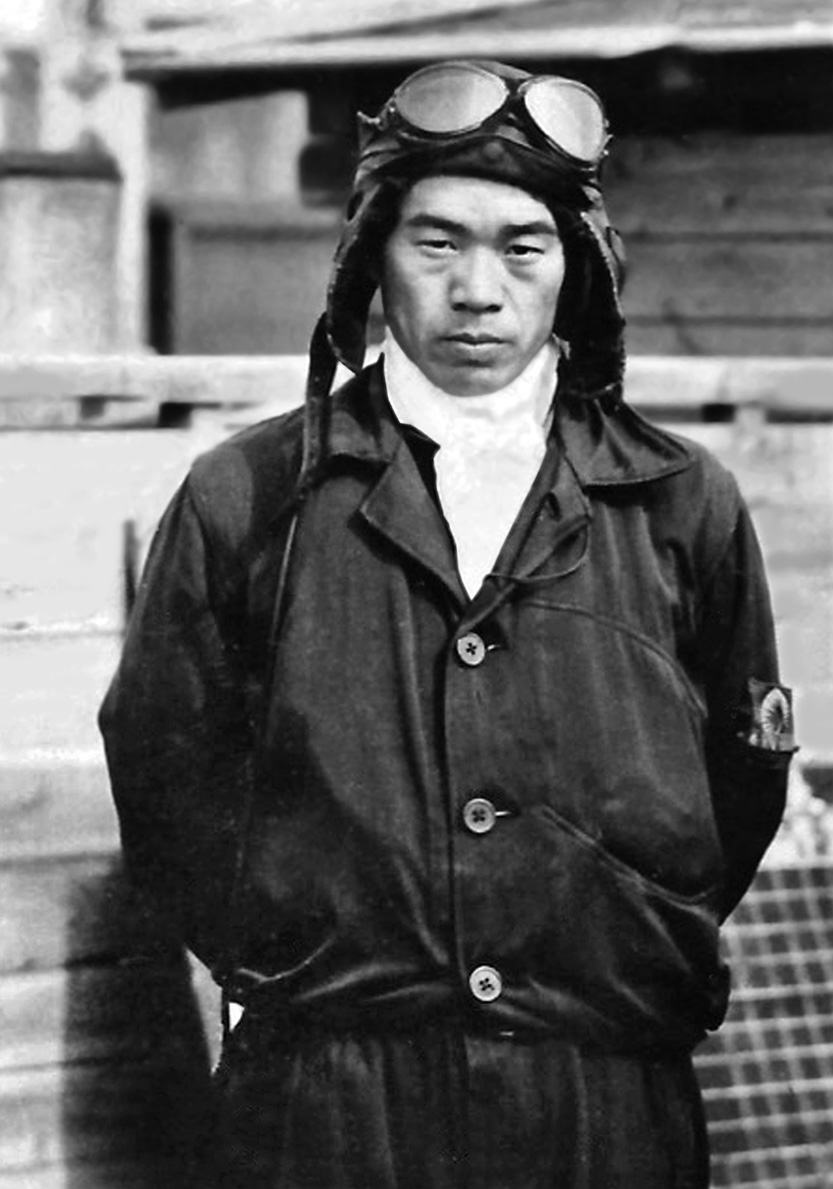
Saburo Sakai was the greatest Japanese fighter ace to survive the war. Sixty-four confirmed kills. Flew the Zero against the P-40, the P-38, the Hellcat, and the Corsair.
Over Java, in early 1942, he caught a lone American DC-3 transport plane in his gunsight. An easy kill. Standard target. He closed to point-blank range.
Then he looked into the cockpit.
The cockpit was full of women and children, Dutch civilian refugees trying to get out of the East Indies ahead of the Japanese advance. One of the women, holding a baby, looked out the side window straight into Sakai's canopy.
Sakai did not fire.
He broke off, saluted the woman, and let the DC-3 fly west into the sun.
Years later, in American interviews, he explained himself plainly.
"I am a samurai. My father's father was a samurai. We do not shoot women and babies. If my ancestors saw me fire into that cockpit, I would not be able to meet them when I died."
Five months later, over Guadalcanal, Sakai took a .50 caliber round through the canopy of his Zero. The bullet went through his head. It blinded his right eye and tore open his skull.
By every medical reasonable expectation he should have gone down.
He flew his damaged Zero four hours and 650 miles over the Pacific, bleeding into his flight suit, half-blind, repeatedly losing consciousness. He landed it, intact, on Rabaul.
He survived the war with one eye.
After the war, Saburo Sakai did not hate Americans. He became a Buddhist. He said in interviews that he had killed too many men already and would not do it again, not even in his own thoughts. He corresponded for years with former American Navy pilots who had been his opponents.
When American pilots began visiting Yasukuni Shrine in Tokyo to pay respects to Japanese pilots they had shot down, it was Saburo Sakai who met them at the gate and walked them in. Enemy pilot. Enemy pilot. Both with white hair. Side by side, bowing at the memorial of men they had tried to kill.
"We were warriors," Sakai told one American interviewer. "Now we are old. Only the young should hate. The old should remember."
Japan had Zamperini forgiveness. Japan had Fuchida reconciliation. Japan also had Saburo Sakai, who refused to fire at women, took a bullet through the head, and spent his old age walking American pilots into Yasukuni.
Warriors recognize warriors.
Even after the war is gone.
I used to make it my mission to avoid any and every mirror I passed. My reflection went from being an image of myself to being an image painted by strangers.
Self-confidence isn’t a destination. It’s a path we will walk our entire lives. Some days are harder than others. But there will be a day when you can look in the mirror again and see your truest self.
The world may have tried to paint your reflection, but you still hold the brush.
There are 58,281 names on the Vietnam Veterans Memorial, and for decades thousands of those American dead were only letters cut in black granite.
Even the man who founded the Wall doubted a photograph could be found for every one. On August 9, 2022, the last face was found.
It began small. Janna Hoehn, a floral designer on Maui with no personal tie to the war, visited the Wall, picked a name at random and made a rubbing of it.
She wanted a photo of that man and could not find one. A cousin who knew genealogy finally did.
She sent it to the Vietnam Veterans Memorial Fund, and the Fund asked her to find the 42 fallen from Maui County. She went through old high school yearbooks and had all 42 in six months.
Then she kept going, state by state.
In 2014 more than 24,000 faces were still missing.
That year a Wisconsin newspaper publisher named Andrew Johnson joined the hunt. His son, 1st Lt. David Johnson, had been killed in Afghanistan in January 2012 at age 24.
Johnson said many Vietnam veterans "embraced me and let me know how much they loved my son." He rallied newspapers across his state, and in 2016 his own paper printed a section showing every Wisconsin face.
In western New York the final man had no picture anywhere. No school and no library had a copy of his high school yearbook.
A researcher found one for sale on eBay and bought it.
Puerto Rico was harder still. Hoehn said Hurricane Maria had destroyed libraries and high schools there, and New York libraries had no old yearbooks. Sometimes volunteers found the family and the family had no photo to share.
So for the last names the team got each man's basic training location from the national records center, and a volunteer searched old basic training books.
Hoehn's team posted about 8,000 photos. She found about 5,000 of them herself.
Hundreds of volunteers did the rest: cold calls, obituaries, library visits, small-town newspapers.
This Veterans Day, type any name from the Wall into the Wall of Faces online. A face looks back at you.
All 58,281 of them.
Some pretty awful things were posted about me this week. But through all of it, I’m reminded of something that remains true every single time:
Use your voice for good.
We may not always be able to control what is said about us, how our image is used, or the hate that finds its way to our screens. But we do get to choose what we do next.
I will always choose to speak up. For myself. For others. For kindness, dignity, and the reminder that there is a real human being on the other side of every screen.
If my voice can turn even one painful moment into something that makes someone else feel seen, protected, or a little less alone, then I will keep using it.
Grateful to see this message being shared beyond my own page.
https://t.co/13Y02rZSCm
In April 1986, when Libyan dictator Muammar Gaddafi's missile batteries fired surface-to-air missiles at a Lockheed SR-71 Blackbird eighty thousand feet above Tripoli, the pilot in the cockpit pushed the throttles to Mach 3.5 and outran the missiles.
What makes that moment unforgettable is that thirteen years earlier, doctors in a military burn ward had told that same pilot he would never live to leave his hospital bed.
During the Vietnam War in 1973, young Air Force Lieutenant Brian Shul was flying a close-air-support plane near the Cambodian border when ground fire shot him down into the jungle.
Trapped inside the burning wreckage on the ground, Shul was engulfed in white-hot aviation fuel flames until Special Forces rescuers pulled him out.
At the military burn center at Fort Sam Houston in Texas, his face and hands were burned so severely that he went blind for two months, lost fifty pounds, and heard doctors whisper that his injuries were fatal.
Refusing to die, Shul endured fifteen reconstructive surgeries over an entire year without giving up on the sky.
When the Air Force told him a man with scarred hands could never fly jets again, Shul passed every single physical and flight test without a single medical waiver.
Not only did he return to fighter jets, he passed the astronaut-grade physical required to fly the world's fastest airplane: the titanium SR-71 Blackbird.
On April 15, 1986, following the American airstrike on Libya, Major Shul and his reconnaissance officer, Major Walter Watson, screamed across Tripoli at eighty thousand feet to photograph the bombed targets.
Suddenly, Watson called out from the back seat that Libyan radar had locked on and surface-to-air missiles were launching toward them.
Why did Shul not bank hard or dive to dodge the missiles?
Because at Mach 3, a sharp turn takes a hundred miles of sky; the Blackbird's only defense is raw American speed.
Shul pushed both throttles past the normal Mach 3.2 redline, watching the Mach meter climb to Mach 3.5, over two thousand three hundred miles per hour, as the outside titanium skin heated past nine hundred degrees and the missiles fell harmlessly into the sea miles behind the man who refused to stay down.
It looks like a scene that no Hollywood director would dare put in a movie because audiences would never believe it was real.
Yet the official U.S. Navy photograph taken on the flight deck of the aircraft carrier USS Abraham Lincoln on July 6, 1991 proves every word of it.
At fifteen thousand feet over the Indian Ocean, Navy Lieutenant Mark Baden was flying a Grumman KA-6D Intruder, with bombardier-navigator Lieutenant Keith Gallagher sitting beside him in the right seat.
Without warning, a mechanical failure triggered the ejection seat under Gallagher while the glass cockpit canopy was still locked shut.
The seat rocket blasted twenty-six-year-old Gallagher straight through the thick acrylic glass roof, but stopped halfway up the rails.
His boots and legs remained jammed inside the cockpit while his head, shoulders, and chest stuck straight out the top of the airplane into a two-hundred-and-fifty-mile-per-hour hurricane of freezing air.
Worse still, his parachute pack popped open in the slipstream, wrapping white nylon shroud lines tightly around the Intruder's vertical tail fin like a giant net.
Hammered against the metal frame by wind forces strong enough to dislocate his shoulders and rip his helmet visor off, Gallagher blacked out.
Inside the shattered cockpit, Pilot Mark Baden looked to his right, saw only Gallagher's boots and limp legs, and assumed the blast had killed his friend.
Why did Baden not pull his own ejection handle and abandon the crippled airplane?
Because if Baden ejected, the firing rocket of his own seat and the pilotless crash into the ocean would kill Gallagher for certain, and a moment later Baden saw Gallagher's gloved hand move in the wind.
Dropping the nose toward the carrier USS Abraham Lincoln below, Baden slowed the jet to one hundred and forty knots so the wind would stop suffocating his friend.
With a shredded tail fin, an open canopy roaring like a tornado, and a human being sticking out the roof, Baden lined up on the pitching flight deck.
He slammed the Intruder onto the steel deck and snagged the number-three arresting wire while deck crewmen swarmed the fuselage to cut Gallagher out of his harness.
Gallagher survived with a dislocated shoulder and bruises, returning to active flight duty six months later because his pilot refused to leave him behind.
My wife has taught high school in Tokyo for twenty years.
Every year, a few of her students spend a year living with a family in America. When they come home, she asks each of them one question.
"What do you miss?"
She expects hamburgers.
She almost never gets hamburgers.
And these aren't old stories. Most of these kids came home in the last two years.
"Every time I left the house, my host mom said, 'Text me when you get there.' In Japan, nobody needs to know where I am. In Ohio, somebody always did." (Mina, 17, Ohio)
"If you walk toward a door, an American will hold it open. Even if you are very far away. So you have to run. I ran to so many doors." (Itsuki, 16, Georgia)
"My host brother screamed on the floor of a grocery store. A stranger walked by and said to my host mom, 'You're doing great, Mama.' She almost cried. I didn't know strangers were allowed to say that." (Aoi, 17, Texas)
"We went away for the weekend and left our trash can at the curb. When we got back, it was by the garage. Nobody said who. My host dad said if it had been there one more day, the neighbor would have knocked." (Haruto, 16, Minnesota)
"A car got stuck in the snow in front of our house. Four men came out of four houses. Nobody called them. They pushed, the car drove away, and they went back inside without saying their names." (Ren, 17, Michigan)
"Every American has jumper cables. Maybe half of them know which clip goes where. The other half help anyway." (Shin, 16, Montana)
"In July, my host family put a cooler on the porch. Cold water, snacks, and a sign: 'For our delivery drivers. Thank you!' I asked if they knew the drivers. They said no." (Nanami, 16, Arizona)
"Downtown, there are banners on the lampposts. Photos of soldiers from the town. Some old, some very young. My host grandpa walked me down the street and told me every name." (Yuna, 16, Iowa)
"I got a C-plus on my first test. My host dad said, 'I'm proud of you,' and put it on the fridge. In Japan, nobody is proud of a C-plus." (Takeru, 17, Pennsylvania)
Then the quietest girl in the class raised her hand.
Sora. Seventeen. Missouri.
"Nobody asks me 'home safe?' anymore," she said.
She was wrong.
In September, there was a typhoon warning for Tokyo. At 2 a.m., Sora's phone lit up.
It was her host mom. In Missouri. Watching the weather in a country she had never been to.
"Saw the storm. You home safe?"
Sora told my wife she cried for a long time. Then she typed the answer she had typed a hundred times, from football games and friends' driveways.
"Home safe."
Her host mom wrote back one line.
"Good. That's all I needed."
My wife has asked that question for twenty years. Not one kid has ever said they missed how big America is.
They miss how America says goodbye. And how it checks that you got home.
So, America. You think you've lost something.
You haven't. It's on a porch in Arizona. It's pushing a car in Michigan. It's awake at 2 a.m. in Missouri, watching our weather.
You don't remember doing any of it.
A kid in Tokyo will never forget.
She is 56 years 🇺🇸
When she was 8, she came home from school and saw police taking her dad away in handcuffs. That was the day her family life changed forever.
She later lost her father to a sudden death 🕊️
She has endured more than a dozen surgeries for severe fibroids, a partial hysterectomy, and failed IVF rounds in a long, painful struggle with infertility
After years of waiting and testing her faith, she and her husband Derek adopted four children (Lance, Langston, and twins Lincoln and Lennox) ❤️
She has spoken movingly about how Black boys are often "the last chosen" in the adoption system, and she is the proud mother of three sons
Keisha has described her father's sudden death at 55 as a wake-up call that made her question how she wanted to spend her own remaining years.
Her early childhood included ballet lessons and international travel thanks to her dad's music career (he once opened for the Beatles), until addiction and prison took it all away.
While her mother worked multiple jobs to keep the family afloat, young Keisha spent weekends driving across Georgia to visit her father in different prisons.
After losing a judicial race, she sat on the floor surrounded by bills and maxed-out credit cards, asking God, "You told me to go do it. So now what?"
Determined not to fail again, she and her mom knocked on doors from 8 a.m. to 6 p.m daily until she won her city council seat without a runoff.
During the 2020 protests, the mother of Black sons tearfully pleaded with the city:" If you care about this city… go home," fearing for her own children's safety
While serving as mayor, she, her husband, and one of her children all tested positive for COVID-19. All four of her kids have asthma
She received racist hate messages during the pandemic, including one while her daughter looked over her shoulder
She is the first person in Atlanta history to serve in all three branches of city government: as a judge, city council member, and mayor.
In her memoir The Rough Side of the Mountain, she opened up about her father's addiction, her own eating disorder struggles, and being molested, saying sharing those parts of herself was liberating.
.
.
.
.
Keisha Lance Bottoms is the first black female governor in the history of United States. 🎉
But you can see how rough and hard her path has been.
How she has been tested in literally all major aspect of her life. In her marriage, her parenting, her career, her political office, her childhood and growing up, etc
.
.
But today, she triumphs and stands high above her challenges. She is a winner today, all because she didn't stop when the going got really hard. She didn't quit.
.
.
And that's exactly what I want you to do today.
Don't stop pushing for what you believe in.
Yes, I know you've gone through a lot. You've faced somethings that would break other people. You've endured challenges that many others can't.
But I tell you today, that if you keep your motion going, then one win is all you need to close your eyes and say to yourself "Yes, I triumphed"
So like Governor Keisha Lance Bottoms, I want you to keep pushing for the life you so much deserve.
You will get there. Certainly. Definitely
Hang in there and keep the motion going, no matter how small 🫂
.
.
Thank you very much for reading
.
.
✍️ Vincent the Therapist
Reposting this for no particular reason
Liz Cheney: “I say this to my Republican colleagues who are defending the indefensible. There will come a day when Donald Trump is gone, but your dishonor will remain.”