The protocol layer is moving quickly. But protocol support is not the same thing as operational readiness.
A system may be able to reach a tool and still lack the conditions required for live use: controlled execution, failure handling, review, and recovery.
Connection is becoming easier to standardize. Safe operation is not.
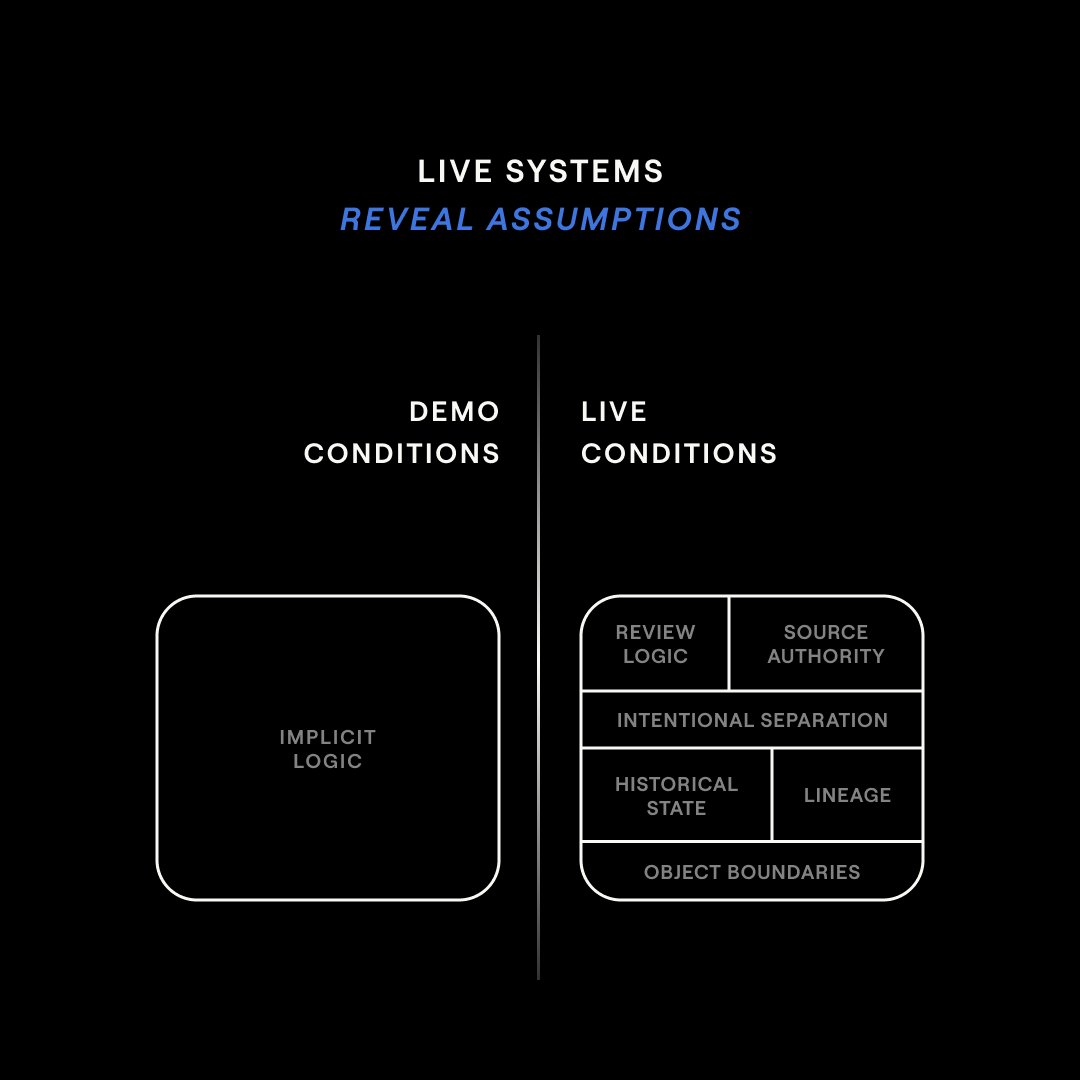
A demo can make a system look coherent without forcing much into the open.
Live enterprise conditions are less forgiving. They surface the assumptions the system was leaning on all along: what counts as the object, who gets to speak for it, which distinctions have to survive, what history still binds the present, where review has to interrupt automation.
Part of becoming reliable is simply having fewer hidden assumptions left.
Once they collapse into one word, the diagnosis starts to collapse with them.
You can no longer tell whether the system failed because it forgot, retrieved weakly, acted on stale reality, or was never given the right conditions for the task in the first place.
“Context” is becoming one of those words that gets less useful the more work it is asked to do.
A lot of current AI discussion uses it to cover memory, knowledge, and state as well. That shortcut makes the language sound cleaner than the system actually is.
Because those are not the same thing. What was assembled for the task. What persisted across interactions. What the system could access. What was true in the workflow at the moment of action.
Agent readiness keeps getting reduced to whether the system can reach the tool. That matters, but it is only the first gate.
Before action, the system also has to know which business object it is looking at, and whether the business has made the rule safe enough to automate against.
Reach, interpretation, actionability.
Different thresholds.
Different failure modes.
Open protocols are becoming a bigger part of the enterprise AI stack.
What they solve: interoperability.
What they do not settle: the production layer above it, including identity, recovery, observability, and safe execution.
A lot of the current conversation is treating those as the same threshold. They are not.
That is one of the more important distinctions in enterprise AI right now.
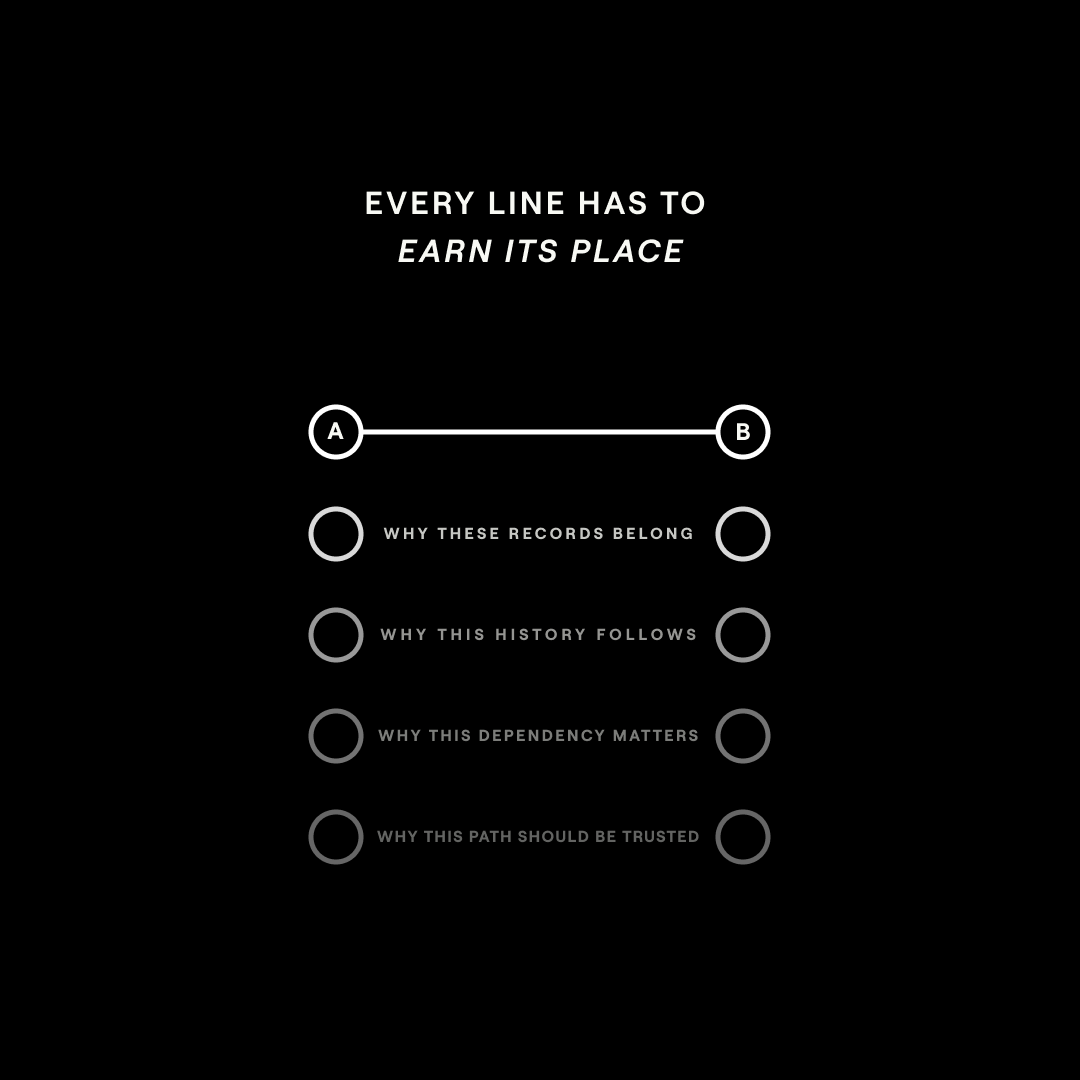
Matching can tell you records belong together.
It cannot tell you what the resulting entity should mean.
Which history follows. Which fields survive. Which version the business is willing to trust.
That work starts after the match.
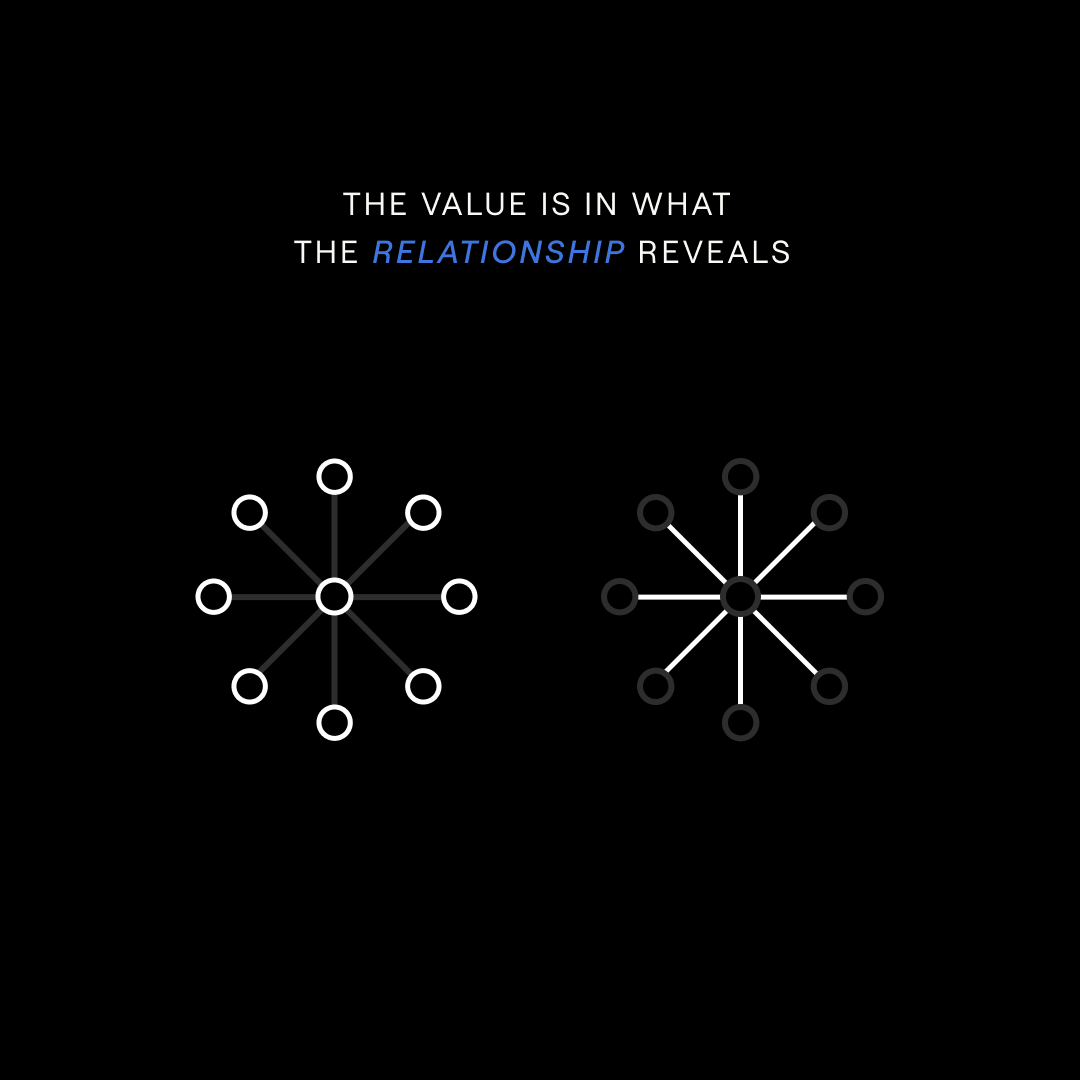
A graph starts to matter when relationships become accountable.
A line needs evidence behind it.
Shared history.
Declared hierarchy.
Source lineage.
Business rules.
Human review.
Without that, the graph is only arranging proximity.
In enterprise systems, “connected” is too weak a claim.
A line is only useful when it changes what the system knows.
The graph conversation is finally getting practical.
For a long time, graphs were discussed as structure.
Nodes. Edges. Networks. Useful, but incomplete.
Now the focus is shifting to what relationships make visible.
Ownership. Influence. History. Dependency. Lineage.
That is when a graph stops being an abstract shape and starts becoming operating context.
Records show what exists.
Relationships show what matters around it.
The semantics wave matters because of what it is forcing the market to admit.
It is becoming harder to pretend that access alone is enough, or that a cleaner interface can compensate for unresolved structure underneath it.
A shared metric layer helps.
A better semantic model helps.
More context for natural-language querying helps.
What these shifts are exposing is that systems still need something more explicit beneath them: clear business objects, clear boundaries, clear authority, and enough continuity for meaning to survive across time and across tools.
That is where the conversation is becoming more useful.
Semantic models are having their moment because the market is finally admitting something important: data needs a business language.
They solve a real layer of the problem. Shared metrics. Reusable logic. Cleaner querying. A better surface for AI and humans to ask questions without rebuilding context every time.
But meaning still has to survive change. Reorgs. Acquisitions. Regional rules. New reporting lines. Old definitions still embedded in live systems.
A semantic model can make language easier to use.
But meaning still has to hold when the business changes underneath it.
When the market says “semantics” right now, it often means one of three things: mapping business terms to schema, standardizing metrics, and adding more context to how natural-language systems query data.
Those are real advances, and they matter, but they also make it easier to treat several different layers of the problem as if they had already been settled.
A semantic model can make a system easier to query, and a cleaner metric layer can make definitions more reusable, while the harder enterprise question remains open:
what exactly is the object the business is trying to preserve, where do its boundaries sit, and which system is actually allowed to define it over time?