This week, @alanjdunne and I had a great chat with Philippe Jordan, President of CFM International.
With CFM celebrating 35 years in quantitative investing, we talk about how the firm has evolved over the years. Do catch our latest episode!
https://t.co/LLMVpF5t9p
This is something I’ve experienced in my own research. Trying to short upward biased, trending assets is extremely difficult. And even when you do find a short strategy that is “profitable,” does it actually improve your portfolio?
If you can find a short strategy in these markets that genuinely improves your portfolio, you’ve found a golden egg! However, short strategies aren’t the only way to improve your portfolio’s performance during bear markets.
In my new video, I explain how I approach this problem using my actual live portfolio as an example, without relying on short strategies.
Watch here: https://t.co/f4CBVuC8Jq
Great video. In general, I have found that combining long/flat strategies in different assets that are weakly or inversely correlated has produced better results than trying to incorporate short strategies. A nice example of that approach is provided in the video.
I know people who have good results on the short side, but I prefer to outsource shorting in my portfolio to managers so that I can focus on the strategies with which I have been successful.
D. E. Shaw On America's Weight In Global Benchmarks:
The U.S. is 70% of developed market equity cap but only about 50% of developed market GDP.
Is the U.S. overweight in global portfolios?
Their finding: the gap stems mainly from structural and compositional factors, not U.S. stocks being pricier than global industry peers. 🧵
This was a long extensive interview and covered a lot of important topics about trading. Concretum backed up a lot of the questions with their thorough research, so I thought the interview was very educational. Enjoy the read and the ride!
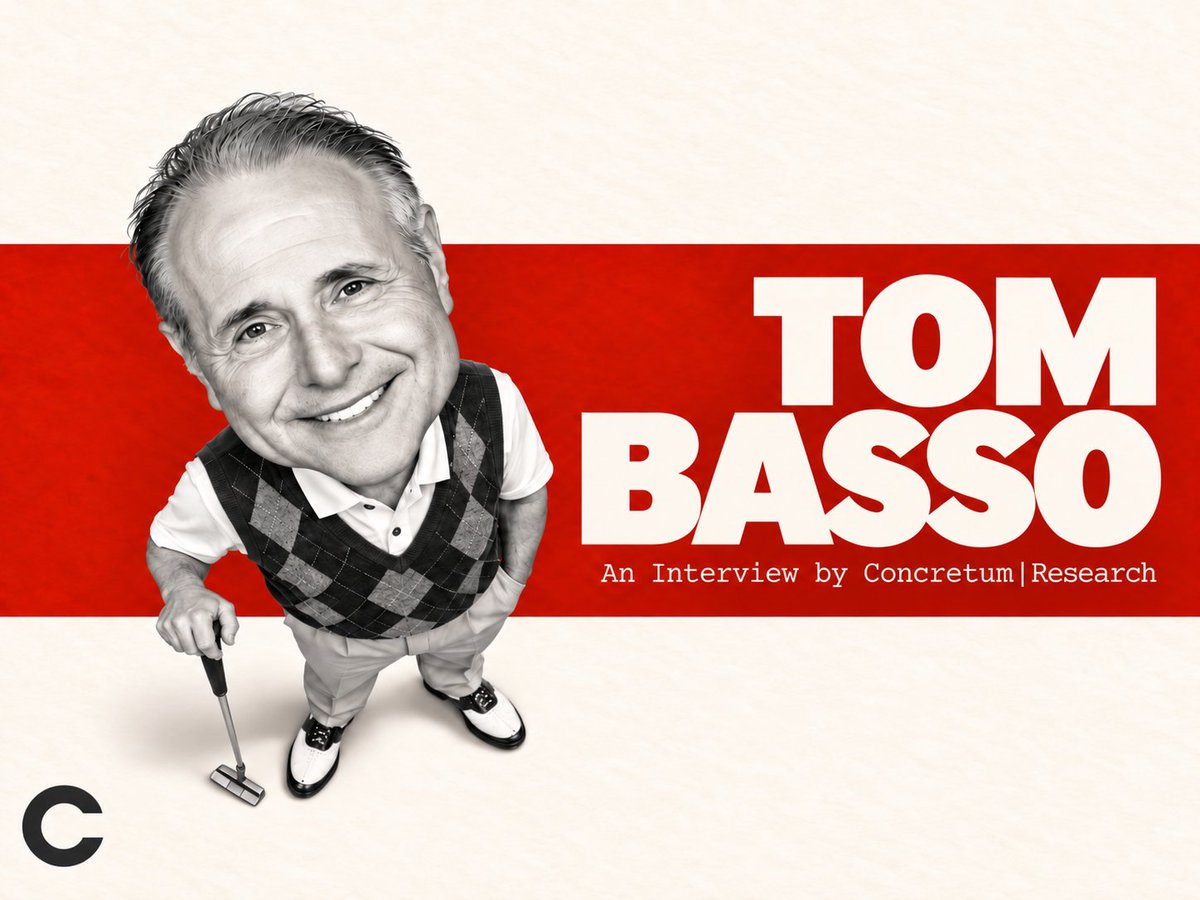
We are glad to announce that our full interview with @basso_tom is now available!
Many of you probably know Tom as “Mr. Serenity”, the nickname @jackschwager gave him when he featured him in The New Market Wizards, the second book in his famous series.
Tom has been incredibly generous in sharing his experience and insights from nearly 50 years in the markets. We covered a wide range of topics, bringing together valuable lessons that are rarely found in a single conversation.
Among other things, we discuss:
✅Systematic Trading
✅Trend Following
✅Position Sizing
✅All-Weather Portfolio Construction
✅Research and Backtesting
✅Trading Psychology
We also include several original backtests and quantitative analyses developed by @ConcretumR to illustrate some of the ideas discussed.
If you are interested in systematic trading, we strongly encourage you to set aside 15 minutes to read or listen to this interview. We believe you will find plenty of valuable insights, regardless of your experience level.
A big thank you to Tom for his time and generosity!
Enjoy your learning!
More info in the first comment 👇
At Berkshire Hathaway’s 1995 annual meeting, a shareholder asked whether Berkshire could improve the returns of companies after acquiring them.
Buffett said Berkshire’s greatest contribution sometimes came from removing excess capital from a business that earned high returns but lacked attractive reinvestment opportunities.
Management may feel compelled to use the money somewhere, even when the available projects offer poor returns. Berkshire can take that cash and deploy it across a much larger universe, including another subsidiary, a new acquisition, or shares of a wonderful public company such as Coca-Cola.
A great business should reinvest aggressively when the returns remain attractive. When they do not, the capital should be moved somewhere more productive.
Good capital allocation requires knowing both where to invest and when to stop.
The Kelly fraction calculation is challenging for a house. Everyone needs to live somewhere and the ability to obtain a fixed-rate amortizing loan for a long period reduces some types of risk. There is also utility to being part of a community and having a sense of ownership. Peter Lynch advised everyone to buy a home. That said, the numbers today make the prospects for attractive returns low in most areas of the U.S.
My wife and I ran a rental property business for 20 years. There were times when prices were low enough relative to fixed mortgage loan interest rates that the numbers worked for home ownership using reasonable projections for appreciation and expenses.
The numbers did not work in every area of the U.S. The key was to own in areas with growing population and adjusted gross income based on public IRS records.
We stopped buying rental houses in the early 2000s when prices got too high. We have owned houses to live in but not with the expectation that we would make good returns relative to other investment options.
Today, the numbers are poor to marginal in most areas for home ownership and renting is usually the better option, as long as there is a commitment to regular investment. For some, owning a home serves as a forced savings plan.
“Warren spends 70 hours a week thinking about investing.”
— Charlie Munger
“We do a lot of thinking and not a lot of acting. A lot of investors do a lot of acting, and not a lot of thinking.”
— Lou Simpson
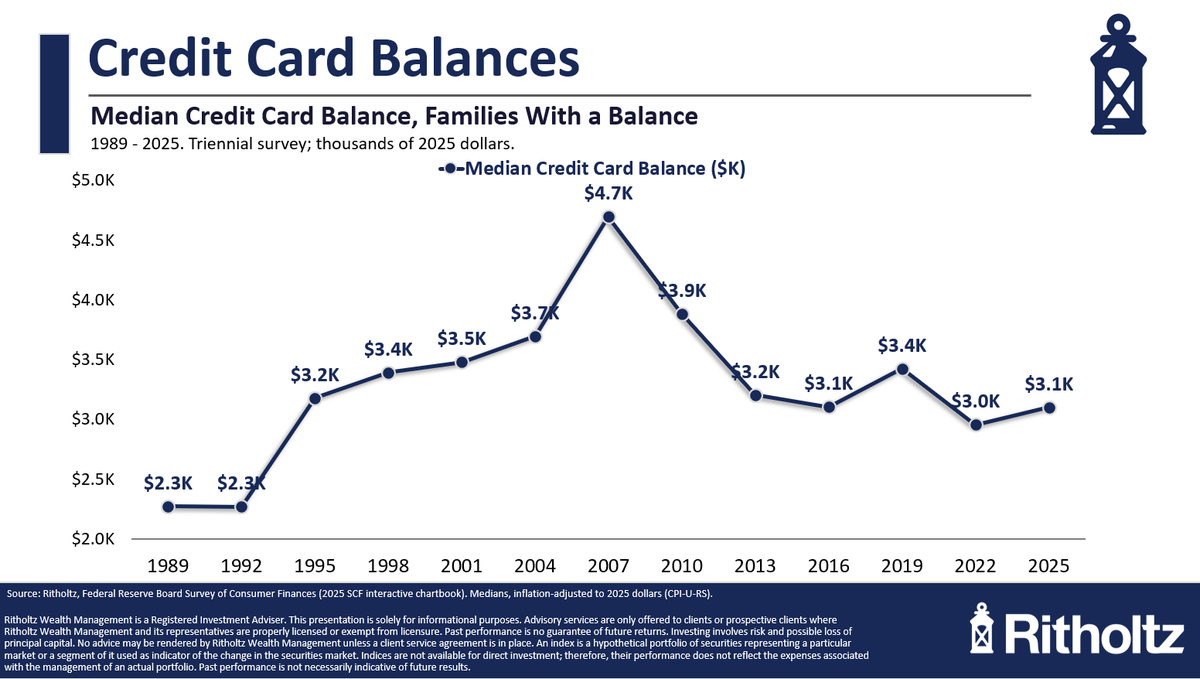
How are US household finances looking?
Incomes are higher
Net worth is at all-time highs
Credit card debt is reasonable
The economy is far from perfect but US households have repaired their balance sheets after the GFC destroyed them
https://t.co/Dawu72Qh7P
🚨NEW EPISODE🚨with financial historian EDWARD CHANCELLOR - 400 yrs of financial history tells him that we're in a bubble.
"It makes sense to stand back, wait for the bubble burst, observe the shakeout, & then see which companies appear to be gathering a dominant position."
We cover:
- rising rates most common factor before bubble bursts
- poor government finances makes situation particularly dangerous
- bubbles are bad at identifying the long term winners
- Messianic leaders in bubbles - Sir John Blunt in South Sea Bubble 1720s vs #JensenHuang #ElonMusk #DarioAmodei #SamAltman
- "the more information we have, paradoxically, the more irrational our behaviour becomes" - newspapers, telephone, internet inflated bubbles...and now AI?
- Lessons for today from 1630s Tulip Mania; 1720s South Sea Bubble; Railways 1840s; 1920s; 1980s Japan; Dot-Com
- Avoid index funds
Timestamps:
00:00 Intro
05:24 Three stages of a bubble
07:41 Social aspect of bubbles
10:00 Investing vs gambling
12:11 Tulip mania & early 1600s
15:02 1690s – first contrarians
19:00 South Sea Bubble 1720s
21:14 Momentum vs Greater Fool
25:00 Messianic leaders today vs Sir John Blunt in South Sea Bubble
29:12 Midterms – mirrors of history?
32:06 Railway mania 1840s vs today
36:15 1920s: radio, tickers and how faster information fuels speculation
40:33 Japan 1980s & moral hazard
43:23 Dot-com bubble vs today
47:09 Real winners emerge after bubble bursts
49:01 Bubble aspects today
52:24 Government debt makes things worse
55:00 History gives confidence this is a bubble
56:40 Rising rates pops bubbles
59:45 Avoid passive index investing
@chancellor_e
Berkshire Hathaway director Chris Davis on his father's (Shelby Davis) infectious enthusiasm for investing.
"My dad said, 'I get to live in the future — and what a privilege that is, to live in the future. I'm always trying to think about what the world could look like. How could this business evolve?'
That's an exciting way to live."