A Backtest Is Better at Killing Ideas Than Proving Them
One of the most useful mental models in quantitative research:
A backtest refutes far better than it confirms.
A beautiful historical result doesn’t prove your strategy will survive the future.
But a factor that repeatedly fails across markets, universes and reasonable specifications is telling you something very useful:
Walk away.
Part 2 of my Momentum series is out:
https://t.co/084h5dH4gx
Volatility is the toll we pay to invest.
Accept it.
The market corrects:
•3%, 7x times a year
•5%, 3 times a year
•10%, once a year
•15%, every 2 years
•20%, every 3.5 years
Replay of a great interview with Richard Liddle and Garth Abbot from Bowmoor Capital. Classic trend following in relatively few markets with a focus on return first with volatility as a secondary consideration.
https://t.co/J8lMleZ6xt
All true. There are people who have adapted the CANSLIM approach very successfully. My own testing suggests that an 8% stop is too tight and there are other elements that can be improved. I think the methodology can work if viewed as a flexible framework for developing trading rules.
@algo_advantage I tend to apply a cost structure that is in the middle. That is typically an overestimate for more recent times and an underestimate for earlier periods.
I used to think big money was made by being very active as a trader, but now I believe it's made by sitting on winning positions. - Lukas Frohlich @TheShortBear 112/n https://t.co/b9PLYapuJD
I Ran Half a Million Backtests BEFORE Building the Strategy
Half a million backtests sounds like data mining.
It can be.
But searching for the best backtest and mapping the behaviour of an entire factor are completely different activities.
I wasn’t asking:
“Which momentum model wins?”
I was asking:
“Is momentum actually real?”
That distinction changes everything.
Part 2 of my Momentum series is out:
https://t.co/084h5dH4gx
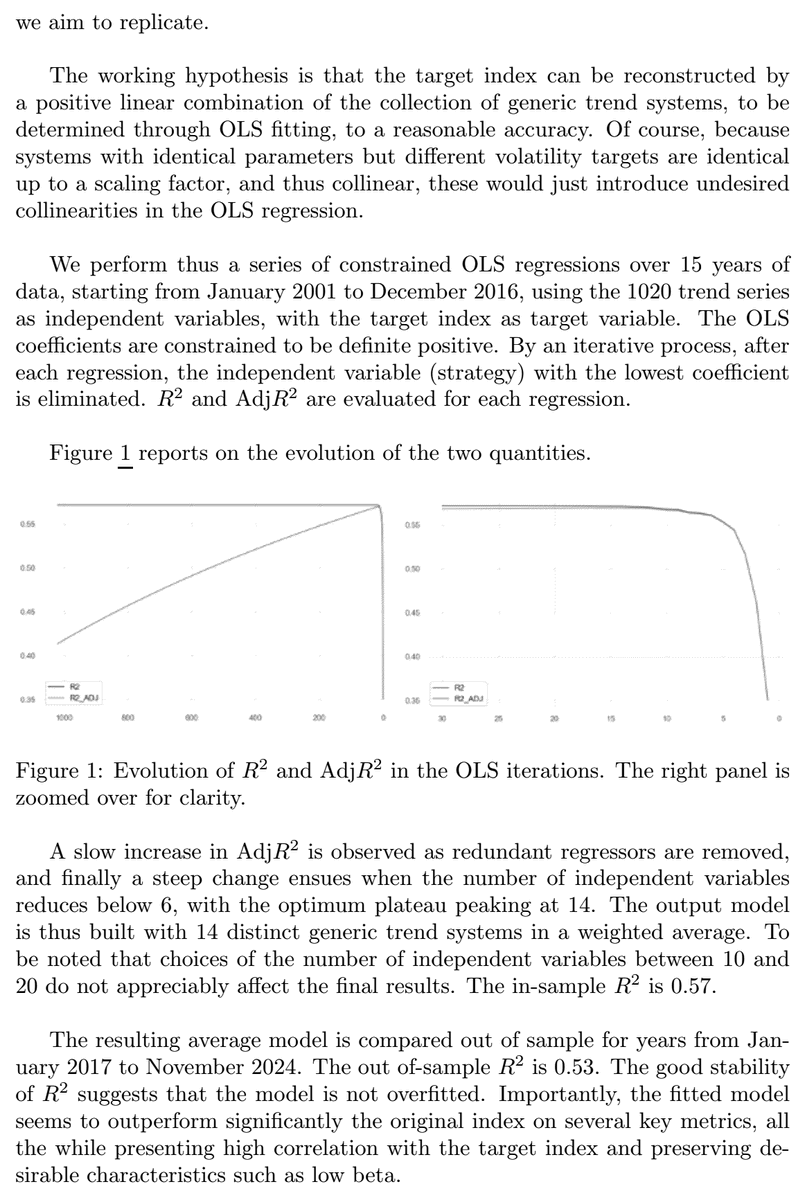
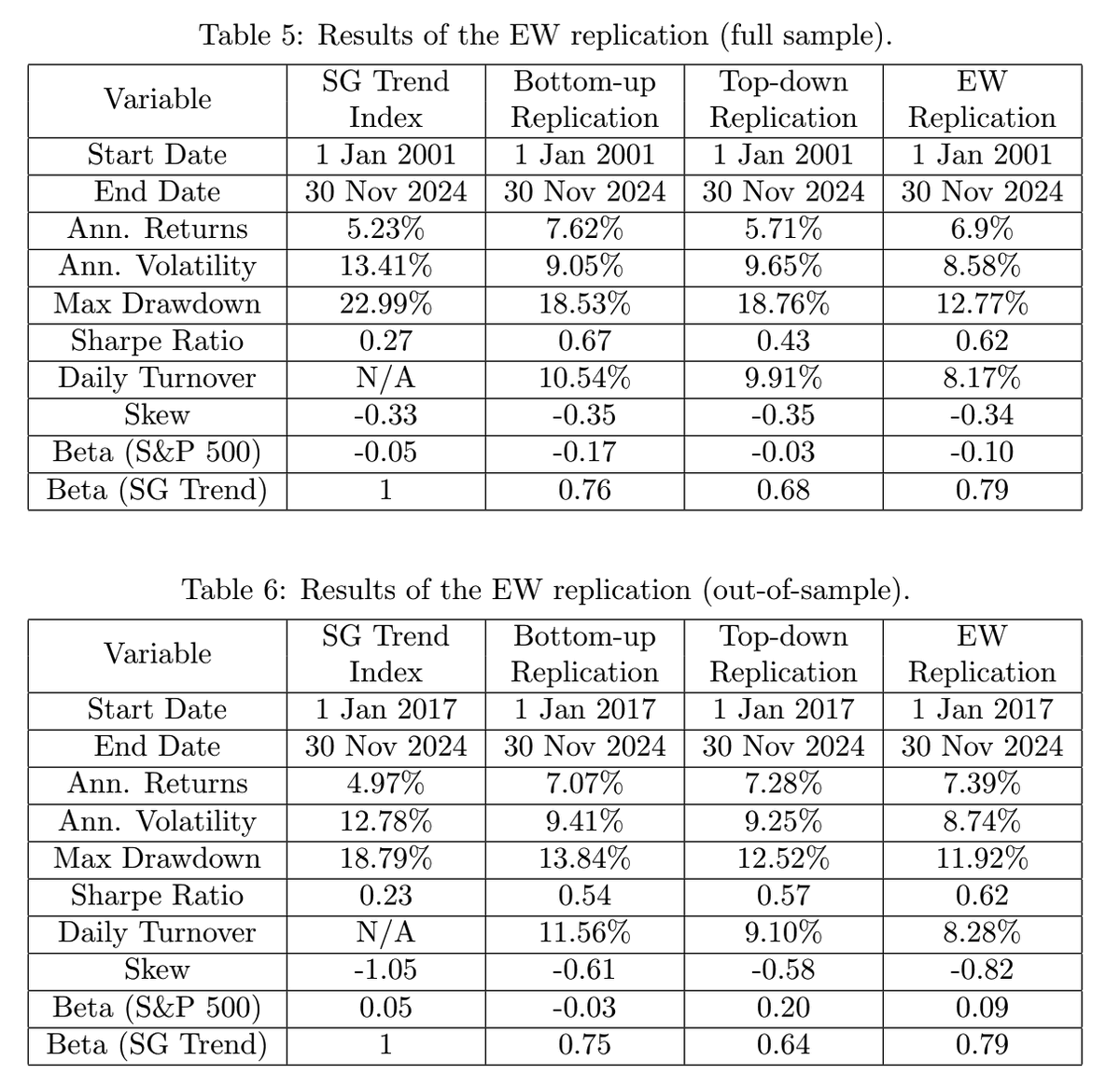
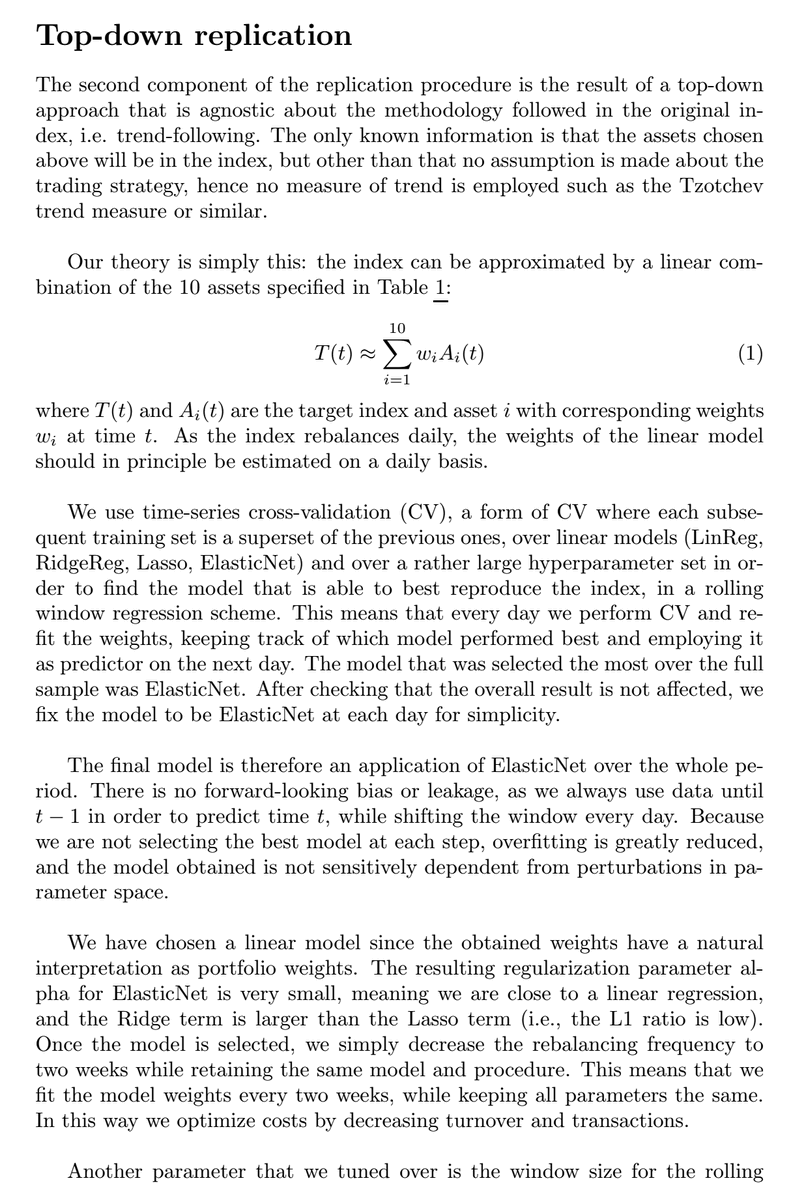
This is good stuff. The EW replication with lower fees produced an annual return of 6.9% with volatility of 8.6% for the full sample period. Most of the programs in the SG Trend index run at low volatility, although combining the individual programs in the index will also lower volatility because of diversification.
With negative beta to the SP500 for the SG proxy, this makes for a strong rationale for combining it with an SP500 proxy using derivatives to obtain leverage. The combination would be expected to produce incremental returns compared to either alone without excessive volatility.
Trend following is having a good year - but you don't need to pay CTA fees to get exposure to SocGen beta.
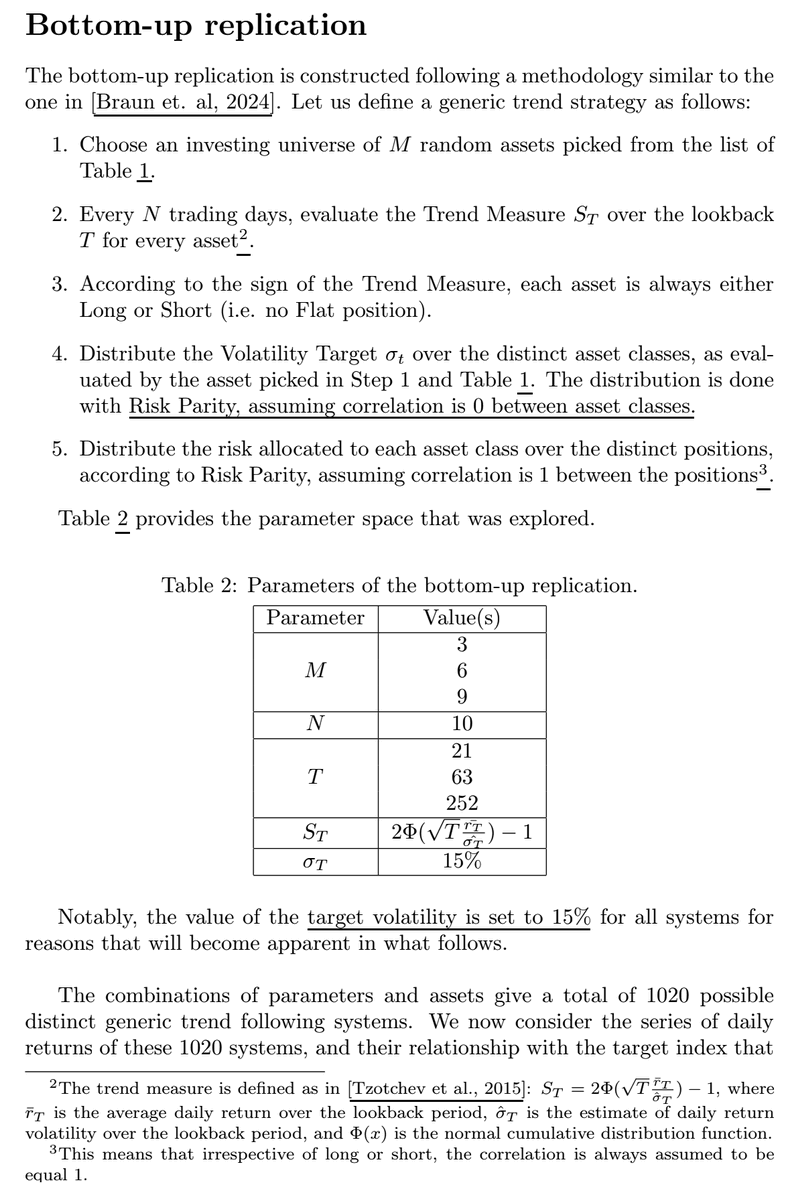
@JungleRockRes equal-weights bottom-up and top-down replications of the SG Trend Index using 10 liquid futures markets, achieving an out-of-sample Sharpe ratio of 0.62 vs. the SG's 0.23. It's a cheaper implementation and includes method diversification.
The methodology includes tranched rebalancing to deal with rebalance timing luck and 2 bp all-in transaction costs. The authors also credit @InvestReSolve for having done similar work in 2023.
Alpha on Trend-Following Beta: a case study of the SocGen Trend Index (Jungle Rock)
Nvidia's market cap of $5.4 trillion is nearly $2 trillion higher than all of the companies in the Russell 2000 combined.
That seems crazy until you learn that Nvidia made a profit of $193 billion over the last year while the Russell 2000 members collectively lost $13 billion.
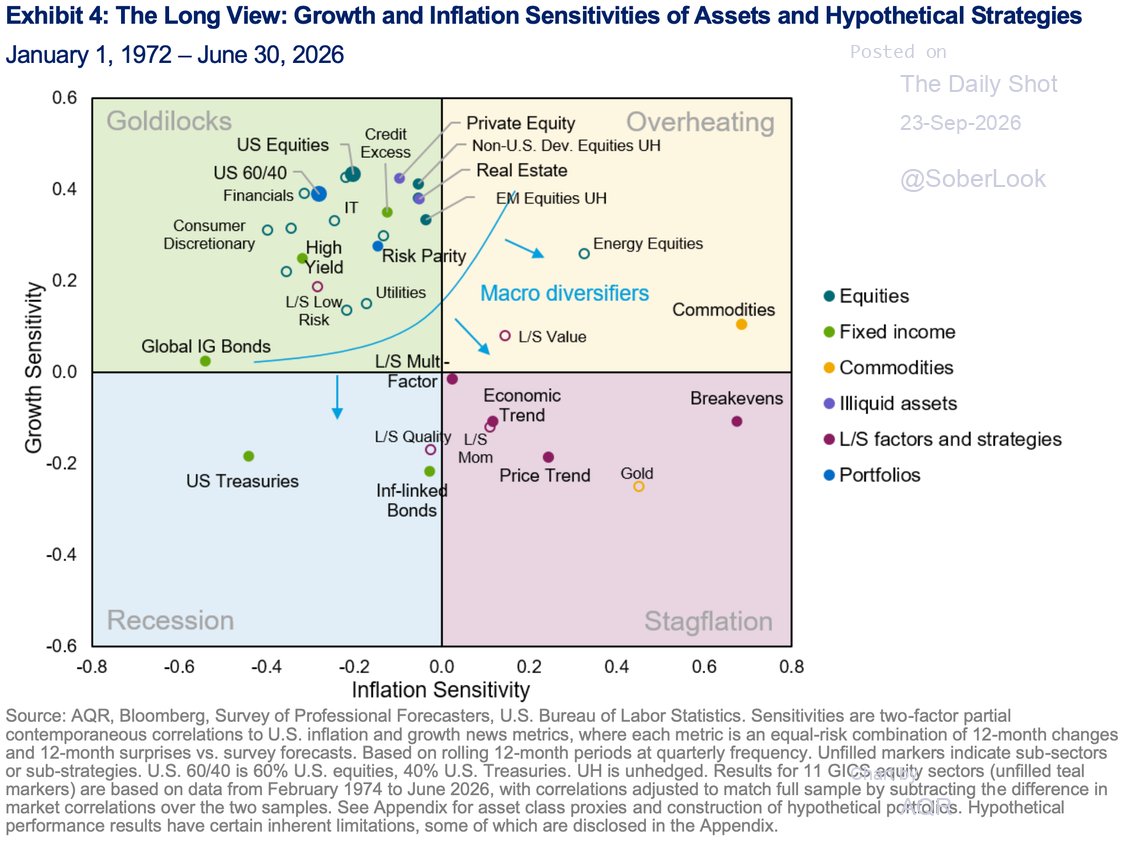
1/ Best Strategies for Inflationary Times (Neville, Draaisma, Funnell, Harvey, Hemert)
"Unexpected inflation is bad for bonds and equities, with local inflation mattering most, while commodities and futures trend following performance is strong."
https://t.co/mympscLKrQ
@QuantInsti Indeed. When I first started modeling managed futures trend effects on portfolio performance, I was shocked at the impact, which was well beyond what I would have guessed from the stand alone stats.