Thank you for the opportunity to be in Shark Tank once again
Thank you to everyone who joined, and special thanks to @Juniorr1945 who helped build this website.
And also, thank you to all my Indonesian friends for the support ❤️
Thanks to everyone who joined the Shark Tank event.
Really happy to have the chance to present together with @Szaonly666 and showcase the project we’ve been building: Rialo POAP
Rialo POAP is built to make the onchain event experience more engaging through badges, attendance proof, and a reward system that’s easy for everyone to use.
For everyone who receives the Shark Tank Audience role, if you like the idea and vision behind our project, we’d really appreciate your support and vote for :
Rialo Poap
And don’t forget to keep supporting @RialoHQ for giving builders a place to grow and share ideas that bring value to the community.
One of the more interesting things happening in AI is that the industry is slowly discovering that intelligence and trust are two completely different problems.
A model can reason. An agent can execute. But neither of those things explains why the rest of the world should trust the outcome. Financial systems don’t care how intelligent an agent is. Businesses don’t care how many benchmarks a model tops. Eventually, every autonomous system runs into the same question: who authorized this action, and under what rules?
For years, the internet solved that problem by putting humans at the center of every important decision. Humans owned credentials, approved transactions, and remained accountable when something went wrong. AI changes that architecture. Autonomous agents are becoming participants in the system rather than just tools that people use.
That shift creates an entirely new infrastructure challenge. An agent economy cannot depend on permanent secrets, unlimited permissions, or the assumption that a human is always watching. The more capable these systems become, the more important governance becomes.
This is part of why @RialoHQ’s direction feels increasingly relevant to me. The project doesn’t seem to start with the assumption that AI simply needs to be smarter. The larger thesis is that autonomous systems need an environment where actions can be governed, permissions can be enforced, and trust can exist without requiring constant human intervention.
The first generation of AI proved that machines could generate intelligence.
The next generation may be defined by whether that intelligence can be trusted.
One of the biggest contradictions in AI is that we’re trying to build autonomous systems on top of security models that were never designed for autonomy.
The modern internet was built around a simple assumption: humans hold credentials. A developer stores an API key, an employee logs into a dashboard, a company decides who gets access to what. Even when those credentials are compromised, the damage is usually limited by the fact that humans operate at human speed, AI agents change that equation completely.
An autonomous agent doesn’t sleep, doesn’t wait for approval, and can execute thousands of actions in a fraction of the time it would take a person to complete one. If that agent is protected by the same static API key that secures a traditional application, then the key itself becomes the weakest part of the system. The moment it is copied, the attacker inherits the same authority as the agent.
What’s interesting about Latch powered by @RialoHQ is that it starts from a different assumption. Instead of handing agents secrets they can leak, the idea is to remove the secret from the equation altogether. API keys remain protected, policies are enforced at the infrastructure layer, and agents receive scoped, revocable permissions that can be monitored and audited in real time. The goal isn’t to make credential theft harder. It’s to make stolen credentials useless.
This is partly why I think the conversation around AI is gradually shifting away from intelligence and toward control. Smarter agents will always be valuable, but an agent economy cannot scale if every autonomous system is effectively carrying around a reusable master key.
The first generation of the internet was built around authenticating people, The next generation may be built around governing machines.
Say goodbye to API key theft.
Can't steal credentials if there are no credentials to steal.
A major goal of ours is to get rid of API keys altogether.
Machine Bound Identity is our first major step in this direction. Your machine is the key.
Try it 👉 https://t.co/BtYLOQoLvH
This is huge!
What started as an internal tool for managing agents, now it will enable you & everyone unleash agents securely!
Sign up 👉 https://t.co/P12bb0WAq7
History suggests they’ll probably integrate with them instead.
Banks aren’t disappearing. Payment networks aren’t disappearing. Businesses aren’t rebuilding decades of infrastructure because a new model was released. The real economy already runs on an enormous web of software, rules, and institutions that took years to develop.
The challenge for AI is not creating intelligence. It’s creating compatibility.
Agents need to understand data they don’t own, interact with services they didn’t build, and operate inside environments that were designed for humans. The more capable they become, the more important that challenge gets.
This is why the conversation around AI increasingly feels like a conversation about infrastructure. Intelligence without connectivity has limited value. An agent that cannot securely interact with the outside world is still confined to its own environment.
That’s part of what makes @RialoHQ’s direction interesting to me. The project seems to start from the assumption that AI won’t exist in isolation. Autonomous systems will need to connect with financial infrastructure, external applications, and real-world services without introducing unnecessary trust assumptions.
The first generation of AI showed that machines can think.
The next generation may be about making sure they have somewhere useful to think.
I think the harder problem is building an environment where that intelligence can actually be useful.
A model sitting in isolation doesn’t create much value. It needs data. It needs access to applications. It needs to interact with financial systems, external services, and eventually other agents. The moment AI starts participating in the real economy, intelligence stops being the only requirement.
Infrastructure becomes the bottleneck.
This is the same pattern we’ve seen with every major technology cycle. The internet wasn’t defined by better computers. It was defined by the networks that connected them. Cloud computing wasn’t valuable because servers became more powerful. It was valuable because businesses no longer had to think about the underlying complexity.
AI feels like it’s moving toward the same point.
The long-term opportunity may not belong to the systems that generate the best responses. It may belong to the systems that allow autonomous agents to securely interact with the world around them.
That’s part of what makes @RialoHQ’s AI thesis interesting to me. The project isn’t treating agents as another application category. It’s treating them as a new type of economic participant that requires an entirely different infrastructure stack.
The first generation of AI proved that machines could reason.
The next generation may be defined by whether those machines can actually participate in the world we’ve already built.
Dario Amodei: AI Policy
> AI is progressing extremely fast, much faster than the policy process was built to handle, and the gap between the two is becoming the central challenge of the technology.
This is why we built https://t.co/P12bb0WAq7
https://t.co/FI4muydS57
Yapper Agent x Lily Paws
Giveaway 10 GTD + 25 FCFS
Rules:
• Follow @yapperagent & @thelilpawsart
• Like & RT + tag 2 friends
• Drop your ETH address
Submit details → https://t.co/LNfS4w8gXZ
Winners selected in 72 hours
You still tokenmaxxing?
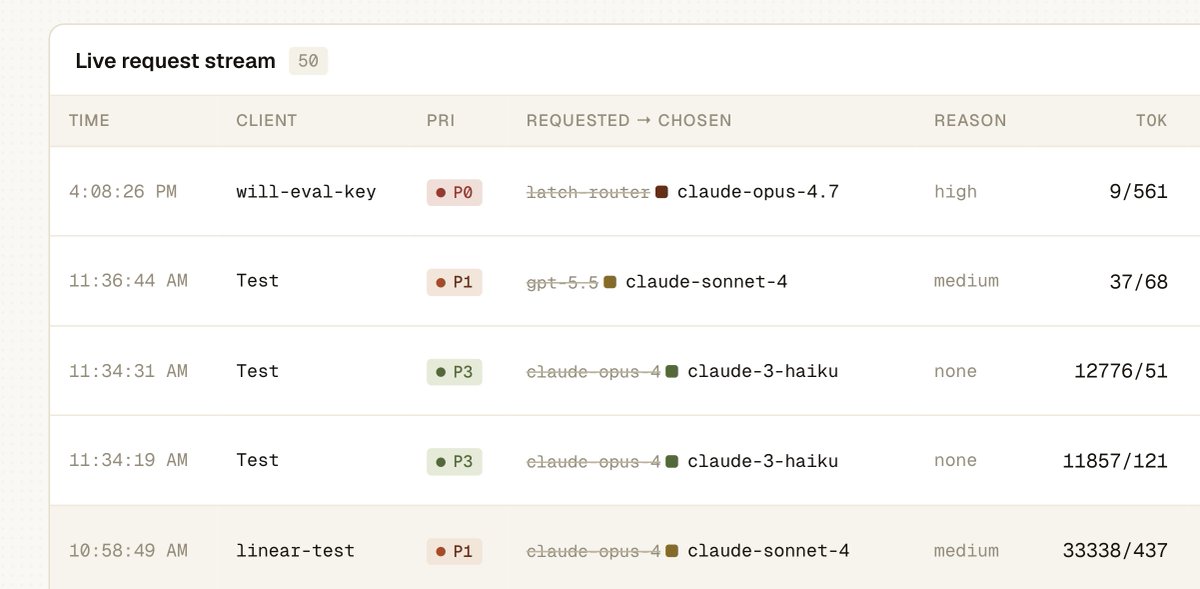
Our brilliant engineers found a way to reduce our AI spend using Latch.
You can do magical things when you can actually understand and control agents.
Sign up for beta access 👉 https://t.co/BtYLOQoLvH
what a night! We just finished another Builders Hub session, where we shared brilliant new ideas and learned from each other.
Let’s stay consistent in building the Rialo ecosystem and keep creating together. The best projects are built by people who never stop building
Last night, we had another Builder Hub, and there were so many fresh ideas from new participants.
It was a really fun session From the presentations to the chats and all the interactions, the energy was amazing.
Thank you to everyone who joined and shared their ideas.
Keep building
Yapper Agent x Dubi
Giveaway — 30 GTD
Rules:
• Follow @yapperagent & @dubinft
• Like & RT + tag 2 friends
• Drop your ETH address
Submit details → https://t.co/J5fKOt19QG
Winners selected in 48 hours
Yapper Agent x Astryx
Giveaway - 5 GTD
Rules:
• Follow @yapperagent & @AstryxNFT
• Like & RT + tag 2 friends
• Drop your ETH address
Submit details https://t.co/wgNeuWlv1i
Winners selected in 12 hours