@rnbeaumont1 @YaghootkarH @marcustuke@kate_s_ruth@AnnaM1966 @rmfreathy @drarwood @timfrayling @ExeterMed@uk_biobank@DNAFitHQ The allele associated with eating yeast extract was present in 73% of consumers and 71% of non-consumers. This variant and those previously reported to influence marmite preference have little predictive value for yeast extract consumption.
@rnbeaumont1 @YaghootkarH @marcustuke@kate_s_ruth@AnnaM1966 @rmfreathy @drarwood @timfrayling @ExeterMed@uk_biobank@DNAFitHQ We identified 1 locus (rs62099778) associated with yeast extract consumption (p=2E-8; OR 1.06). The yeast extract consumption allele was also associated with higher salt consumption (p=3E-17), & vegetable intake (P=3E-6), lower caffeine intake & higher risk of depression (P<5e-5)
@rnbeaumont1 @YaghootkarH @marcustuke@kate_s_ruth@AnnaM1966 @rmfreathy @drarwood @timfrayling @ExeterMed Using 135730 @UK_Biobank participants we performed a GWAS of self report yeast extract consumption (data field 20088) (15315 consumers/120415 nonconsumers). Variants previously associated with loving or hating marmite in 261 people had P>0.02 https://t.co/0RbzqpwJiH @DNAFitHQ
Christmas special publication.
A GWAS of yeast extract consumption #marmitegenes
By
@rnbeaumont1 , SE Jones, @YaghootkarH, @marcustuke@kate_s_ruth , F Casanova, S Sharp, Y Ji, W Thompson, JHarrison, @AnnaM1966 @rmfreathy, J Tyrrell, @drarwood , @timfrayling
Address @ExeterMed
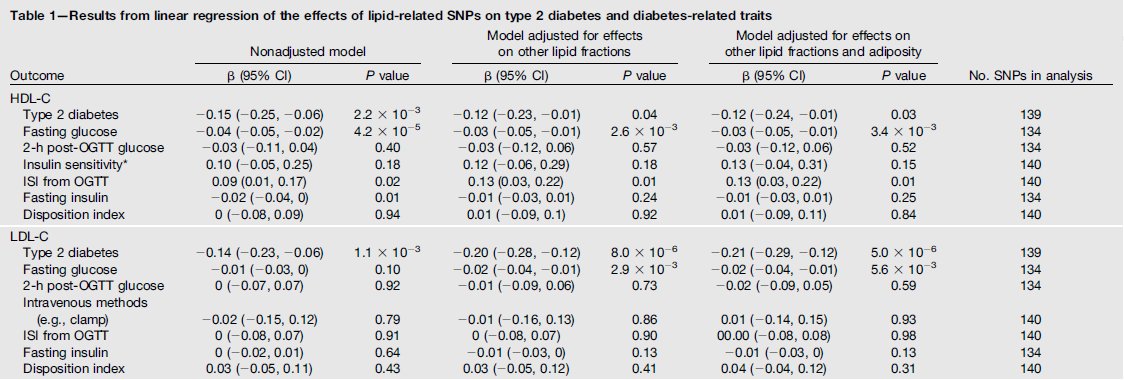
Genetics informing if & how low LDL-C increases T2Diabetes risk: https://t.co/Rh0HlLWnde & https://t.co/9iigfs3MkU & https://t.co/UN0xGu3JOk
Can’t say it enough: if you’re frantically submitting to a journal before the holidays, consider how likely YOU'd be to referee by Jan 2... https://t.co/ouIu9mLvUX