Welcome to Speaking Truth to Power.
This page exists to proclaim Christ, encourage the weary, equip believers, and call leaders—political and spiritual—to righteousness, integrity, and truth.
We will speak boldly.
We will stand on God’s Word.
We will love deeply.
“Righteousness exalts a nation, but sin is a reproach to any people.” — Proverbs 14:34
Here you’ll find:
📖 Devotions from God’s Word
✝️ Biblical encouragement for today’s trials
🔥 Truth spoken with grace
🕊️ A call to repentance, integrity, and faithful living
Learn more:
https://t.co/LiaN5R4JPC
https://t.co/sEVJKVN8AN
May Christ be exalted in all we say and do.
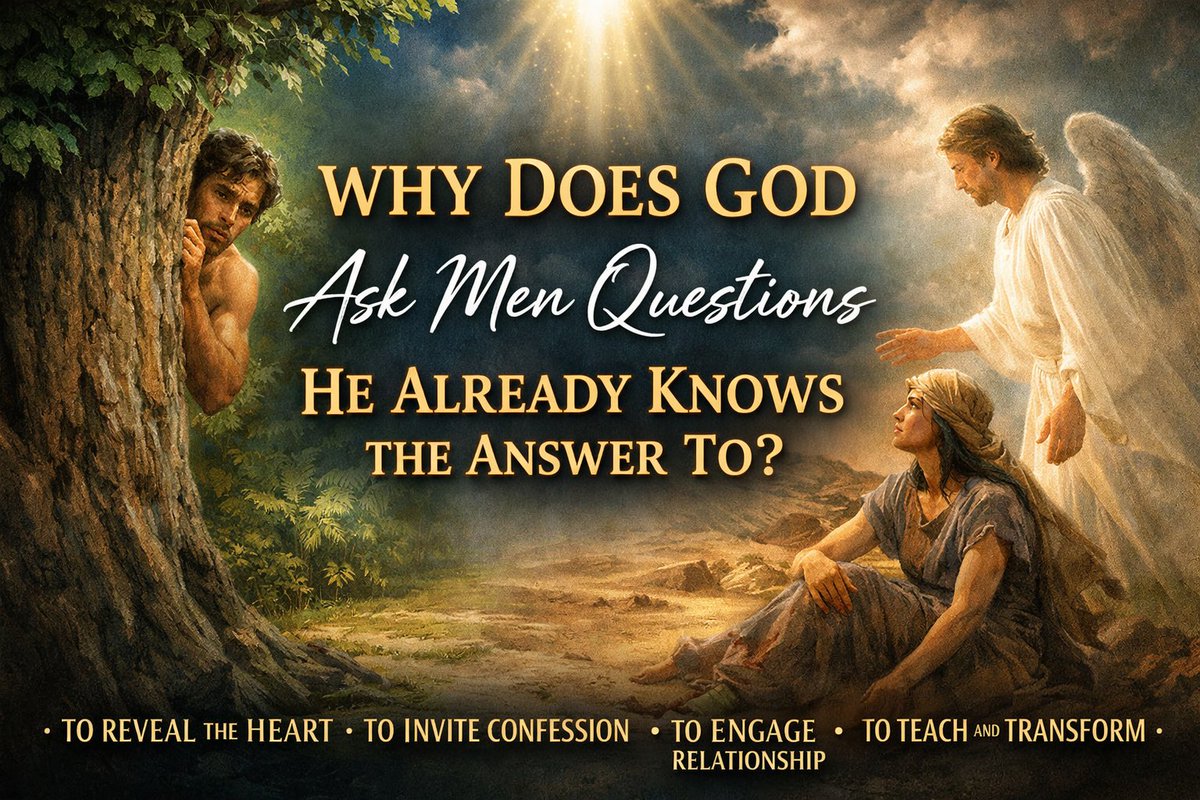
4. God’s Questions Are Acts of Grace
This is powerful to consider:
God could have declared judgment immediately.
Instead, He asks:
“Where are you?”
“What have you done?”
Those questions are actually merciful pauses.
They give space for:
repentance
reflection
return
A Simple Way to Say It
God does not ask questions because He lacks knowledge.
He asks questions because we lack awareness.
“When God asks a question, it is never for His information—it is always for our transformation.”
Why does God ask us Questions?
Last night, during prayer meeting, the question was ask, “why does God ask us questions that He obviously already knows the answer to.
So, Why does God ask questions like when He ask Adam, “where are you?” Or when He asked Hagar, “from where do you come and where are you going” or even when He asked Peter three different times, “do you love me?
Obviously being Sovereign and Omniscient, God already knows the answer to the questions He often asks us.
3. God Asks Questions to Teach and Transform
God often teaches not by telling—but by drawing truth out of us.
This is the same method Jesus used constantly:
“Who do you say that I am?”
“Why are you afraid?”
A question forces engagement.
Engagement leads to transformation.
2.God Asks Questions to Lead to Self-Examination
Throughout Scripture, God’s questions function like a mirror.
They cause people to pause and consider:
Where am I spiritually?
What am I doing?
What do I truly believe?
Even in the New Testament:
“Do you love Me?” (John 21:15–17)
(Jesus to Peter)
Jesus knew the answer—but Peter needed to search his own heart.
1.God Asks Questions to Engage Relationship
God does not treat people like robots—He engages them personally.
Think of:
“Whom shall I send?” (Isaiah 6:8)
“What do you want Me to do for you?” (Mark 10:51)
These are relational invitations, not informational needs.
God asks questions because He desires fellowship, not just obedience.
A Call to the Church
The Church must not be reckless with claims. We must not bear false witness (Exodus 20:16). We must not spread rumors or exaggerate accusations.
But neither should we ignore a widespread concern that touches the integrity of governance.
As Believers in Christ we are called to:
• Pray for leaders (1 Timothy 2:1–2)
• Speak truth (Ephesians 4:25)
• Seek justice (Micah 6:8)
• Walk humbly
The issue is not red versus blue.
It is integrity versus erosion.
A nation cannot long stand where trust is continually strained.
“Righteousness exalts a nation, but sin is a reproach to any people.”
— Proverbs 14:34
May our leaders govern transparently.
May safeguards strengthen unity.
May truth guide our speech.
And may Christ be honored in our public life.
"SPEAKING TRUTH TO POWER"
A Nation Cannot Thrive Where Trust Is Weak
A Prophetic Word on Election Integrity
By Ralph Jenkins
Scripture is clear: God does not merely judge individuals — He weighs nations.
When public trust erodes, something deeper is at stake than policy. It is a matter of righteousness.
We are repeatedly told there is no widespread voter fraud in America. Yet polling consistently shows that a large majority of Americans — now reportedly over 80% — support voter identification laws. That includes strong majorities across party lines. When such numbers persist year after year, leaders should pause.
God cares about numbers. The Book of Acts counts thousands who believed. Entire censuses are recorded in Scripture. Numbers matter because they reveal the condition of people’s hearts.
When 8 out of 10 citizens desire safeguards in elections, the issue is no longer partisan — it is pastoral, moral, and civic.
Silence and Dismissal Breed Division
“When the righteous increase, the people rejoice, but when a wicked man rules, the people groan.”
— Proverbs 29:2
This is not an accusation of fraud. It is a warning about trust.
If citizens believe their voice does not matter, cynicism grows. When cynicism grows, unity fractures. And when unity fractures, nations weaken.
Righteousness exalts a nation. Integrity preserves it.
Leaders Are Stewards of Public Trust
“Moreover, it is required of stewards that one be found faithful.”
— 1 Corinthians 4:2
Public office is stewardship. Elections are stewardship. Trust is stewardship.
Leaders are not merely elected to win debates; they are called to guard the confidence of the people. If confidence weakens, wise leaders act to restore it.
When broad support exists for voter identification, resistance to such measures should be explained clearly, transparently, and without condescension.
A righteous leader does not dismiss the concerns of the people. He listens. He clarifies. He strengthens what protects unity.
God Hates Dishonest Scales
“A false balance is an abomination to the Lord, but a just weight is His delight.”
— Proverbs 11:1
In biblical times, corrupt merchants manipulated scales to gain advantage. God did not tolerate it.
The principle stands: systems must not only be honest — they must be visibly honest.
Even if wrongdoing is minimal, any system that resists transparency invites suspicion. When leaders appear reluctant to strengthen safeguards supported by overwhelming majorities, they risk deepening division.
Integrity should never fear accountability.
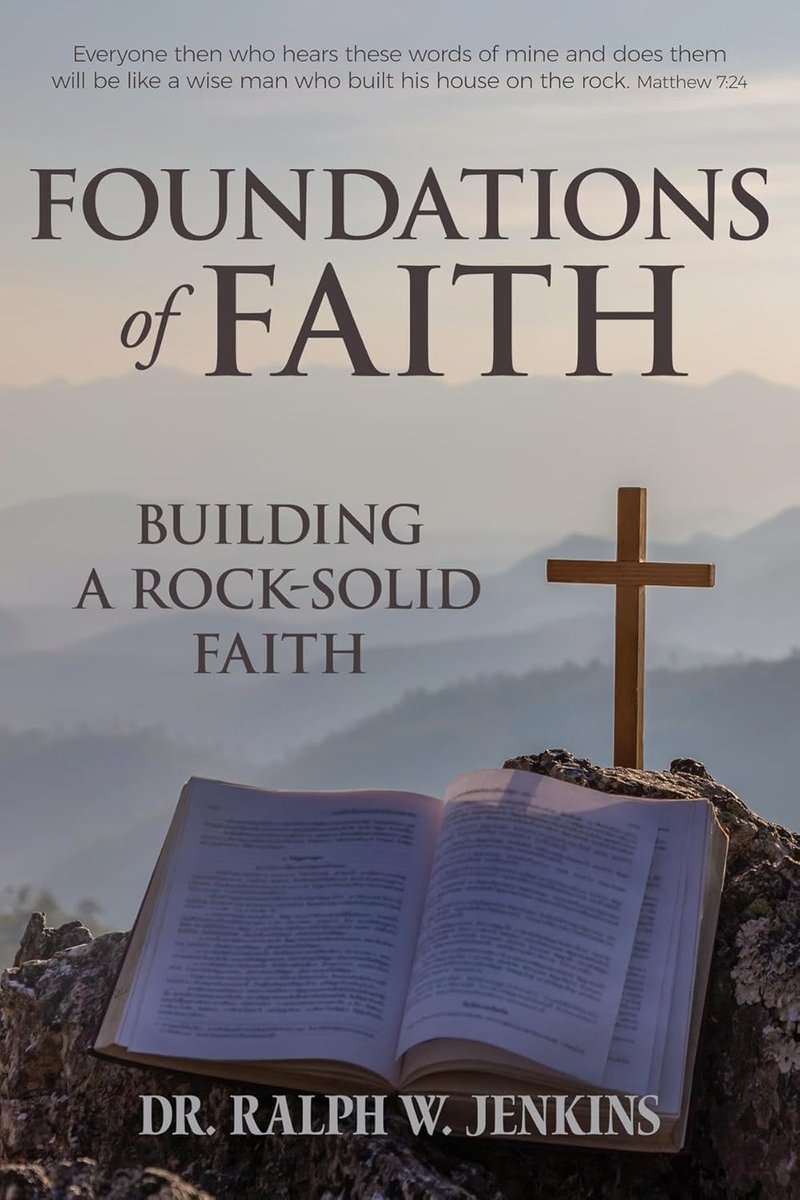
Foundations of Faith
Day 1: The Gift of Grace
Scripture: Ephesians 2:8-9 (NASB)
“For by grace you have been saved through faith; and that not of yourselves, it is the gift of God; not as a result of works, so that no one may boast.”
Further Scripture:
Titus 3:4-7: Emphasizes the kindness and love of God, not by works but by His mercy.
Romans 11:6: Highlights that if salvation is by grace, it cannot be based on works.
2 Timothy 1:9: God saved us and called us to a holy life, not because of anything we have done but because of His own purpose and grace.
Foundations of Faith
Day 1: The Gift of Grace
Scripture: Ephesians 2:8-9 (NASB)
“For by grace you have been saved through faith; and that not of yourselves, it is the gift of God; not as a result of works, so that no one may boast.”
Prayer:
Heavenly Father, I am in awe of Your grace. Thank You for saving me, not because of anything I have done, but because of Your great love and mercy. Help me to live each day in the reality of Your grace, extending it to others and growing in my faith. May my life reflect Your goodness and lead others to see the beauty of Your grace. Amen.
Personal Reflection:
How does the understanding that salvation is a gift of grace change my approach to God and to others today? What can I do to show gratitude for God’s grace in my daily life?