CMS finalized the TAVR NCD. Asymptomatic severe AS is now covered under CED.
The bottleneck moves upstream: these patients have no symptoms to present with, so they only exist as an echo report nobody flagged.
Coverage changed. Detection hasn't. #AorticStenosis#TAVR
In the September Heart Rhythm, Corsi and colleagues note that despite large improvements in leads and devices, no intraprocedural method is widely accepted for including or excluding a given coronary sinus lead placement. Two papers in that issue go at it. #EPeeps
TRAJECTORIES, Corsi et al, six centers, open access: https://t.co/iL4fwpKDhv activation delay,
Poviser and Curila: S1547-5271(26)00219-5
Photon-counting CT, paced QRS and lead location: S1547-5271(26)02228-9
More than 94,000 patients with moderate aortic stenosis, and nearly two in five had no follow-up echo within two years. Mayo and Kaiser report the same gap. Guidelines say repeat the echo every one to two years, but nothing tracks whether it happened. #ValveDisease
@escardio@DrMarthaGulati The hard part of starting earlier is that people in their twenties have no cardiology encounter to attach prevention to. The evidence for earlier risk assessment keeps getting stronger while the pathway for acting on it in that age group barely exists.
@hrs_journal@LukasPoviser@curilakarol What changes here is when the information is available. QLV has predicted CRT response for years but could only be measured once the patient was on the table, so it never informed the decision to implant. Surface leads put the number where the decision actually sits.
@EricTopol@AnnalsofIM A J shape is also the hardest thing to operationalize. Every alert in every EHR is a threshold, so the band where risk is lowest cannot be encoded as a rule, and the result is that these values stay in the chart as information rather than becoming anything a clinician acts on.
The second analysis pooled the same 5,890 patients and read ischemic stroke as comparable, with the same reduction in non-procedure-related bleeding.
https://t.co/I6DYB7IzBz
Two meta-analyses of the same four LAAC vs DOAC trials, weeks apart, agree on the bleeding benefit and diverge on ischemic stroke. The signal is not significant with OPTION in the pool (RR 1.36) and significant without it (RR 1.45). #AFib#EPeeps
https://t.co/LnJyECx4GB
Open access pilot in Structural Heart. An echo AI model's HFpEF output did not change significantly after shunting dropped exercise PCWP by 7.4 mmHg, which the authors read as the model reflecting chronic phenotype rather than loading state. #EchoFirst https://t.co/CkjBG3ljgi
HF remains one of the most urgent challenges in cardiovascular care: 425K+ deaths, 7M patients, and costs of $858B.
TAILRD is collaborating with @MountSinaiHeart
to apply AI-driven insights that identify risk earlier, optimize GDMT, and improve outcomes at scale.
@HFSA
🚨 The numbers are staggering:
425,000+ deaths from heart failure in the past year
6.7M Americans living with HF today → projected 11.4M by 2050
$858B in costs expected by 2050
The HF Stats 2025 Report delivers urgent insights & a roadmap for change.
Watch the highlights: https://t.co/uwMnbbLHxc
This work is close to my heart ❤️
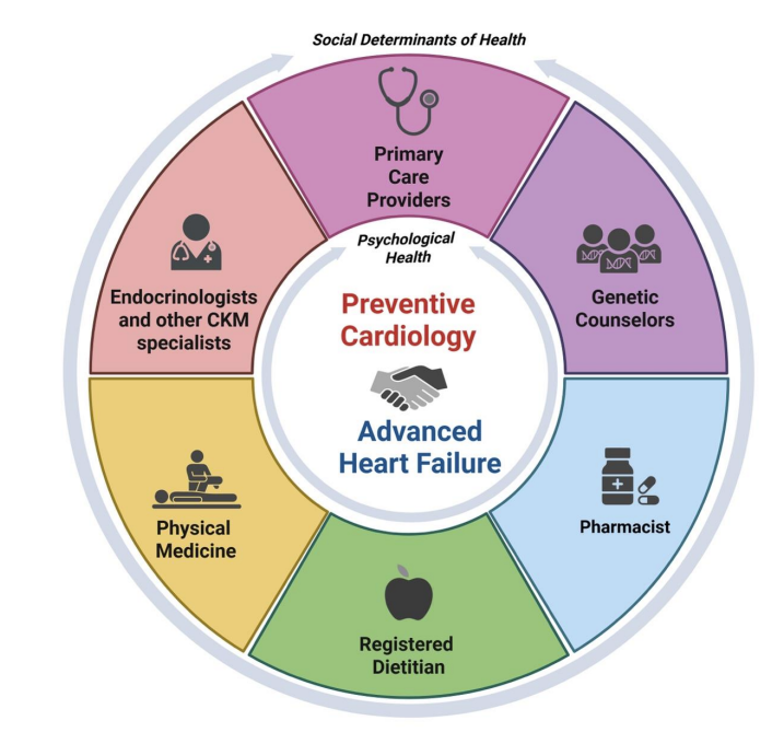
I’m grateful to join colleagues from @HFSA & @ASPCardio on the 1st joint scientific statement reframing #FunctionNotFailure care—seeing the whole person, across their entire healthspan --- NOT as fragmented problems in silos.🧘♀️
From “at-risk” to advanced HF—prevention must be woven into every stage!
Grateful to @DrMarthaGulati & 🌟colleagues for sharing this vision.
Check it out @JCardFail : https://t.co/MF3ChGMOdV
#CardioPrevention #CKMSyndrome #HeartHealth #HealthScience @rcstarling@DLBHATTMD@JennaSkowronski@CMichaelGibson