A Kentucky family turned down a $26 million offer to sell their farm for a proposed AI data center.
For them, preserving generations of farmland, protecting local resources, and maintaining their way of life was worth more than the money.
Across the country, communities are being asked to give up land, water, and power to support the rapid expansion of AI infrastructure.
Americans are pushing back against Big Tech.
🚨Join the fight!🚨
“As a new report suggests, electricity demand from data centres could outstrip clean power from renewables and lead to new gas plants. Before committing fully, we need granular detail on how much water and energy these centres use.”
https://t.co/BKqYErQsxF
@JPBWFarm Am I hearing right ? The "Labour" party want to get rid of 90% of Dartmoor's ponies !
These ponies this country side is our
Heritage, next will be the Exmoor ponies
these animals are part of England forever
been here our love for them is massive.
How can we stop this lunacy ?
@JPBWFarm Anyone that would like to support our campaign to save the Dartmoor hill ponies please please please sign the petition https://t.co/v2mLmwk2BQ
Natural England wants to remove 90% of Dartmoor’s ponies.
Our Exmoor ponies are next. These animals have been here for thousands of years.
A government quango, destroying the countryside and its heritage.
The growing extraction of rainforest resources is pushing the Amazon and similar biomes towards breaking point, a report has shown.
https://t.co/RRfb1rhedF
"Globally, we’ve lost over 50% of the phytoplankton biomass since the 1950s, and we’re continuing to lose it about 1 to 2 percent a year. Never mind nuclear war. This is what’s going to kill us.”
You know the phytoplankton that creates most our our oxygen
https://t.co/RRiqCOkJro
Devastating footage of rain of burning phosphorus falling over Kostiantynivka.
Russians are scorching the earth, wiping out every living thing in the Donetsk region.
Think this one through. Beautiful olive trees that grow and mature and serve as the livelihoods of families. People who think they are righteous and devoted to an all-seeing god, burn them down. And it happens again and again and again.
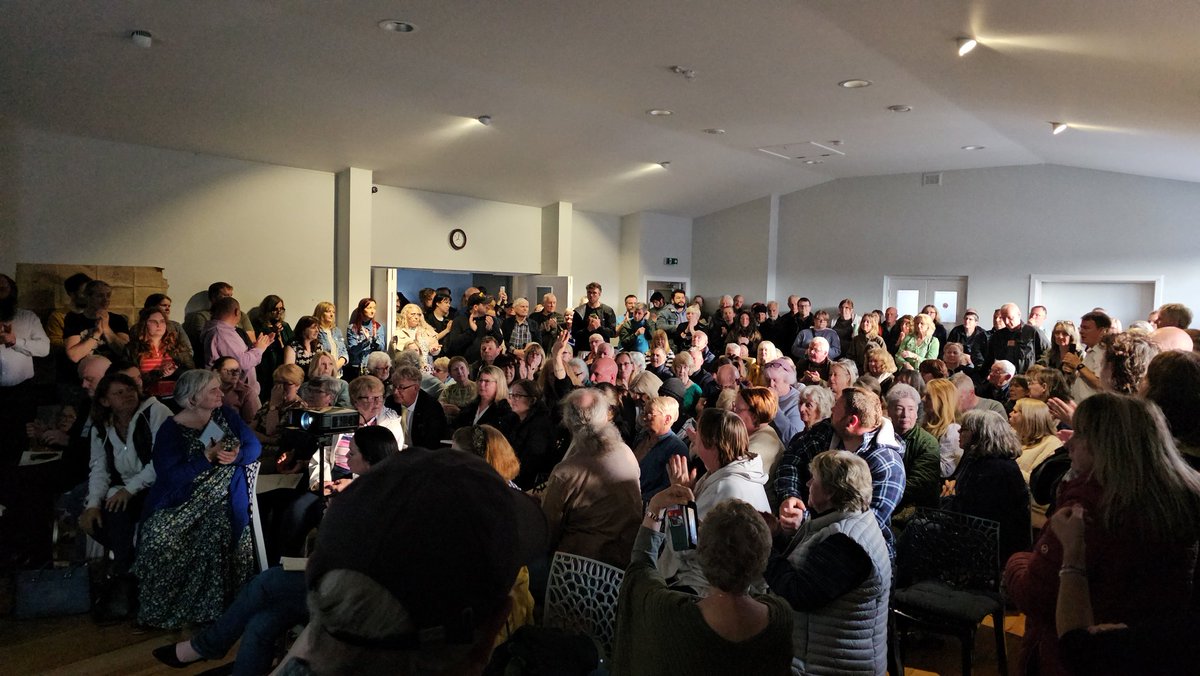
Tonight's meeting in Auchtertool about the 600MW AI data centre.
Fifers are furious. Looks like Fife Council fast-tracking data centre despite it:
- Consuming half of Scottish household electricity
- No Environmental Impact Assessment EIA
- Looking like it has landed from space
A 2022 study from Finland found that bumblebees exposed to Roundup lost the ability to tell flowers apart by color within hours.
A 2023 follow-up found exposed bees lost their attraction to UV light, the spectrum bees use to read nectar guides invisible to humans.
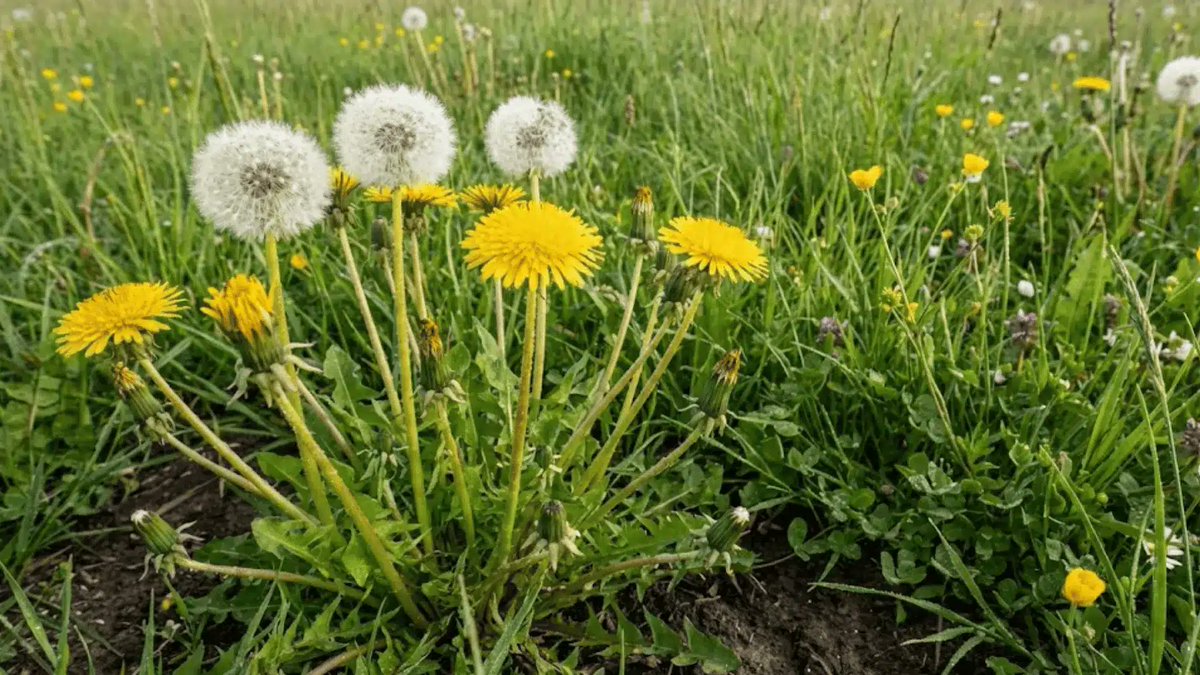
If you have to get rid of your dandelions, pull them, don't spray them.
The reason we think dandelions are weeds is because of a 1950s marketing campaign.
Dandelions, native to Europe and Asia, were brought to North America in the 1600s by European colonists who grew them deliberately.
Every part is edible. The leaves are a salad green, the flowers were made into wine, and the roots were roasted as a coffee substitute and used medicinally for liver and kidney conditions for thousands of years. They were a kitchen-garden staple well into the 1800s.
The shift happened after World War II, when 2,4-D (originally developed for chemical warfare research) was approved as a residential herbicide. Companies like Scotts built the modern lawn-care industry around the idea that a perfect green lawn meant zero broadleaf plants.
Dandelions, being bright yellow and resistant to mowing, became a visible enemy, and the campaign worked. By the 1970s, "dandelion-free" was synonymous with "well-kept."
They aren't native, but they aren't doing significant ecological harm either. The herbicides used to kill them, on the other hand, kill bees, contaminate groundwater, and have been linked to non-Hodgkin lymphoma in humans.
If you hate dandelions, it's most likely due to a marketing campaign that ran before you were born.
Supertrawlers Are Taking Antarctic Krill That Whales Depend On
Due to the growth of factory fish farms, supertrawlers as long as football fields now work the same space as krill-eating whales
It is completely unsustainable to empty the seas of krill so vital for our beleaguered wildlife
#WakeUpWorld
@CIWF_Global
https://t.co/toUT03UbPZ