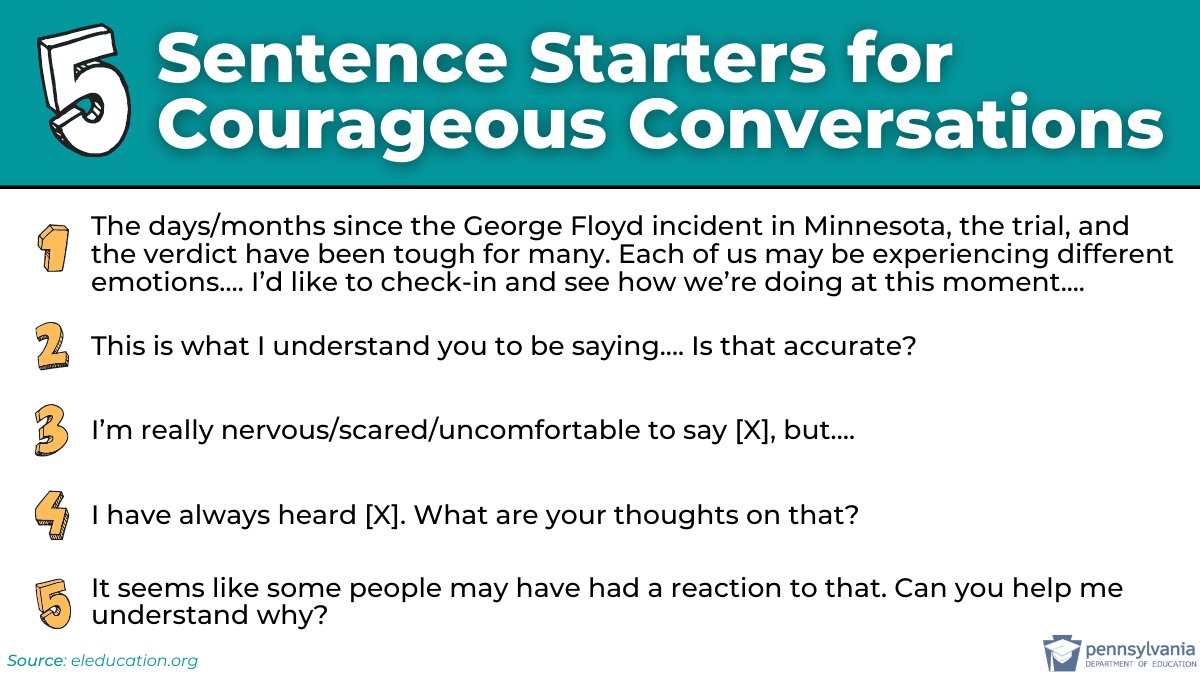
Your community may be exhibiting a range of emotions right now. These emotions are important to acknowledge + support in safe and trusted spaces.
We offer sentence starters ⤵️ to engage your community + support the very important and brave conversations that are/will take place.
The author of one of the nation’s most influential and widely used curriculum for teaching reading is beginning to change her views. https://t.co/vH6e1VabWb
"#ILANext—ILA’s professional learning event tailored to the unique needs of educators in today’s digital and hybrid environments—kicks off on Saturday with the first of four weeks of Main Stage Sessions." https://t.co/koXeSwTRHC
Schools may be closed until further notice, but learning should continue – and we must do everything we can to create equitable learning environments for all students.
We developed a collection of resources ⤵️ to help. https://t.co/LVi8Crl7kb
In our latest @TILESIG post, @AWhite100 asks readers to reflect upon their daily digital reading habits. What are your digital reading habits? How often do you engage with digital text? What kinds of text do you consume digitally? https://t.co/6PZQ6psuAt
Today for #TeacherAppreciationWeek, we’re giving you a discount code! Use TEACHERWK19 to get a free one-year subscription to The Reading Teacher with your membership! Applies to new or renewing memberships.
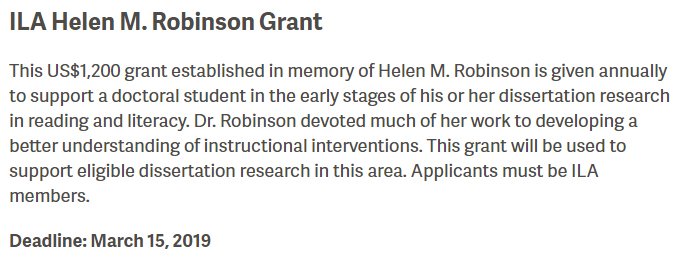
Are there any doctoral students out there just beginning their dissertation research? Check out the ILA Helen M. Robinson Grant for a chance at some additional funding: https://t.co/zX51wY9Jrh
If you are also interested in promoting technologies as tools for improving the quality of reading/language arts instruction and enhancing children’s interest in recreational reading, join ILA’s @TILESIG. Find out more: https://t.co/79zT2NCj2G
@ILAToday extended the deadline for #ILA2019 proposals! Become a member for free and submit a proposal to present at our roundtable! https://t.co/BEkzsfJFqK
The deadline for proposal submissions have been extended one week through Oct. 29! If you didn’t have time to finish yours, now’s your chance. https://t.co/NqmwZFS6DH
@mjsol @ila2019 Correct! #ILA2019 applications are due the 22nd. But to present with @TILESIG, we ask you to submit today, so we can compile our presentation proposal. It only takes a few minutes to apply with our group!
Hey @TILESIG members: Would you like to present at #ILA2019 with us? Fill out this form: https://t.co/BEkzsfJFqK! Not a member yet? Join us; it's free! See the membership page on the same website. :)
Hey @TILESIG members: Would you like to present at #ILA2019 with us? Fill out this form: https://t.co/BEkzsfJFqK! Not a member yet? Join us; it's free! See the membership page on the same website. :)
This article revisits the reading science behind a structured phonics approach - especially for those with #dyslexia. Read it (or listen); use it to spark important discussions about #literacy.
“Children can learn to decode words without knowing what the words mean. To comprehend what they're reading, kids need a good vocabulary, too. That's why reading to kids and surrounding them with quality books is a good idea.” https://t.co/Xy7wF5pNqa
There’s much more to reading fluently than simply reading quickly. Our literacy brief explores these three aspects of fluency: reasonable accuracy, appropriate reading rate, and suitable expression. https://t.co/x30UGJonDK
In our latest Teaching With Tech post, our Technology in Literacy Education SIG suggests cloud-based tools to use with digital writing assignments. Which #edtech tools do you use with students in your class? https://t.co/2yo48HETSm
Phonics instruction can be a tricky topic to explain to noneducators. Our literacy leadership brief breaks down how educators should address this topic when speaking to the families of students. https://t.co/jCh9Utj8iW