The single best match for today’s Gospel (Mt 14:22–33)—the warning against presumption and the rescue from despair—is Shūsaku Endō’s short story “A Fifty‑Year‑Old Man.”
Why this story fits the Gospel exactly: Endō gives us a protagonist who is quietly proud of his competence, then suddenly overwhelmed by life, and finally saved by a grace he did not earn—precisely the arc of Peter walking, faltering, and being lifted.
#CatholicFiction #CatholicWriters #Endo
The #GospelOfToday (Mt 14:22-33) teaches us the importance of not getting carried away by success and of never being presumptuous. At the same time, it teaches us not to despair, even in moments of darkness, when we feel powerless in the face of problems.
What is “Peak Humanity”?
Beautiful thread, but I’d push one layer deeper: none of this — Michelangelo’s ceiling, Mozart’s Requiem, the Odyssey — is Peak Humanity on its own. It’s evidence of it.
The actual peak isn’t population, output, or genius. It’s grace meeting a free “yes.” God became man so man could be divinized — not by talent, but by cooperating with what he’s freely given. Every fresco, every symphony, every cathedral is only ever a sign pointing past itself to that.
Which means the numbers going down changes nothing essential. A smaller, faithful people saying yes to grace is still Peak Humanity. The Chapel doesn’t need a bigger audience to mean what it means — it needs souls who understand what it’s pointing at.
We are at Peak Humanity. Yes – this is what it looks like.
Western Civilization is at its most numerous, most prosperous, and most advanced in history. The numbers will only go down from here. The demographic trajectory is set. We cannot vote our way out of arithmetic.
But look at what we have. Look at what was built.
The Sistine Chapel – one man, four years, on his back, half-blind, arguing with the Pope, repainting what wasn’t right, hiding the human brain in the hand of God because he understood that the divine gift to man is Reason. Still there. Still looking down at us.
Mozart – dying at thirty-five, in debt, Requiem unfinished, buried in a pauper’s grave. Leaving behind Eine Kleine Nachtmusik, the Jupiter Symphony, Don Giovanni, the Queen of the Night – melodies so perfect they feel like they were always there, waiting to be found rather than composed. Still playing, two hundred and thirty years later, every week, somewhere in the world.
The Odyssey – three thousand years old, still true. The man who refused immortality and chose home. The particular over the abstract. Ithaca over paradise. Still the right answer.
The Winged Hussars descending at Vienna. The Parthenon catching the morning light. Chartres rising above the plain. Bach’s counterpoint – multiple voices pulling in different directions, producing something more beautiful than any single voice could achieve alone. The moon landing. The printing press. The vaccine. The steam engine. The Magna Carta. The rule of law. The idea that every human being has dignity that no king, no state, and no ideology can take from them.
This is the inheritance. This is what Peak Humanity looks like from the inside – when you stop looking at the news for a moment and look at what the civilization actually produced.
The numbers will go down. The beauty doesn’t have to. The genius doesn’t have to. The greatness doesn’t have to. These are not functions of population size. They are functions of what a civilization believes in, builds, and transmits – and what it chooses to defend.
The lives of our children and grandchildren can still be great. The Sistine Chapel will still be there. Mozart will still be playing. The Odyssey will still be true. The question is whether enough people understand what they are inheriting – and whether they are willing to pass it forward.
We are at Peak Humanity. We built extraordinary things on the way here.
Now build something worthy of standing next to them.
@PaxAeterna “Lord Jesus, transfigure our ordinary days. Let Your light break through the fog. Give us the courage to keep listening until the morning star rises in our hearts.”
Amen, brother.
What work of Catholic fiction best illustrates today’s Gospel message?
The single best match for today’s Gospel (Mt 14:22–33)—the warning against presumption and the rescue from despair—is Shūsaku Endō’s short story “A Fifty‑Year‑Old Man.”
Why this story fits the Gospel exactly: Endō gives us a protagonist who is quietly proud of his competence, then suddenly overwhelmed by life, and finally saved by a grace he did not earn—precisely the arc of Peter walking, faltering, and being lifted.
#CatholicFiction #CatholicWriters #Endo
Rumer Godden’s In This House of Breden, which dramatizes the exact spiritual arc of Habakkuk → Psalm 9 → Matthew 17: faith that persists through confusion, delay, and the hiddenness of God.
Why it fits today’s readings:
• Habakkuk’s protest: The protagonist, Philippa Talbot, enters the monastery expecting clarity and order but instead encounters confusion, injustice, and unanswered questions.
• Psalm 9’s assurance: The novel repeatedly shows that God remembers the afflicted, even when His help comes slowly or through unexpected channels.
• Matthew 17’s rebuke: The nuns must learn that faith is not passive waiting but courageous, active trust — especially when their own efforts seem to fail.
Godden’s genius is quiet, sacramental realism: she shows how God works through ordinary, slow, hidden processes, mirroring the readings’ insistence that the just shall live by faith even when God seems silent.
#CatholicWriters #RumerGodden
Today’s combined message from the readings in the Catholic Church is:
God is not absent in delay, disorder, or struggle; He calls the believer to steadfast, active faith that trusts His word even when circumstances contradict it.
This is the heart of Habakkuk’s lament, the Psalm’s assurance, and Christ’s rebuke of the disciples’ unbelief.
What work of Catholic fiction illustrates this best?
#CatholicFiction #TodaysReadings
@NGATU25 $1 billion in just 6 days is still insane.
Only one movie in history did it faster — Avengers: Endgame in 5 days. Everything else took 11+ days.
Saint for August 7, 2026: Saint Cajetan of Thiene, Patron of the Unemployed
Saint Cajetan of Thiene, presbyter, who piously devoted himself to works of charity in Naples in Campania, especially for those afflicted with incurable plague, promoted religious associations for the laity, and founded the Clerics Regular to reform the Church, handing down to his disciples the duty of cultivating the ancient apostolic way of life.
He is traditionally invoked for employment, bread, work, and economic hardship. This patronage reflects his trust in Divine Providence and his practical commitment to helping people in need—not a promise that prayer will produce wealth automatically. 2
A central lesson from Saint Cajetan is:
Trust in God’s providence while acting faithfully and responsibly.
He is especially appropriate to invoke when seeking a job, facing unemployment, struggling to support a household, or trying to overcome anxiety about material needs.
Prayer to Saint Cajetan Saint Cajetan, faithful servant of God and helper of the poor, intercede for me in my financial needs. Obtain for me the grace to work diligently, make prudent decisions, and trust God’s providence. Help me to seek honest work and to remain generous toward those who are in greater need. Through Christ our Lord. Amen.
#saint #unemployment
Many Catholic novels illustrate the same reality highlighted by the saints: prayer is frequently difficult, consolations can disappear for long periods, and perseverance itself becomes an act of love and trust.
The Diary of a Country Priest and Silence are especially direct in portraying aridity and the felt absence of God while affirming that continued fidelity matters.
#CatholicFiction #CatholicWriters #Bernanos #Endo
7 Saints Who Found Prayer Difficult
And What Helped Them Persevere
1. St. Francis de Sales
When your mind will not stay focused!
He struggled with constant mental distractions and a restless mind during prayer.
He learned to gently return his attention to God without self-reproach.
Simple, short aspirations and trust in God’s patience became his way forward.
2. St. Teresa of Ávila
When you need help staying focused!
She often faced dryness, wandering thoughts, and difficulty concentrating in prayer.
She used structured methods like meditation on Christ’s life and the Jesus Prayer.
Her perseverance and practical advice later helped countless others stay focused.
3. St. Thérèse of Lisieux
When you keep falling asleep!
She frequently dozed off during prayer, especially after long days of work.
Instead of despairing, she offered her sleepiness to God as a childlike gift.
Her “Little Way” taught that even imperfect prayer is precious to the Father.
4. St. Jane Frances de Chantal
When distractions last for years!
She endured decades of mental noise, dryness, and relentless distractions.
Guided by St. Francis de Sales, she practiced quiet fidelity without forcing feelings.
Steady perseverance through long barren periods became her path to deeper union.
5. St. Faustina Kowalska
When your heart feels cold!
She experienced periods when her heart felt empty, cold, and unresponsive in prayer.
Jesus taught her to trust in His mercy even when she felt nothing.
She continued praying the Chaplet and offering her coldness as an act of love.
6. St. John of the Cross
When God removes spiritual comfort!
He passed through the Dark Night of the Soul, when all consolations disappeared.
He taught that this purification strips the soul of attachments so God alone remains.
Faithful prayer in total darkness led him to the deepest mystical union.
7. St. Teresa of Calcutta
When God feels completely silent!
For nearly 50 years she lived in profound interior darkness and silence from God.
She continued to pray, smile, and serve the poorest of the poor without consolation.
Her hidden fidelity in silence became one of the greatest modern witnesses of love.
PERSEVERE IN PRAYER.
GOD IS ALWAYS LISTENING.
Which work of Catholic fiction? Best illustrates today’s gospel message?
The single best work of fiction that embodies this theological arc — light before darkness, consolation before mission, glory before suffering — is The Lord of the Rings, especially Frodo’s experience in Lothlórien.
#CatholicWriters #CatholicFiction #Tolkien
Which work of Catholic fiction? Best illustrates today’s gospel message?
The single best work of fiction that embodies this theological arc — light before darkness, consolation before mission, glory before suffering — is The Lord of the Rings, especially Frodo’s experience in Lothlórien.
#CatholicWriters #CatholicFiction #Tolkien
Today the Church celebrates the Feast of the Transfiguration of the Lord, one of the great feasts of the liturgical year. In Matthew 17:1–9, Jesus is transfigured before Peter, James, and John.
The Transfiguration confirms that the humble carpenter from Nazareth is the glorious Son of Man Daniel saw.
The Gospel lets the disciples see that glory.
On Mount Tabor, Jesus briefly allows His divine glory to shine through His humanity. Why? Not simply to amaze Peter, James, and John.
Within a short time they will see Him betrayed, arrested, beaten, and crucified. Before they witness His humiliation, Christ gives them a glimpse of who He really is so that, when darkness comes, they will remember the light.
As the Preface for today’s Mass beautifully says, the Transfiguration was given so that “the scandal of the Cross might be removed from the hearts of the disciples.”
He gives light before darkness.
The disciples receive the mountain before Calvary.
Israel receives the promise before exile.
The Church receives Easter before Pentecost’s mission.
==
In our own lives, God often grants moments of clarity, consolation, or profound peace—not so that we can remain there, but so that those moments sustain us when prayer becomes dry, answers seem delayed, or suffering arrives.
Peter could not stay on the mountain. He wanted to build tents and preserve the moment, but Jesus led him back down into ordinary life, and eventually toward the Cross. The memory of Christ’s glory did not eliminate suffering; it gave suffering its meaning.
There is a lesson here for mature discipleship: faith does not consist in living continually on the mountain of consolation. It consists in remembering who Christ is when we find ourselves back in the valley.
Peter tells us why it mattered.
The Second Reading is especially striking because Peter writes decades later.
He doesn’t say, “I heard stories.” He says: We were eyewitnesses of His majesty.
That mountain became an anchor for Peter’s entire ministry. Whenever persecution, suffering, or doubt arose, he knew what he had seen. The memory of glory gave him courage to endure suffering.
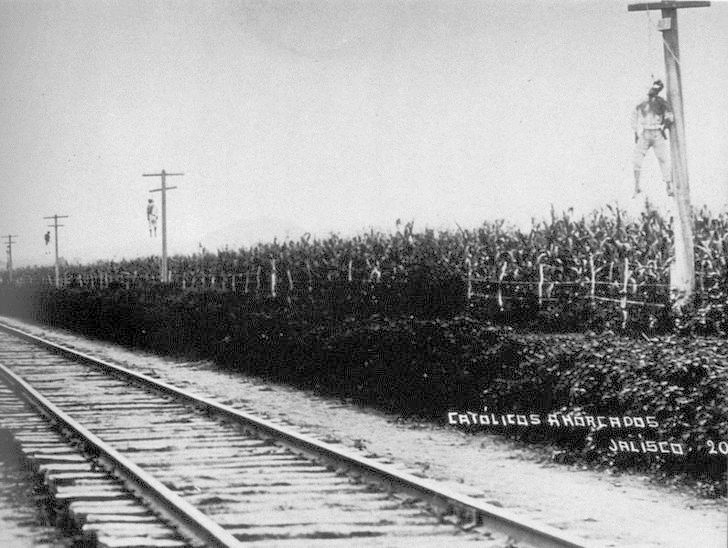
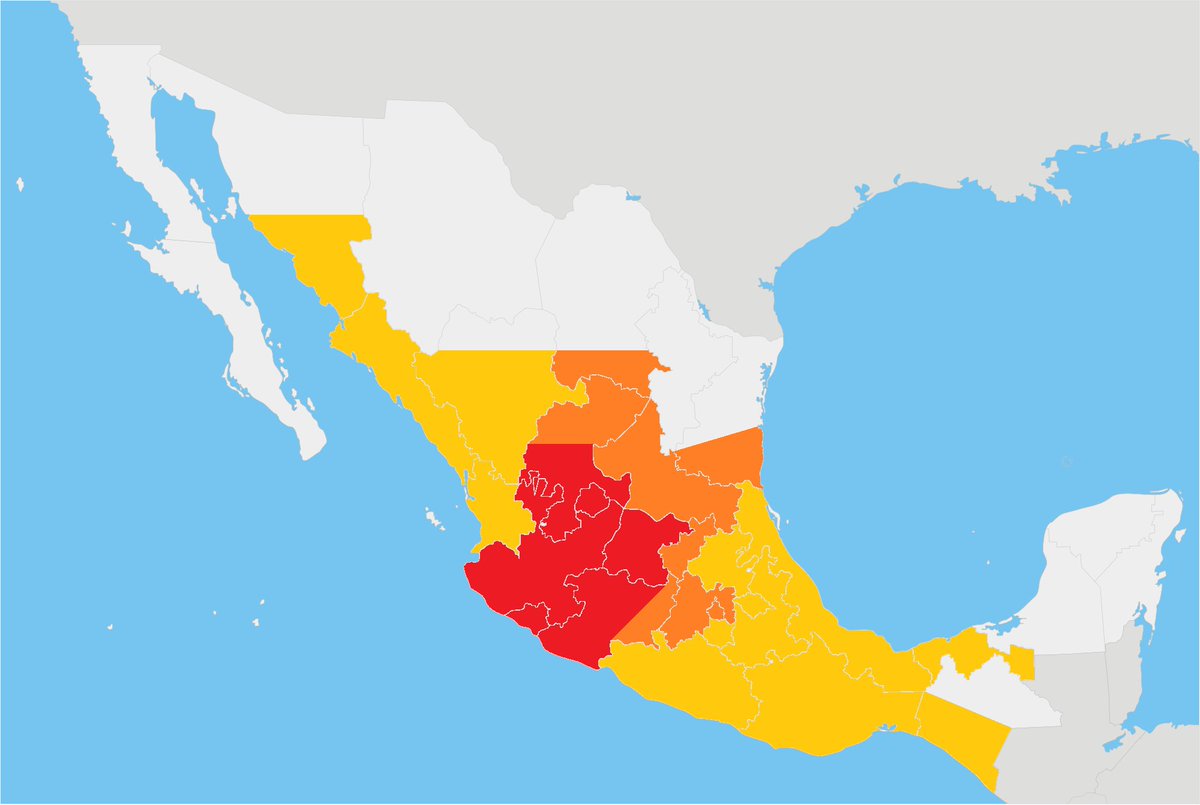
Catholic fiction related to Cristero War: Graham Greene’s The Power and the Glory: the whiskey priest and the flawed believer living amid institutional and personal ruin. Grace operates in the weeds; the mixture is interior as well as social.
Today we celebrate the 100th anniversary of the start of the Cristero War.
Mexican Catholics rose up in arms to reopen their Churches against government oppression.
“¡¡Viva, Cristo Rey!!” Long live Christ the King!!
Today’s readings (Memorial of St. John Vianney) are united by a single, deeply hopeful theme:
God restores the wounded through faith that trusts Him in the storm.
This theme unfolds progressively across the readings.
1. Jeremiah: God does not ignore our wounds—He promises to heal them.
Jeremiah begins with brutal honesty. Israel’s wounds are described as “incurable.” The people’s suffering is real, and it is connected to their sin. Yet God’s final word is not judgment but restoration:
“I will restore… You shall be my people, and I will be your God.”
The pattern is important:
God names the wound.
God reveals its cause.
God promises restoration and renewed covenant.
2. Psalm 102: The proper response is to cry out in trust.
The psalm assures us that God hears the prayer of the afflicted.
The sufferer is not forgotten. God bends toward those who call upon Him, preparing to rebuild Zion and reveal His glory. The movement shifts from God’s promise to our response: bring your need before Him.
3. Matthew: Christ enters the storm and saves those who reach for Him.
The Gospel makes Jeremiah’s promise visible.
The disciples are battered by wind and waves. Peter begins well—he actually walks on water—but when he fixes his attention on the storm instead of Christ, fear overtakes faith.
The crucial moment is not Peter’s failure.
It is Jesus’ immediate response:
“Immediately Jesus stretched out his hand and caught him.”
Then comes the question:
“Why did you doubt?”
The Gospel is not primarily about Peter’s weakness. It is about Christ’s readiness to save anyone who cries, “Lord, save me.”
The thread connecting everything
All three readings move through the same spiritual progression:
Woundedness — Israel’s exile; the disciples’ storm.
Human inability — no earthly remedy; Peter cannot save himself.
Turning toward God — prayer; crying out.
Divine intervention — restoration; Christ’s outstretched hand.
Renewed relationship — “You shall be my people”; “Truly you are the Son of God.”
A Catholic spiritual insight
Since today is also the memorial of St. John Vianney, the Church quietly adds another layer to these readings. Vianney spent decades listening to the wounds of sinners in the confessional. His ministry embodied today’s message: no wound is beyond Christ’s healing when it is honestly brought to Him. The Curé of Ars did not heal souls by his own power; he continually extended Christ’s mercy to those who came in faith.
#TodaysReadings
@CMAstfalk@PAProLifeFed Awesome! Love seeing Catholic authors highlight the beauty of life through stories. Thanks for sharing the episode — looking forward to watching! Kudos!
From @BishopBarron: Check out this new trailer for my film on #FlanneryOConnor!
Get early access and start watching right now: https://t.co/qtZ3nTEIsY… https://t.co/UtuFGV7Ny1
Also, from @beataproduction: You can watch “Uncommon Grace: The Life of Flannery O’Connor” for free on the PBS app.
What is the overarching theme connecting today's readings in the Catholic Church?
Authentic faith trusts God’s truth even when circumstances are frightening or God’s plan is difficult to accept.
At first glance, Jeremiah 28 and Matthew 14 seem unrelated. One concerns a dispute between prophets; the other, Jesus walking on water. But together they present two complementary aspects of faith.
1. Jeremiah: True faith chooses God’s truth over comforting illusions
The prophet Hananiah tells the people exactly what they want to hear: Babylon’s oppression will soon end, everything will quickly return to normal, and the crisis will disappear. Jeremiah would have loved that outcome himself, but he cannot proclaim what he wishes were true. He must proclaim what God has actually revealed.
The contrast is striking:
Hananiah offers false hope.
Jeremiah offers costly truth.
The temptation is timeless. We naturally prefer messages that promise immediate relief over those that call for endurance, repentance, and trust.
2. Matthew: True faith keeps its eyes on Christ in the storm
The Gospel picks up the same theme from another angle. The disciples are caught in a storm, and Peter actually walks on water while his attention remains fixed on Jesus. The moment he shifts his attention to the wind and waves, fear overtakes faith, and he begins to sink. Jesus immediately reaches out and asks:
“Why did you doubt?”
Peter’s problem wasn’t that the storm existed. It was that he allowed the storm to become more real to him than Christ’s presence.
The common thread
Together, the readings teach that faith is anchored not in pleasant circumstances but in God’s reality.
Jeremiah refuses comforting lies.
Peter learns not to be ruled by frightening appearances.
Both are called to trust God when that trust is costly.
A deeper Catholic insight
The readings also reveal an important distinction between hope and optimism.
Optimism says:
“Everything will probably work out quickly.”
Christian hope says:
“Whatever happens, God remains faithful, and I will remain faithful to Him.”
Hananiah preached optimism. Jeremiah preached hope.
Peter lost hope for a moment because the storm seemed stronger than Christ. Jesus gently teaches him—and us—that grace is always stronger than the waves.
What work of catholic fiction best illustrates this common theme?
For today’s specific theme—remaining faithful to God’s truth amid uncertainty, refusing comforting illusions, and trusting Christ in the storm, Flannery O’Connor’s short story, Revelation, is the best match.
Mrs. Turpin believes she understands God’s favor and her own righteousness. Then an unexpected encounter shatters her comforting illusions.
Like Hananiah in Jeremiah, she has constructed a reassuring narrative about reality. God disrupts it. The story ends not with easy answers but with a vision that forces her to see herself truthfully.
Today’s connection: God prefers difficult truth over comforting illusion.
#FlanneryOConnor
QUESTION: Does any Catholic fiction Illustrate the “useful idiot” dynamic?
That is, naive or idealistic supporters of revolutionary, progressive, or atheistic ideologies who later face betrayal, persecution, or the destruction of what they valued.
ANSWER: Lord of the World by Robert Hugh Benson (1907)
This dystopian novel by the English Catholic priest and convert is the strongest literary parallel.
It depicts a near-future world (set roughly in the early 21st century) dominated by secular humanism, materialism, and a form of international socialism/communism fused with Freemasonry-like elements. A charismatic global leader rises who embodies a humanitarian “new religion” of peace, equality, and progress while systematically marginalizing and then persecuting the remaining Catholic Church.
Benson shows how the triumph of these progressive, godless ideals—often advanced under banners of justice, unity, and human betterment—leads to the suppression of faith, the nationalization or secularization of religious spaces, euthanasia, and the erasure of traditional institutions.
The novel portrays the endgame of ideologies that many well-meaning people might support or accommodate, only for those systems to turn totalitarian and hostile to Christianity.
Multiple popes (including Francis) have recommended it as prophetic and as a warning against “worldly totalitarianism,” “ideological colonization,” and “teenage progressivism.”
#CatholicFIction #CathokicWriters #RobertHughBenson #LordoftheWorld