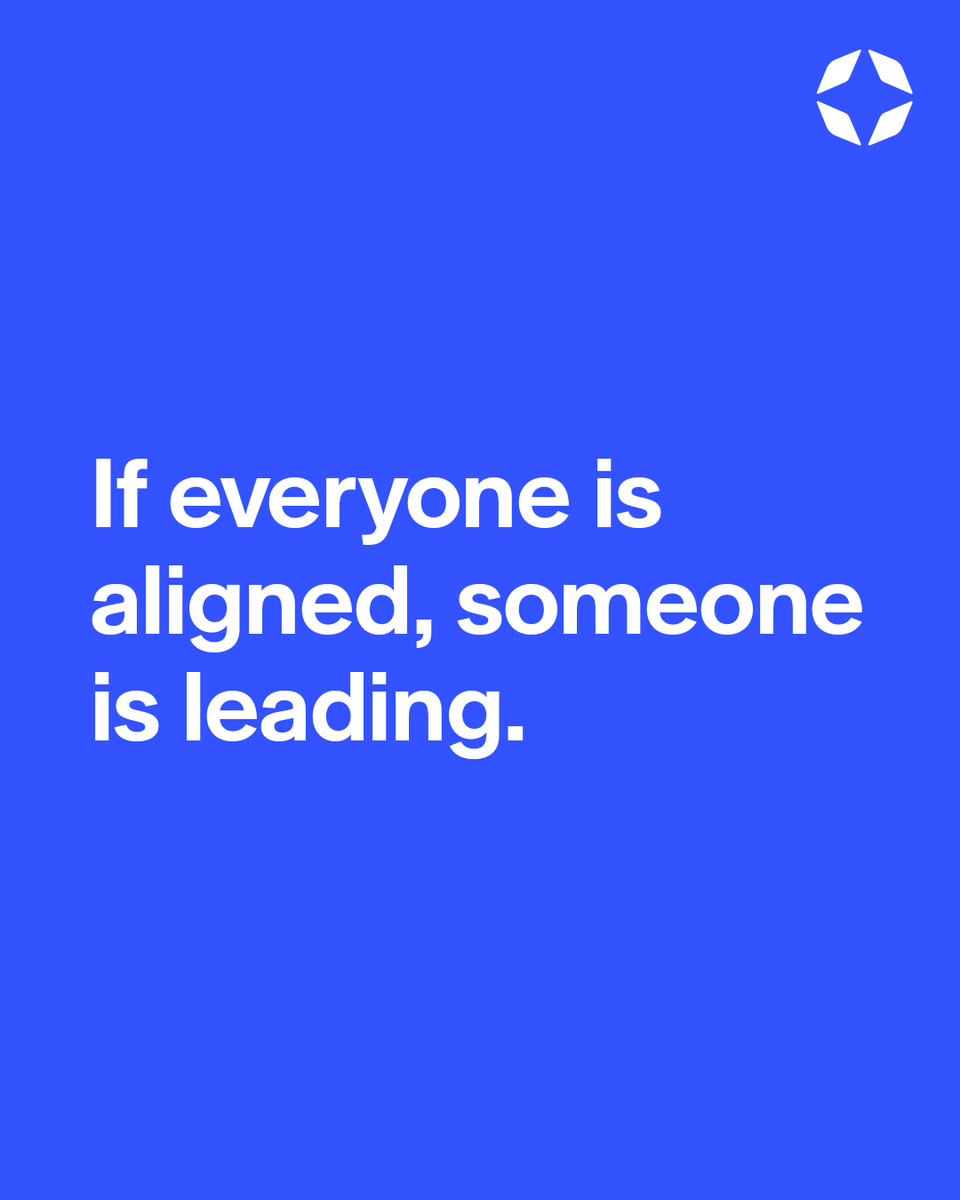
Hesitation often comes from not knowing the next step.
When your direction is clear, your confidence grows, and your actions become stronger.
Clarity gives movement to your goals.
What do you need to clarify today?
The best asset we have for making a contribution to the world is ourselves. If we underinvest in ourselves, and by that I mean our minds, our bodies, and our spirits, we damage the very tool we need to make our highest contribution.
The faster and busier things get, the more we need to build thinking time into our schedule. And the noisier things get, the more we need to build quiet reflection spaces in which we can truly focus.
Creativity, clarity, and problem-solving don't come from pushing harder.
They come from making space to think.
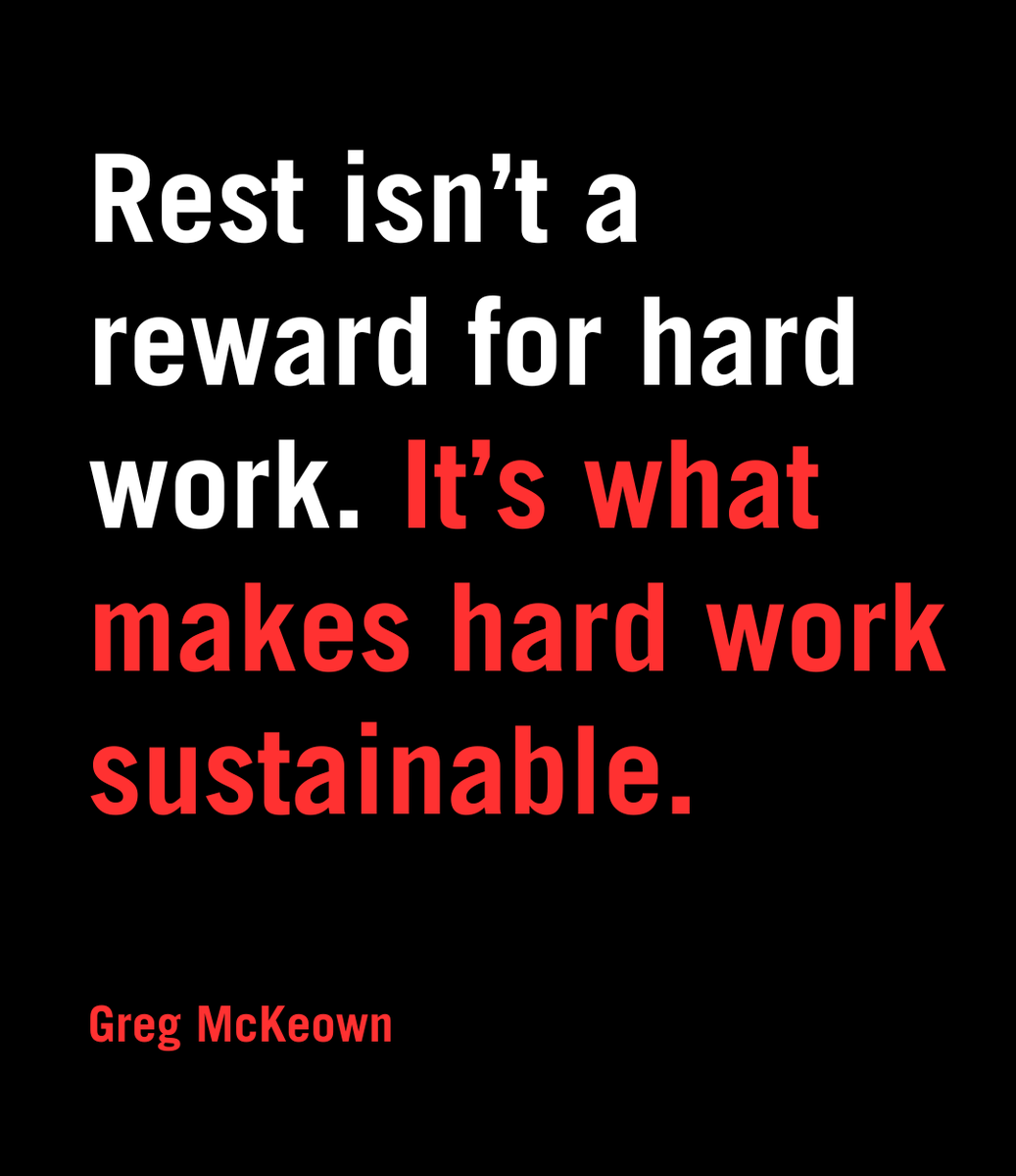
We've been taught to see rest as something we earn—a break after we've pushed ourselves to the limit.
But the most effective people don't wait until exhaustion forces them to stop.
They rest before they need it.
Lin-Manuel Miranda didn't create Hamilton by grinding nonstop—he was on vacation when the idea struck.
"The moment my brain got a moment's rest, Hamilton walked into it," he said.
Baseball manager Joe Maddon applied the same principle.
During the long summer stretch of the MLB season, he built in extra rest for his players to keep them sharp—helping the Chicago Cubs win their first World Series in 108 years.
When you step back, ideas step forward—and so does your performance.
Sleep allows us to operate at our highest level of contribution.
Entrepreneurs like Jeff Bezos and Mark Andreesen swear by the need for 7-8 hours of sleep.
The stigma of going nights without sleep is fading, but I am here to put the nail in the coffin.
Jeff Bezos says, "I am more alert, and I think more clearly. I just feel so much better all day long if I've had eight hours."
Mark Andreessen @pmarca, a reformed sleep restrictor who used to work till the early hours but is still up at 7am, is another.
He said, " I would spend the whole day wishing I could go home and go back to bed."
Now he says of his level of sleep, "Seven [hours] and I start to degrade. Six is suboptimal. Five is a big problem. Four means I'm a zombie."
On weekends, he sleeps twelve-plus hours.
The logic of an Essentialist is that there are only a few things of exceptional value, with most everything else being of far less importance.
The problem with being sleep-deprived is that it compromises our ability to tell the difference, and thus our precious ability to prioritize.
Sleep will enhance your ability to explore, make connections, and do less but better throughout your waking hours.
Essentialism, pg.101
What if the real problem isn’t lack of time but lack of clarity?
Not everything deserves your attention.
Not everything earns your energy.
When you say yes to what matters most, you quietly say no to everything else.
Being good at what nobody is doing is better than being great at what everyone is doing.
But being an expert in something nobody is doing is exponentially more valuable.
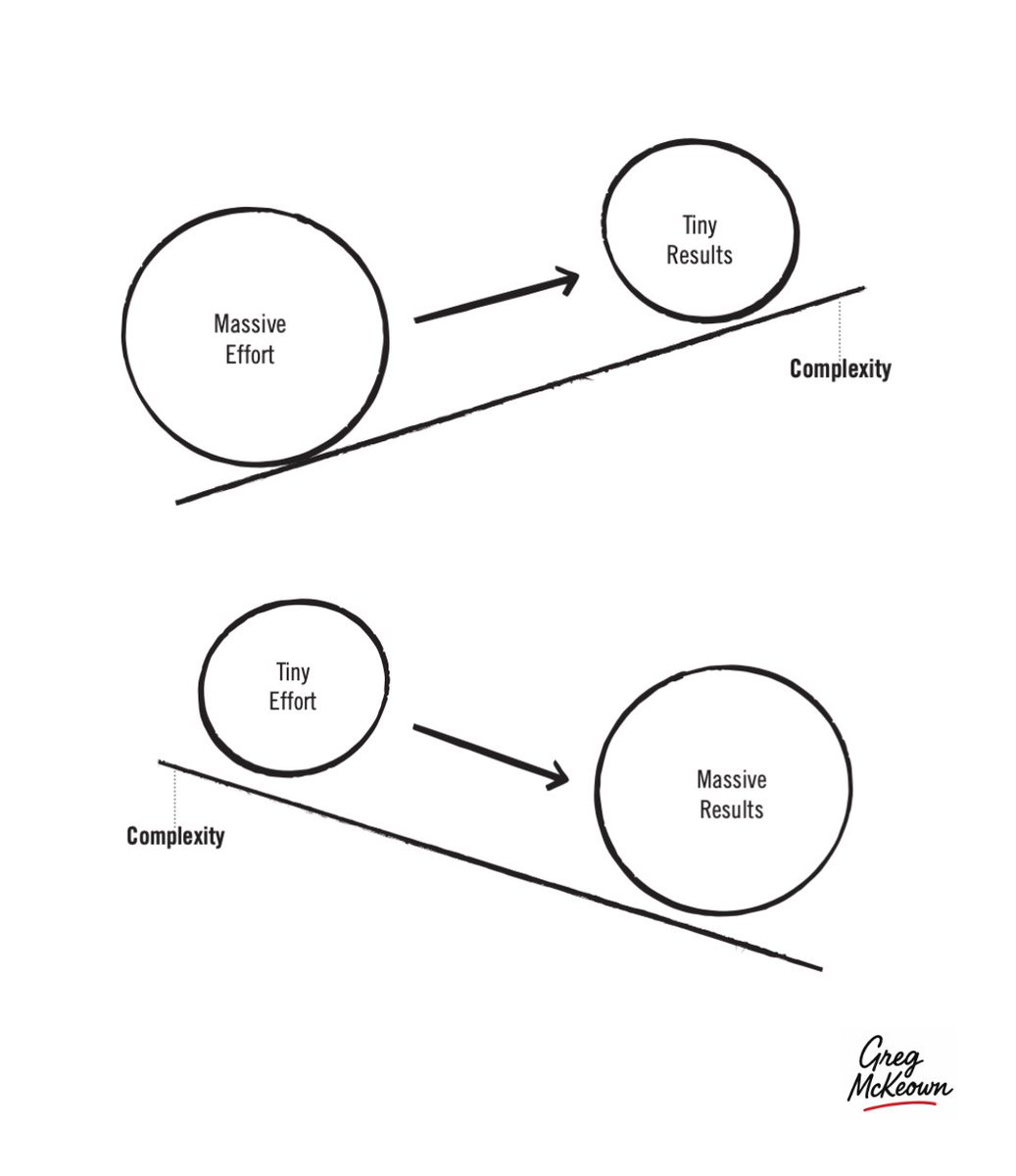
"If you can think about how hard it is to push a business uphill, particularly when you're just getting started, one answer is to say: 'Why don't you just start a different business you can push downhill?'"- @SethGodinBlog@ReidHoffman, cofounder of LinkedIn, said it differently but meant the same thing: "Part of the business strategy is to solve the simplest, easiest, and most valuable problem. And actually, part of doing strategy is to solve the easiest problem."
We think that to be extraordinarily successful we have to do the things that are hard and complicated.
But what if that's wrong?
@ariannahuff used to buy into the notion that anything worth doing required superhuman effort.
She has since said she didn't become truly successful until she stopped overworking herself. "
It's also our collective delusion that overwork and burnout are the price we must pay in order to succeed."
Warren Buffett has described his investment strategy as "lethargy bordering on sloth."
He's not looking for companies that require enormous effort to achieve profitability.
In his words: "I don't look to jump over 7-foot bars: I look around for 1-foot bars that I can step over."
Of course there are hard paths to success.
But those stories have created a false impression that pushing uphill is the only path.
When a strategy feels like pushing a boulder up a hill — pause.
Invert the problem. Ask: "What's the simplest way to achieve this result?"
When we remove the complexity, even the slightest effort can move what matters forward.
Constraints aren’t the problem.
Untapped team intelligence is.
When resources are tight, I’ve seen teams innovate more, not less, when leaders ask, not dictate.
“Do more with less” works...
If we multiply what’s already in the room.
#Multipliers#DoMoreWithLess#Innovation
Remember: Producing a great result is good. Producing a great result with ease is better. Producing a great result with ease again and again is best.
Effortless, pg 77
Most companies don't get focused until they have to.
Until failure forces them.
Ask any successful turnaround and you'll find the same story: they were doing too many things.
They had to face that reality. Then they got focused.
The complexity. The noise. The undisciplined pursuit of more.
It almost always takes a crisis to fix it.
Failure is the most common cause for suddenly getting out of the undisciplined pursuit of more.
You don't have to wait for failure to teach you.
You can choose to become an Essentialist now.
Not the kind of leader who reacts to crisis.
•The kind who leads before crisis arrives.
•The kind who focuses before they have to.
•The kind who employs the disciplined pursuit of less while everything is still working.
That's rare. Most leaders won't do it until the threat of failure forces them.
They look at what everyone else is doing—more projects, more initiatives, more everything—and they ask: "What if we did less, better?"
They cut before they crash.
They focus before they fail.
What would change if you focused before you had to? 👇🏼
Responsibility reveals character.
Owning outcomes, especially in challenging moments, shows true leadership.
Character is proven through accountability.
Where are you choosing responsibility today? 👇
We aren't looking for a plethora of good things to do.
We are looking for our highest level of contribution: the right thing the right way at the right time.
Essentialism, p.22





![GregoryMcKeown's tweet photo. Sleep allows us to operate at our highest level of contribution.
Entrepreneurs like Jeff Bezos and Mark Andreesen swear by the need for 7-8 hours of sleep.
The stigma of going nights without sleep is fading, but I am here to put the nail in the coffin.
Jeff Bezos says, "I am more alert, and I think more clearly. I just feel so much better all day long if I've had eight hours."
Mark Andreessen @pmarca, a reformed sleep restrictor who used to work till the early hours but is still up at 7am, is another.
He said, " I would spend the whole day wishing I could go home and go back to bed."
Now he says of his level of sleep, "Seven [hours] and I start to degrade. Six is suboptimal. Five is a big problem. Four means I'm a zombie."
On weekends, he sleeps twelve-plus hours.
The logic of an Essentialist is that there are only a few things of exceptional value, with most everything else being of far less importance.
The problem with being sleep-deprived is that it compromises our ability to tell the difference, and thus our precious ability to prioritize.
Sleep will enhance your ability to explore, make connections, and do less but better throughout your waking hours.
Essentialism, pg.101](https://pbs.twimg.com/media/HIDOH8KbMAAddXh.jpg)