"To destroy a nation, you don't need atomic bombs or long-range missiles. You only need to lower the quality of education and allow cheating in examinations." - Unknown.
Let's hope we'll someday have a government that'll prioritize education.
For now, let's keep funding pilgrimages, marriages and repentant terrorists!
Nigeria has now been delisted from the International Maths Olympiad, whose finals are happening in Shanghai, China, this July.
It is one of the most prestigious academic competitions in the world.
Nigeria can now only participate as an observer nation, while other countries can participate fully.
This was because of the Ministry of Education’s inability to fund students for 4 consecutive years through National Mathematical Center.
It’s a big shame for Nigeria.
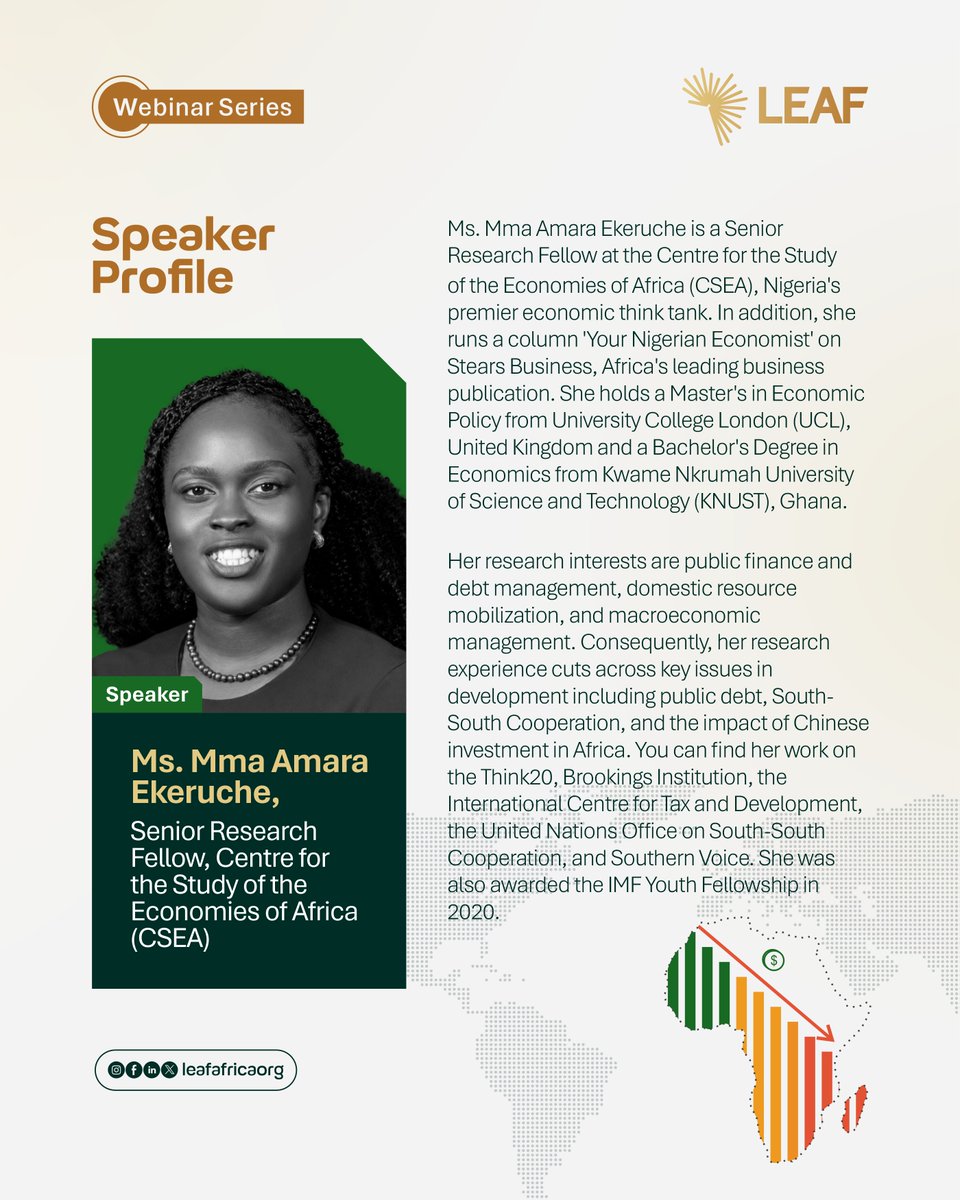
Africa owes less than 2% of global debt, yet many African countries face some of the world’s highest borrowing costs. What does this mean for jobs, businesses, investment, and economic growth? Join LEAF Africa’s Webinar on Thursday June 11, 2026, at 2 PM WATAfrica owes less than 2% of global debt, yet many African countries face some of the world’s highest borrowing costs. What does this mean for jobs, businesses, investment, and economic growth? Join LEAF Africa’s Webinar on Thursday June 11, 2026, at 2 PM WATAfrica owes less than 2% of global debt, yet many African countries face some of the world’s highest borrowing costs. What does this mean for jobs, businesses, investment, and economic growth? Join LEAF Africa’s Webinar on Thursday June 11, 2026, at 2 PM WATAfrica owes less than 2% of global debt, yet many African countries face some of the world’s highest borrowing costs. What does this mean for jobs, businesses, investment, and economic growth? Join LEAF Africa’s Webinar on Thursday June 11, 2026, at 2 PM WATAfrica owes less than 2% of global debt, yet many African countries face some of the world’s highest borrowing costs. What does this mean for jobs, businesses, investment, and economic growth? Join LEAF Africa’s Webinar on Thursday June 11, 2026, at 2 PM WATAfrica owes less than 2% of global debt, yet many African countries face some of the world’s highest borrowing costs. What does this mean for jobs, businesses, investment, and economic growth? Join LEAF Africa’s Webinar on Thursday June 11, 2026, at 2 PM WAT.
Fintech has not just led Africa’s funding story. It has shaped it.
Over the last decade, fintech captured about 35% of venture capital and backed 933 deals, roughly 26% of all deals on the continent. No other sector matched its consistency in both volume and investor confidence.
That dominance matters because it tells us where investors have seen the strongest mix of scale, monetisation, and infrastructure relevance. Payments, lending, neobanks, and embedded finance did not just attract capital. They became the backbone of Africa’s digital investment narrative.
Even after the funding slowdown, fintech stayed resilient. That is why this chart is more than a sector snapshot. It is a signal of where capital has repeatedly found conviction in Africa.
Read LEAF Africa’s Africa’s Investment Landscape via https://t.co/McGiPnMMg3 to see why fintech has remained the continent’s most dominant and durable funding story.
Africa owes less than 2% of global debt, yet many African countries face some of the world's highest borrowing costs. What does this mean for jobs, businesses, investment, and economic growth? Join LEAF Africa's Webinar on June 11, 2026, at 2 PM WATAfrica owes less than 2% of global debt, yet many African countries face some of the world's highest borrowing costs. What does this mean for jobs, businesses, investment, and economic growth? Join LEAF Africa's Webinar on June 11, 2026, at 2 PM WATAfrica owes less than 2% of global debt, yet many African countries face some of the world's highest borrowing costs. What does this mean for jobs, businesses, investment, and economic growth? Join LEAF Africa's Webinar on June 11, 2026, at 2 PM WATAfrica owes less than 2% of global debt, yet many African countries face some of the world's highest borrowing costs. What does this mean for jobs, businesses, investment, and economic growth? Join LEAF Africa's Webinar on June 11, 2026, at 2 PM WATAfrica owes less than 2% of global debt, yet many African countries face some of the world's highest borrowing costs. What does this mean for jobs, businesses, investment, and economic growth? Join LEAF Africa's Webinar on June 11, 2026, at 2 PM WATAfrica owes less than 2% of global debt, yet many African countries face some of the world's highest borrowing costs. What does this mean for jobs, businesses, investment, and economic growth? Join LEAF Africa's Webinar on June 11, 2026, at 2 PM WAT.
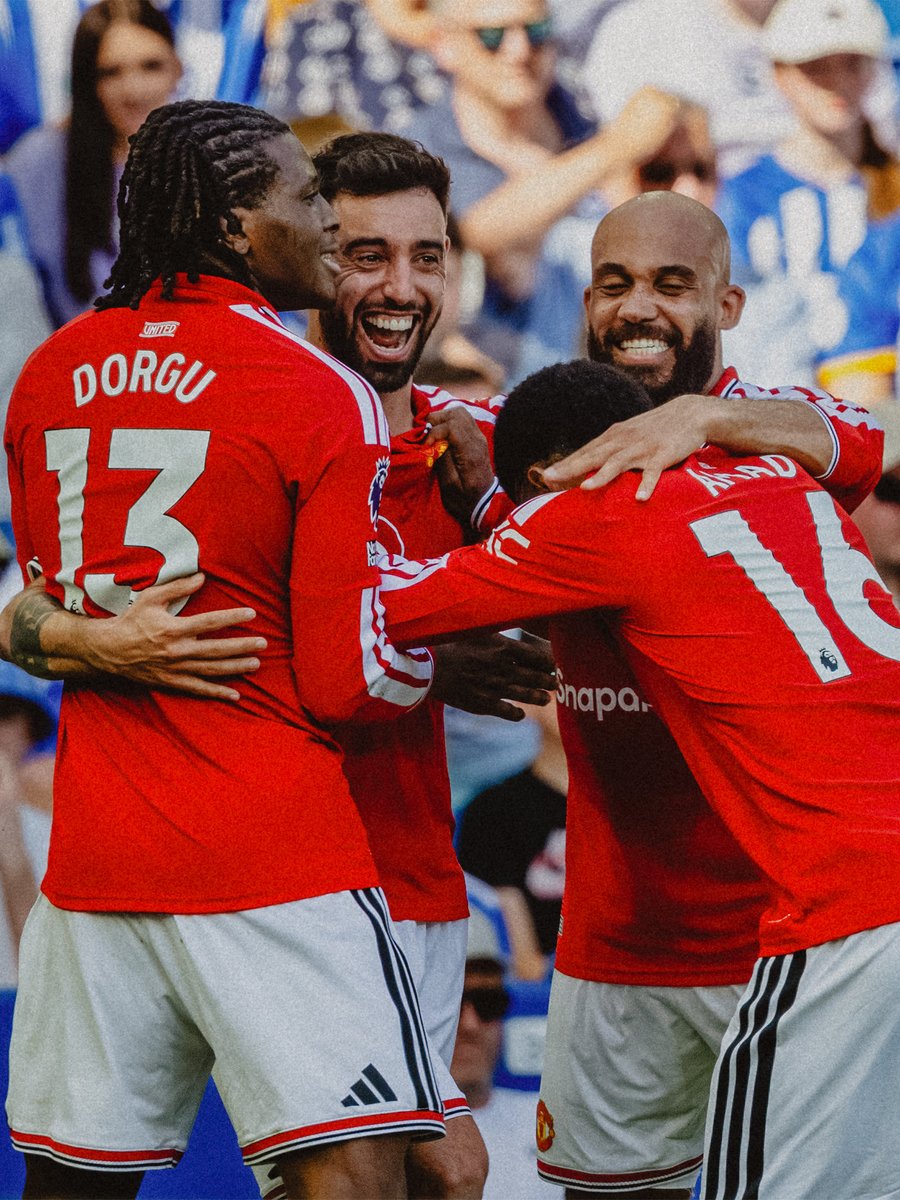
This is not mine. This is yours. This is ours.
From all the players, staff and everyone involved in the club, to you guys who supported us every single day of the season.
Grateful for your love and support ❤️
Nigeria’s projected $11.6B debt service in 2026 represents nearly 50% of government revenue.
This underscores the rising fiscal pressure where interest obligations increasingly compete with essential spending on health, education, and infrastructure.
For a full analysis and debt sustainability insights, read the LEAF Africa Debt Story Report here: https://t.co/xg3FPaQUUe
Sub-Saharan Africa is not moving in one direction in 2026. Kenya strong. Nigeria recovering. Ghana slowing. South Africa improving. Winners study countries individually, not as one market. Tap the link below to download our new Outlook Report. #LEASub-Saharan Africa is not moving in one direction in 2026. Kenya strong. Nigeria recovering. Ghana slowing. South Africa improving. Winners study countries individually, not as one market. Tap the link below to download our new Outlook Report. #LEASub-Saharan Africa is not moving in one direction in 2026. Kenya strong. Nigeria recovering. Ghana slowing. South Africa improving. Winners study countries individually, not as one market. Tap the link below to download our new Outlook Report. #LEASub-Saharan Africa is not moving in one direction in 2026. Kenya strong. Nigeria recovering. Ghana slowing. South Africa improving. Winners study countries individually, not as one market. Tap the link below to download our new Outlook Report. #LEASub-Saharan Africa is not moving in one direction in 2026. Kenya strong. Nigeria recovering. Ghana slowing. South Africa improving. Winners study countries individually, not as one market. Tap the link below to download our new Outlook Report. #LEAF
What if investing in Africa could pursue returns and measurable impact at the same time?
That is the core idea behind impact investing.
In LEAF Africa’s illustrative framework, capital can be viewed through three lenses:
40% Financial Returns
30% Social Impact
30% Environmental Impact
This is not a performance claim. It is an educational model for thinking about how investors can align capital with long-term value creation.
Across Africa, companies are building scalable solutions in clean energy, financial inclusion, sustainable agriculture, healthcare, and education technology.
For investors, the opportunity is clear: Africa’s growth story is not only about market returns. It is also about funding solutions to real economic and social challenges.
The future of investing may belong to those who can measure both profit and purpose.
Download the full LEAF Africa report at https://t.co/hkbwn3KSgE
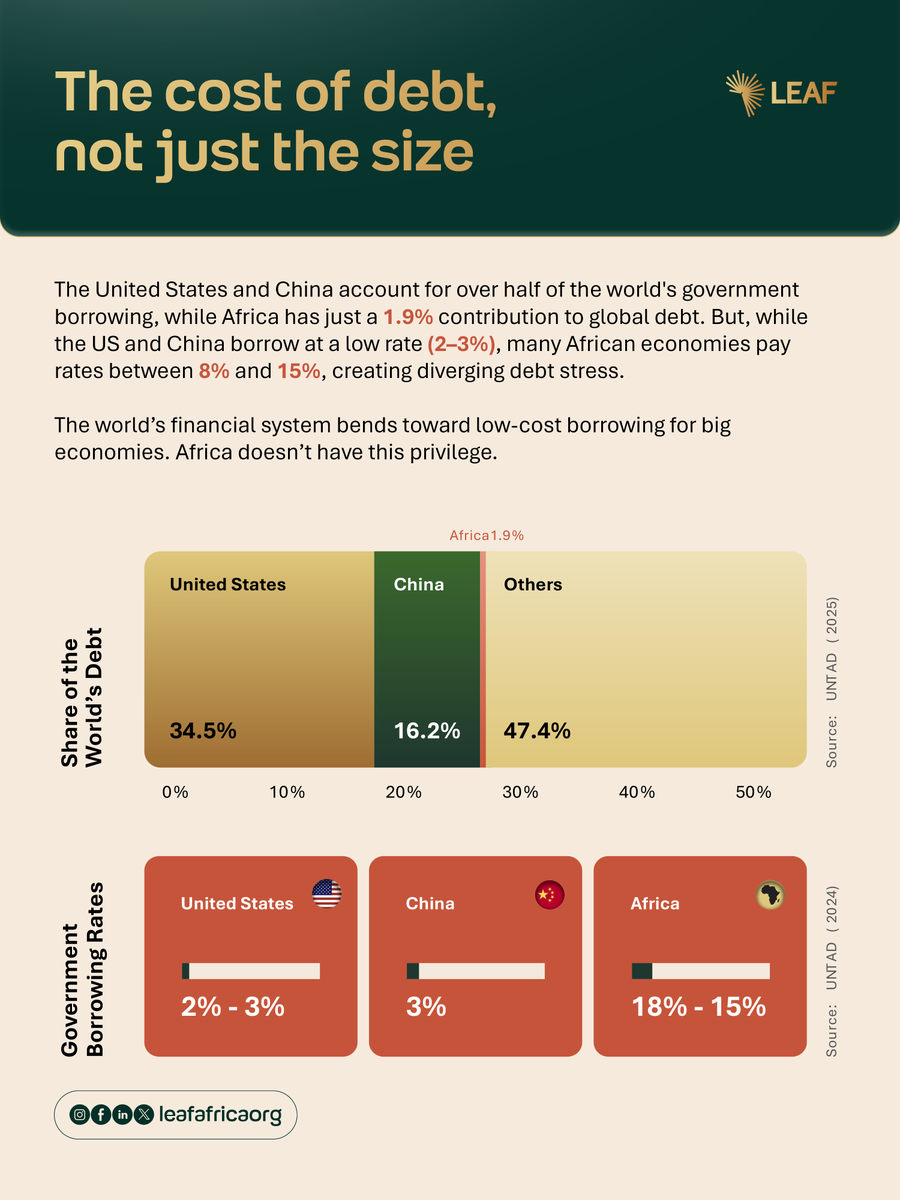
Africa holds little of the world’s debt, but pays much more to borrow.
Africa accounts for just 1.9% of global public debt. Yet many African economies borrow at around 8% to 15%, while larger economies like the United States and China borrow far more cheaply.
That gap is the story. It means Africa often pays more for capital even when it carries far less debt in absolute terms. So the real issue is not only how much debt the continent holds. It is the price attached to it.
Until the conversation shifts from volume to borrowing conditions, we will keep missing the real source of fiscal pressure across African economies.
Read Africa’s Debt Story at https://t.co/06IHW8roaK to understand why Africa’s debt challenge is as much about pricing as it is about volume.
Africa’s debt problem is also a problem of creditor structure.
Africa’s external public debt did not just grow. Its creditor mix changed.
Between 2008 and 2023, Africa’s external public debt rose from $208 billion to $746 billion. Over that period, bondholders became the largest creditor group, rising from $25 billion to $186 billion. The World Bank, IMF, AfDB, China, and other private creditors also expanded their role.
Why does this matter?
Because debt becomes harder to restructure when it is spread across private bondholders, multilaterals, and bilateral lenders with different incentives. The debt story is no longer only about how much is owed. It is also about who is owed.
Read the full Africa’s Debt Story report at https://t.co/xg3FPaRsJM to understand who holds Africa’s debt and why it changes the politics of repayment.
The major challenge about Africa’s debt is not only about borrowing. It is also about exports, foreign exchange, and how vulnerable economies become when external conditions shift.
When commodity prices are strong, governments often borrow with confidence. But when those prices fall, export earnings weaken, currencies come under pressure, and debt obligations still have to be serviced in hard currency.
That is the structural trap this chart reveals. Nigeria’s reserves fell sharply, Zambia’s currency weakened significantly, and external debt service relative to exports rose steeply.
In economies where oil, metals, and cocoa still account for a large share of export earnings, debt pressure can intensify very quickly when the external environment turns.
This is why Africa’s debt story cannot be understood through debt volumes alone. It also needs to be understood through export strength, FX resilience, and commodity dependence.
Download LEAF Africa’s Africa’s Debt Story at https://t.co/OLyVTBenDB to see why export weakness and currency shocks keep turning debt into a deeper structural challenge across African economies.