This is an interesting take on the ethics of receiving government aid. Since taxation is theft, recipients of government aid are benefiting from theft. If I receive back the exact automobile that was stolen from me, the analogy applies. If I was robbed of my money, and years later the same thief gives me a portion of the loot he stole from someone else, is that really the same analogy?
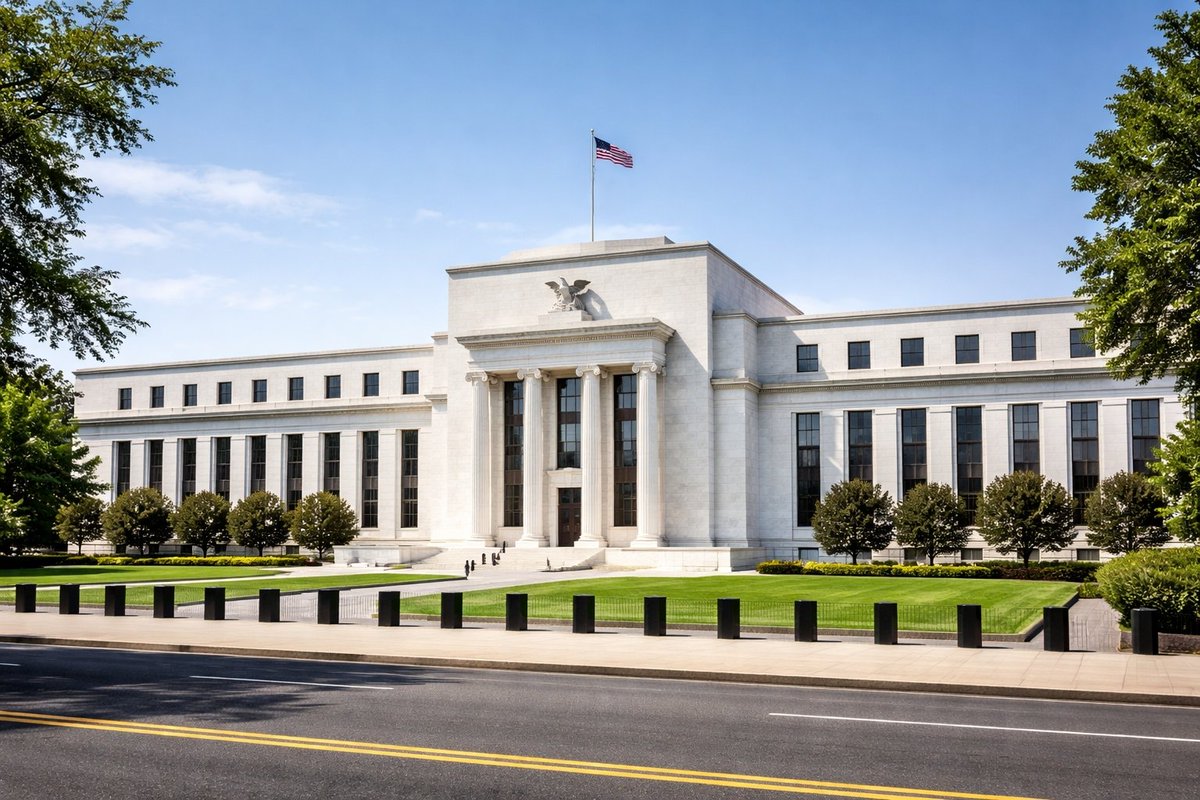
Banks do not take money on deposit and lend it out. They create it, from nothing, with a few keystrokes, and the entire system depends on you never noticing.
When you deposit $10,000 in cash at JPMorgan Chase, the bank records a liability to you and an asset for itself. Under fractional reserve banking, the Federal Reserve requires banks to hold only a fraction of deposits as reserves. For decades, that requirement sat around 10%, and in March 2020 the Fed dropped it to zero. That means JPMorgan can lend out the full $10,000 you deposited, while still owing you that $10,000 on demand. The borrower who receives that $10,000 deposits it elsewhere. That bank then lends it out again. The same dollars multiply through the system, spawning new purchasing power at each stage without a single additional dollar being printed.
Murray Rothbard called this counterfeiting conducted through respectable institutions, and I think that word fits. If you printed money in your basement and spent it, you would transfer real wealth from later dollar-holders to yourself. Banks do precisely this, they just call the process "credit creation" and charge interest for the privilege of doing it.
The price you pay seems hidden at first. Every new dollar dilutes your "old" dollars. When credit expansion drives a housing boom, as it did between 2003 and 2007, asset prices rise first for the people closest to the new money, the borrowers, the developers, the leveraged speculators. By the time ordinary wages and savings adjust, you have already been taxed by dilution of purchasing power without a single congressman casting a vote.
This system contains the seed of every business cycle. Cheap credit manufactured by banks sends false signals to entrepreneurs, who invest in projects that the real pool of savings cannot support. The boom turns to bust when reality reasserts itself, usually violently, usually on your tab through bailouts.
Fractional reserve banking is state-licensed privilege, enforced by deposit insurance and central bank backstops that socialize the losses while the gains flow upward. This is how the rich become richer, and the poor get poorer, not "capitalism," as economically illiterate politicians like to claim.
Don't let your local proponent of fiat currency or MMT propagandist tell you debt is money.
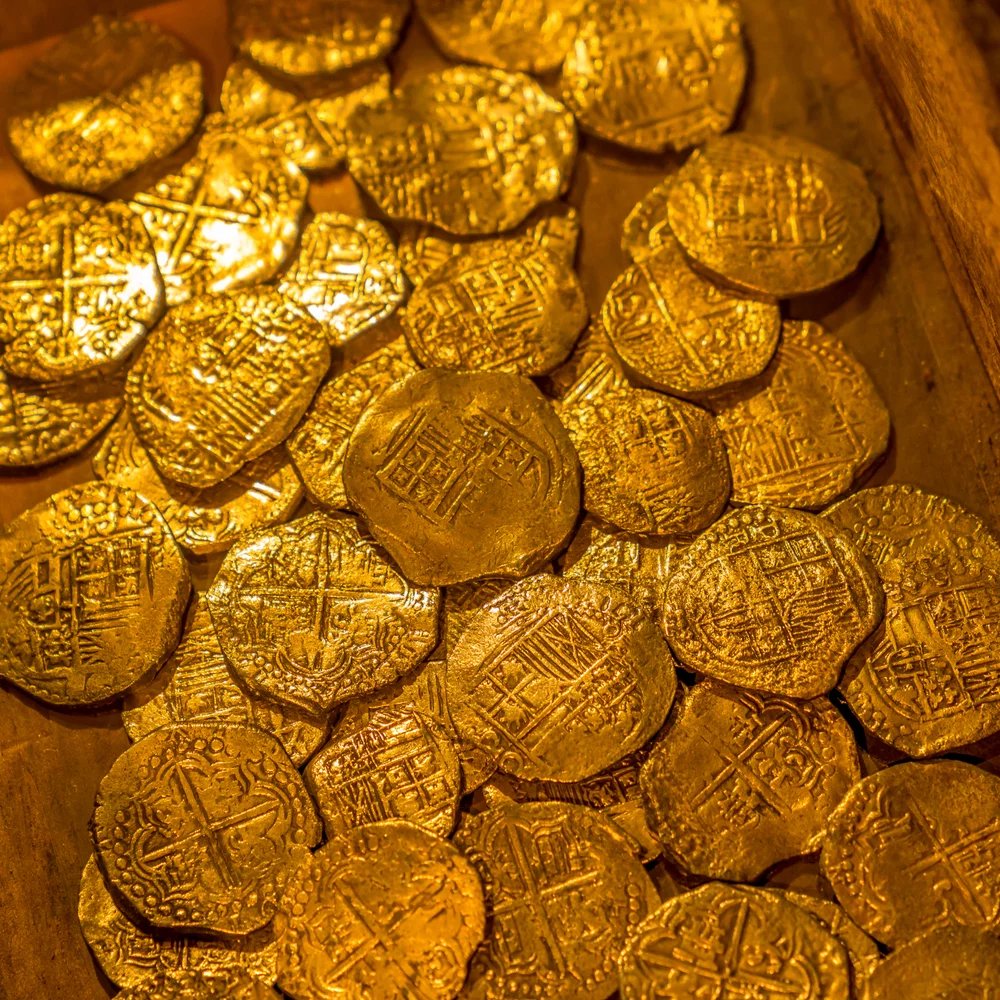
Gold is money, and multiple societies across the globe and throughout history selected it independently as a unit of exchange. Partly because it costs real resources to pull it out of the ground.
Under the classical gold standard (+-1870 to 1914), every major currency was a fixed claim on a specific weight of gold. The British pound represented 113 grains of pure gold. The US dollar represented 23.2 grains. This meant the pound-dollar exchange rate was not negotiated daily by currency traders; it was mathematically fixed by two weights. If London imported more than it exported to New York, gold physically left Britain and sailed across the Atlantic to settle the balance.
That outflow did something automatically that central bankers today try to replicate by decree. Gold leaving London contracted the British money supply, which pushed prices down and raised interest rates. Cheaper British goods then attracted more foreign buyers, and higher rates attracted foreign capital. The deficit corrected itself without a committee meeting. David Hume described this price-specie-flow mechanism in 1752, and it worked exactly as he said.
Trade credit and clearing houses handled most routine settlement, so gold rarely moved for every single transaction. Banks in the City of London extended credit to merchants in Hamburg or Buenos Aires, and those balances netted out periodically, with only residual imbalances settled in gold. This system worked because the counterparties shared a legal culture, reputation mattered across generations, and the ultimate backstop was always a fixed, unambiguous weight of metal.
This is where debt as money runs into its structural wall. Credit requires you to trust that your counterparty will perform across time. Inside a tight commercial circle, that trust is built on shared courts, shared reputation networks, and repeat dealings. Extend that circle to a stranger outside your legal and cultural sphere, and the trust calculus collapses. You cannot sue a Venetian merchant from your court in Antwerp with any confidence. You cannot verify his solvency. Debt between strangers is a promise backed by nothing you can enforce.
Gold dissolved that problem. When a Florentine merchant traded with an Ottoman counterpart in the 1500s, neither trusted the other's IOUs and neither needed to. Gold transferred ownership of real value at the moment of exchange. No court, no shared institution, no reputation network required. The metal did not care about culture or jurisdiction. It settled the transaction on the spot, permanently.
The gold standard was therefore not primarily a monetary policy choice. It was the natural settlement layer for trade between parties whose mutual trust stopped at the city gates.
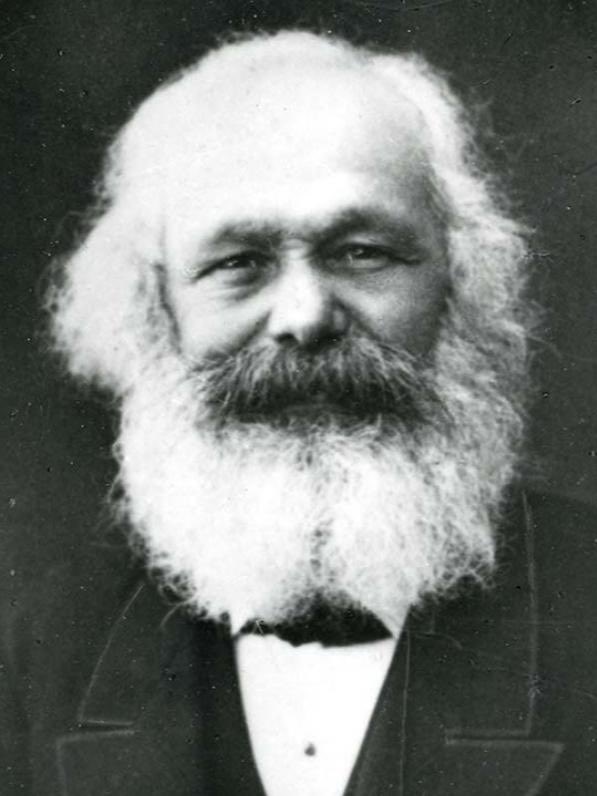
Karl Marx spent his life denouncing factory owners while leeching off one like a parasite.
Friedrich Engels, heir to a cotton fortune, financed the research behind "Das Kapital." The man who wrote the book on the evils of profit did it on a mill owner's money.
His economics did not survive contact with logic. Marx built "Das Kapital" on the claim that labor alone creates value. In 1896, Eugen von Böhm-Bawerk showed that the third volume contains an irreconcilable contradiction of the law of value laid down in the first, and most critiques of Marxist economics have repeated his argument since. Neither Marx nor anyone else ever resolved it.
His predictions failed too. He expected capitalism to grind the workers into deeper misery. In Britain, real wages rose 123 percent between 1840 and 1900. He expected a revolution in industrial Britain and Germany.
It came in agrarian Russia and China instead, countries where his own theory said it should not. The regimes that followed ran labor camps and engineered famines that killed tens of millions of their own people.
The greatest flaw sits in the plan itself. In 1920, Ludwig von Mises explained that a society without private ownership has no market prices, and without prices, planners cannot calculate what anything costs or what to produce. Every version of socialism that replaces prices with orders hits that wall, from empty Soviet shelves to Venezuelan hyperinflation.
The planner cannot know what you want, so he guesses, and you pay for the guess instead of the goods you need or want.
Marx died in 1883 still living on a capitalist's money, and every government that adopted his plan has needed someone else's.
Somehow, the garbage he came up with remains relevant today as a testimony to the idiocy we live in, and a blight on humankind.
@HeidiBriones Everyone should be allowed to trade with “inside information”. It would allow for faster and more accurate price discovery. Liberty for all is the answer, even if that includes congress.
When I took the business strategy class for the MBA, I was shocked the instructor outlined regulatory capture as though it were an acceptable strategy. She taught us various methods to implement, never once considering the violation of the non-aggression principle. Not all business leaders are corrupt, but some are taught to be.
@2dogs1chic@MDBitcoin Gen X is not only independent, demographically we are a small population compared to the boomers and the generations that followed us. We will get out voted on both sides.
The Federal Reserve is concerned AI agents could trigger a bank run. Well, if we had honest banking instead of fractional reserve banking, every bank run including AI triggered runs wouldn’t be a problem. We need honest banking. #EndTheFed
@iAnonPatriot I’m grateful to learn there was no loss of life and only minor injuries. I pray for a speedy recovery for everyone involved, including the anguish and mental trauma.