Great example and great teammate! He had every excuse to leave but he didn’t. He will be rewarded for that in the upcoming draft. He’s hard to root against.
At 18 years old, Roch Cholowsky had a choice.
Take first-round money from MLB. Or take a football scholarship, he was good enough for Notre Dame to offer him one as a QB.
He turned down both.
Instead he chose to walk onto a UCLA campus and join a program that would win just 19 games is Freshman year. No guaranteed role. No guaranteed anything. Just like life.
Freshman year he spent most of his time at third base. Hit below .250 for a month. One homer three quarters through the season.
In the transfer portal era, where every highly recruited kid bounces the second things get hard... he didn't flinch.
He waited. He worked. He stayed.
And so did his teammates.
The majority of that roster stayed together. Built something. Trusted the process when it wasn't pretty. That's not a coincidence, that's culture. And culture starts with your best player setting the standard every single day.
That's delayed gratification in real time.
Sophomore year: .353. 23 HRs. 74 RBI. National Player of the Year. College World Series.
Here's what people don't talk about though.
The kid keeps a vision board in his dorm room. Has since his senior year of high school. Individual goals on the left side. Team goals on the right side. He doesn't just write them down... he sees them every single day.
Tucked in the corner of that board is a handwritten note from his mom.
Four words.
"Keep your circle small."
At the peak of the hype, when everybody wants a piece of you... he had the blinders on anyway. That doesn't happen by accident. That starts at home.
His head coach John Savage said it plainly:
"His makeup, his leadership, his work ethic in the weight room, drills, practice, meetings, it's all about winning with him."
Savage also called him a "head coach's dream." In 10 years coaching at the D1 level and as a 7th round draft pick myself... I can tell you that phrase gets used maybe once or twice in an entire career.
And then there's the QB piece. Shortstop IS the quarterback of the field. You're calling coverages, commanding the defense, reading the game before the ball is even hit. Cholowsky did that every Friday night under the lights in high school. He didn't just play baseball. He learned how to lead.
His words:
"Football helped me leadership-wise, because nothing works if the guys aren't on the same page."
Now they're the #1 team in the country. And he's the #1 pick in the country.
Does that mean he goes #1 overall in July? Has a long MLB career? Makes the Hall of Fame?
Not necessarily.
But he's living right. He understands his system. He knows who he is and what he needs to do every single day.
The talent gets you noticed.
The character gets you there.
That's Roch Cholowsky. That's why coaches and MLB scouts respect him.
I'm a fan. And we have to remember, it's not easy. But we're only as good as the system we build for ourselves.
Your journey IS YOUR journey!
@CholowskyRoch
At 18 years old, Roch Cholowsky had a choice.
Take first-round money from MLB. Or take a football scholarship, he was good enough for Notre Dame to offer him one as a QB.
He turned down both.
Instead he chose to walk onto a UCLA campus and join a program that would win just 19 games is Freshman year. No guaranteed role. No guaranteed anything. Just like life.
Freshman year he spent most of his time at third base. Hit below .250 for a month. One homer three quarters through the season.
In the transfer portal era, where every highly recruited kid bounces the second things get hard... he didn't flinch.
He waited. He worked. He stayed.
And so did his teammates.
The majority of that roster stayed together. Built something. Trusted the process when it wasn't pretty. That's not a coincidence, that's culture. And culture starts with your best player setting the standard every single day.
That's delayed gratification in real time.
Sophomore year: .353. 23 HRs. 74 RBI. National Player of the Year. College World Series.
Here's what people don't talk about though.
The kid keeps a vision board in his dorm room. Has since his senior year of high school. Individual goals on the left side. Team goals on the right side. He doesn't just write them down... he sees them every single day.
Tucked in the corner of that board is a handwritten note from his mom.
Four words.
"Keep your circle small."
At the peak of the hype, when everybody wants a piece of you... he had the blinders on anyway. That doesn't happen by accident. That starts at home.
His head coach John Savage said it plainly:
"His makeup, his leadership, his work ethic in the weight room, drills, practice, meetings, it's all about winning with him."
Savage also called him a "head coach's dream." In 10 years coaching at the D1 level and as a 7th round draft pick myself... I can tell you that phrase gets used maybe once or twice in an entire career.
And then there's the QB piece. Shortstop IS the quarterback of the field. You're calling coverages, commanding the defense, reading the game before the ball is even hit. Cholowsky did that every Friday night under the lights in high school. He didn't just play baseball. He learned how to lead.
His words:
"Football helped me leadership-wise, because nothing works if the guys aren't on the same page."
Now they're the #1 team in the country. And he's the #1 pick in the country.
Does that mean he goes #1 overall in July? Has a long MLB career? Makes the Hall of Fame?
Not necessarily.
But he's living right. He understands his system. He knows who he is and what he needs to do every single day.
The talent gets you noticed.
The character gets you there.
That's Roch Cholowsky. That's why coaches and MLB scouts respect him.
I'm a fan. And we have to remember, it's not easy. But we're only as good as the system we build for ourselves.
Your journey IS YOUR journey!
@CholowskyRoch
The Scouting Classroom #16
What Scouts Watch During Infield/Outfield
Pregame Defense Matters
Pregame defense matters. A lot!
Most fans don’t pay close attention during infield/outfield. They’re finding their seat, checking the lineup, or waiting for the game to start. But scouts are already working, because a player can tell you a lot before the first pitch is ever thrown.
Infield/Outfield Is Not Just Warmup
To a scout, infield/outfield is part of the evaluation. It is a chance to watch feet, hands, exchange, arm action, carry, accuracy, body control, first step, angles, rhythm, and energy. The throw is only the last part of the play. The real evaluation starts before the ball ever reaches the glove.
How does the player move into position? Does he work through the baseball? Are his feet active or heavy? Are the hands soft or stiff? Does the exchange happen naturally? Does the arm work clean? Does the ball carry with life, or does he have to max out to make the throw?
That’s what scouts are watching
The Feet Tell the First Story
Before the arm, before the glove, before the throw, I’m watching the feet. Bad feet usually create bad throws. A player can have arm strength, but if his feet don’t work, the arm may never play the way it should.
Infielders have to create rhythm, read hops, get their body in position, and play through the ball instead of letting the ball play them.
Outfielders have to show reads, routes, angles, body control, and the ability to get behind the baseball.
A big arm is nice, but a big arm with bad feet is not the same as a playable defensive tool.
It’s More Than Just Arm Strength
Fans love the big arm. Scouts do too. But scouts are not just asking, “Was it hard?” We’re asking if it carried, if it was accurate, if the arm action was clean, if the ball stayed true, and if the player can make that throw again and again.
There is a difference between a player who can air one out in pregame and a player whose arm is a real tool. A real arm plays with carry, accuracy, and consistency.
Hands and Exchange Matter
For infielders, hands tell you a lot. Are they soft? Are they confident? Does the player receive the ball cleanly? Can he adjust to an in-between hop? Does he funnel naturally? Does the exchange happen quickly without panic?
Some players look athletic until the ball gets to them. Then the game gets loud, the hands get hard, the feet stop, the exchange gets long, and the throw rushes.
That’s evaluation
A scout is not only looking for the routine play. He is looking for how clean the body works when the play speeds up.
Outfielders Get Evaluated Too
Outfield defense is not just catching fly balls and throwing to the cutoff man. Scouts are watching reads off the bat, first step, route efficiency, closing speed, body control near the wall, ability to play through the ball, throwing mechanics, carry, accuracy, and comfort moving in space.
A fast player is not automatically a good outfielder. Speed helps, but reads and instincts are what make the speed play. That is the difference between raw tools and baseball tools.
And there is a difference
The Lesson for Players
Never sleepwalk through infield/outfield. You may think nobody is watching, but a scout probably is, and he may learn more than you realize.
Pregame defense is not the time to be casual. It is the time to show pride in your position, to show that your actions are real, and to prove that your tools can play.
Because defensive evaluation doesn’t start when the ball is hit in the game. It starts in pregame.
The feet, the hands, the exchange, the arm, the carry, the accuracy, the rhythm, the body control, and the energy all matter.
Scouts are not just watching the throw
They are watching everything before it
That’s where evaluation begins
That’s Scouting
#BehindTheRadarGun 🔎
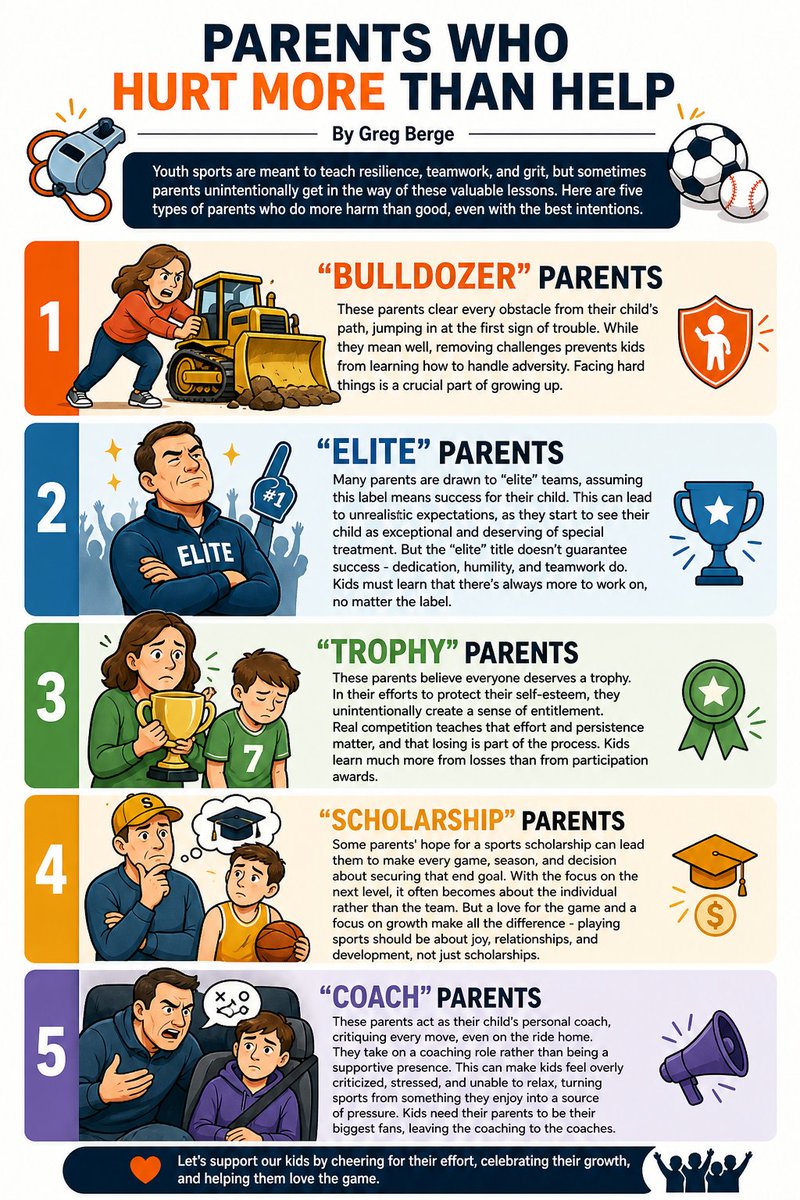
Hard truth:
Some parents don’t mean to hurt their child’s growth…But they do.
When we remove struggle, chase labels, or coach from the stands, we take away the lessons sports are meant to teach.
Support > Control
Which one do you see most right now?
Clovis North 26’ outfielder Dylan Slakey has committed to San Diego State
@dylslake22 hit .358 with 3 HR (13 XBH), 8 SB and a 1.008 OPS this season, earning 1st team TRAC honors.
If your plan this summer is to travel all over the country playing ball, that’s up to you. But you better be able to lift, eat, sleep and workout at an elite level if you’re doing that because you want to play college baseball.
The physicality and skill level needed to play at that level are what matters. If you’re living in a hotel this summer, make sure you have a plan.
I’ve seen a ton of careers wrecked by traveling too much and not having a plan for the part of your development that will matter most when you get to college.
Pay attention folks. They know or will find out the smallest details about the player and the family. Don’t be the reason they look past your sons or daughters.
Pay attention folks. They know or will find out the smallest details about the player and the family. Don’t be the reason they look past your sons or daughters.
Had an hour long phone call this past week with a MLB cross checker about one of our alumni who is now in college…in that hour, there may have been about 5 minutes of him asking me about his talent.
The other 55 or so minutes…
1. How does he handle failure?
2. Tell me about his parents?
3. Tell me about his parents personality types?
4. Did his teammates like him or tolerate him?
5. Were his parents overly involved or did they let him deal with tough moments on his own?
6. Does he handle tough coaching well?
7. Were there ever times he made excuses for performance?
8. When he got hurt, did he still show up for games or not?
Had an hour long phone call this past week with a MLB cross checker about one of our alumni who is now in college…in that hour, there may have been about 5 minutes of him asking me about his talent.
The other 55 or so minutes…
1. How does he handle failure?
2. Tell me about his parents?
3. Tell me about his parents personality types?
4. Did his teammates like him or tolerate him?
5. Were his parents overly involved or did they let him deal with tough moments on his own?
6. Does he handle tough coaching well?
7. Were there ever times he made excuses for performance?
8. When he got hurt, did he still show up for games or not?